Saturday – April 8th

Read: Matthew 27:62-66 and Isaiah 53:8-12

Here in Matthew 27:62-66, we see an interesting exchange between the Pharisees, the chief priests, and Pontius Pilate. As Jesus is in the tomb, they are fearful His disciples will steal the body and “fake” His resurrection. They ask Pilate for “a guard” which was around sixteen Roman soldiers to seal the tomb and keep watch. I find this interesting and ironic all on its own, since the Pharisees actually believed in a bodily resurrection (Acts 23:8). As interesting as that may be, the main point that stands out has to be the contrast between how the Jews revered Pilate and degraded Jesus. They address Pilate as “Sir” whereas Jesus, the one who willingly laid down His life and suffered a horrible death to save undeserving sinners, they refer to as a fraudulent imposter. Here are some questions that immediately come to mind: how could the religious leaders of God’s people get things so wrong?  -AND- how do we get it right?  We will definitely revisit these questions, but let’s look at our second scripture reading before we do.  

Isaiah 53:8-12 is a known prophecy about the Messiah that was written 700 years before Jesus walked the earth. In this passage, God makes it very clear that everything is happening as it was foretold - the Messiah had to die and make atonement for our sins. He even gives us specific details regarding the Messiah, so we don’t get it wrong. “They made His (Jesus) grave with the wicked and with a rich man in his death,” (53:9). Jesus was crucified between two thieves who were wicked, and yet He was buried in the tomb of Joseph of Arimathea, a prominent rich man of that day. In verses 10-12, we are told that it was the Lord’s will that Jesus would be an offering for the guilt of our sin and suffer the death of a transgressor - in place of us - so that we would be counted righteous before God. These details were recorded centuries before they took place, and are so specific that they cannot be written off as mere circumstance or conjecture. 

In light of how God painted such a clear picture of the Messiah, how could the religious leaders get it wrong? -AND- of equal importance, how can we avoid that mistake? First, they ignored God’s Word, and we must NEVER ignore God’s Word. Since the religious leaders devoted their lives to the study of scripture, we cannot conclude that they were unfamiliar with it. The logical explanation is they ignored what it said, and in doing so tried to keep Jesus in His grave. As for those of us who are born again believers in Jesus Christ, we should always seek to study, understand, and apply God’s word. We can avoid the mistake of the religious leaders in our own lives by choosing to NOT ignore what God’s Word says. In other words, we must listen and be obedient to it.  

Prayer: Pray and ask God to show you an area of your life where you may be “trying to keep Jesus in the tomb” and willfully ignoring God’s Word. Confess to the Lord where you are struggling, and ask for prayer from a friend.

Reflection Questions:

  • Is there anyone or anything in your life you are placing above Jesus?

  • What do you think led the religious rulers to a place where their priorities were so misaligned? 

Good Friday – April 7th

Prayer: Ask the Lord for eyes to see and ears to hear wonderful things from His Word.  

Read: Matthew 27:1-61, Psalm 22, and Isaiah 52:13-53:7

Sometimes people with ill-formed or uninformed spiritual notions say, “if only God would show up, then I would believe in him.” In the mid-1990s, the song One of Us cynically asked “What if God was one of us?” The questions posed by the song were left to the listener to answer philosophically. But today’s passage answers the questions definitively. On this day, we see God in the hands of angry sinners. It was a day of treachery (27:1-10) and false accusations (27:11-18). It was a day of murder (27:26-31) and envious and haughty mockery (27:27-31, 37-44). It was a day when rebellious voices called for the release of a murderer instead of their Messiah (27:15-26). What happened to Jesus this day is exactly how sinful people answer the question, what “would you want to see, if seeing [God] meant that you would have to believe”[1] in Jesus? The answer is, “we don’t want to see Jesus!” Sinners so desperately want to believe in themselves and anything other than Jesus Christ that they were (and still are) eager to put Him to death in their hearts and minds. And when given the opportunity to kill Him, they subjected Him to an unspeakably cruel and brutal death on the cross.

What they saw didn’t fit the Messiah of their imaginations.They wanted a warrior ruler and king. Yet during His earthly ministry there was nothing majestic about Jesus – how could such a poor man – from Galilee of all places – be the Messiah (Isaiah 53:1-3)? They did not see the kind of messiah they wanted, and so they rejected Him. They saw a man they thought deserved the mockery and brutal beatings, because He claimed to be the Son of God. In their minds, He deserved death for such blasphemy (Isaiah 53:4b; Matthew 27:39-43). And it was in the throes of death that Jesus “cried out with a loud voice saying, “Eli, Eli, lema sabachthani?” that is, “My God, My God, why have you forsaken me?” By reciting the first line of Psalm 22, a messianic psalm, Jesus called the past into the present – in other words, He called the people to recite the psalm and see the Word of God accomplished. Yes, all the mockery (Psalm 22:7-8) and distress – even the very means of death – were being fulfilled before their eyes (Psalm 22:14-18). Had they recited the psalm perhaps their eyes would have opened wide as they sang about His pierced hands and feet and realized the Roman soldiers had cast lots for His clothing. And perhaps they would have cried out, “we are killing the Messiah!”

But they did not see these things and they did not cry out. It was Jesus who cried out with a loud voice as He yielded His spirit. This was no cry of defeat; it was a shout of victory over death. Like an athlete who, in the final seconds or remaining yards of a grueling contest, summons from the depths of his being a final push to seize victory with loud exclamation, Jesus plunged into death victorious. To His followers, however, this looked nothing like victory. Instead, it appeared all their hopes and longings for Messiah had been crushed, and they were despondent and confused. It appeared as though in just a week’s time everything had spun out of control and Jesus was powerless to stop the events that led to His death.

But He was in control of every single thing that happened. It is truly mysterious that God used sinful people acting from sinful motives to reject and kill the Son of God. It is truly mysterious that God in fact became one of us to conquer death by dying. The people that put Jesus to death were so intent on “doing the work of God” to kill “a blasphemer,” that they completely missed the work God was doing through Jesus’ death. We tend to see Jesus’ victory over sin and death occurring when He rose from the dead. But His victory was complete when He exclaimed, “It is finished!” (John 19:13). And we see His victory was immediate because the temple curtain was torn from top to bottom, the earth shook, and saints were raised from the dead (Matthew 27:50-53). The Roman soldiers who saw just some of these things – this was unlike any crucifixion they had ever carried out – exclaimed in awe that Jesus was, truly, the Son of God! Having finished all His work, Jesus rested on the Sabbath. His disciples and friends would see Him on the third day, and the victory celebration would commence.

Reflection Questions:

  • Do you agree that believing in Jesus is necessary to see God?

  • In Luke 9:23, Jesus said“If anyone would come after me, let him deny himself and take up his cross daily and follow me.” Does this statement cause you to see yourself differently? Does it cause you to see Jesus differently?

[1]One of Us, Eric Bazilian, ©Warner Chappell Music, Inc.

Maundy Thursday – April 6th

Prayer: Ask the Lord to show you how to be more like Christ as you read today’s passage. 

Reading: Matthew 26:17-75 and Zechariah 13:7

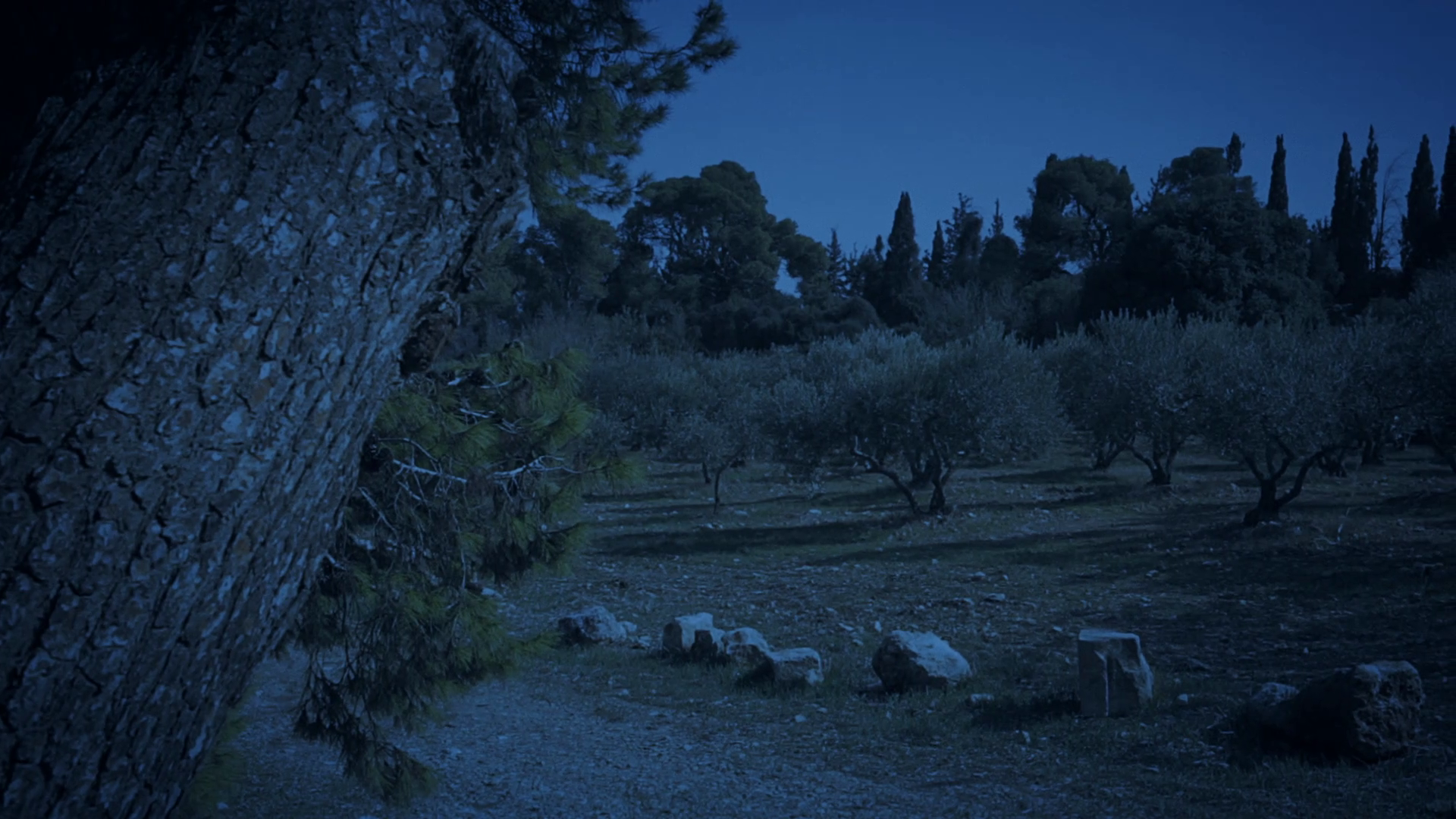
Growing up I attended a traditional church that had a Maundy Thursday service before Easter. It was always a memorable time of reverent worship and contemplation. The quiet weight and physical darkness of the service leading into Good Friday has stuck with me over the years, and I was reminded of those somber Thursday night services as I read and prayed about what to share from today’s scriptures. In these crucial last hours of Christ’s life, we can learn how Jesus and His disciples chose to battle at ground zero of the invisible war that was being waged. Let’s look at the warnings given, the preparations made, the weapons used, and the outcomes realized in this battle.

The Warnings. As any good leader does, Christ in his perfect love and wisdom reveals to His disciples what is about to transpire so that they will be prepared for battle. First, He gives a clear warning of the betrayal that is to come. He then goes on to warn of His coming death when He quotes our passage from Zechariah and says, “For it is written, ‘I will strike the shepherd, and the sheep of the flock will be scattered.’”Lastly Peter is told that he will deny his Lord three times. These warnings were to help His followers to be as prepared as possible for what was to come.  

The Preparations. A good leader doesn’t just give warnings to his followers, but he also walks alongside them to lay preparations for battle. Jesus does this by having the disciples gather to begin the Passover meal, and in a beautiful and moving moment of unity He says a blessing as they break bread, and drink wine to exemplify the New Covenant He would soon be battling to establish. To finish their preparations, Christ leads them in worship by singing a hymn before finally moving to their battlefield at Gethsemane.

The Weapons. In this time of unimaginable anxiety, and dread, Jesus chooses to fight this battle to the cross with the weapon of prayer. With full knowledge of the coming horrors of physical pain and death, crushing betrayal and abandonment, and the emptiness of His Father turning His face away, Jesus fights this war lying on His face communing with God. This is in stark contrast to what we see just a few moments later when Peter attempts to fight the battle with a sword under his own strength.

The Outcomes. Despite all the preparations, warnings, and examples, we see the disciples sleep through battles, wield ineffective weapons, and rely on their own strength. Ultimately this ends with the disciples fleeing the scene and Peter denying his Lord three times. Contrast this against the perfect example of victory in our Lord Jesus. He fought His battle with prayer and was victorious in obeying his Father’s will. He did not succumb to any temptations to flee, to sleep, to deny who He was to his enemies, to call upon legions of angels to save him, or to execute justice with a sword in His own strength.

Jesus won the greatest battle against sin and death by yielding to His Father’s perfect will and trusting in His perfect plan through prayerful obedience. We must look to Christ’s example daily as we fight against our own sinful desires, and the powers of darkness that surround us in a fallen world.

Reflection Questions:

  • What battles are you currently fighting in your spiritual life?

  • How are you doing with being prepared for battle (i.e. community and accountability with fellow believers, communal and personal worship, prayer, time in The Word)? 

  • Can you think of a time in your life when you fought like Peter? Like Christ? What was the outcome?

Wednesday - April 5th

Prayer: Ask God to open your heart to His Word as you read through these passages.

Read: Matthew 26:6-16 and Zechariah 11:12-13

I would venture to say that the woman anointing Jesus with oil and Judas’ betrayal of Jesus in Matthew 26 are two of the most well-known stories among Christians. The Gospel of Matthew is preached during the Easter season in churches around the world. Zechariah 11, on the other hand, is probably not as common to hear during the weeks leading up to Easter. At first glance, it seems to have nothing to do with the death and resurrection of Jesus…or does it?

When reading these verses separately it may be difficult to see but when read together, it’s hard to miss the prophecy in Zechariah giving a glimpse of what would happen roughly 550 years later. If you dig deeper, you can see the following themes from Zechariah 11:12-13 directly correlate to the betrayal of Jesus by Judas in Matthew 26:

1.    Zechariah was portraying himself as a shepherd “of the flock doomed to slaughter”with the responsibility of rebuking the false shepherds who led the flock astray. For Jesus, we were the flock doomed to slaughter and the religious leaders of the time were the false shepherds.

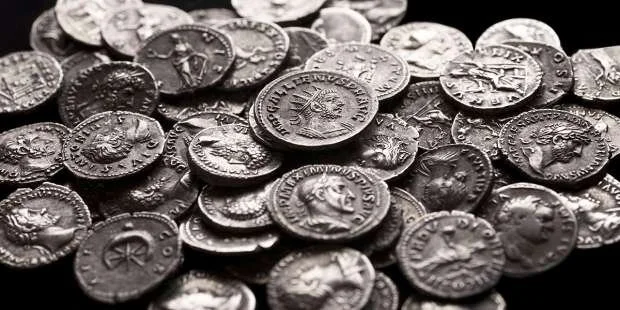
2.    Zechariah and Jesus were both valued at 30 pieces of silver. 30 pieces of silver was the minimum amount allowed to be charged for a person during that time – the value attributed to a slave.

3.    Zechariah rejected and subsequently threw his 30 pieces of silver to the potter working in the house of the Lord. Later in Matthew 27, Judas is eventually overcome by guilt and tries to return his silver to the Pharisees who use it to buy a potter’s field.

So, what does this mean? Simply put, God is sovereign and in control of every single situation. The betrayal, crucifixion and resurrection of Jesus were always His plan, right down to the 30 pieces of silver that would be paid for Jesus’ life - the price of a slave paid for the savior of the world. During this Easter season, reflect on God’s sovereignty and trust that whatever you are facing, He has a plan for you. He loves us enough that he sent His only Son, the king of the world, to live the life of a servant and suffer the death of a criminal. A burden that Jesus willingly shouldered for each and every person who places their face and trust in Him.

Reflection Questions: 

  • Why is it important to constantly consider and meditate upon God’s sovereignty over our lives?  

  • In what situations do we often question God’s plans? What can we do in those situations to realign ourselves?

  • Does your perspective change when you realize that Jesus was valued at the price of a slave? Look at your life and consider how much you truly value Jesus.