
Guest Speaker

David: Failure and Redemption

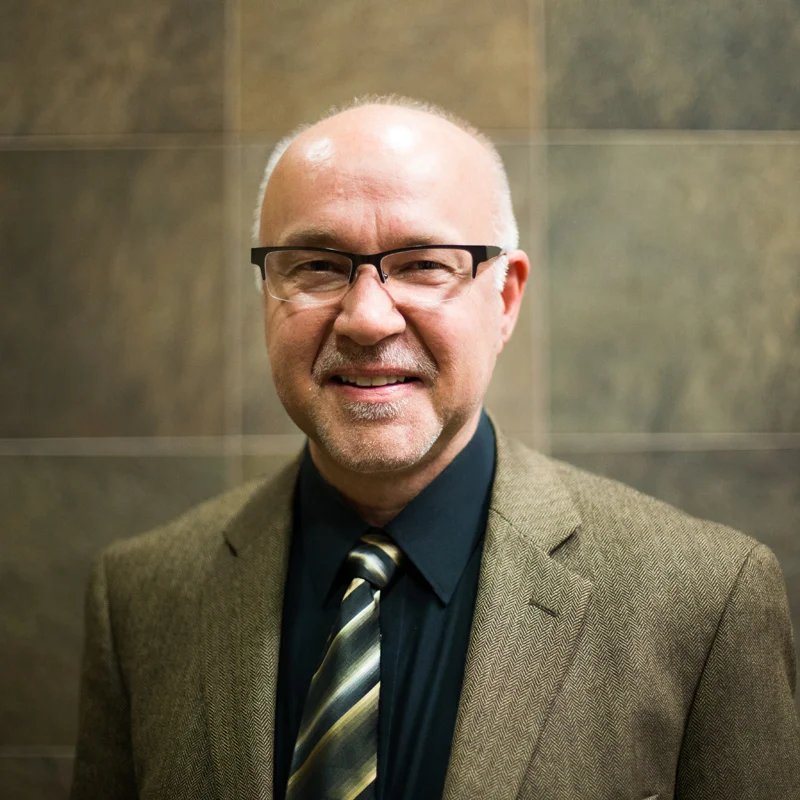
Brandon Stephenson - onechurchPGH.com

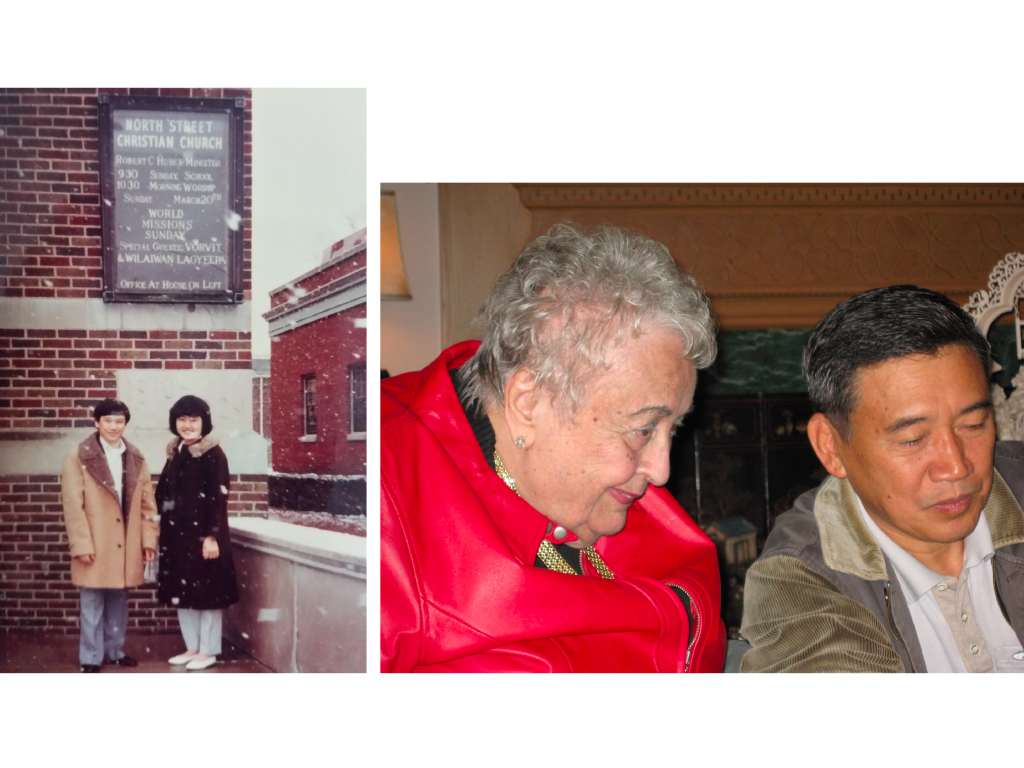
Brandon Stephenson was born and raised in Butler, PA. He was a part of North Street Christian Church where Pastor Jeff used to serve. Brandon is married to his amazing wife, Danielle, and they have 3 boys: Noah, Drew and Coby. They are currently planting a new church in the South Hills area of Pittsburgh called One Church.

Intro:

2 Samuel 11:1-3* (NIV) - In the spring, at the time when kings go off to war, David sent Joab out with the king's men and the whole Israelite army. They destroyed the Ammonites and besieged Rabbah. But David remained in Jerusalem. One evening David got up from his bed and walked around on the roof of the palace. From the roof he saw a woman bathing. The woman was very beautiful, and David sent someone to find out about her. The man said, "She is Bathsheba, the daughter of Eliam and the wife of Uriah the Hittite."


2 Samuel 12:13 (NIV) - Then David said to Nathan, "I have sinned against the Lord." Nathan replied, "The Lord has taken away your sin. You are not going to die."


We are just like David.


Romans 3:23* (NIV) - for all have sinned and fall short of the glory of God


Our sin doesn't Define us, our Reaction to it does.

Sermon Notes (PDF): BLANK
Hint: Highlight blanks above for answers!

  • Pastor Jeff:

    00:25-00:45

    For those of you that are visiting with us, my name is Pastor Jeff Miller, and it is usually at this point in the service that I have the privilege of delivering God's Word to you, but I have a different privilege over these next few weeks, and that is to introduce some amazing guest speakers.

    Pastor Jeff:

    00:46-00:52

    Kicking off these next few weeks of guest speakers, Brandon Stevenson, if you would make your way up here, please.

    Pastor Jeff:

    00:54-01:04

    Brandon was born and raised in Butler, Pennsylvania, and he was part of North Street Christian Church where I served for 11 years as associate pastor.

    Pastor Jeff:

    01:04-01:12

    And when I think of Brandon, there's always two things that I think about, and one is — he looks nervous.

    Pastor Jeff:

    01:13-01:16

    I'm just going to let this hang for a second.

    Pastor Jeff:

    01:17-01:18

    I'm just kidding.

    Pastor Jeff:

    01:19-01:21

    Brandon's a tremendous basketball player.

    Pastor Jeff:

    01:21-01:22

    You still play?

    Pastor Jeff:

    01:23-01:32

    you can. I know Brandon dominated Church League back in what I like to refer to as his prime.

    Pastor Jeff:

    01:34-01:56

    But what's really special about Brandon is his heart for Christ, his love for the Word of Christ and his dedication to Christ's church. Brandon is married to his amazing wife, Danielle, and we're not going to bring you up front and make you give a speech, but I would like you to stand up so that we could welcome you, Harvest Pittsburgh North Style.

    Pastor Jeff:

    02:00-02:05

    And they are blessed with three boys, Noah, Drew, and Kobe.

    Pastor Jeff:

    02:06-02:18

    And Brandon served as a youth pastor in a church in Wisconsin for many years, and just recently got the call to return to the burg for the next chapter of God's story and the life of his family.

    Pastor Jeff:

    02:19-02:24

    and they're currently planting a new church down in Short Tears Valley called One Church.

    Pastor Jeff:

    02:25-02:31

    And Brandon and I had lunch a couple of months back and we're getting caught up in what the Lord was doing in his life.

    Pastor Jeff:

    02:31-02:41

    And I'm like, "Hey, if your church isn't planted yet, that means your Sundays are free." And I would love for you to come and bless Harvest Bible Chapel by delivering the word.

    Pastor Jeff:

    02:42-02:48

    So Brandon, we have our Bibles and we are ready to hear what the Lord is going to speak through you.

    Pastor Jeff:

    02:48-02:52

    So let's give a Harvest Pittsburgh North welcome to Pastor Brandon Stevenson.

    Brandon:

    02:57-02:58

    Good morning, how you guys doing?

    Brandon:

    03:00-03:00

    Good, good.

    Brandon:

    03:00-03:02

    I said I'd call something out.

    Brandon:

    03:02-03:08

    You know, Jeff's talking about my basketball ability, but you also heard him say I dominated church league, which means I wasn't good enough for high school basketball.

    Brandon:

    03:09-03:12

    So you know, it's like in the minor leagues of church league, but it was fun.

    Brandon:

    03:12-03:14

    So it's good to be with you all today.

    Brandon:

    03:14-03:16

    I'm excited to spend some time with you guys.

    Brandon:

    03:17-03:19

    I've known Jeff for many, many years.

    Brandon:

    03:20-03:25

    And Jeff's kind of like a folk hero to me, kind of a legend.

    Brandon:

    03:26-03:26

    'Cause you gotta think about this.

    Brandon:

    03:26-03:31

    When Jeff came to North Street, he was from North Street, when he came on staff, I was in junior high.

    Brandon:

    03:32-03:54

    And when this associate pastor comes, who's like ripped and buffed and just kind of manly looking, and you find out that he moonlights on the weekends or used to as a studio wrestler that went by the name of Too Cool Trevor Lowe, as a junior higher, you're like, "Oh my God, this is like the coolest pastor ever!" And so, you know, Jeff had this kind of folk hero status with me and all the other people in our church.

    Brandon:

    03:54-03:59

    And Jeff taught me some really amazing things in my life that I have to give thanks for.

    Brandon:

    04:00-04:01

    And not even the Jesus stuff.

    Brandon:

    04:01-04:04

    He taught some cool things about Jesus, and I appreciate that.

    Brandon:

    04:04-04:08

    But he taught me things about life that I still carry with me today.

    Brandon:

    04:09-04:14

    You know, one of the things he taught me when I was a kid was how to defend myself from bullies.

    Brandon:

    04:14-04:22

    And when it happened, he said, "All I had to do was give them a purple nurple." And if you don't know what that is, just ask 2 Cool Trevor Lowe after service.

    Brandon:

    04:22-04:24

    He will tell you what a purple nurple is.

    Brandon:

    04:25-04:31

    But more than that, he also taught me some important dietary information of how to just enjoy life, eat good food.

    Brandon:

    04:32-04:36

    And what he taught me, I think you were still a single guy back then, so you just really had this thing figured out with diet.

    Brandon:

    04:37-04:39

    But I remember we were hanging out with him and he lived right beside the church.

    Brandon:

    04:40-04:45

    We were hanging out with him one night and he's talking to us, he's like, "Guys, the best midnight snack you could possibly get.

    Brandon:

    04:45-04:48

    You know when you go to the grocery store and you see those tubes of cookie dough?

    Brandon:

    04:49-04:55

    You buy one of those and you plop the whole tube on a pan and you put it in the oven.

    Brandon:

    04:55-05:01

    You cook it till the outside is like the color of a cookie, but inside it's just raw, gooey, warm cookie dough.

    Brandon:

    05:01-05:05

    So I live off the Jeff Miller cookie dough diet now, as you can tell.

    Brandon:

    05:05-05:10

    So Jeff, thank you, 'cause my life has forever been changed because of your tutelage to me.

    Brandon:

    05:11-05:20

    But no, more importantly, I'm excited just to be here and just to share God's word with you guys this morning and be a part of Harvest Pittsburgh North just for a moment with you guys today.

    Brandon:

    05:20-05:29

    I still remember when Jeff, I was in the process of getting this church started, I was excited because I love Pittsburgh and I love Jesus and I love when Jesus and Pittsburgh get together like this.

    Brandon:

    05:29-05:34

    And so I get to be a part of that with you guys and I just thank you for bringing me in.

    Brandon:

    05:34-05:40

    And so right now, like Jeff mentioned, we are in the middle of planning a church in Chartier's Valley area of the South Hills of Pittsburgh.

    Brandon:

    05:40-05:43

    So Scott Township, Ridgeville, that community right there.

    Brandon:

    05:44-05:45

    And it is an adventure.

    Brandon:

    05:45-05:53

    It is just a crazy journey that leaves us just shaking our heads in delight, shaking our heads in what is going on.

    Brandon:

    05:53-05:57

    It's just a crazy, crazy journey for my wife and kids and I and the people who are part of this thing.

    Brandon:

    05:58-06:08

    And if you were to ask me what our chapter of life is called right now, the best chapter title I could give it is simply "unpredictable." Because we have no idea what's about to happen.

    Brandon:

    06:08-06:25

    If you were to talk to me one day and say, "Hey, Brandon, how are things going?" I'd be honest with you and tell you how I was doing that day at that moment, but I'd also say, "Hey, just give me a few hours, because I could be completely different later today depending on what's about to happen." Because this journey is so unpredictable.

    Brandon:

    06:25-06:49

    Between moving to this new community six months ago after living in the Milwaukee, Wisconsin area for almost eight years, moving to that community, knowing three total people in the the Chartiers Valley, South Hills area, to starting this new church, to meeting a ton of new people, to doing events in our community, all while having three kids, five and under, it's been absolutely unpredictable for us in this chapter of our lives.

    Brandon:

    06:50-06:51

    It's amazing.

    Brandon:

    06:52-06:52

    It's exhausting.

    Brandon:

    06:53-06:53

    It's exhilarating.

    Brandon:

    06:54-06:57

    It's been faith-filled, but it's completely unpredictable.

    Brandon:

    06:57-07:02

    And all of us have different chapters in our lives that we could title different things.

    Brandon:

    07:02-07:08

    All of us have seasons, all of us have moments where we can kind of give it a theme or a chapter title.

    Brandon:

    07:08-07:16

    And I want you guys to do really quick, just for fun, I want you to turn to your neighbor, and if you were to have a chapter title of your life right now, tell your neighbor what the title of that chapter would be.

    Brandon:

    07:16-07:17

    Go ahead and do that.

    Brandon:

    07:18-07:20

    All right, you guys share your chapter titles?

    Brandon:

    07:21-07:24

    I heard some giggling, some laughter, some nervous laughter even.

    Brandon:

    07:24-07:59

    So I think what's cool about this is in this room, there's a bunch of us with different backgrounds and different baggage and different behaviors and different things like that. We all have our own unique separate stories. And while we're all different and all have different chapter titles and different seasons of life, I think we all have similar chapters too. I think if we got to sit down and talk with each other, I think we'd find out that some of our chapters actually line up with different moments in our life. In fact, I think we all have a chapter that I think we could call failure. I think we all have this chapter of failure that's a part of our lives.

    Brandon:

    07:59-08:07

    There's not a single person on this planet that hasn't failed in some way, shape, or form, even those we hold in high regard like Too Cool Trevor Lowe.

    Brandon:

    08:08-08:12

    People that we held in high regard, they have had chapters of failure in their life.

    Brandon:

    08:13-08:15

    See, I grew up as a Penn State fan in my house.

    Brandon:

    08:15-08:18

    My dad instilled that quickly into me as a kid.

    Brandon:

    08:18-08:26

    We would watch Penn State football on Saturdays, afternoons together, and with Penn State, when you associated Penn State, you always associated them with one person.

    Brandon:

    08:26-08:27

    Who's that person?

    Brandon:

    08:28-08:28

    Joe Paterno.

    Brandon:

    08:29-08:30

    It's a no-brainer.

    Brandon:

    08:30-08:32

    That's who you associate Penn State football with.

    Brandon:

    08:32-08:40

    And so I grew up watching Penn State football and watching Joe Paterno on the sidelines and kind of being in awe that this guy was such a legendary coach.

    Brandon:

    08:40-08:42

    He was into his 80s, still coaching football.

    Brandon:

    08:42-08:44

    It was mind-boggling.

    Brandon:

    08:44-08:50

    For 40 years throughout his time as head coach, he worked hard to do things differently as a coach.

    Brandon:

    08:50-08:54

    He told his players that it wasn't just about playing football, but also about getting an education.

    Brandon:

    08:54-09:03

    And because of that tutelage, the Penn State football team would routinely have some of the highest graduation rates all across Division I football year after year.

    Brandon:

    09:04-09:08

    He always talked about living a life of honor, and kids grew up wanting to play for Joe Paterno at Penn State.

    Brandon:

    09:08-09:15

    He was a living legend, and people adored him, not just for his coaching ability, but because of the person that he was.

    Brandon:

    09:16-09:27

    But almost six years ago now, news broke that a former coach of Paterno's had been molesting boys for years at Penn State, and it was found out that Joe Paterno knew that it was going on.

    Brandon:

    09:28-09:43

    Paterno ended up getting fired because of this, which was unthinkable, because we found out that he maybe could have done more to stop the disgusting ass that was taking place on his campus, the campus that he had a lot of control over.

    Brandon:

    09:44-09:47

    And the way we viewed Joe Pa forever was changed.

    Brandon:

    09:47-09:52

    You see, the hero of Penn State failed, and it was mind-boggling.

    Brandon:

    09:52-09:57

    You see, people fail from athletes to politicians to coaches to teachers to parents to ourselves.

    Brandon:

    09:58-10:01

    Failure is a part of the human life and the human experience.

    Brandon:

    10:01-10:02

    It's a part of our stories.

    Brandon:

    10:03-10:15

    Tiger Woods, the lone at the top of the golf world for years, he was, he created a generation, a younger generation that was actually interested in golf, but he failed when it came out that he had a sex addiction.

    Brandon:

    10:16-10:30

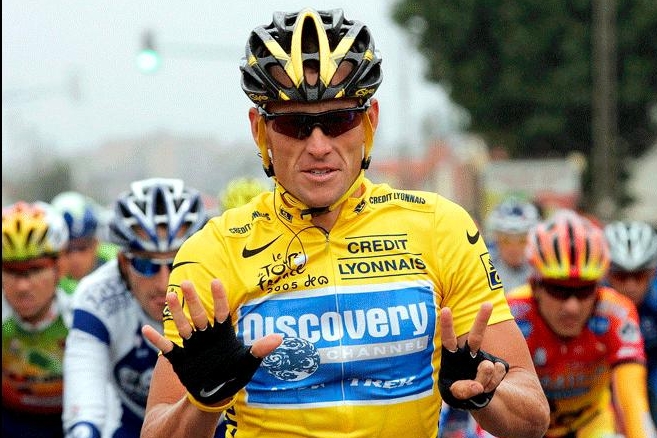
    Lance Armstrong, cancer survivor, seven-time Tour de France winner, captured the hearts of our country with his story failed when it came out that he used steroids to achieve his cycling victory. You want to see how big of a deal he was for America when it came to cycling?

    Brandon:

    10:30-10:33

    How many of you guys even realize that Tour de France is going on right now?

    Brandon:

    10:33-10:37

    Very few of you, because Lance Armstrong isn't a part of it anymore.

    Brandon:

    10:38-10:40

    He failed when it came out that he cheated.

    Brandon:

    10:42-10:51

    And for you, I'm sure you can think of times in your life where you screwed up, you failed, you messed up. I know I can. I can give you a list of things that I've screwed up with.

    Brandon:

    10:52-10:53

    People fail.

    Brandon:

    10:53-10:54

    You fail, I fail.

    Brandon:

    10:55-11:02

    From us to people we hold in high regard in our culture and everyone in between, we all have this one thing in common, that we all fail in some way, shape, or form.

    Brandon:

    11:03-11:04

    And it's not like these people set out to fail.

    Brandon:

    11:04-11:07

    I don't think Tiger Woods woke up one day and said, "Hey, you know what?

    Brandon:

    11:07-11:13

    "Today I'm going to start into sex addiction "and just completely screw up my marriage, my life, my career." No one sets out the plan to fail.

    Brandon:

    11:14-11:15

    It usually happens when it isn't planned.

    Brandon:

    11:16-11:19

    It just happens through different steps and different mistakes and things like that.

    Brandon:

    11:19-11:25

    And today, with you, we're gonna look at the failure of one of the heroes in the Bible.

    Brandon:

    11:26-11:30

    And we're gonna spend most of our time today in the book of 2 Samuel, if you wanna open that up today.

    Brandon:

    11:31-11:34

    And we're gonna talk about this person's failure.

    Brandon:

    11:34-11:41

    You see, to get to this point in the Bible, this is what happens in God's amazing story that he is writing, that he is orchestrating.

    Brandon:

    11:41-12:00

    And what happened up to this point is God created the world and he created mankind, but mankind made a mess of everything by failing and sinning and rebelling God's design for life. And so God promised to fix what was broken by sending a rescuer, a true hero, and that rescuer would be Jesus through his death and his resurrection.

    Brandon:

    12:01-12:49

    And so God set that up. He did that by raising up a family, and that family would one day become a nation, and that's where we're at right now in the middle of 2 Samuel. This nation has risen up that will eventually lead to the coming Messiah, Jesus. And that nation, Israel, just got a new king named David. The former king Saul was a colossal failure and God raised up David to replace him and David was awesome. Like when I think of the Bible there's always Jesus for me and he's way at the top but the next person that I would say that I just love to read about in the Bible is David because he was awesome, he was amazing, he killed Goliath, he was brave, he won many battles, he was called a man after God's own heart and David was a hero in this story. David is that we look up to in the Bible.

    Brandon:

    12:50-12:54

    I mean, guys, guys in this room, David is a guy that we should strive to be like.

    Brandon:

    12:54-12:56

    He was a man's man.

    Brandon:

    12:56-13:01

    He was, he killed giants, he was a great shepherd, and you're probably thinking, a shepherd?

    Brandon:

    13:01-13:02

    Dude, what, that's not manly.

    Brandon:

    13:02-13:04

    Well, here's what happened as a shepherd.

    Brandon:

    13:04-13:09

    They would do whatever it took to protect their sheep, and so David, to protect his sheep, once killed a lion.

    Brandon:

    13:10-13:11

    That's manly, right?

    Brandon:

    13:12-13:18

    And so before you knock on him being a shepherd, think about if you haven't killed a lion yourself to protect your sheep, you're not as manly as David.

    Brandon:

    13:18-13:19

    But David was manly.

    Brandon:

    13:19-13:27

    He killed lions, he won battles, he had a best bro named Jonathan, he was a dude's dude, he was a man's man.

    Brandon:

    13:28-13:32

    And ladies in the room, David's kind of a cool guy you could look up to too.

    Brandon:

    13:32-13:37

    He was a musician, he wrote poetry, I mean eat your heart out.

    Brandon:

    13:37-13:41

    I mean this guy, he was the man, and David was the man that women dream about.

    Brandon:

    13:42-13:46

    My wife used to dream about finding the David of her life and God answered her prayer with me.

    Brandon:

    13:47-13:47

    (audience laughing)

    Brandon:

    13:48-13:49

    You are welcome, Danielle.

    Brandon:

    13:51-13:59

    I mean, all the wives in the room, turn to your husband right now and say, "Honey, you are my King David." Tell him, this is gonna make him feel manly, go ahead.

    Brandon:

    14:00-14:02

    But David, David was just an awesome guy.

    Brandon:

    14:02-14:05

    He loved God, he loved to pray, he loved to worship God.

    Brandon:

    14:06-14:10

    He was a king, he was rich, he had a great family, and David had it all.

    Brandon:

    14:11-14:15

    But as we're gonna see today, David is going to fail, and his failure is going to be bad.

    Brandon:

    14:16-14:21

    And it's a failure that we could stop and look and go, "David, you idiot, what were you thinking?

    Brandon:

    14:21-14:22

    How could you do this?

    Brandon:

    14:22-14:39

    You had it all and you're trying to throw it away with what you're doing." But I think as we go throughout this failure of this hero, this guy we hold in the high regard in the Bible and the history of mankind, we're going to learn some things about ourselves and more importantly, we're going to learn some things about God, who God is.

    Brandon:

    14:40-14:45

    We pick up the story in 2 Samuel 11, And this is at the height of David's reign.

    Brandon:

    14:45-14:47

    He had been king for about 20 years right now.

    Brandon:

    14:47-14:48

    He never lost a battle.

    Brandon:

    14:48-14:49

    There was peace.

    Brandon:

    14:49-14:51

    Things were going very, very good.

    Brandon:

    14:51-14:54

    And we pick it up in 2 Samuel 11, verse 1.

    Brandon:

    14:55-15:02

    It says this, "In the spring, at the time when kings go off to war, David sent Joab out with the king's men and the whole Israelite army.

    Brandon:

    15:02-15:14

    They destroyed the Ammonites and besieged Raba, but David remained in Jerusalem." So obviously, this was before March Madness was a big deal because in the spring, instead of playing basketball and watching basketball, the men went out to war.

    Brandon:

    15:15-15:20

    This is part of what they did to make sure things were staying in a good place, people weren't trying to attack them.

    Brandon:

    15:21-15:25

    And what happened is the king would normally go out with his army.

    Brandon:

    15:25-15:31

    So David was supposed to go with his army to go to battle, but David decides to sit this one out for some reason.

    Brandon:

    15:32-15:33

    And so this is David's first mistake.

    Brandon:

    15:33-15:35

    He wasn't where he should have been.

    Brandon:

    15:35-15:44

    He should have been with his men, but he sent Joab off, his first in command after him, to go with a man, and he stayed home when he should have been at, off to war.

    Brandon:

    15:44-15:49

    Next verse, verse 2 says, "One evening David got up from his bed and walked around on the roof of the palace.

    Brandon:

    15:50-16:04

    From the roof he saw a woman bathing, and the woman was very beautiful." So back then it was customary for the bedroom of a house in that day to be on the second floor of the house, if they had two floors, on the second floor, and that second floor would kind of go out to like a patio type area.

    Brandon:

    16:04-16:08

    So it's like bedroom, you kind of walk out to a patio, there'd be some furniture there you can hang out.

    Brandon:

    16:08-16:14

    And so David gets up from bed, he goes out to the patio, it's evening, and he just goes out to relax on the roof.

    Brandon:

    16:15-16:20

    But what was also customary in that day was on top of that little roof area would be their bathtub.

    Brandon:

    16:20-16:30

    And what they would do is they would fill it with water in the day, and the heat of the day would warm that water up so in the evening they could take a bath, it'd be warm water, it'd feel good, and they'd get cleaned up that way.

    Brandon:

    16:30-16:42

    And so that's happening, but also the thing that's important to notice here that we don't really see in Scripture but that was customary, The king's palace was most likely on a higher piece of ground in that area.

    Brandon:

    16:42-16:46

    So he would go out and he would have a view across his land.

    Brandon:

    16:46-16:49

    And so as he's higher, he could see on people's roofs.

    Brandon:

    16:50-16:52

    They couldn't see him, but he could see them.

    Brandon:

    16:52-16:57

    And he's looking around, he's hanging out, just relaxing, and he sees this woman bathing on her roof.

    Brandon:

    16:58-17:00

    He sees that she's very attractive.

    Brandon:

    17:01-17:04

    And so David looked down, he saw her, saw that she was beautiful.

    Brandon:

    17:04-17:08

    And what David should have done is avert his eyes, go back in and stop staring at this naked woman.

    Brandon:

    17:09-17:11

    But instead, David does this.

    Brandon:

    17:12-17:14

    Verse 3, "And David sent someone to find out about her.

    Brandon:

    17:14-17:26

    The man said back to him, 'She is Bathsheba, the daughter of Eliam and the wife of Uriah the Hittite.'" So the servant comes back to David and tells David, "Her name is Bathsheba." And almost like he gives a warning, he goes, "This is Bathsheba.

    Brandon:

    17:26-17:33

    She's the daughter of Eliam and she's the wife of Uriah the Hittite." You know, the guy who's in your army right now?

    Brandon:

    17:33-17:37

    It's almost like the servant gives David this warning, like, "Hey dude, this is who she is.

    Brandon:

    17:37-17:39

    She's married to somebody else and she's someone else's daughter.

    Brandon:

    17:39-17:45

    You probably shouldn't do that." But the servant can't be that blunt about it because he would probably lose his life if he talked that way to the king.

    Brandon:

    17:46-17:48

    So he just says it kind of that way.

    Brandon:

    17:48-17:51

    "Hey, she's the daughter of somebody else.

    Brandon:

    17:51-17:55

    She's the wife of somebody else." Almost like saying, "Hey, don't do this, David.

    Brandon:

    17:55-18:02

    I know what you're thinking." But David ignores that, gives in to his temptation, and has his messengers go and retrieve Bathsheba.

    Brandon:

    18:02-18:07

    He uses his king powers, which is essentially whatever the king wants, the king gets.

    Brandon:

    18:07-18:10

    And that type of power, he goes, he gets her, and he sleeps with her.

    Brandon:

    18:11-18:18

    And after that, he sends her back home, and David's intent was simply to have a one-night stand with Bathsheba.

    Brandon:

    18:19-18:21

    But Bathsheba sent word back that she was pregnant.

    Brandon:

    18:23-18:25

    Not exactly what David had in mind.

    Brandon:

    18:26-18:27

    David had sinned.

    Brandon:

    18:28-18:29

    The hero has failed.

    Brandon:

    18:29-18:36

    This man after God's own heart gave into his desires, and after that he tries to cover it all up.

    Brandon:

    18:36-18:47

    You see, David sent word to Joab then, and his plan was, you know, where David should have been, he sends word to Joab and says, "Hey, send Uriah, Bathsheba's husband, back here, back home for a little bit.

    Brandon:

    18:47-19:01

    He needs a break." And so his plan was that Uriah would come home from battle, you know, he'd be with his wife, he'd sleep with his wife, then he believed that the kid that she was carrying was his, And so his plan was just to cover it up that way.

    Brandon:

    19:01-19:07

    But the thing is, the thing that David didn't plan on, is that Uriah was actually a pretty upstanding individual.

    Brandon:

    19:07-19:11

    When Uriah came back from battle, his belief was, "You know what?

    Brandon:

    19:11-19:14

    My brothers are back there fighting and risking their lives.

    Brandon:

    19:15-19:17

    I have no right to go home with my wife.

    Brandon:

    19:18-19:20

    So I'm not going to go home and stay and sleep with my wife.

    Brandon:

    19:20-19:25

    I'm going to sleep with my servants, and I'll stay with them." He doesn't go home with his wife.

    Brandon:

    19:26-19:42

    And David's like, "Well, that's kind of not how I plan this." And so David's next plan was the next night, he brings Uriah in and he gets Uriah drunk, thinking that if he gives him enough wine, gets him drunk enough, then he'll stumble home, go to his wife, sleep with his wife, and then again he thinks the child is his, again it's covered up.

    Brandon:

    19:43-19:48

    And so he gets Uriah drunk, but Uriah still had the presence of mind to not go home to his wife.

    Brandon:

    19:49-19:51

    He still didn't go home and sleep with her.

    Brandon:

    19:52-19:57

    And so David's plan to cover up this failure of his is not working.

    Brandon:

    19:58-19:59

    So finally, he takes it a step further.

    Brandon:

    20:00-20:06

    He sends Uriah back to battle with a note, a note that was only for Joab's eyes.

    Brandon:

    20:06-20:16

    And Uriah carries this note, and a note that says to Joab, gives him orders, "Joab, your orders are to put Uriah "at the front of the line where the fighting is fiercest.

    Brandon:

    20:17-20:27

    "And when the time is right, pull the men back "so that Uriah is killed in battle." Uriah carries his death sentence back to Joab.

    Brandon:

    20:28-20:31

    because of what David had done.

    Brandon:

    20:33-20:34

    And that's what happens.

    Brandon:

    20:35-20:38

    Uriah is killed in battle because Jehovah is following his orders.

    Brandon:

    20:38-20:43

    And all this happened because David made a colossal mistake.

    Brandon:

    20:45-20:47

    Look what this hero has done.

    Brandon:

    20:48-20:49

    That's kind of disgusting, right?

    Brandon:

    20:49-20:50

    Because we think of David, we think of awesome.

    Brandon:

    20:51-20:52

    We think of greatness.

    Brandon:

    20:52-20:55

    We think of someone that God has used for amazing things.

    Brandon:

    20:56-21:00

    This is a pretty far fall for a man that God calls a guy after his own heart.

    Brandon:

    21:02-21:03

    The story continues.

    Brandon:

    21:04-21:09

    David thinks he gets away with it, but it continues because God uses someone to call out David.

    Brandon:

    21:09-21:11

    He uses this prophet named Nathan.

    Brandon:

    21:11-21:15

    And Nathan comes to David and he tells David this story.

    Brandon:

    21:15-21:16

    It was King David.

    Brandon:

    21:17-21:18

    There were two men.

    Brandon:

    21:19-21:20

    One man was extremely rich.

    Brandon:

    21:21-21:25

    This guy had cattle, he had sheep, he had wealth, he had it all.

    Brandon:

    21:26-21:28

    He was fine, didn't need anything in life.

    Brandon:

    21:28-21:33

    But there was another man who was very poor, and his family had one little lamb.

    Brandon:

    21:35-21:36

    And this guy took care of this lamb.

    Brandon:

    21:36-21:37

    He fed this lamb.

    Brandon:

    21:38-21:40

    He bathed this lamb.

    Brandon:

    21:40-21:43

    This lamb fell asleep in this man's arms.

    Brandon:

    21:43-21:46

    This was like a family member to this man.

    Brandon:

    21:47-21:55

    And what happened is one day the rich man had some family and friends come into town, and it was customary that he had to provide dinner for them.

    Brandon:

    21:56-22:02

    But the rich man didn't want to use his own sheep and his own cattle to provide dinner for his family.

    Brandon:

    22:02-22:11

    Instead, what he did is he went to the poor man's house, he took the one little lamb that man had, and he killed and provided that lamb for his friend's dinner.

    Brandon:

    22:11-22:16

    And Nathan tells David this story, and David just loses it.

    Brandon:

    22:16-22:17

    He's like, "Are you serious?

    Brandon:

    22:17-22:33

    Please go get that man and have him killed for what he just did?" And Nathan looks at him and says, "David, you're the man." Nathan calls David out with this story to show him, "David, you had it all.

    Brandon:

    22:34-22:37

    And you took this one lamb from this man.

    Brandon:

    22:37-22:38

    That's all he had.

    Brandon:

    22:38-22:46

    You took his wife and you eventually took his life." David's sin was brought into the open thanks to Nathan.

    Brandon:

    22:46-22:50

    And God used Nathan to call out David for his sin, for his failure.

    Brandon:

    22:50-22:57

    after all that cover up, after all that work that David did to make sure he wasn't found out, God still knew and brought that to David's attention.

    Brandon:

    22:57-23:02

    So here is this hero of the Bible, this man after God's own heart in the middle of this epic failure.

    Brandon:

    23:03-23:05

    And the question is, is that it for David?

    Brandon:

    23:06-23:07

    Is it all that God wrote for him?

    Brandon:

    23:07-23:12

    Because God raised him up to this high status, he does this, is God just going to say, "Nope, okay, you're done.

    Brandon:

    23:12-24:06

    You screwed up." Is this someone we should just brush off as just another failure like we all mess up and fail with. Not exactly. You see this failure didn't define David. I think his reaction to this event is what actually better defines him. You see when David finally sees that his sin can't be hidden and that God has seen and knows everything, he finally humbles himself to God and says in 2 Samuel 12 13, "Then David said to Nathan, 'I have sinned against the Lord.'" And David finally realized and accepted the fact that he failed, that he sinned, he had broken his relationship with God no matter how much cover-up he tried to do. And so David did what he needed to do. He chose to do something that God desires. We all fail, we all sin, we all mess up. David practiced repentance. Now repentance is this very churchy word that we use that literally just means to change your mind.

    Brandon:

    24:06-24:26

    You're going one way and you turn back to go the other. You sin, you go away from God, you repent and you go back to God. And David didn't try to act better and a better person. He knew he was broken and only God can help, so he turned away from his selfish desires and turned towards God. And we see David's repentance and worship to God through his writings.

    Brandon:

    24:26-24:42

    Remember when I said that David was a poet, he was a musician? David wrote actually a lot of the Psalms that we find in the Bible. And what's amazing is we actually have David's Psalm that that he wrote out of repentance for this situation in his life in Psalm 51.

    Brandon:

    24:45-24:51

    So David's words were words of recognition and admittance that sin and failure was in his life.

    Brandon:

    24:52-24:57

    They were words of acknowledgment that only God could forgive and only God could give grace and wipe it away.

    Brandon:

    24:57-25:00

    And that grace and forgiveness from God leads David to do one thing.

    Brandon:

    25:01-25:02

    To worship Him.

    Brandon:

    25:04-25:09

    and give praise and give glory to God because it was God who could wipe his slate clean.

    Brandon:

    25:09-25:16

    And it's this attitude that David has, this attitude of humility and repentance to God that sets him apart I think from other people.

    Brandon:

    25:17-25:18

    This is what defines him.

    Brandon:

    25:18-25:22

    His desire for God, even in the midst of his biggest failure, was for God.

    Brandon:

    25:23-25:29

    And God in His grace and forgiveness, He forgives this man who just committed adultery and murder.

    Brandon:

    25:29-26:33

    We see the character of who God is midst of David's character of failure who sought forgiveness from God. Now things weren't perfect from here on out for David. Yeah, his sin was found out, he repented, he worshipped, he wrote that amazing psalm, but there were consequences for David's sin. Just like his parents, there's consequences for our own kids' disobedience. Even though we still love them, there were consequences for David. For one, that child that Bathsheba had through that one-night Stan died at a very young age. On top of that, David's other son Absalom tried to take him out as king so he could rule himself. His own son rebelled against them. And David had this big dream that one day he would build a temple for God where God would dwell, where people would worship God, and God said, "No, I'm not allowing you to do that." So a death, a broken family, and not accomplishing a big dream of his was part of David's consequence out of this which still shows the magnitude of what our sin can do to our lives.

    Brandon:

    26:33-26:34

    But God still forgave David.

    Brandon:

    26:36-26:40

    Now look at this story, and I'm just amazed by how crazy it is.

    Brandon:

    26:41-26:46

    A story of a person in the Bible that is held in high regard, that failed, that screwed up.

    Brandon:

    26:46-26:50

    But here's what I've learned in my life, and here's what I want to remind you of.

    Brandon:

    26:51-26:53

    The first is this, that we are just like David.

    Brandon:

    26:55-27:02

    The first thing I want you to remember in this story is that when we think of David in the Bible, we need to remember that our lives are more similar than his, than we may think.

    Brandon:

    27:03-27:06

    And this is what I mean when I say that we can all relate today.

    Brandon:

    27:06-27:10

    If you are a Christian in this room, you are susceptible to failing just like David did.

    Brandon:

    27:10-27:14

    David had an extremely close relationship with God.

    Brandon:

    27:14-27:17

    He was a man after God's own heart, and he still failed.

    Brandon:

    27:18-27:20

    And if David can fall, so as we as Christ followers.

    Brandon:

    27:22-27:30

    We could worship, we could read scripture, we could pray, but we are still susceptible to giving into our own selfish desires, and we can fail and sin just like David, like a lot of us do.

    Brandon:

    27:30-27:36

    And if you're in this room and you would not label yourself as a Christ follower, first of all, I'm so glad that you're here today.

    Brandon:

    27:36-27:40

    This is an amazing church to be a part of, to understand and know who Jesus is.

    Brandon:

    27:41-27:53

    But I just want to let you know that your struggle with figuring out what's right and wrong, what life is all about, it's a struggle that all of us go through, whether we follow Jesus or not, because we are all just like David. We are all human. We are all susceptible to failing.

    Brandon:

    27:53-28:00

    Sure, you may not be this good-looking, line-killing, poetry-writing king, but you're a human who has sinned like David.

    Brandon:

    28:00-28:08

    Paul writes in Romans 3:23, "For all of us have sinned and fall short of the glory of God." And this levels the playing field for all people for all time.

    Brandon:

    28:08-28:16

    So often we compare ourselves with other people based off looks or achievement or relationships that we forget that God doesn't care about that stuff.

    Brandon:

    28:17-28:18

    We forget about that.

    Brandon:

    28:18-28:22

    When God chose David to be the next king, he didn't look at his stature.

    Brandon:

    28:22-28:25

    He didn't look at his achievements, he looked at his heart.

    Brandon:

    28:26-28:28

    And that's the same thing God looks at for all of us.

    Brandon:

    28:28-28:35

    He's looking at our heart because out of our heart will come our words, out of the heart will come our actions, out of our heart comes our worship.

    Brandon:

    28:37-28:39

    But our hearts can be rebellious.

    Brandon:

    28:39-28:41

    We want our own selfish desires that leads to sin.

    Brandon:

    28:42-28:48

    And it's in that way that we are just like David, just like Joe Paterno, just like Lance Armstrong and every other human being has ever walked this planet.

    Brandon:

    28:49-28:51

    We all have a sin problem.

    Brandon:

    28:51-28:56

    And just like David, we probably have people warning us on the path that we're walking.

    Brandon:

    28:56-29:02

    Your David's servant told him that Bathsheba was somebody else's daughter and wife, but David ignored that.

    Brandon:

    29:02-29:05

    And we have people in our lives that warn us with the things that we're doing.

    Brandon:

    29:06-29:11

    We probably have people in our lives that warn us about our anger issues, our addictions, or the way we use our finances.

    Brandon:

    29:11-29:15

    And as an FPU graduate, my wife and I seriously go to that class, it's amazing.

    Brandon:

    29:16-29:19

    We have people who warn us about the path we're heading down.

    Brandon:

    29:19-29:22

    And just like David, we have a tendency to ignore those warnings.

    Brandon:

    29:23-29:23

    Why?

    Brandon:

    29:23-29:28

    Because we have a sin problem and we want what we want, just like David wanted what he wanted.

    Brandon:

    29:28-29:30

    And just like David, we try to cover it up.

    Brandon:

    29:30-29:37

    In the midst of our struggles and failures, we work hard to make sure nobody else sees all the brokenness that's going on inside.

    Brandon:

    29:37-29:43

    When we're struggling with something, we don't want anybody to tell us about it, and we'll do whatever it takes to cover it up.

    Brandon:

    29:44-29:51

    How many times has sin or failure been revealed in our lives or somebody else's lives, and Behind it is a trail of cover up.

    Brandon:

    29:53-29:54

    We don't want anyone else to know.

    Brandon:

    29:55-29:59

    And just like David, we need people in our lives to point out our sin.

    Brandon:

    29:59-30:04

    Nathan did the difficult thing by going to the king and telling the king that he had sinned.

    Brandon:

    30:05-30:07

    But that got David going in the right direction.

    Brandon:

    30:07-30:10

    And as difficult as it was, it turned out for the good.

    Brandon:

    30:11-30:46

    David was even so thankful that later on in life, another son and he named him Nathan. And just like David our sin has consequences. Our sin hurts our relationship with God, our relationship with others, and sin hurts ourselves. And we may not see the consequence at the current moment that we're in this sin, but be assured that consequence is coming in some way shape or form. Just like David we need to realize our own sin. After David had Nathan call out the sin in his life, he had to make the effort to realize and admit it.

    Brandon:

    30:48-30:49

    And that same thing needs to happen for us.

    Brandon:

    30:49-30:56

    The moment we admit to ourselves that we have sin in our lives, that will lead us to the most important part of us understanding that we are like David.

    Brandon:

    30:57-31:00

    And that's this, that our sin doesn't define us.

    Brandon:

    31:01-31:02

    Our reaction to it does.

    Brandon:

    31:04-31:06

    Our sin does not define us.

    Brandon:

    31:07-31:08

    Our reaction to it does.

    Brandon:

    31:08-31:12

    Because just like David, when we realize that there's sin in our lives, we need to do something about it.

    Brandon:

    31:12-31:28

    And what separates David from others his reaction to his sin, he repented and turned to worship God. He knew he could do nothing for his sin, only God could heal, and we need to realize that same thing every single day of our lives. And that's why David's sin didn't define him.

    Brandon:

    31:28-32:10

    That's when we think of David, and we hear about David, and how he's regarded in the history of the rest of Scripture, it's not defined by that colossal failure. It's defined by his heart for God, and this is why your sin doesn't need to define you. So often we're so caught up in the moments of sin that we believe that this is who we are. We believe that we have messed up, we've cheated, we weren't honest, we've covered it up, we've become addicted, and we let these moments define us, but they don't have to. If we understand like David did to repent and turn back to God, then we will find forgiveness and grace, and we will find a God that loves us, who cares for us, the God who wants to give us life that's not defined by our sin, but defined by His grace and mercy.

    Brandon:

    32:12-32:16

    Because in our culture, as humans, we long for redemption.

    Brandon:

    32:17-32:19

    We long for stories of comeback.

    Brandon:

    32:20-32:25

    We long for people who have failed to have a second chance and do better with that chance.

    Brandon:

    32:27-32:29

    We've become a pretty forgiving society, actually.

    Brandon:

    32:30-32:39

    And so we love to see these stories of redemption, because deep inside, seeing Tiger Woods come back and winning another major, it'd be kind of cool to see because he gets his life back together.

    Brandon:

    32:41-32:49

    We want to see people succeed after their mistakes and see redemption happen and see a broken marriage heal again.

    Brandon:

    32:49-32:58

    We want to hear stories of a wife that's about to leave her husband and saved up all this money, but instead her husband and her reconcile and they use that money to pay off debt.

    Brandon:

    32:58-33:06

    We want those stories because those stories speak to us as humans, because that's how God has wired us, because that's who God is.

    Brandon:

    33:07-33:09

    God is a God of a rescue and redemption.

    Brandon:

    33:10-33:13

    He's the God who takes our failure and makes us clean again.

    Brandon:

    33:13-33:18

    He is a God that takes our brokenness, puts us back together, and does amazing things through us.

    Brandon:

    33:20-33:23

    And so we long to see the same thing happen in ourselves and each other.

    Brandon:

    33:24-33:30

    We want to see this because this is the story that God has been writing for thousands and thousands of years.

    Brandon:

    33:32-33:35

    Chapters of redemption to overcome our failure.

    Brandon:

    33:36-33:41

    We wanna see redemption because it's the one thing that we need and it can only be found in Jesus.

    Brandon:

    33:43-33:48

    The reason that story of David's failure is so great is because it's a reflection of God's big story.

    Brandon:

    33:49-33:55

    See, after David repented and God forgave him, God continued his mission to rescue and restore us all.

    Brandon:

    33:56-33:58

    You see, David and Bathsheba actually had more children together.

    Brandon:

    33:59-34:04

    And those children had children, and those children had children, and one of those children was this guy named Solomon.

    Brandon:

    34:05-34:10

    And Solomon took over for his dad David as king after David passed away.

    Brandon:

    34:11-34:18

    And Solomon had children, that lineage continued, and wouldn't you know it, out of that lineage came this guy named Jesus.

    Brandon:

    34:20-34:27

    that Jesus was the ultimate rescuer and restore for the history of mankind.

    Brandon:

    34:29-34:30

    Think about that for a second.

    Brandon:

    34:31-34:49

    God sent his Messiah, his rescuer, through the lineage of adultery, through the history of murder, through lies and corruption by David, he used that relationship and brought about Jesus.

    Brandon:

    34:51-34:52

    That's the God we worship.

    Brandon:

    34:54-34:55

    That's the God we follow.

    Brandon:

    34:57-34:59

    Because He's a God of redemption and rescue.

    Brandon:

    34:59-35:03

    And so maybe it's time for God to do some redemptive work in you.

    Brandon:

    35:04-35:08

    Because if God can forgive David and use him, God can forgive and use you.

    Brandon:

    35:08-35:10

    And so often we're haunted by our past struggles.

    Brandon:

    35:11-35:18

    We're so locked up by the things we're struggling with today that we let them define us instead of letting God define us through Jesus.

    Brandon:

    35:19-35:22

    As Christians, repentance needs to be a continual thing that we do.

    Brandon:

    35:23-35:29

    We're going to sin, we're going to fail, it's going to happen, but God desires us to turn from that anytime it happens and come back to Him.

    Brandon:

    35:30-35:32

    And when we do, there is forgiveness for us.

    Brandon:

    35:32-35:34

    There is redemption waiting for us.

    Brandon:

    35:36-35:40

    And if you're not a Christian, maybe it's time to admit that you need God.

    Brandon:

    35:41-35:46

    That your past failures have broken that relationship between you and God, it's broken that relationship with others.

    Brandon:

    35:46-35:48

    But those failures don't have to define you.

    Brandon:

    35:50-35:56

    When you follow David's example of repentance and forgiveness that comes with it, new life is waiting for you on the other side.

    Brandon:

    35:57-36:04

    A life of being a part of something so much bigger than yourself and so much greater than yourself because of what Jesus has done for us.

    Brandon:

    36:05-36:08

    That's why we're starting this new church in Chartiers Valley, actually.

    Brandon:

    36:10-36:18

    It'd be very easy for Danielle and I to just live in the chapter of failure, live in the chapter of brokenness that's in our life.

    Brandon:

    36:19-36:21

    We're not defined by those moments in our lives.

    Brandon:

    36:22-36:23

    We're defined by Jesus.

    Brandon:

    36:25-36:30

    And we want others to experience that same healing, that same rescue, that same redemption that Jesus brings.

    Brandon:

    36:31-36:34

    And so we're starting this new church in this area of Pittsburgh.

    Brandon:

    36:36-36:38

    'Cause I don't know if you guys know this, Pittsburgh's one of the least church cities in the country.

    Brandon:

    36:40-36:42

    It's one of the least Biblically-minded cities in the country.

    Brandon:

    36:42-36:49

    It's one of the fastest growing post-Christian cultures people are moving further and further away from God.

    Brandon:

    36:50-36:54

    And so we're coming to show them that there is a chapter that God is waiting to write in their lives.

    Brandon:

    36:56-36:56

    It's called forgiveness.

    Brandon:

    36:58-36:58

    It's called redemption.

    Brandon:

    36:59-37:00

    It's called rescue.

    Brandon:

    37:02-37:09

    There are people in Pittsburgh and here in Wexford and Chartier's Valley and all across the city, they're living in the chapter of failure for far too long.

    Brandon:

    37:11-37:15

    And so we're here to set a church to help them realize there's something more waiting for them through Jesus.

    Brandon:

    37:17-37:19

    You see, Harvest, David's story is our story.

    Brandon:

    37:19-37:24

    It's God's big story to restore this relationship with him despite our mistakes, despite our failures.

    Brandon:

    37:25-37:34

    And when we understand the great lengths he went to to do that for us, it will lead us to a life of worship, a life that's about following and living for Christ.

    Brandon:

    37:35-37:44

    And when we understand and live this out, amazing things are going to happen in our lives, in our families, in our communities, in our churches, in Pittsburgh and all across the world.

    Brandon:

    37:46-37:55

    Amazing things take place when we live out this truth together, that we are not defined by our sin, we are defined by our reaction to it.

    Brandon:

    37:55-37:58

    And my reaction to my sin is Jesus.

    Brandon:

    37:59-38:00

    I hope yours is too.

    Brandon:

    38:01-38:04

    We all sin, let's not be defined by it.

    Brandon:

    38:05-38:08

    Let's live lives of rescue and redemption because of what God has done.

    Brandon:

    38:09-38:09

    Let's pray.

    Brandon:

    38:11-38:15

    God, thank You so much for this morning to come and be a part of this amazing church.

    Brandon:

    38:15-38:31

    God, I pray for the people of Harvest, Pittsburgh North, that they continue to realize that they don't have to be defined by their failures and their struggles, they can be defined by You, what You are doing in their lives through Jesus and through Your Holy Spirit.

    Brandon:

    38:33-38:39

    God, I pray that You write new chapters in all of us here of rescue and forgiveness and redemption.

    Brandon:

    38:39-38:46

    And God, You write chapters of purpose living out our mission to love people like you've called us to love, and for people to know who you are.

    Brandon:

    38:48-38:55

    And I pray that Wexford continues to change because of the chapters you are writing in the people's lives at Harvard's Bible Chapel, Pittsburgh North, God.

    Brandon:

    38:55-38:59

    And I pray you do the same thing for one church as we're kicking that off in Charters Valley.

    Brandon:

    38:59-39:02

    God, we thank you for David, who is just like us.

    Brandon:

    39:03-39:04

    Remind us of that daily, God.

    Brandon:

    39:05-39:09

    Remind us that in the midst of our failures, we can turn back to you.

    Brandon:

    39:10-39:12

    And we thank you for Jesus who came from that lineage.

    Brandon:

    39:14-39:15

    Let's pray, amen.

Small Group Questions (Whole Group):
Read 2 Samuel 11:1-3 and 2 Samuel 12:1-13

  1. Ice Breaker: What was something you always got in trouble for when you were a kid?

  2. What stood out from the message and why?

  3. For some people we remember their failures first, for others we remember their achievements while often times overlooking their failures. From your perspective, why do we do that?

  4. David is one person we tend to view in a positive light despite doing some really bad things. In 2 Samuel 11 what were key elements that caused David to fail so bad?

  5. In 2 Samuel 12:1-13, what were the causes of David moving towards redemption?

  6. We're not so different from David. What causes David to see redemption is his reaction to his failure. Brandon said, "Our failure doesn't define us, our reaction to it does."
    What did he mean by that in reference to David’s situation? How does that relate to your life?

  7. David's repentance led him to worship God by writing Psalm 51. What does (or should) your repentance lead you to do?

  8. We serve and believe in a God that loves redemption. How do you see God using you to bring redemption to you and those around you?

Breakout Questions:
Pray for one another.

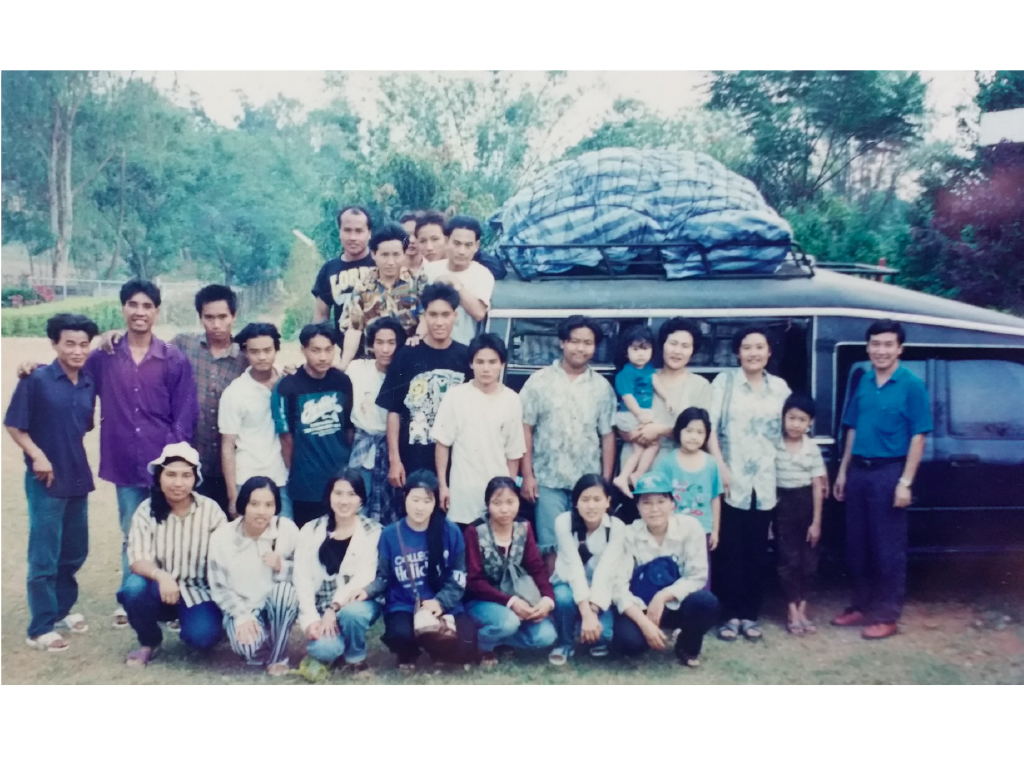
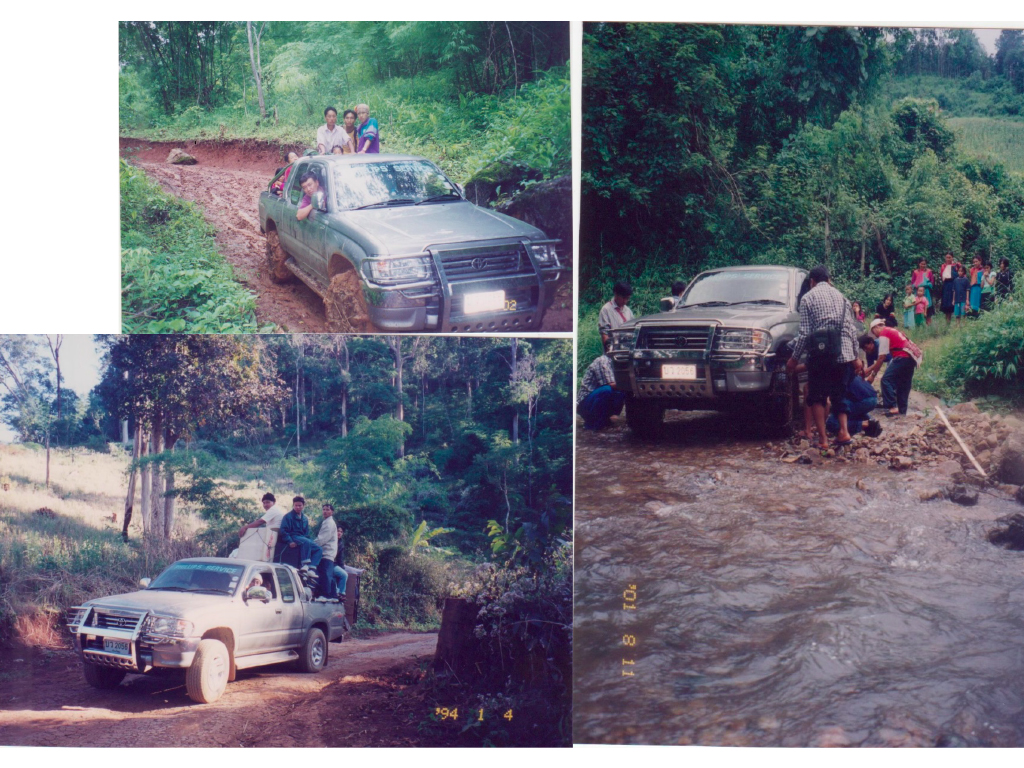
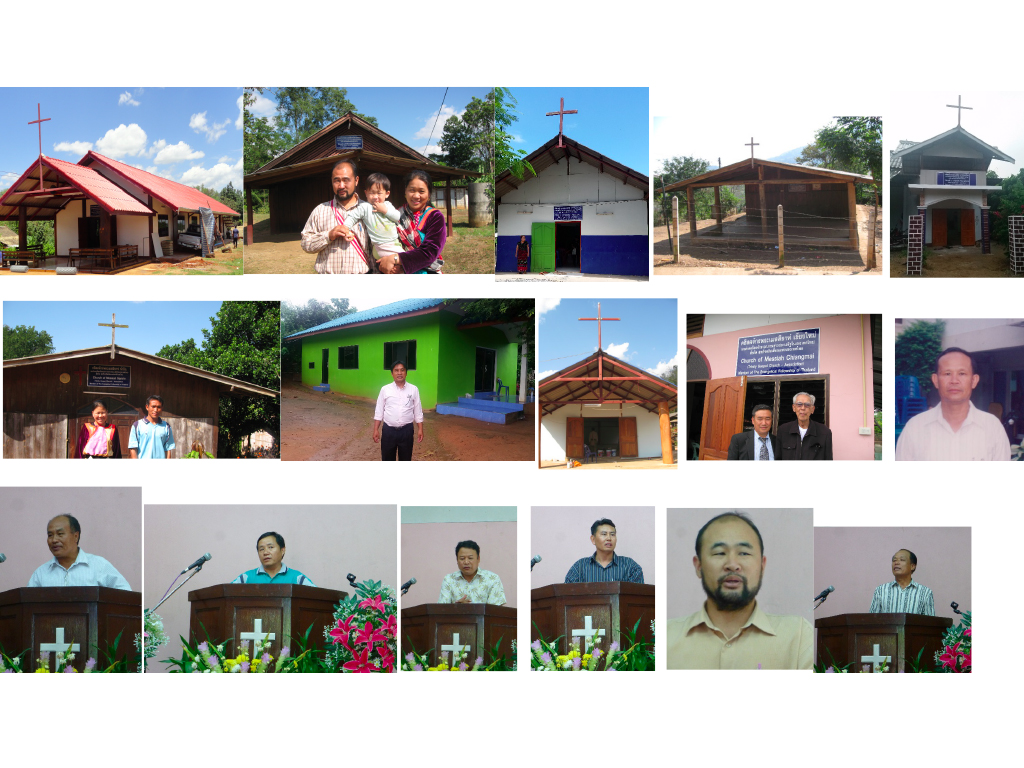
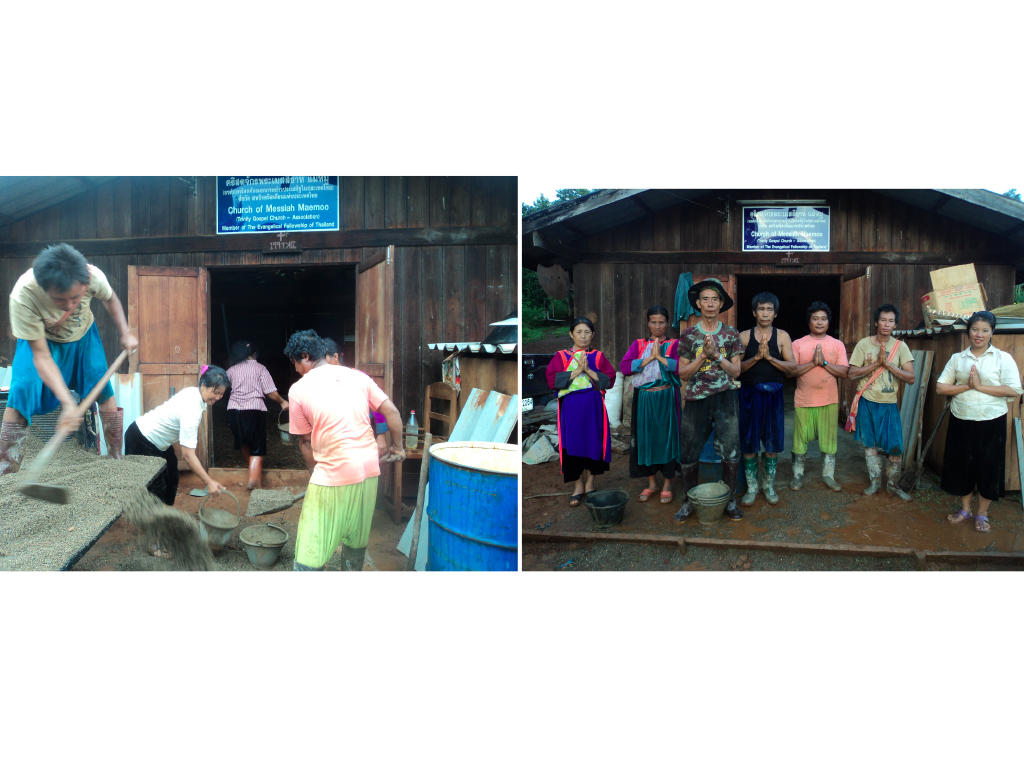
Modern Day Miracles

Review: Mark 3:13-15

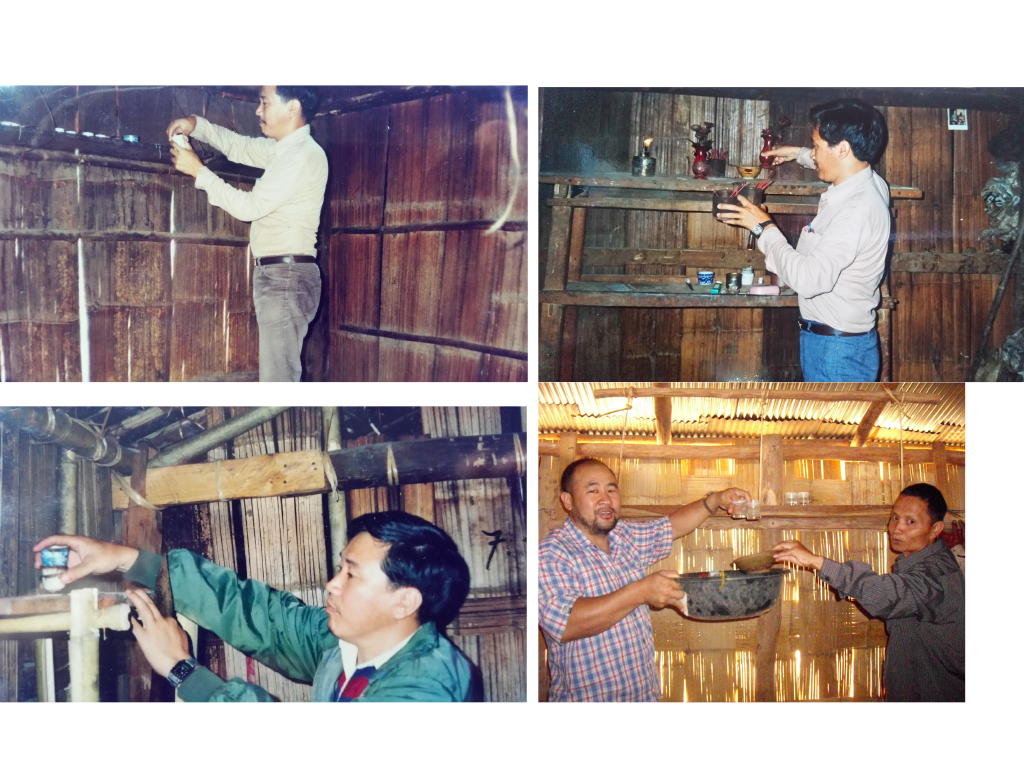
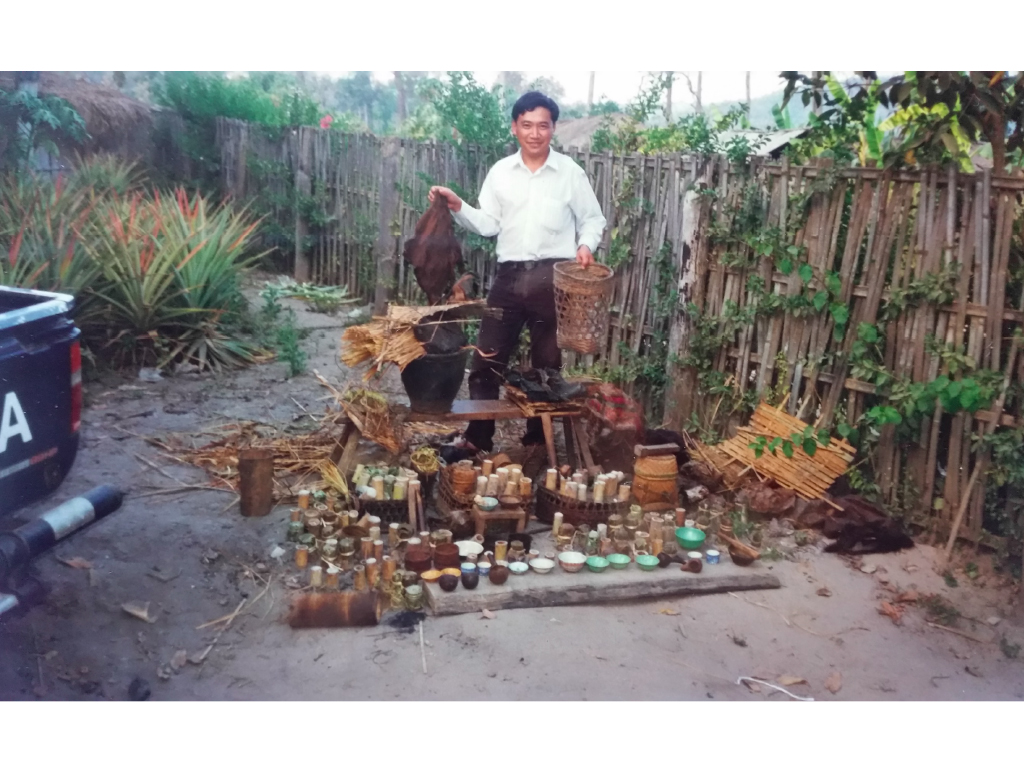
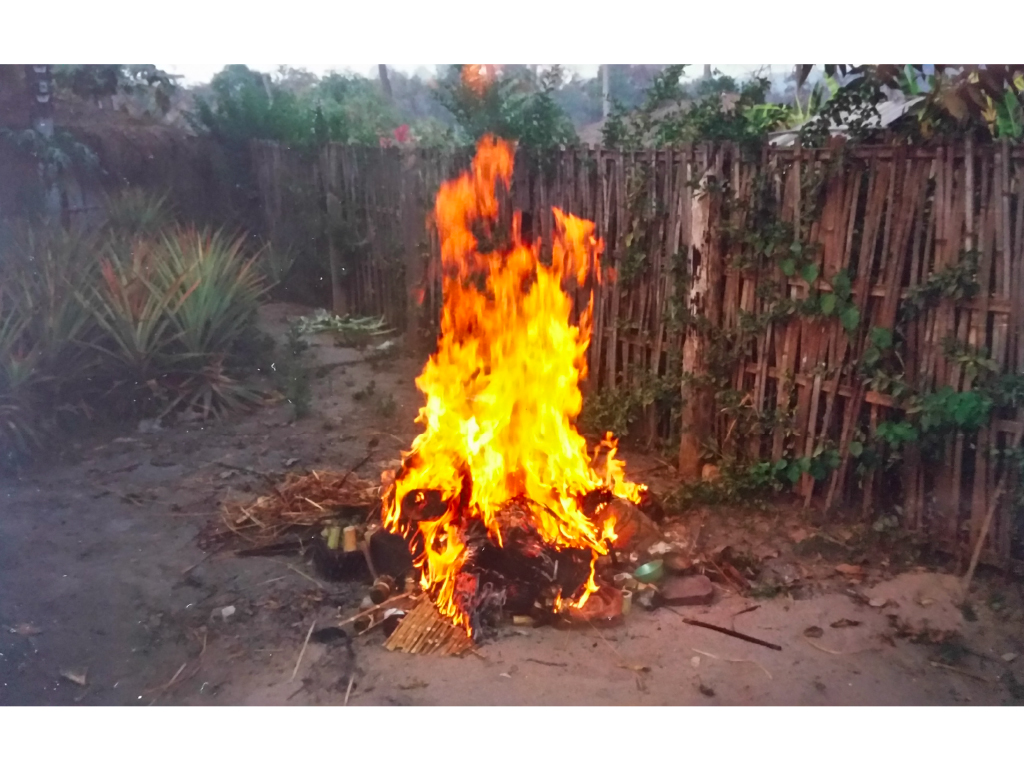
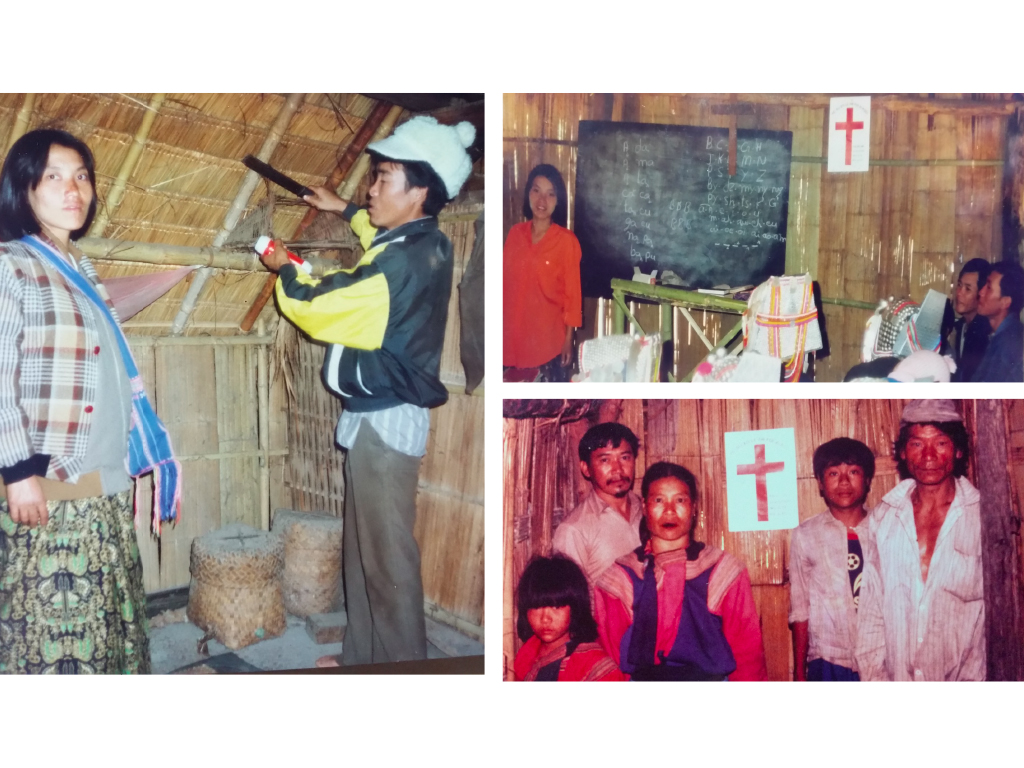
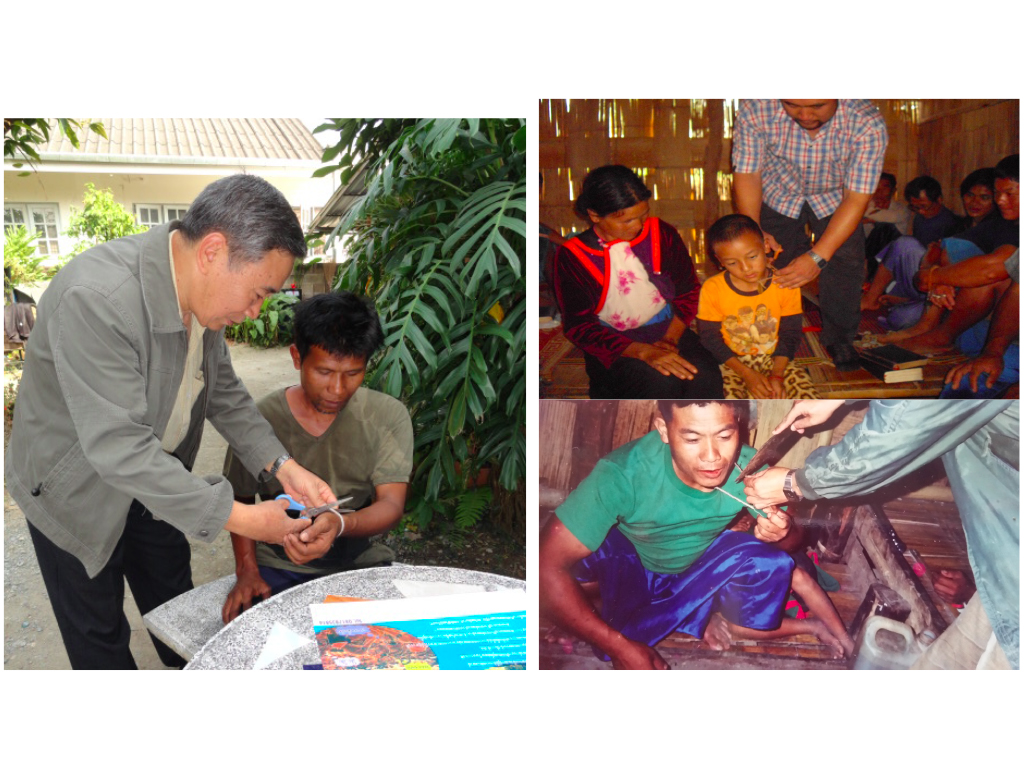
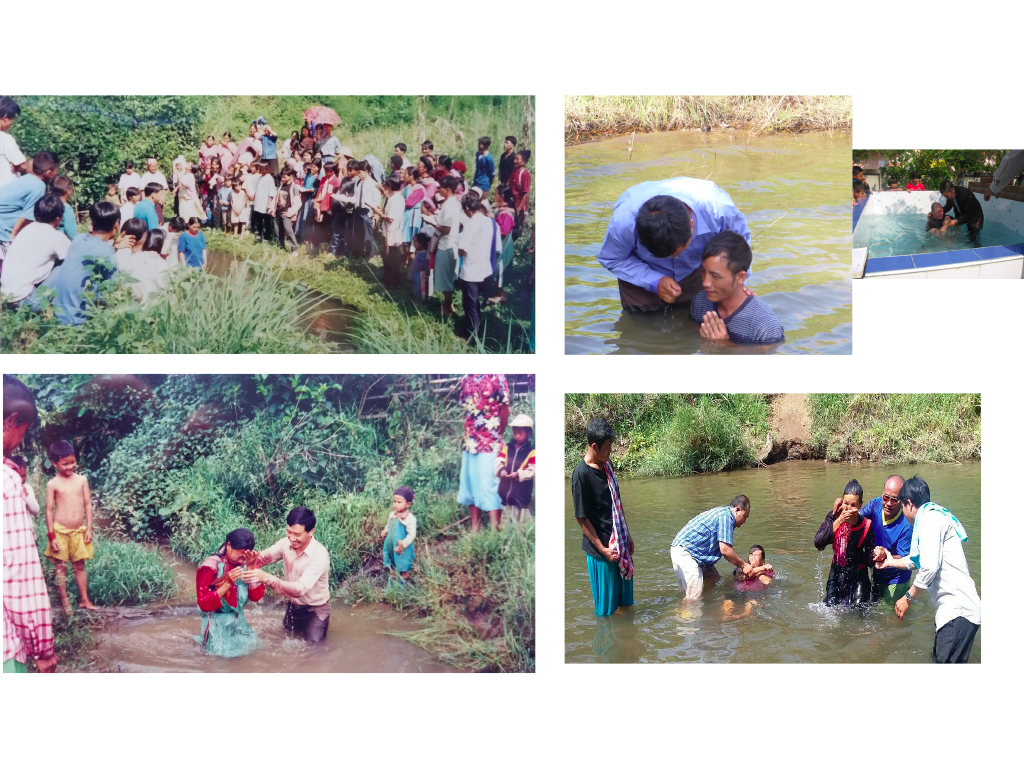
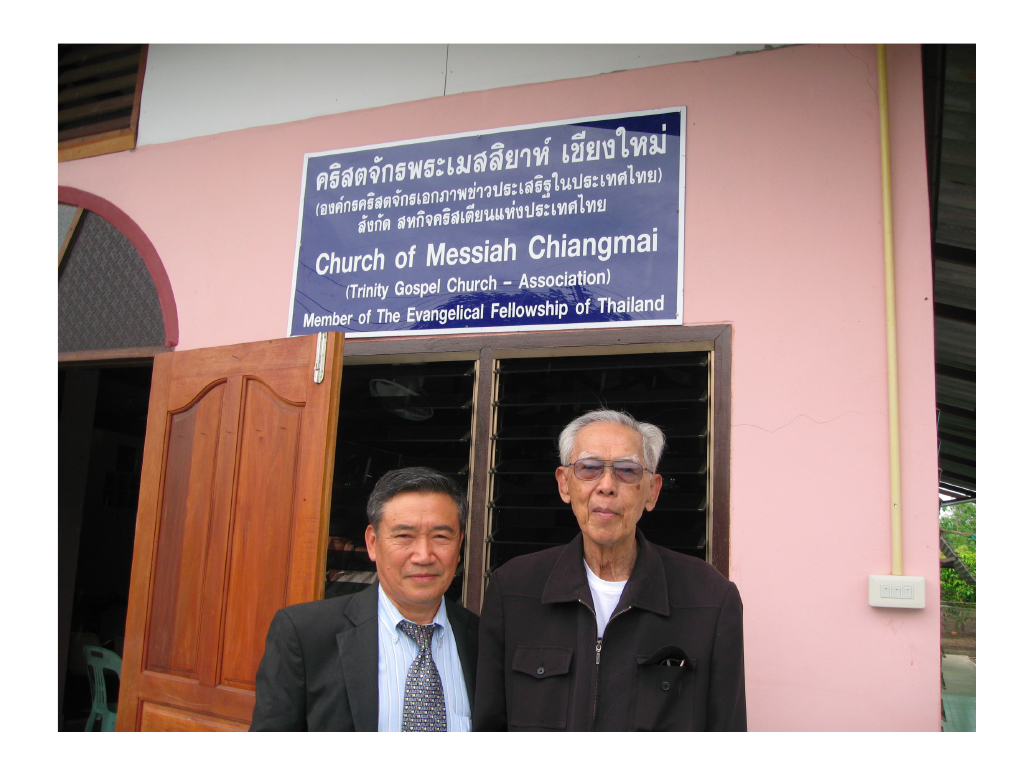
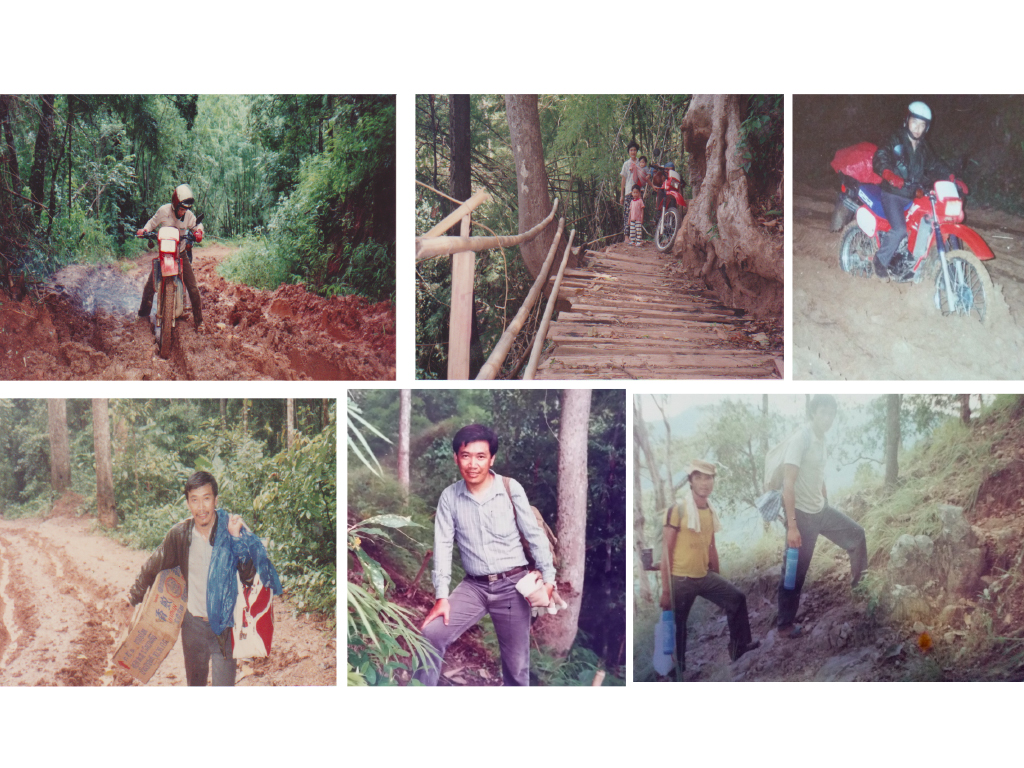
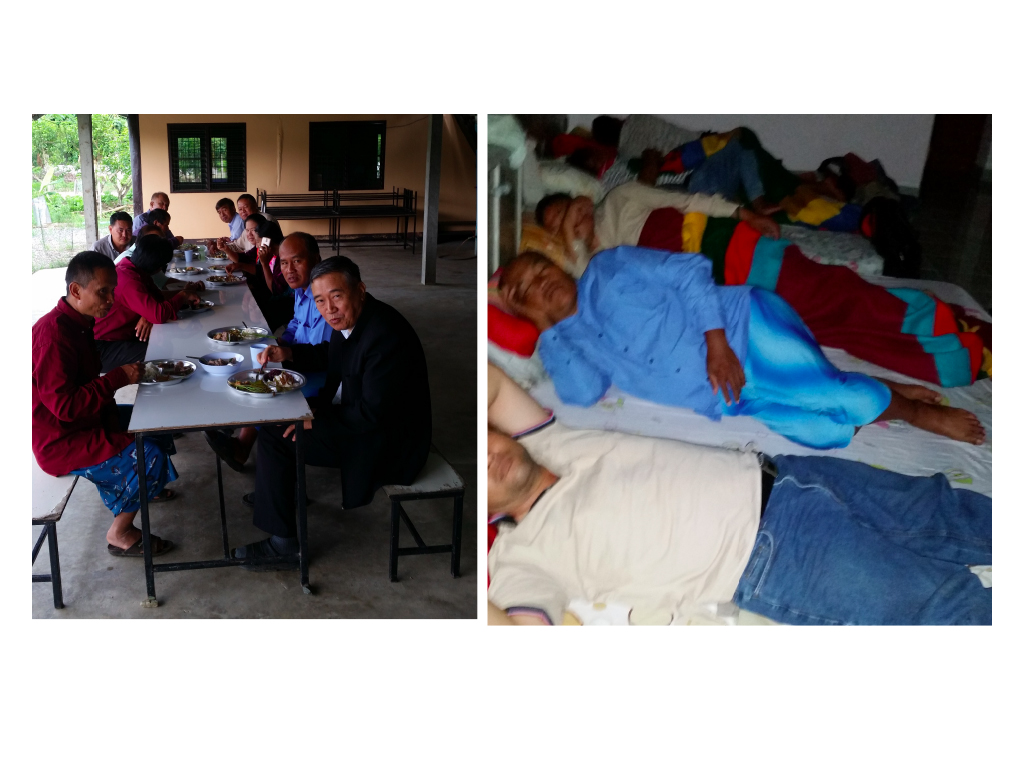
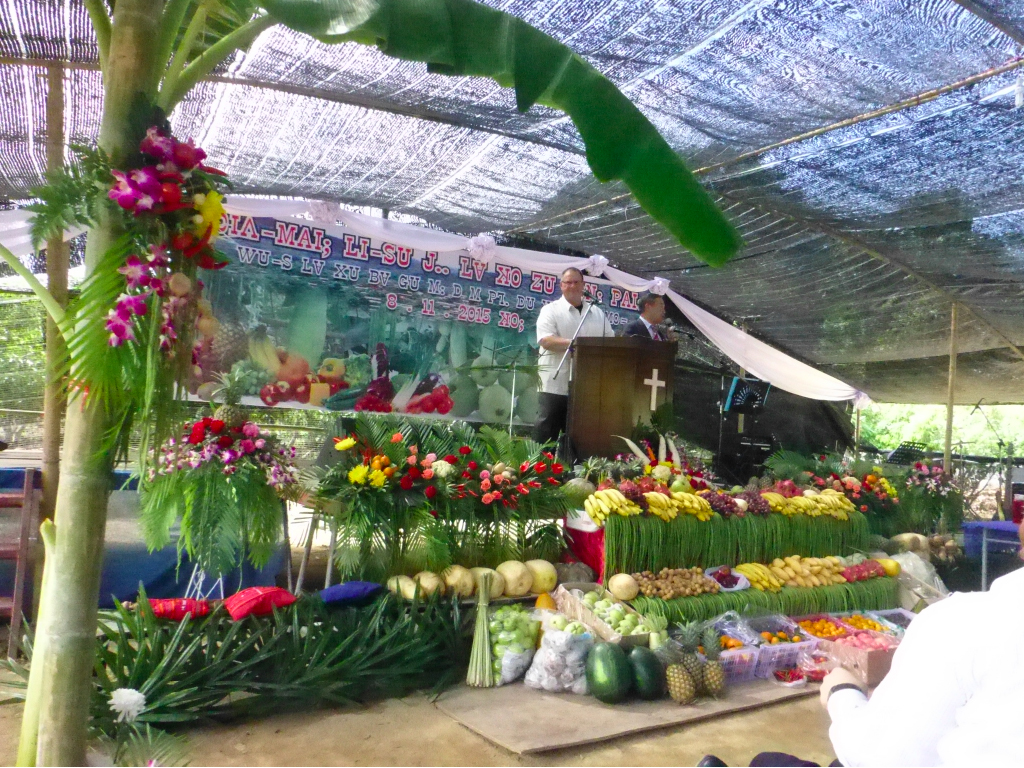
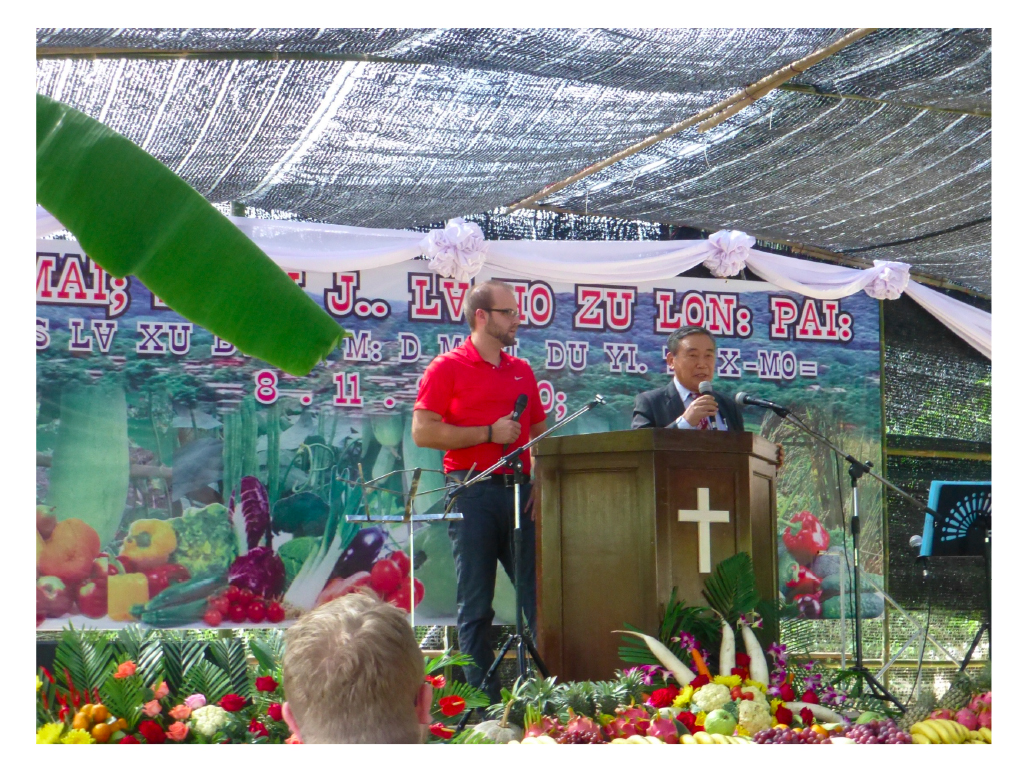
Follow along with Barnabas as he shares with us photos and stories of God's amazing work on the other side of the world!

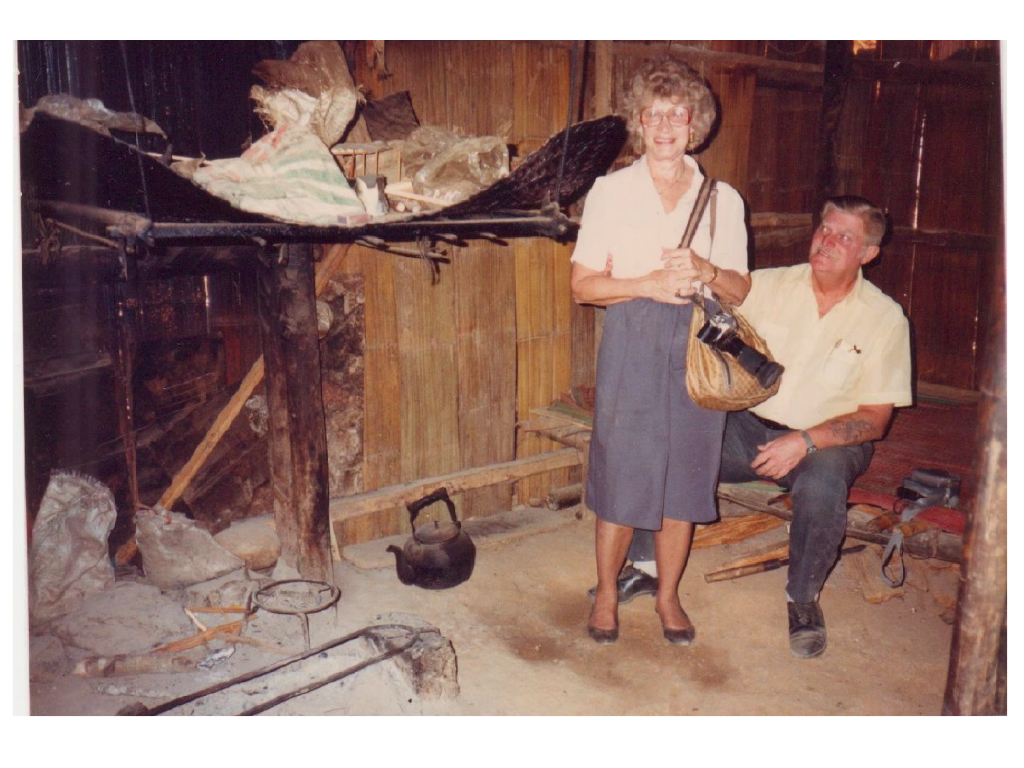
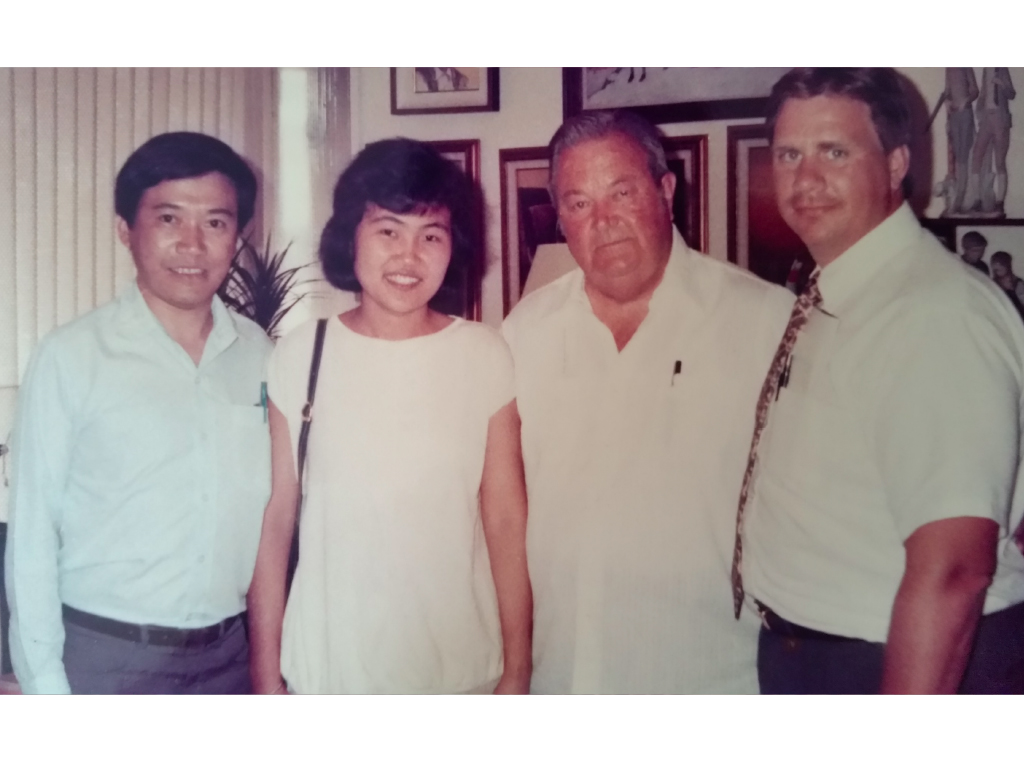
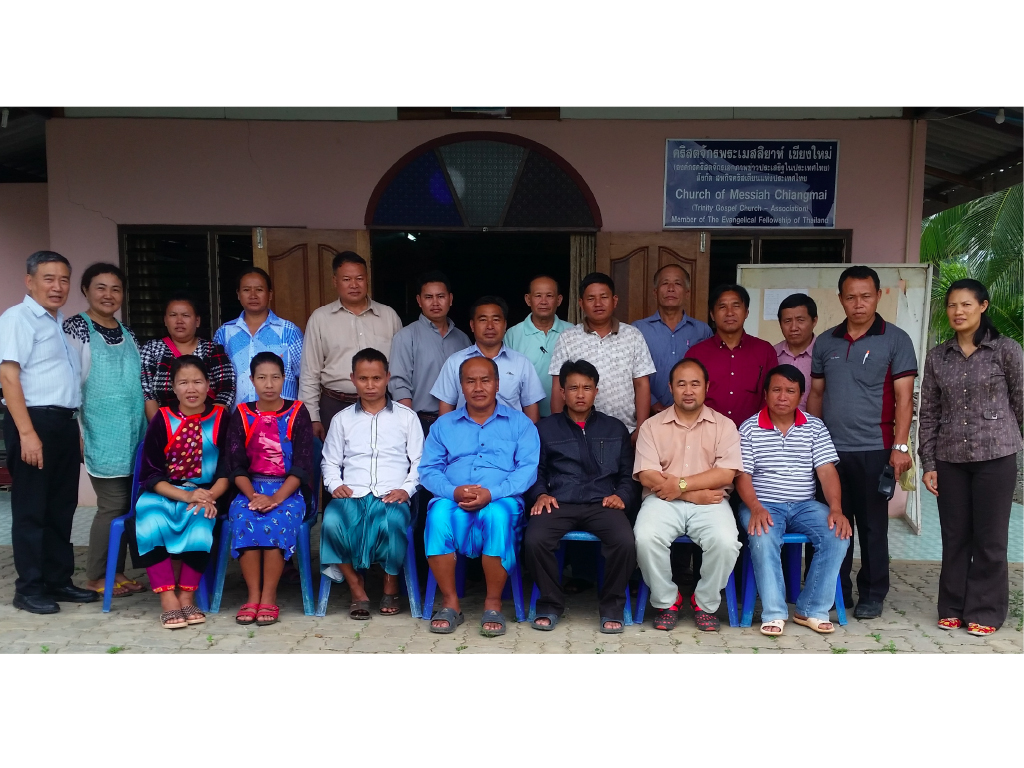
The sometimes incomprehensible stories of the disciples in Acts has played out in Barnabas and Martha's life over the past thirty years by simply following God's guidance and not holding back when speaking God's gospel and truth to those in need of hearing it in Thailand and beyond.

  • Pastor Jeff:

    00:00-00:12

    You guys know this because I've been saying this like for quite a while, but I can't even describe how excited I am for our special guest speakers today.

    Pastor Jeff:

    00:12-00:15

    Barnabas and Martha, would you please come up and join me?

    Pastor Jeff:

    00:16-00:17

    Up so everybody can see you.

    Pastor Jeff:

    00:22-00:24

    Thank you very much.

    Pastor Jeff:

    00:24-00:29

    Now, some of you are like, I come to Harvest Bible Chapel all the way from Gibsonia.

    Pastor Jeff:

    00:30-00:35

    And some of you say, I came to Harvest Bible Chapel all the way from Allison Park.

    Pastor Jeff:

    00:35-00:38

    These two came all the way from Thailand.

    00:41-00:41

    (congregation applauding)

    Pastor Jeff:

    00:43-00:48

    And if you're wondering where Thailand is, it's literally on the other side of the planet, literally.

    Pastor Jeff:

    00:49-00:51

    Do you know what time it is in Thailand?

    Pastor Jeff:

    00:51-00:56

    You just change AM to PM with whatever time it is here, and that's what time it is there.

    Pastor Jeff:

    00:56-01:00

    So right now it is 10.38 p.m. in Thailand.

    Pastor Jeff:

    01:00-01:10

    And I am so thrilled to have these two come and share what the Lord is doing in their lives and ministries and bring a word from the Lord today.

    Pastor Jeff:

    01:10-01:17

    But Barnabas graduated from Chiang Mai Bible Institute and from Cincinnati Christian Seminary.

    Pastor Jeff:

    01:18-01:20

    And he speaks seven languages.

    Pastor Jeff:

    01:22-01:23

    Now make sure I got these all right.

    Pastor Jeff:

    01:23-01:33

    Thai, Chinese, Burmese, Lisu, Lahu, Aka, and English.

    Pastor Jeff:

    01:34-01:35

    Yeah, that's the one.

    Pastor Jeff:

    01:36-01:37

    Fortunately for us, he speaks English.

    Pastor Jeff:

    01:39-01:49

    And since the early '80s, Barnabas has spread the gospel in the hill tribe villages in the Northern Mountain Jungle region in Thailand, around Chiang Mai, if you're trying to look it up on a map.

    Pastor Jeff:

    01:50-01:58

    The dominant religion in Thailand is Buddhism, But when you get to these tribal areas, it's mostly animism that you will find.

    Pastor Jeff:

    01:58-02:00

    And what does Barnabas do?

    Pastor Jeff:

    02:01-02:12

    Well, Barnabas and Martha recruit and train evangelists as they go through sharing the gospel, leading people to Christ, and training evangelists and church leaders.

    Pastor Jeff:

    02:13-02:18

    He's also founded three children's homes in Thailand and in Myanmar.

    Pastor Jeff:

    02:19-02:23

    How did I get connected with these wonderful servants of the Lord?

    Pastor Jeff:

    02:24-02:32

    Well, most of you know I became a Christian in 1995, and shortly after I came to Christ I was called into ministry.

    Pastor Jeff:

    02:33-03:26

    I remember I was having lunch with Pastor Bob, Bob Huber, who had spoken at our church, and I was telling him, "Hey, I came to Christ, and I just feel like I'm called to ministry, and I want to talk to you about it because I have no idea what I'm doing, and I still don't. And you're like, "Amen?" And Pastor Bob said, "Well, we have a group of people that are going to Thailand in a couple of months. Would you like to join us?" And I was like, "Okay." I didn't have a nickel to my name. I didn't know where Thailand even was on a map. I was just a new Christian. I'm like, "Yeah, I'll do whatever God calls me to do, and that was February of 1996. Can you believe that? It was over 20 years ago that I went to Thailand and was completely blown away at the way the Lord is at work.

    Pastor Jeff:

    03:26-03:42

    You know, this stuff that we're reading in Acts about the apostles going and sharing the gospel and these conversions and these spiritual attacks and all of these things that are happening, that's sort of the life that Barnabas lives.

    Pastor Jeff:

    03:43-03:46

    And I was amazed at the way the Lord is at work.

    Pastor Jeff:

    03:46-03:50

    And I've enjoyed spending time with them whenever they come stateside.

    Pastor Jeff:

    03:52-03:57

    And as you know, I was able to go back and help with training last November, a year ago.

    Pastor Jeff:

    03:58-04:05

    And at one time, Barnabas was at our house and he shared with me a verse that sort of sums up his life.

    Pastor Jeff:

    04:06-04:13

    And that verse is 1 Corinthians 9.23 that says, "I do all things for the sake of the gospel." Remember that conversation?

    Pastor Jeff:

    04:14-04:15

    That's just, that stuck with me.

    Pastor Jeff:

    04:15-04:19

    Everything he does, he puts that banner over it.

    Pastor Jeff:

    04:19-04:24

    I do all things for the sake of the gospel and everyone needs a hero.

    Pastor Jeff:

    04:26-04:26

    So here's mine.

    Pastor Jeff:

    04:27-04:34

    So give a warm welcome and get ready to listen closely to Barnabas Martha Singsarakoon.

    04:38-04:39

    [Applause]

    Barnabas:

    04:41-04:47

    Good morning. In Thai we say sawadee krap. Sawadee krap.

    Barnabas:

    04:48-04:59

    and Lisu is very easy, (speaks in foreign language) and in Burmese we say (speaks in foreign language) and the Lao who will say

    Barnabas:

    04:59-05:01

    (speaks in foreign language)

    Barnabas:

    05:03-05:07

    this is a greeting words from different language.

    Barnabas:

    05:08-05:24

    Thank you very much that allow me to have this opportunity 30 years, how the Holy Spirit has done through my life.

    Barnabas:

    05:25-05:31

    I'm not going to preach, but witness how the Spirit of God is working in my life.

    Barnabas:

    05:34-05:42

    Starting from zero, right now, God's world is bigger and bigger, much more than myself.

    Barnabas:

    05:43-05:57

    I can do it right now. Today is just witness how God, how the Holy Spirit get things done through my life. And I thank you, every brother and sister, you pray for me.

    Barnabas:

    05:58-06:04

    And I thank every brother and sister, you also donate the money for the ministry.

    Barnabas:

    06:05-06:58

    and may the Lord bless you. Your check deduction for the ministry, may the Lord fill according to his promise 30 times, 60 times, and 100 times. This is what we cannot imagine what Christ promised it for sacrificial giving, it's much more than we can understand. But he is, Jesus Christ is God. For him, this is possible. So like this morning, I would like to go by picture and how, you know, 30 years of my ministry, try to short it to about 45 minutes.

    Barnabas:

    07:00-07:11

    That would be pretty, how to say, anyhow, that would be good enough time to share that experience.

    Barnabas:

    07:12-08:08

    Actually, I would like to witness that. Mark chapter 3, verse 13 to 15, what Jesus Christ said in the Bible. Mark chapter 3, verse 13 to 15. Jesus went up on the mountainside and called to him those he wanted, and they came to him. He appointed twelve, designating them apostles, that they might be with him and that he might send them out to preach and to have authority to drive out demons. But this is like also for us difficult to do. How can you drive the demons out from someone? It's very difficult to do, but for God it's possible.

    Barnabas:

    08:10-08:18

    So in my life, I drive the demons a lot, whether older person or whether younger person.

    Barnabas:

    08:21-08:31

    So what Jesus Christ was said 2,000 years ago, still true till today, still powerful, still powerful.

    Barnabas:

    08:32-08:39

    So it's really worthy to obey God and to worthy to serve the Lord.

    Barnabas:

    08:40-08:49

    And then our life will be blessed and we are ready to bless our children and coming generation in our country.

    Barnabas:

    08:50-09:10

    Especially when I arrived over here, America is like from our forefathers, it red carpet, a healthy country, a very beautiful country, very comfortable, very safe.

    Barnabas:

    09:12-09:17

    So this generation is responsible for coming generations.

    Barnabas:

    09:18-09:20

    Then we will give them the same message to them.

    Barnabas:

    09:22-09:28

    Jesus Christ is the same yesterday, today, and forever.

    Barnabas:

    09:30-09:37

    Then by this way, we lead our country, our family, to the internal kingdom of God.

    Barnabas:

    09:38-09:40

    There will be much more than we can tell.

    Barnabas:

    09:41-09:52

    The way that God prepared for us is, our Father, God, we see on the screen, no eyes has been seen, no ear has been heard.

    Barnabas:

    09:54-09:56

    No heart has been thinking of this.

    Barnabas:

    09:57-10:00

    So, totally new, totally new.

    Barnabas:

    10:02-10:07

    So, by that time we feel that, okay, much more than we can imagine.

    Barnabas:

    10:09-10:11

    Things that God prepared for us, much more than we can imagine.

    Barnabas:

    10:12-10:20

    We will be surprised because of this unwilling to serve the Lord in my life.

    Barnabas:

    10:22-10:28

    Most of us would like to say God is with us, or God is with me.

    Barnabas:

    10:29-10:30

    Yeah, I accept that.

    Barnabas:

    10:32-10:36

    But the most important is whether I am with God or not.

    Barnabas:

    10:37-10:38

    Now this is the problem.

    Barnabas:

    10:39-10:44

    God is with me, God's waiting for me to repent.

    Barnabas:

    10:44-10:50

    But whether I am with God or not, if I repent, I'm with God.

    Barnabas:

    10:51-10:55

    If I don't repent, God is with me, He's awaiting me.

    Barnabas:

    10:56-10:57

    I never come back.

    Barnabas:

    10:59-11:07

    So the most important thing is like, yeah, we accept that God is with us, or God is with me.

    Barnabas:

    11:08-11:19

    But the most important is think of ourself, whether I am with God or not in our action, in our speaking, in our thinking.

    Barnabas:

    11:20-11:23

    If we can change, that means worshipping God.

    Barnabas:

    11:24-11:26

    That's the true worship is changing.

    Barnabas:

    11:26-11:33

    Unless we change our attitude, that's not, we don't have a chance to worship God yet.

    Barnabas:

    11:34-11:46

    So, oh, coming to the church also, we hearing the gospel of the word of God, and then when you come and when you go back, will be different.

    Barnabas:

    11:47-11:53

    When you have a new, when we have learn new things, then we will apply into our heart.

    Barnabas:

    11:53-11:56

    That's, we are with God.

    Barnabas:

    11:57-12:01

    So that's the most important thing.

    Barnabas:

    12:01-12:03

    Just cannot be done one thing.

    Barnabas:

    12:03-12:06

    It's going to be done every day, every day, every day, every day.

    Barnabas:

    12:07-12:10

    That makes sure we are with God.

    Barnabas:

    12:10-12:14

    If we are not with God, there's no protection.

    Barnabas:

    12:16-12:21

    If we are with God, we are safe in our daily life.

    Barnabas:

    12:21-12:24

    Okay, I would like to show some pictures.

    Barnabas:

    12:25-12:26

    Thank you.

    Barnabas:

    12:26-12:33

    Okay. Yeah, this is me and Martha in a wedding, the little dress.

    Barnabas:

    12:36-12:37

    And this is my family.

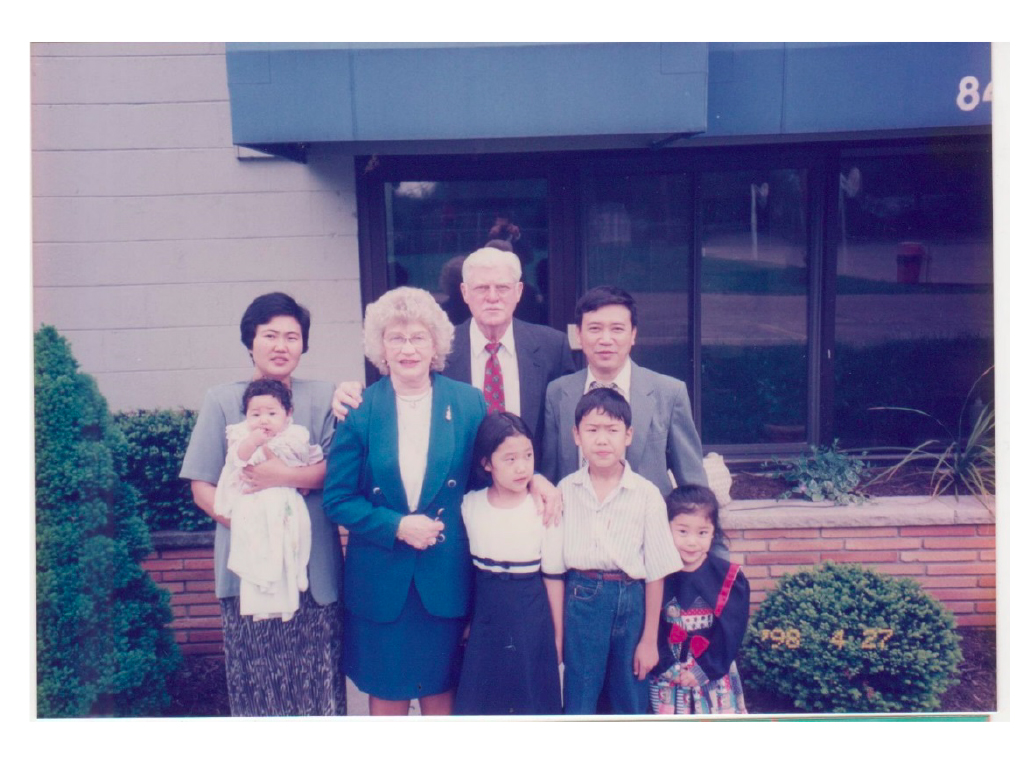
    Barnabas:

    12:38-12:45

    When we came to 1998, when we came over here, my youngest daughter is only four months old.

    Barnabas:

    12:46-12:51

    But right now, she is at the first year at the college.

    Barnabas:

    12:51-13:20

    Okay, second one. Yeah, this is my father. This is my mother. I was born between Burma and China border area, nearby the border area. We can go to China, but we didn't come to Burma side in order to go to market. From our house to go to market is you have to walk for four hours.

    Barnabas:

    13:21-13:24

    If go to China, yeah, about four hours.

    Barnabas:

    13:24-13:27

    If go to Burma side, about one day.

    Barnabas:

    13:30-13:34

    So usually mothers, they didn't see anything.

    Barnabas:

    13:34-13:38

    They just stay at home because cannot go to the market.

    Barnabas:

    13:39-13:42

    Usually men go to the market.

    Barnabas:

    13:42-13:43

    OK, second.

    Barnabas:

    13:44-13:46

    Yeah, this is Martha's parents.

    Barnabas:

    13:47-13:56

    and Martha's father involved a lot in the Lisu Bible translation, starting from 1963.

    Barnabas:

    13:58-14:06

    And our 1967 then, we have Lisu Old and New Testament, they finished.

    Barnabas:

    14:06-14:09

    So we have right now Lisu Bible.

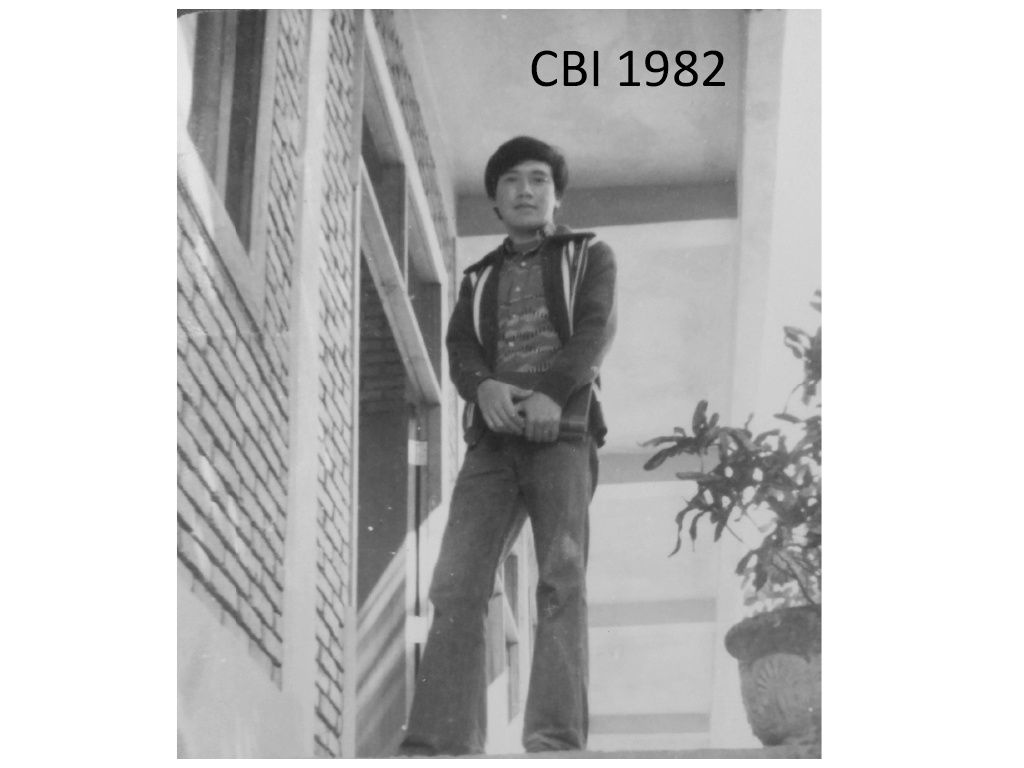
    Barnabas:

    14:11-14:14

    Yeah, this is in Thailand, CBI.

    Barnabas:

    14:15-14:18

    CBI means the Chiang Mai Bible Institute.

    Barnabas:

    14:20-14:25

    In our village, there was Burmese Communist Party and the government.

    Barnabas:

    14:27-14:30

    So they fighting many years.

    Barnabas:

    14:32-14:35

    So in the village, very difficult to live, very difficult to work.

    Barnabas:

    14:36-14:39

    There are so many bad things going on.

    Barnabas:

    14:40-14:42

    And some are stepping on the landmine.

    Barnabas:

    14:43-14:47

    And at midnight, sometimes there's gunfire.

    Barnabas:

    14:47-14:49

    We don't know which way to run.

    Barnabas:

    14:50-14:56

    And we thought banana tree is better to hide.

    Barnabas:

    14:56-14:58

    So try to hide beside the banana tree.

    Barnabas:

    14:59-15:04

    It's not-- banana tree is not a good protection for the bullets.

    Barnabas:

    15:07-15:15

    When I came down to Thailand, people I went to Bible college only four years, but I took six years.

    Barnabas:

    15:16-15:17

    The reasons I didn't have ID.

    Barnabas:

    15:18-15:21

    The second is I didn't know Thai language.

    Barnabas:

    15:22-15:24

    So sometimes I can be in the class.

    Barnabas:

    15:24-15:30

    So sometimes I went and I stay with the Lishu people where the police did not come.

    Barnabas:

    15:32-15:38

    So when the condition is pretty quiet, then I went down and went to the Bible school again.

    Barnabas:

    15:39-15:41

    So I was there for four years.

    Barnabas:

    15:41-15:51

    Actually, that Bible school at the beginning, we are the one who pulled the cement and everything from the beginning that way.

    Barnabas:

    15:51-15:57

    When I graduated, the Bible school also finished building.

    Barnabas:

    15:58-15:59

    And this is in Burma.

    Barnabas:

    15:59-16:06

    After I finished my Bible school there in Thailand, I went back to Burma and suffered a lot at the country area.

    Barnabas:

    16:08-16:18

    traveling a lot, no time to stay at home, traveling to the north, to the south, to the west, to the east, traveling a lot within these four years.

    Barnabas:

    16:20-16:29

    After four years, this is what we call General Secretary of Myanmar Council of Churches.

    Barnabas:

    16:30-16:37

    The middle one is the General Secretary of the Church of England.

    Barnabas:

    16:38-16:45

    And this is me, I dress in Burmese, official dress is like this.

    Barnabas:

    16:46-16:51

    When we go to Burma, you will see this dressing is mostly you can see at the office.

    Barnabas:

    16:52-16:58

    So I was there at the Lisu Christian Church as a General Secretary for four years.

    Barnabas:

    16:59-17:01

    Then I wanted to preach the gospel.

    Barnabas:

    17:01-17:06

    That's why I came down to Thailand in 1986.

    Barnabas:

    17:09-17:18

    And when I came down over there, a group of American group preaching the gospel came to Thailand, but they don't speak any Thai.

    Barnabas:

    17:19-17:22

    They don't speak any Lisu or something like that.

    Barnabas:

    17:23-17:28

    So, they also went to join the Bible class.

    Barnabas:

    17:29-17:32

    And nobody can translate for them.

    Barnabas:

    17:33-17:41

    So I translate for them into Burmese, Lisu, and Lahu, three languages at the same time.

    Barnabas:

    17:42-17:58

    And Mr. Wallaby, he said that, "Okay, if you willing, I'm going to, he's willing to support me two years to go to Cincinnati Bible Seminary." Yeah, this is Burmese writing language.

    Barnabas:

    17:59-18:11

    Yeah, Mr. Willoughby and Mrs. Virginia Willoughby, they brought me to America and I went to Cincinnati Bible Seminary for two years.

    Barnabas:

    18:13-18:14

    This is in Ching Dao.

    Barnabas:

    18:16-18:17

    Yeah, this is Cincinnati.

    Barnabas:

    18:18-18:21

    I was here for two years.

    Barnabas:

    18:22-19:13

    was so urgent. I came to Thailand for a couple of weeks, and I met Mr. Wallaby. I didn't have a chance to prepare that, to go to school. And then when I came over to America, I was late for school, two weeks already. And I couldn't catch, it was difficult to catch because my English was not good. I didn't know this kind of a big city and many rooms like that. I'm lost in the Cincinnati Bible Seminary. I don't know which way to go. So somebody took me to a room, a classroom. Okay, I tried to listen to the professor. And about three, four minutes later, somebody came and said, "This is not your class." So he took me to another class.

    Barnabas:

    19:15-20:15

    And when I came out, I don't know which room is my class, because Usually we have only one room or two rooms, but a big city, I'm lost in the Cincinnati Bible Seminary over there. So after two years, exactly two years, I went back to Thailand and I start preaching the gospel. One thing, when I graduated from Cincinnati Bible Seminary, now I finished. Looks like all the heavy burdens for the preparation and reading for the examination is so much, you know, since it's my second thought language, and I couldn't -- difficult, you know, every day we are struggling, reading assignments, all these things. Usually, American students are three hours in the class. At home, they read maybe about 30 minutes or 10 minutes, then they finish.

    Barnabas:

    20:16-20:21

    But for me, in the class, three hours, back home, another three hours, you know.

    Barnabas:

    20:22-20:30

    So some nights, I stay until in the morning, because our challenge is so great.

    Barnabas:

    20:30-20:42

    I couldn't sleep, so the whole night, typing and also reading, and I think not less than three, four nights that I still do in the morning, you know.

    Barnabas:

    20:44-20:52

    My time is almost finished in staying in America, but I don't have any support to go back and serve the Lord.

    Barnabas:

    20:53-20:59

    Thailand is not my homeland, so I need some support.

    Barnabas:

    20:59-21:04

    So in one class, I met Mr. Bob Huber in the same class.

    Barnabas:

    21:05-21:06

    Actually, the time is gone.

    Barnabas:

    21:07-21:08

    The time is finished.

    Barnabas:

    21:08-21:10

    But one more subject is not finished yet.

    Barnabas:

    21:11-21:17

    So in the midterm, they have a two-week class.

    Barnabas:

    21:17-21:20

    So Mr.

    Barnabas:

    21:20-21:22

    Bob came over there, and we met over there.

    Barnabas:

    21:22-21:28

    So usually in the school, people don't introduce themselves very much.

    Barnabas:

    21:29-21:37

    But Mr. Bob introduced himself to me, then that's why we came to know each other.

    Barnabas:

    21:37-21:46

    Another thing he said, "Our church willing to support a missionary to Thailand." That's me, you know.

    Barnabas:

    21:47-21:56

    And that is the Holy Spirit brought us to know together in order to do the ministry there in Thailand.

    Barnabas:

    21:57-21:58

    I didn't know him.

    Barnabas:

    22:00-22:02

    I have to go back home without support.

    Barnabas:

    22:02-22:04

    That means that we cannot suffer more.

    Barnabas:

    22:05-22:07

    I have to find some other jobs like that.

    Barnabas:

    22:07-22:14

    Yeah, when I went back to Thailand, Mr. Ben Felix gave me a dog bike.

    Barnabas:

    22:15-22:17

    You have only one bike.

    Barnabas:

    22:17-22:22

    Marta stayed at home, no bicycle, no scooter.

    Barnabas:

    22:23-22:27

    When she go to buy some, go to the market, still difficult.

    Barnabas:

    22:27-22:32

    But our families are depending on one dog bike.

    Barnabas:

    22:34-22:43

    Me and Martha in the city, me and Martha, and even Arthur and Lisa, we four people ride on the dog bike.

    Barnabas:

    22:45-22:52

    So whether we go to the village or live in the town, we use four people on one bike.

    Barnabas:

    22:53-22:54

    This is Mr. Phillip.

    Barnabas:

    22:56-23:04

    We came in 1988 here in Butler, Pennsylvania.

    Barnabas:

    23:05-23:07

    During that time, it looks like snowing.

    Barnabas:

    23:09-23:10

    OK, this is Mary Phillip.

    Barnabas:

    23:12-23:16

    She donated-- later that she donated one truck.

    Barnabas:

    23:16-23:19

    And that's very powerful to use in the country area.

    Barnabas:

    23:21-23:24

    To do the ministry, I walk a lot.

    Barnabas:

    23:25-23:26

    I walk a lot.

    Barnabas:

    23:26-23:30

    Looks like our sweat is taking a shower, you know.

    Barnabas:

    23:30-23:33

    Sweat comes out and it dries up.

    Barnabas:

    23:33-23:35

    When you rest, it dries up.

    Barnabas:

    23:35-23:38

    When you walk out, the sweat comes out again.

    Barnabas:

    23:39-23:42

    Okay, so this we call animism.

    Barnabas:

    23:43-23:46

    They worship their forefathers' spirit.

    Barnabas:

    23:47-23:49

    And also we call jungle spirit.

    Barnabas:

    23:50-23:54

    They have two kinds of spirit in their family worship altar.

    Barnabas:

    23:55-24:06

    So when they accept Jesus Christ, we have to take out their spirit altar and put it into the basket, and we burn it outside their house.

    Barnabas:

    24:06-24:14

    And this is —we—so many pictures on this thing, just only a few pictures we can see.

    Barnabas:

    24:16-24:18

    And this is what we call Aka Village.

    Barnabas:

    24:20-24:27

    And the first day they became Christians, 70 people just accepted Jesus Christ within one day.

    Barnabas:

    24:29-24:39

    Yeah, this is, I took off from their spirit altar and I put it on my truck and they said, "Oh, don't let us see that our forefather's spirit.

    Barnabas:

    24:40-24:51

    We burned them in front of my eyes." They said, "Difficult to accept it." So you take away and burn them somewhere else, but not in our village.

    Barnabas:

    24:51-24:55

    So I carried all these things to another village.

    Barnabas:

    24:55-25:07

    But some people said, "Barnabas carries some kind of spirit, "so don't let him burn this area." So, okay, I can burn somewhere else.

    Barnabas:

    25:10-25:25

    Well, we all burn this area, even though we just like, we have to pray to God that nothing happen to us and to the people who accept Jesus Christ.

    Barnabas:

    25:25-25:26

    We have to pray.

    Barnabas:

    25:28-25:37

    Yeah, when we take out the spirit altar, we usually the cross sign put into the family.

    Barnabas:

    25:38-25:45

    So I used from the Joshua, me and my family will worship our God.

    Barnabas:

    25:45-25:49

    So I write the word over there in this.

    Barnabas:

    25:50-25:51

    So in the, that's bamboo wall.

    Barnabas:

    25:52-25:54

    They pick up, put it on a bamboo wall.

    Barnabas:

    25:55-26:01

    And then when we step into their house, we can easily know that this is Christian.

    Barnabas:

    26:02-26:05

    If non-Christian, they are pretty much superstitious.

    Barnabas:

    26:06-26:12

    But Christians, the same Bible changed their life, and the same Bible changed us.

    Barnabas:

    26:13-26:16

    So we feel like brother and sister, you know.

    Barnabas:

    26:16-26:21

    We don't feel afraid or suspect or something like that.

    Barnabas:

    26:23-26:28

    Yeah, they have some threat, white threat or sometimes colorful threat.

    Barnabas:

    26:28-26:34

    They bite on, tie it on their wrist or on the neck.

    Barnabas:

    26:35-26:39

    So they vow something to the spirit.

    Barnabas:

    26:41-26:43

    Sometimes this can be very dangerous.

    Barnabas:

    26:45-26:52

    And so when they accept Jesus Christ, we use the scissor or a knife, cut them off.

    Barnabas:

    26:52-26:54

    Then we lay hands on them and pray.

    Barnabas:

    26:55-26:59

    And then let them follow after our prayer.

    Barnabas:

    27:00-27:05

    So whenever they accept Jesus Christ, I stay one or two more nights.

    Barnabas:

    27:06-27:07

    I cannot go home immediately.

    Barnabas:

    27:09-27:14

    Or sometimes, today, one family become Christian, usually I stay with them, you know.

    Barnabas:

    27:15-27:18

    So my life is, I have, looks like many house, you know.

    Barnabas:

    27:19-27:21

    I can stay with any family.

    Barnabas:

    27:22-27:25

    Means I don't have my private room.

    Barnabas:

    27:25-27:30

    We just sleep on the floor, nearby their stove.

    Barnabas:

    27:31-27:38

    They lit the fire, And in the country area, not enough blankets, so I have to close to the stove.

    Barnabas:

    27:39-27:40

    Then a little bit warmer.

    Barnabas:

    27:41-27:44

    You know, shaky nights, you know, very cold.

    Barnabas:

    27:45-27:50

    Yeah, when they accept Jesus Christ, we baptize them.

    Barnabas:

    27:51-27:54

    Many, many people were baptized, many, many.

    Barnabas:

    27:55-27:57

    Sometimes 70, sometimes 60.

    Barnabas:

    27:59-28:02

    So when we —my truck is enough, not enough.

    Barnabas:

    28:03-28:12

    So I have to hire three more taxi trucks over there, then to go to the water in order to be baptized.

    Barnabas:

    28:12-28:15

    In the village, the water is not enough.

    Barnabas:

    28:15-28:22

    So we have to go out about maybe 40 minutes' drive at the jungle, going very dusty.

    Barnabas:

    28:23-28:25

    Here, I don't see any dust here.

    Barnabas:

    28:26-28:29

    Over there, one truck goes, don't follow after them.

    Barnabas:

    28:29-28:32

    You know, dust.

    Barnabas:

    28:32-28:34

    We couldn't see the next truck.

    Barnabas:

    28:36-28:40

    And we become American because all the hairs become gray.

    Barnabas:

    28:43-28:45

    This fellow is a general, Thai general.

    Barnabas:

    28:46-28:54

    I didn't know him, but his house helper, she's a Lee Su, and knew her, so I give a call to her.

    Barnabas:

    28:54-28:57

    Please ask permission from your boss.

    Barnabas:

    28:58-29:00

    Can I share the gospel to him?

    Barnabas:

    29:00-29:08

    And she asked, and she said, "Yes." So me and my wife and one more couple, we went to preach gospel that night.

    Barnabas:

    29:10-29:16

    And for Thai people, they are really difficult to approach high officers.

    Barnabas:

    29:17-29:22

    When we step in, for Hilltribe people, we just step in this way.

    Barnabas:

    29:23-29:29

    But the two Thai fellow, they just kneel down and crawling in front of the yard.

    Barnabas:

    29:31-29:31

    General.

    Barnabas:

    29:32-29:37

    So I'm a Thai, but counterfeit, you know, fake Thai, you know, like that.

    Barnabas:

    29:38-29:46

    So when I shared the gospel, the general said, "How can it be? I'm the leader of Thailand.

    Barnabas:

    29:46-30:03

    I'm leading in the Second World War and the Vietnam War, joining with the U.S. force." He said, "If I don't know this one, how can I be a leader of Thailand?" So Barnabas give me one night, then I will give you the answer.

    Barnabas:

    30:04-30:07

    So it's about one hour drive from my house to his house.

    Barnabas:

    30:09-30:18

    And then when I'm back home in the night about 8 p.m., watering my plants, you know, the flowers, he give him my call and he said, "Barnabas, I couldn't wait.

    Barnabas:

    30:19-30:28

    If something going to happen to me this night then, tonight then, how can I solve the problem?" He said, "Come over tonight."

    Barnabas:

    30:28-30:28

    (laughs)

    Barnabas:

    30:29-30:30

    I said, "It's very dark.

    Barnabas:

    30:32-30:40

    "God is with you." At the second that you wanted to accept Jesus Christ, God is with you, he's gonna give you protection.

    Barnabas:

    30:41-30:46

    So on Sunday, he came to the church, and we lay hands on him, pray for him.

    Barnabas:

    30:47-30:50

    And the Holy Spirit helped him a lot.

    Barnabas:

    30:51-30:57

    He was 85 and caught car accident a couple times, so his health is not good.

    Barnabas:

    30:59-31:02

    Slivers are dropping all the time.

    Barnabas:

    31:02-31:09

    So whether he, with the net tire or the white shirts, getting wet.

    Barnabas:

    31:11-31:14

    So he came to, he stayed with us for three days.

    Barnabas:

    31:15-31:25

    And then we prayed together and the dropping slivers, Slavery is gone, immediately gone.

    Barnabas:

    31:25-31:29

    He said, "If this happened to someone, "I don't believe," he said.

    Barnabas:

    31:30-31:31

    "But it's happened to me.

    Barnabas:

    31:32-31:33

    "What shall I say?

    Barnabas:

    31:33-31:36

    "If I don't believe, now I'm dried up.

    Barnabas:

    31:37-31:42

    "If I believe, what happened to me?" He said, "Jesus Christ is so surprised," he said.

    Barnabas:

    31:44-31:49

    So in the Second World War, he killed so many Vietnamese.

    Barnabas:

    31:50-31:52

    So that bothered him a lot.

    Barnabas:

    31:52-31:54

    In the nighttime, he couldn't sleep.

    Barnabas:

    31:54-32:05

    All the people that he killed coming back to him in the nighttime, even though he closed eyes, still coming, and he couldn't sleep the whole night.

    Barnabas:

    32:06-32:10

    So after we went to his house and prayed for him, all this gone.

    Barnabas:

    32:11-32:12

    He was so happy.

    Barnabas:

    32:13-32:19

    So wherever our evangelists are going, the Holy Spirit is with us.

    Barnabas:

    32:20-32:28

    How can we drive, how do you say, the spirits in the Second World War come to bother him?

    Barnabas:

    32:28-32:30

    How can we drive them out?

    Barnabas:

    32:30-32:32

    Only in the name of Jesus Christ.

    Barnabas:

    32:33-32:37

    So when he became a Christian, he was so happy.

    Barnabas:

    32:38-32:39

    He was so happy.

    Barnabas:

    32:41-32:53

    As you see the dirt bike, very muddy, the hillside, our bridge, it's only wooden bridge, not last long, but we're very scary.

    Barnabas:

    32:54-33:03

    In this motorbike, me and my wife and my son and my daughter, four people on our dirt bike, very slippery.

    Barnabas:

    33:05-33:07

    Don't say to ride on a motorbike.

    Barnabas:

    33:07-33:11

    Just walk down is not easy, you know, not that way.

    Barnabas:

    33:13-33:21

    To ride on motorbike, we have to ride, and the left leg must be strong, because you have to keep side by side like that.

    Barnabas:

    33:22-33:28

    So this is, I walk at the country for one day, two days, I walk.

    Barnabas:

    33:30-33:35

    because I want to know Jesus Christ more, you know.

    Barnabas:

    33:36-33:41

    By traveling, God has performed something better than before.

    Barnabas:

    33:41-33:43

    Something new, something new.

    Barnabas:

    33:43-33:46

    I always keep this thing all the time in my mind.

    Barnabas:

    33:48-33:52

    So, I didn't feel like I'm tired.

    Barnabas:

    33:53-33:54

    You know, I didn't complain.

    Barnabas:

    33:55-33:59

    Even those difficulties, I didn't complain.

    Barnabas:

    34:00-34:02

    But one day I complained one time.

    Barnabas:

    34:04-34:05

    The road was so slippery.

    Barnabas:

    34:06-34:11

    Before I could reach the village, I fell off a motorbike six times.

    Barnabas:

    34:12-34:16

    You see, I fell off a motorbike six times.

    Barnabas:

    34:16-34:23

    So I said, "Lord, only one mile." I fell off six times.

    Barnabas:

    34:24-34:28

    There are another 30 more miles. How can I go?

    Barnabas:

    34:29-34:41

    So I sit before the Lord and I pray, "Help me on this trip." And then the rest of the journey, I didn't fail out from the bike, you know, right to the village.

    Barnabas:

    34:41-34:47

    My motorbike road is a path, it's a very small path, very steep.

    Barnabas:

    34:48-34:53

    When you come, I will point out for you the places that I went.

    Barnabas:

    34:53-34:55

    You just don't believe me.

    Barnabas:

    34:56-34:57

    You don't believe me.

    Barnabas:

    34:58-35:03

    But it's real. All the people over there, they knew that I went this road.

    Barnabas:

    35:04-35:05

    Very difficult.

    Barnabas:

    35:07-35:14

    Yeah, Mr. Wallaby, when we have a motor with a dog bike and he bought me this truck.

    Barnabas:

    35:15-35:18

    This truck looks like all the Leasing people owned it.

    Barnabas:

    35:19-35:21

    One truck, we loaded 30 people.

    Barnabas:

    35:23-35:24

    27 people.

    Barnabas:

    35:27-35:28

    Very helpful.

    Barnabas:

    35:29-35:32

    Got a truck in the country, very helpful.

    Barnabas:

    35:32-35:36

    Not necessarily with the air condition, a warmer system.

    Barnabas:

    35:39-35:41

    This is not with air condition.

    Barnabas:

    35:43-35:47

    And also, the steering is not power.

    Barnabas:

    35:48-35:57

    So my journey is about 150 kilometres, but you have to drive five to six hours.

    Barnabas:

    35:59-36:11

    More than a thousand turns, you know, almost, yeah, just, almost turning all this way without steering, HDR, how to say, shoulder pain, arm pain, like that.

    Barnabas:

    36:13-36:23

    Mary Phillip, she donated this truck, So we put the other truck is now four by four, so cannot go this way.

    Barnabas:

    36:23-36:27

    So this one, we have to put four chains on four wheels.

    Barnabas:

    36:30-36:34

    Yeah, here, like this is Mr. Chuck Ralph.

    Barnabas:

    36:35-36:41

    Now he is here, Denise and Mr. Chuck, they donate this truck.

    Barnabas:

    36:41-36:50

    And now I'm not using this one because my left leg is not so strong.

    Barnabas:

    36:50-36:52

    So this truck came.

    Barnabas:

    36:54-36:57

    At the time, I really needed this kind of a truck.

    Barnabas:

    36:58-37:00

    So that really helped me a lot.

    Barnabas:

    37:00-37:03

    So will you please stand up for me, Mr. Chuck and Denise?

    Barnabas:

    37:05-37:07

    OK, Alexis, thank you.

    Barnabas:

    37:07-37:08

    Give applause to them.

    Barnabas:

    37:08-37:08

    OK.

    Barnabas:

    37:13-37:13

    [APPLAUSE]

    Barnabas:

    37:14-37:29

    When we loaded generator, sandbox, and everything's on one truck, above them we have six, seven people sit on the top.

    Barnabas:

    37:29-37:32

    So very shaky like that.

    Barnabas:

    37:32-37:34

    In the country, the road is not good.

    Barnabas:

    37:34-37:40

    You must learn how to hold—we have to learn from monkey, you know, how much they are strong.

    Barnabas:

    37:41-37:45

    And when you lose out, you'll be losing out like that.

    Barnabas:

    37:46-37:51

    So we have to-- the whole time that we are on the top, you have to hold this way.

    Barnabas:

    37:52-37:57

    And so riding the truck over here is a lot easier, very comfortable.

    Barnabas:

    37:58-38:01

    Over here is-- you hold very tight.

    Barnabas:

    38:02-38:02

    OK.

    Barnabas:

    38:04-38:15

    And the truck right now is like-- actually, I couldn't drive the truck anymore because my left leg, so since we have automatic gear, I got this one.

    Barnabas:

    38:16-38:24

    So my stay at home and stay and live in the truck, my time in the lift truck is more than my stay at home.

    Barnabas:

    38:25-38:28

    So traveling in the day or in the night.

    Barnabas:

    38:28-38:34

    So like I have to be, in the past time, I run 40 village by myself.

    Barnabas:

    38:35-38:43

    But right now I keep 20 village, maybe 25 village, and we have 17 fellow evangelists.

    Barnabas:

    38:45-38:51

    So right now, not alone, you know, we have some fellow evangelists that I trained.

    Barnabas:

    38:51-39:06

    We train them monthly, and from time to time I go to the village, and especially I met with the headman of the village, or spirit man, like a witch doctor.

    Barnabas:

    39:07-39:12

    So they're a little bit hesitant to go, but for me, it's no problem.

    Barnabas:

    39:13-39:16

    To see the headman or to see the witch doctor.

    Barnabas:

    39:17-39:20

    We are come here to challenge, to meet these people.

    Barnabas:

    39:22-39:25

    Okay, these are some of our church right now.

    Barnabas:

    39:26-39:28

    That was Nong Choe Church.

    Barnabas:

    39:29-39:42

    Yeah, all this church, we mostly send, The money came from non-seclusion church, that we can able to build all this church.

    Barnabas:

    39:42-39:44

    This is my fellow evangelist.

    Barnabas:

    39:46-39:55

    Yeah, when we have some money, we pave church floor, and our church members are helping in the mixing cement, like that.

    Barnabas:

    39:57-40:02

    Yeah, in my life, I just don't agree with the Muslim, what they do.

    Barnabas:

    40:02-40:07

    So I use this one and I pray for Muslims.

    Barnabas:

    40:09-40:11

    The reason is like very difficult.

    Barnabas:

    40:12-40:19

    If we don't pray for the Muslims, don't send our kids as a missionary to other countries.

    Barnabas:

    40:21-40:22

    They will be killed, you know.

    Barnabas:

    40:24-40:28

    So we have to, our prayer must be like a long reach missile.

    Barnabas:

    40:29-40:31

    Let our prayer go there first.

    Barnabas:

    40:32-40:46

    I remember when the Jews, Israelites came up from Egypt to Canaan, 600,000 Israel were lost.

    Barnabas:

    40:47-41:00

    So the same thing, like in this generation, if 600,000 Jihadis gone, then the next generation is open to the gospel.

    Barnabas:

    41:01-41:07

    So I pray for them like a war.

    Barnabas:

    41:08-41:16

    So I lit the candle and kneel before God and fast and pray.

    Barnabas:

    41:18-41:24

    Because even this generation's gone, we want coming generation to come to Christ.

    Barnabas:

    41:25-41:31

    It's not the end time, but still we have hope like that.

    Barnabas:

    41:31-41:38

    But here in America, I think you better not use your candle, because you are paved with the carpet.

    Barnabas:

    41:40-41:47

    Carpet is very flammable, so if you-- sometimes it burns your house away.

    Barnabas:

    41:47-41:49

    Over there, we don't have a carpet.

    Barnabas:

    41:49-41:54

    So even though it drops down there, there's only cement floor.

    Barnabas:

    41:56-42:03

    But here it's very difficult if you use the candle, must use a light, electric light.

    Barnabas:

    42:05-42:07

    Yeah, this is a monthly meeting.

    Barnabas:

    42:07-42:09

    So Martha is cook.

    Barnabas:

    42:10-42:11

    Our meeting is three days.

    Barnabas:

    42:11-42:16

    One day they come, the second day I teach, I train them the whole day.

    Barnabas:

    42:17-42:21

    And they have to give me report, every monthly report.

    Barnabas:

    42:22-42:25

    What has been done this past month?

    Barnabas:

    42:26-42:27

    what is your new plan for next month?

    Barnabas:

    42:29-42:36

    So like monthly, but starting from this year, I divided out two sections.

    Barnabas:

    42:37-42:41

    This first mission part, this is second part like that.

    Barnabas:

    42:42-42:50

    So they will be meeting their own village, and then the second month come to meet me in Chiang Mai.

    Barnabas:

    42:51-42:56

    So when evangelists come in my house, about more than 20 people.

    Barnabas:

    42:57-43:01

    Mother are cooking and well to prepare for their sleeping.

    Barnabas:

    43:01-43:08

    But here in America, every time when I came over here, they give me private room like that.

    Barnabas:

    43:08-43:11

    Over there, we don't have a private room, just sleeping line.

    Barnabas:

    43:14-43:18

    This is just before I came over here, when they were sleeping, I just took a picture.

    Barnabas:

    43:19-43:19

    (laughs)

    Barnabas:

    43:22-43:27

    Yeah, my ministry in Chiang Mai is not to start a Lisu church.

    Barnabas:

    43:28-43:31

    From the Lisu to start a Thai church.

    Barnabas:

    43:33-43:39

    So now the country people become pastors in the city or evangelists in the city.

    Barnabas:

    43:40-43:43

    Country people went to Bible college a lot.

    Barnabas:

    43:44-43:51

    So like I preach in Lisu, Mata interpreted into Thai language.

    Barnabas:

    43:53-43:57

    Up there was the Christmas time, down there is Thanksgiving.

    Barnabas:

    43:57-44:07

    So Mata is always cooking, cooking for the Christmas or Thanksgiving or monthly meeting.

    Barnabas:

    44:09-44:14

    This is last year that Mr. Bob came to Thailand.

    Barnabas:

    44:15-44:20

    And our Thanksgiving and here your Thanksgiving is a little different.

    Barnabas:

    44:21-44:27

    So this is our Thanksgiving is what you can see from biblical like that way.

    Barnabas:

    44:29-44:32

    Yeah, this is Ben Rath.

    Barnabas:

    44:33-44:34

    He came to Thailand.

    Barnabas:

    44:35-44:40

    And also, he also encouraged the people over there.

    Barnabas:

    44:42-44:48

    Yeah, this is just beside my house.

    Barnabas:

    44:49-44:50

    This is what we call bamboo house.

    Barnabas:

    44:52-44:55

    We use the bamboo, make a big hole.

    Barnabas:

    44:56-45:08

    We don't let, how to say, in the middle, we don't have the post, so we try to make ourself a bamboo house, and then we can hold many people.

    Barnabas:

    45:09-45:12

    In my house church is still very small.

    Barnabas:

    45:13-45:17

    Maybe 67 people can stay, but 300, 400 people.

    Barnabas:

    45:17-45:23

    Sometimes, Thanksgiving, we have more than 1,000 people came.

    Barnabas:

    45:23-45:25

    Sometimes 300 people came.

    Barnabas:

    45:25-45:26

    Sometimes 400 people came.

    Barnabas:

    45:28-45:31

    Yeah, this is how bamboo house.

    Barnabas:

    45:32-45:35

    That is my fellow evangelist.

    Barnabas:

    45:37-45:43

    My fellow evangelist from Lisu, Thai, Laos, Aka.

    Barnabas:

    45:45-45:49

    So I'm serving the Lord among the four tribes here in Thailand.

    Barnabas:

    45:51-45:54

    So I speak Burmese and sometimes I went to Burma.

    Barnabas:

    45:55-46:01

    At the border one time I met the immigration officer.

    Barnabas:

    46:02-46:03

    He's a Burmese.

    Barnabas:

    46:04-46:08

    When I share the gospel to him, he accept.

    Barnabas:

    46:09-46:22

    And I said, "Okay, you who live here in Burma, you can take out his idol, all idols from his house." And they said, "No, no, no, Barnabas.

    Barnabas:

    46:23-46:24

    We cannot do it.

    Barnabas:

    46:24-46:25

    You do it.

    Barnabas:

    46:26-46:41

    We don't know how to do it." So I told this immigration officer, "Okay, let's go to your house." So I went to his house and asked, "Do you agree that we take all these things?" He said, "I agree." I decided.

    Barnabas:

    46:42-46:54

    So I put all the idols, the Buddhist idols, put into the paper box and I tied it up and I told one young man, "Take and run."

    Barnabas:

    46:54-46:55

    (laughs)

    Barnabas:

    46:56-46:59

    They can run and don't let anybody see.

    Barnabas:

    46:59-47:00

    They don't speak this rule.

    Barnabas:

    47:01-47:07

    So I said, "You went out there in the wood and you can use your hammer to break out.

    Barnabas:

    47:08-47:16

    Don't let anybody know." The idols used the hammer, hit their heads at the jungle.

    Barnabas:

    47:16-47:19

    We cannot hit them in front of them.

    Barnabas:

    47:22-47:26

    Actually, your support is good enough for my family.

    Barnabas:

    47:28-47:35

    I can spend more money, but I cannot do, I cannot be each village.

    Barnabas:

    47:36-47:42

    So, what sort of a you give me, I separate it up, give to 70 people.

    Barnabas:

    47:45-47:46

    So, what sort of a left?

    Barnabas:

    47:46-47:53

    Maybe $100 left, $200 left, and our family depend on that.

    Barnabas:

    47:55-47:59

    So God, the Holy Spirit give us more food, you know.

    Barnabas:

    48:00-48:04

    When they have Thanksgiving, they give some more rice to us.

    Barnabas:

    48:05-48:08

    When we go to the village, they give some chicken to us.

    Barnabas:

    48:09-48:15

    So I don't lay my treasure here on earth.

    Barnabas:

    48:16-48:20

    What's all that we have, just share with the evangelists, share with the evangelists.

    Barnabas:

    48:20-48:24

    They can be where they are, I cannot be, you see.

    Barnabas:

    48:25-48:28

    Then this little money I can spend, yeah, I can spend it.

    Barnabas:

    48:29-48:33

    But if they have it better than it has in my hand.

    Barnabas:

    48:34-48:38

    So I share all the support to our fellow.

    Barnabas:

    48:39-48:42

    Yeah, in their hand, their whole envelope.

    Barnabas:

    48:44-48:45

    One family, $100.

    Barnabas:

    48:47-48:49

    One family, $150.

    Barnabas:

    48:50-49:04

    Every month when I give them, "Okay, you pray for North South Christian Church and also how to say, Mr. Jeff, I give them the name, you have to pray for them.

    Barnabas:

    49:06-49:13

    So when they hold the envelope and pray for you, and you are responsible to use this money.

    Barnabas:

    49:15-49:25

    So like the word of God is, you know, going to 17, 18 area, usually 25 villages that we are running.

    Barnabas:

    49:26-49:27

    Yeah, they are praying.

    Barnabas:

    49:27-49:28

    Next one.

    Barnabas:

    49:28-49:30

    Yeah, actually here we have one song.

    Barnabas:

    49:32-49:33

    Can we hear their song?

    Barnabas:

    49:35-49:37

    Actually we together sing a song.

    Barnabas:

    49:39-49:44

    In my prayer, God use me a lot.

    Barnabas:

    49:44-49:51

    So just we, let us give ourselves to God first and he can use.

    Barnabas:

    49:52-49:55

    Like your money, if you don't give me, how can I use your money?

    Barnabas:

    49:57-50:02

    The same way, if we don't give our life to God, God cannot use.

    Barnabas:

    50:03-50:12

    If I say this is mine, then God, okay, you are, by your own, then God cannot use us.

    Barnabas:

    50:13-50:36

    So like Father says, a while ago we read Mark chapter, verse three, chapter three, 13 to 15, is that the signs will be authority, the same authority that he gave to 12 disciples and 70 people and gave it to the apostle Paul.

    Barnabas:

    50:37-50:45

    And even today, the same authority we receive to drive demons and evil spirits.

    Barnabas:

    50:47-50:51

    So what he had said in this world is true.

    Barnabas:

    50:52-50:58

    Then what he said for the coming promise that he will take us to heaven, that will be true.

    Barnabas:

    50:59-51:03

    So our hope is really true.

    Barnabas:

    51:04-51:06

    So don't be discouraged in our life.

    Barnabas:

    51:07-51:11

    Worshiping God and preaching the gospel.

    Barnabas:

    51:13-51:33

    Actually, in preaching the gospel, like a bear in fruit, like a bear in fruit means when I receive the Bible and I have to speak out the Bible, go to all nations, means let the word of God go out from our mouth.

    Barnabas:

    51:35-51:38

    Let the word of God come out from our mouth.

    Barnabas:

    51:39-51:39

    It's good.

    Barnabas:

    51:40-51:47

    the Word of God go anywhere and everywhere, you can let the Word of God go out. Let the Word of God go out.

    Barnabas:

    51:49-51:53

    Then God will use his Word to change someone's life.

    Barnabas:

    51:54-52:06

    So evangelist means I told my people like we must be talking Bible, walking Bible. This Bible is not talking Bible.

    Barnabas:

    52:07-52:12

    It's not walking Bible, but it transfer to in our life.

    Barnabas:

    52:13-52:18

    Then the Bible, we ourselves like the Bible, talking Bible and walking Bible.

    Barnabas:

    52:20-52:25

    So even on the way, anywhere you can talk the gospel to everyone.

    Barnabas:

    52:27-52:30

    Since we did dedicated to the Lord.

    Barnabas:

    52:30-52:34

    So God will, we give and God will use.

    Barnabas:

    52:36-52:41

    Many times we face the spirit problem, spirit battle.

    Barnabas:

    52:42-52:57

    I faced many times, but God gave me, suppose something is happening, I couldn't see clearly, but in my dream, God gave me, who is bothering this young boy?

    Barnabas:

    52:58-53:00

    I know that the spirit is bothering.

    Barnabas:

    53:01-53:02

    Which spirit?

    Barnabas:

    53:03-53:06

    Where even spirit, they have a higher position, a lower position.

    Barnabas:

    53:07-53:11

    The spirit of Bardo, this younger, is from the higher position.

    Barnabas:

    53:13-53:19

    So I drove one hour, two hour, to go there and help this youngest out.

    Barnabas:

    53:20-53:22

    So she's now okay.

    Barnabas:

    53:24-53:34

    So like, I wanted to witness that, what the Bible said in the Jesus time is still true to this day.

    Barnabas:

    53:36-53:39

    If we dedicate to him, he will use us.

    Barnabas:

    53:41-53:47

    And then things that are happening, we don't understand.

    Barnabas:

    53:48-53:52

    It's increasing, the number of Christians is increasing.

    Barnabas:

    53:53-53:59

    In my area, just before I came over here, One family, it's a Thai family, became Christian.

    Barnabas:

    54:00-54:03

    Three children and a father and mother, all five people.

    Barnabas:

    54:06-54:15

    So my preaching gospel place is whenever I meet non-Christian, that is the place that I preach in the gospel.

    Barnabas:

    54:15-54:23

    I don't choose the place, whether at the cemetery, whether on the bus, at the restaurant.

    Barnabas:

    54:25-54:32

    Usually when I eat something at the restaurant, the restaurant over there is, you know, at the city and the country area is very different.

    Barnabas:

    54:33-54:38

    One meal about $1, but here it's maybe not one meal, $1.

    Barnabas:

    54:40-54:46

    And then, if not many customer, I can share the gospel to shop owner.

    Barnabas:

    54:48-54:58

    So like, I would like to witness that the Holy Spirit done it in my life and all these spirits gone.

    Barnabas:

    54:59-55:00

    And many people become Christian.

    Barnabas:

    55:01-55:07

    Right now we have more than 2,000 people become Christian within this 30 years.

    Barnabas:

    55:08-55:11

    So worker also more increased it.

    Barnabas:

    55:12-55:20

    So like here also more stronger support must be increased it and then we will reach more area.

    Barnabas:

    55:21-55:24

    and my preaching the gospel is a lot improved.

    Barnabas:

    55:24-55:35

    At the beginning, I have to, in order to preach the gospel to one person, is have to wait opportunity, make a friend, make a friend.

    Barnabas:

    55:36-55:40

    Like I said, be a friend, be a friend, be a friend, the rest of all your life, be a friend.

    Barnabas:

    55:41-55:43

    Nowadays, I don't make a be friend, you know.

    Barnabas:

    55:44-55:46

    I just directly preach gospel to them.

    Barnabas:

    55:48-55:52

    Be a friend is take, spend a lot of time.

    Barnabas:

    55:53-55:54

    Just share the gospel immediately.

    Barnabas:

    55:56-56:01

    I said, I'm faithful to your life, so I share the gospel to you.

    Barnabas:

    56:02-56:05

    I'm faithful to your life, that's why I share the gospel to you.

    Barnabas:

    56:07-56:16

    So like, I thank you for your prayer, and thank you for your listening, and thank you that allow me to be with you.

    Barnabas:

    56:17-56:17

    It's a great honor.

    Barnabas:

    56:18-56:19

    May God bless you.

    56:22-56:22

    [APPLAUSE]

    56:23-56:26

    [APPLAUSE]

Guilt, Goats, and God's Grace

Introduction:


  1. Men must be persuaded by the Holy Spirit of their Guilt. (Romans 8:1-2)

  2. Review: 2 Peter 1:21 | John 14:16 | Col 2:13

    Review: Lev 16 | John 8:3-11


  3. Believers must be persuaded by the Holy Spirit of their Innocence. (Romans 8:3-4)

Guest Speaker - Mark Ort (HBCPN Elder)

Sermon Notes (PDF): BLANK
Hint: Highlight blanks above for answers!

  • Mark Ort:

    00:00-00:02

    I've been feeling a little guilty about something.

    Mark Ort:

    00:03-00:11

    You and I had a discussion a couple weeks ago about why do I take an hour to speak.

    Mark Ort:

    00:13-00:15

    Do you want to tell everybody why I speak for an hour?

    Pastor Jeff:

    00:16-00:17

    Yeah, I would be glad to.

    Pastor Jeff:

    00:18-00:24

    Because I've been guilty of this too, as you know, and this is something that I've actually saw outside help.

    Pastor Jeff:

    00:24-00:27

    This is it, I've seen outside help in correcting this problem.

    Pastor Jeff:

    00:27-00:39

    The reason the market I would tend to go long is we would do Bible study for Christmas and Friday, and that was sometimes two and a half or three hours of preaching a day.

    Pastor Jeff:

    00:40-00:44

    And sometimes, you know, it would be like the time just flew by.

    Pastor Jeff:

    00:44-00:51

    So when they're preaching and sharing the Word, it's like, wow, it's, you know, we started at seven and it's like 9.30 already.

    Pastor Jeff:

    00:51-01:02

    So, when you're used to every week preaching for two and a half, three hours every week, you have to understand, you can ask that, it's like a teamwork, you need to preach for a half hour.

    Pastor Jeff:

    01:03-01:07

    A half hour feels like about three minutes after that normal thing.

    Pastor Jeff:

    01:07-01:10

    So, I'm doing that too.

    Pastor Jeff:

    01:10-01:12

    Like I said, I'm getting a lot of counseling on that.

    Pastor Jeff:

    01:12-01:14

    I have a good pastor friend of mine down in Florida.

    Mark Ort:

    01:15-01:19

    When you brought that up a couple weeks ago, I can't believe that I didn't even think of that.

    Mark Ort:

    01:20-01:28

    It's like you go in, like I would go in at six o'clock, and it would be 8.30, quarter to nine, and they'd be calling for us to leave.

    Mark Ort:

    01:28-01:30

    I'm thinking, man, that went really fast.

    Mark Ort:

    01:31-01:35

    So for me to condense something down into 40 minutes is just like, it's not happening, I'm sorry.

    Mark Ort:

    01:36-01:36

    (laughs)

    Mark Ort:

    01:37-01:37

    Today-- - I'm gonna

    Pastor Jeff:

    01:37-01:38

    pray for you right now for that.

    Mark Ort:

    01:39-01:48

    Today I'm going to, I have my phone here, so I'm gonna watch the time, and it has the potential of going long, but I'm gonna try to keep it to 40 minutes.

    Mark Ort:

    01:49-01:55

    Okay, today we're gonna look at a great passage of Scripture in Romans.

    Mark Ort:

    01:55-02:03

    So if you turn in your Bibles to Romans chapter 8, while you're turning there, I just have a couple things.

    Mark Ort:

    02:06-02:18

    Do you ever hear this phenomenon of people who, they've committed a crime, and they don't even, they don't get caught, and they turn themselves in some years later.

    Mark Ort:

    02:19-02:24

    like 10 years later, 15 years later, 30 years later, they turn themselves in.

    Mark Ort:

    02:25-02:27

    There's a couple of people like that.

    Mark Ort:

    02:27-02:36

    May of this past year, 57-year-old Charles Kugel, he confessed to abusing children 25 years ago in Oklahoma City.

    Mark Ort:

    02:38-02:46

    Last October, a Milwaukee man told his wife that he was responsible for killing his 13-year-old neighbor 33 years ago.

    Mark Ort:

    02:47-02:48

    He claimed that the girl was still haunting him.

    Mark Ort:

    02:49-02:58

    A local television station in a mental health crisis center reported that somebody had called them reporting the same story.

    Mark Ort:

    02:58-03:03

    And so the next day, Jose Ferreira was arrested for the murder.

    Mark Ort:

    03:04-03:12

    In July of last year, a 91-year-old man confessed to a murder that occurred in 1946 in London.

    Mark Ort:

    03:13-03:16

    That's believed to be the longest gap between a crime and its confession.

    Mark Ort:

    03:18-03:32

    These kind of confessions, to me, they're kind of a strange phenomenon, because why in the world would you get away with something and then confess it at some time after that?

    Mark Ort:

    03:33-03:37

    I suspect that these people are laden with guilt.

    Mark Ort:

    03:39-03:42

    Their conscience, it's like eating away at them like acid.

    Mark Ort:

    03:45-03:49

    A 91-year-old claimed that he wanted to clear his conscience before he died.

    Mark Ort:

    03:51-04:02

    Guilt. I looked guilt up on the internet, and it's been known to cause crippling emotional effects such as anxiety, stress, paranoia, depression.

    Mark Ort:

    04:03-04:11

    It can even cause physical ailments, heart disease, fatigue, things like that.

    Mark Ort:

    04:13-04:15

    while we're confessing things that make us guilty.

    Mark Ort:

    04:16-04:22

    When I was a kid, I was probably 12 years old, maybe 13.

    Mark Ort:

    04:22-04:24

    And did you guys ever hear of Fisher's Big Wheel?

    Mark Ort:

    04:25-04:26

    Nobody ever heard of Fisher's Big Wheel?

    Mark Ort:

    04:27-04:27

    Jay?

    Mark Ort:

    04:27-04:28

    Yeah, a couple people.

    Mark Ort:

    04:28-04:31

    Fisher's Big Wheel was a store kind of like Kmart.

    Mark Ort:

    04:32-04:33

    And it was real near to my house.

    Mark Ort:

    04:34-04:37

    And I would ride my bike up there and buy baseball cards and stuff like that.

    Mark Ort:

    04:37-04:45

    But one time, my next door neighbor, who probably was not the biggest, greatest influence of my life, he talked me into going there and stealing something.

    Mark Ort:

    04:47-04:49

    And I was really nervous about this.

    Mark Ort:

    04:49-04:51

    It's like, I can't believe I'm going to steal something.

    Mark Ort:

    04:51-04:59

    We had those slot car racing tracks, and they had these little tiny slot cars that went with them, and they were real small, so they were real easy to steal.

    Mark Ort:

    05:00-05:06

    And we were back in the aisle, and I pulled up my pant leg, because I had dingo boots on.

    Mark Ort:

    05:07-05:08

    You know what dingo boots are?

    Mark Ort:

    05:09-05:13

    I had bingo boots on, so I was able to shove the car down in my boot and put my pant leg down.

    Mark Ort:

    05:13-05:18

    I'm looking around like I was guilty, because I was.

    Mark Ort:

    05:19-05:21

    I couldn't believe I made it out of the store.

    Mark Ort:

    05:24-05:26

    That theft haunted me for years.

    Mark Ort:

    05:27-05:31

    I would think about it often, and I just felt so guilty about it.

    Mark Ort:

    05:33-05:42

    When I started my job after I got out of college, I think it was the first or second paycheck, I thought, you know what, I know where the Fisher's Big Wheel headquarters is.

    Mark Ort:

    05:43-05:47

    The Fisher's Big Wheel store was gone, but I knew where the Fisher's Big Wheel headquarters was.

    Mark Ort:

    05:47-05:48

    It was in Newcastle.

    Mark Ort:

    05:48-05:55

    So I thought, I'm going to drive over there, I'm going to walk in, and I'm going to pay for that thing plus interest, because it still was on my mind.

    Mark Ort:

    05:55-05:55

    I was guilty.

    Mark Ort:

    05:57-06:05

    I drove into the parking lot, and I saw these big signs that said, "Out of business." And I thought, oh my goodness.

    Mark Ort:

    06:06-06:09

    Me and people like me caused them to go out of business.

    Mark Ort:

    06:11-06:15

    But on the drive home, I thought, you know, I was guilty.

    Mark Ort:

    06:16-06:24

    And I tried, I tried my very best to ease my guilty conscience by going there and making it right.

    Mark Ort:

    06:25-06:28

    And I think that's a desire that we have as humans.

    Mark Ort:

    06:29-06:31

    We have this desire in our hearts.

    Mark Ort:

    06:31-06:32

    We want to be right.

    Mark Ort:

    06:32-06:33

    We want to be clean.

    Mark Ort:

    06:34-06:35

    We don't want to be guilty.

    Mark Ort:

    06:36-06:37

    Guilt can destroy us.

    Mark Ort:

    06:37-06:39

    It destroys us from the inside out.

    Mark Ort:

    06:39-06:45

    And guilt can prevent us from being right.

    Mark Ort:

    06:47-06:48

    So what about us in here?

    Mark Ort:

    06:49-06:51

    Maybe we haven't murdered anybody.

    Mark Ort:

    06:51-06:55

    We haven't abused children or stolen slot cars.

    Mark Ort:

    06:57-07:02

    But aren't there maybe what we would call silent sins that we do that maybe nobody even sees?

    Mark Ort:

    07:04-07:10

    Think about materialism, or lust, or anger.

    Mark Ort:

    07:11-07:14

    Think things that are inside, and we feel guilty about them.

    Mark Ort:

    07:15-07:20

    Nobody even knows about these, but they cause us shame before God, right?

    Mark Ort:

    07:22-07:38

    So at the end of May this past year, I started a discipline a few years ago, maybe five years ago, where whenever the kids get out of school, I start a summer study on my own, and I share it with them as much as I can.

    Mark Ort:

    07:38-07:44

    But I'll pick a book or a topic, and I'll just spend the whole summer looking at that.

    Mark Ort:

    07:45-07:47

    And this summer happened to be Romans.

    Mark Ort:

    07:47-07:49

    I wanted to jump back into Romans.

    Mark Ort:

    07:49-07:53

    My favorite book in the New Testament, I jumped into Romans.

    Mark Ort:

    07:54-08:39

    And my summer of Romans, what you're going to hear tonight or today is some of the fruit of my study in Rome, my summer in Romans, I guess my prayer in this particular scripture is that God would help us deal with feelings of guilt that might be paralyzing us. So why don't we take a moment and just open up in prayer. Heavenly Father I just pray this morning that by your Spirit, by your Holy Spirit, you would teach us in your Word what you want us to know. I pray you give us understanding. Lord help us to to understand the things that are in your Scripture, and that we would apply them by faith to our lives.

    Mark Ort:

    08:39-08:40

    In Jesus' name, amen.

    Mark Ort:

    08:43-08:45

    So just a couple questions pointed at you.

    Mark Ort:

    08:47-08:48

    Do you live with guilt and shame?

    Mark Ort:

    08:48-08:49

    You don't have to answer that.

    Mark Ort:

    08:49-08:50

    You don't have to raise your hand or anything.

    Mark Ort:

    08:51-08:56

    Do you live with guilt and shame over something?

    Mark Ort:

    08:56-09:02

    Something you did wrong, something you didn't do, something you wish you would have done, you stole some attitude that you had?

    Mark Ort:

    09:02-09:04

    Do you feel guilt, shame?

    Mark Ort:

    09:06-09:08

    And the second thing is, do you feel condemned?

    Mark Ort:

    09:09-09:14

    Because of your guilt, do you feel like this weight and this load of condemnation?

    Mark Ort:

    09:16-09:18

    Then I want you to ask yourselves these questions.

    Mark Ort:

    09:20-09:24

    Do I believe that God's Word is effective in changing people's lives?

    Mark Ort:

    09:25-09:27

    Do I believe it's effective in changing my life?

    Mark Ort:

    09:28-09:34

    And do I believe that God's Word is effective in changing my thinking patterns about guilt and condemnation?

    Mark Ort:

    09:36-09:44

    Think about those for a second, and we're going to jump into God's Word and see what He says about guilt and condemnation, and how we can find freedom and relief.

    Mark Ort:

    09:47-09:50

    I want to read the first four verses in Romans 8.

    Mark Ort:

    09:52-09:58

    It says, "Therefore, there is now no condemnation for those who are in Christ Jesus.

    Mark Ort:

    09:59-10:03

    For the law of the Spirit of life in Christ Jesus has set you free from the law of sin and of death.

    Mark Ort:

    10:04-10:09

    For what the law could not do, weak as it was through the flesh, God did.

    Mark Ort:

    10:10-10:31

    God did, sending his own Son in the likeness of sinful flesh, and as an offering for sin, he condemned sin in the flesh, so that the requirement of the law might be fulfilled in us "Do not walk according to the flesh, but according to the Spirit." If the men who wrote the Bible were inspired, they were inspired by God.

    Mark Ort:

    10:32-10:38

    It says that the Word of God was inspired by God.

    Mark Ort:

    10:40-10:48

    Men wrote down what God said, but in 2 Peter 1:21, it's the Spirit.

    Mark Ort:

    10:49-10:51

    It was facilitated by the Spirit, the Holy Spirit.

    Mark Ort:

    10:53-11:09

    And if you look in Romans 8, in just the first 11 or 12 verses, Holy Spirit with a capital S, capital H, capital S, the word Spirit, it occurs 11 times.

    Mark Ort:

    11:11-11:13

    I'm sorry, 12 times.

    Mark Ort:

    11:15-11:16

    Cheating on my notes here.

    Mark Ort:

    11:16-11:18

    It occurs 12 times in the first 11 verses alone.

    Mark Ort:

    11:20-11:33

    So in arguably one of the most amazing chapters in the New Testament, maybe even in the whole Bible, there's gotta be something with the role of the Holy Spirit here in us dealing with guilt.

    Mark Ort:

    11:35-11:38

    So we must look to the Holy Spirit to find freedom and relief.

    Mark Ort:

    11:39-11:41

    And just briefly, what is the Holy Spirit?

    Mark Ort:

    11:41-11:43

    I'm sorry, what's the job of the Holy Spirit?

    Mark Ort:

    11:44-11:50

    If you look in John 14, 16, it refers to the Holy Spirit as the helper, the one who comes alongside.

    Mark Ort:

    11:51-11:56

    You know, when somebody helps you, they come alongside, you know, the roof project.

    Mark Ort:

    11:56-11:58

    People are coming alongside and helping.

    Mark Ort:

    11:58-12:00

    That's one of the roles of the Holy Spirit.

    Mark Ort:

    12:01-12:07

    That would include things like, the Holy Spirit is your comforter, he's your advocate, your intercessor, and words like that.

    Mark Ort:

    12:08-12:09

    He's your helper.

    Mark Ort:

    12:09-12:13

    John 14, 26 refers to the Holy Spirit as your teacher.

    Mark Ort:

    12:15-12:15

    Teacher.

    Mark Ort:

    12:16-12:17

    What is a teacher?

    Mark Ort:

    12:19-12:22

    We were just talking about this briefly when we were praying back here.

    Mark Ort:

    12:24-12:26

    A teacher is someone who instructs you in the truth.

    Mark Ort:

    12:28-12:30

    It's someone who persuades you.

    Mark Ort:

    12:31-12:39

    And so if the Holy Spirit is one who is our teacher, He's the one who is going to persuade us, right?

    Mark Ort:

    12:42-12:50

    So men-- this is our first point today-- men must be persuaded of their guilt.

    Mark Ort:

    12:52-12:54

    You've got to be persuaded that you're guilty.

    Mark Ort:

    12:56-13:01

    Wait a minute, I thought we were going to be encouraged by freedom from guilt.

    Mark Ort:

    13:04-13:05

    We've got to be persuaded.

    Mark Ort:

    13:05-13:07

    Men have to be persuaded that they are guilty.

    Mark Ort:

    13:08-13:12

    I think a lot of people walk around thinking that sin is not a big deal.

    Mark Ort:

    13:14-13:14

    It's fun.

    Mark Ort:

    13:15-13:16

    It's what we do.

    Mark Ort:

    13:16-13:17

    It's our culture.

    Mark Ort:

    13:17-13:18

    It's not a big deal.

    Mark Ort:

    13:19-13:22

    And I'm afraid that even Christians may even think that.

    Mark Ort:

    13:23-13:25

    But I have a slide that talks about guilt.

    Mark Ort:

    13:26-13:31

    Actually, it's just an illustration of the forensic nature of guilt.

    Mark Ort:

    13:33-13:39

    This is the definition of guilt. It's a fact or state of having committed an offense or a crime.

    Mark Ort:

    13:40-13:46

    Guilt is proven by forensic evidence. That is, evidence is in a court of law.

    Mark Ort:

    13:46-13:55

    This is a legal term. It's specifically obtained by scientific methods such as ballistics, blood, DNA testing, and fingerprinting.

    Mark Ort:

    13:56-13:57

    And you can see these up on the screen.

    Mark Ort:

    13:58-14:10

    If you've watched any of those CSI shows or maybe you've been involved in a court case yourself, these are the kinds of things that they would use to prove that you're guilty or not.

    Mark Ort:

    14:11-14:12

    We're establishing guilt here.

    Mark Ort:

    14:13-14:14

    There's like shoe impressions.

    Mark Ort:

    14:15-14:17

    You have DNA evidence, ballistics.

    Mark Ort:

    14:18-14:19

    We have blood evidence.

    Mark Ort:

    14:20-14:24

    If you watch the OJ Simpson trial, you know they have the famous glove.

    Mark Ort:

    14:24-14:26

    That's forensic type stuff.

    Mark Ort:

    14:27-14:29

    Tire tracks will be one, fingerprints.

    Mark Ort:

    14:30-14:32

    There's things like that that establish guilt.

    Mark Ort:

    14:35-14:43

    So if you go into your passage here in Romans 8.1, we see the word "therefore" in Romans 8.1.

    Mark Ort:

    14:44-14:47

    And so when you see that word, you have to go backwards to see why it's there.

    Mark Ort:

    14:49-14:56

    Leading up to Romans 8, we see that the Holy Spirit is persuading people that they are guilty.

    Mark Ort:

    14:59-15:06

    And if you're not a believer in Christ, if you're not following the Lord, if He's not the Lord of your life, you need to listen really closely here.

    Mark Ort:

    15:08-15:15

    You might begin to become a little nervous or maybe even shaking a little bit.

    Mark Ort:

    15:15-15:27

    You might start to sweat because listen to the stuff that the Holy Spirit uses early in Romans to persuade people that they are guilty, forensically guilty.

    Mark Ort:

    15:29-15:37

    In Romans 1, God's wrath is revealed against men who suppress the truth in unrighteousness.

    Mark Ort:

    15:40-15:45

    God has made himself evident to everybody, but people ignore that.

    Mark Ort:

    15:47-15:50

    They ignore him, and Paul says that they are without excuse.

    Mark Ort:

    15:51-15:54

    I think Romans 1 is a good description of what's happening in our culture today.

    Mark Ort:

    15:55-16:01

    His wrath is being revealed against men who suppress the truth in unrighteousness.

    Mark Ort:

    16:02-16:25

    In Romans 2, "Because of your stubbornness," he says, "in your unrepentant heart, you are storing up wrath for yourself." It goes on in Romans 2, it says, "There will be tribulation and distress for every soul of man who does evil." Are you being persuaded yet?

    Mark Ort:

    16:26-16:27

    How about in Romans 3?

    Mark Ort:

    16:28-16:31

    There's some famous verses in Romans 3, you probably memorized some of them.

    Mark Ort:

    16:32-16:34

    "There is none who are righteous, not even one.

    Mark Ort:

    16:36-16:39

    All have sinned and fallen short of the glory of God.

    Mark Ort:

    16:40-16:50

    We have all missed the mark." So, forensically, we are all guilty of offending a holy God with our sin.

    Mark Ort:

    16:52-16:57

    But things like murder and theft, those are things that people see, that stuff.

    Mark Ort:

    16:58-16:59

    What about the stuff that's in your heart?

    Mark Ort:

    17:00-17:06

    Racism, fear, hatred, lust, materialism, envy, doubt.

    Mark Ort:

    17:06-17:11

    I could go on for like a whole hour about that.

    Mark Ort:

    17:12-17:13

    But we're guilty of those things.

    Mark Ort:

    17:15-17:19

    Your DNA and your fingerprints are all over that stuff.

    Mark Ort:

    17:19-17:20

    You are guilty.

    Mark Ort:

    17:23-17:30

    Whenever Jesus died on the cross, like our fingerprints were even on that hammer and the nails.

    Mark Ort:

    17:32-17:41

    But this suitcase represents, I guess, the weight of guilt.

    Mark Ort:

    17:41-17:43

    This is probably maybe even a bad analogy.

    Mark Ort:

    17:43-17:43

    I don't know.

    Mark Ort:

    17:44-17:49

    Whenever you're carrying guilt around, it's like lugging this thing around.

    Mark Ort:

    17:50-17:55

    And if you're carrying it to the car because you're going on a trip and you throw it in the trunk, you can do that.

    Mark Ort:

    17:55-17:58

    You can carry that two minutes.

    Mark Ort:

    17:59-18:07

    You start carrying it for 10 minutes, and an hour, in an hour and a half, and now a week, a month, you're carrying this thing around, it's gonna get pretty heavy.

    Mark Ort:

    18:09-18:15

    The weight of that guilt is a load that we were not supposed to carry.

    Mark Ort:

    18:16-18:24

    You're not strong enough, you're not clever enough, you're not rich enough, you don't have enough friends to help you to carry this.

    Mark Ort:

    18:26-18:27

    You shouldn't be carrying this.

    Mark Ort:

    18:27-18:29

    You shouldn't be carrying this load of guilt around.

    Mark Ort:

    18:30-18:47

    So imagine just carrying this around, and it's bulky, I couldn't get up the steps, you're bumping into things, but for the unbeliever, for the unbeliever, you're stuck with that.

    Mark Ort:

    18:48-18:57

    You're gonna be carrying it around unless you're willing to come to the one who wants to bear your guilt.

    Mark Ort:

    18:59-19:00

    And that's Jesus Christ.

    Mark Ort:

    19:02-19:11

    Someone who is not a Christian, if you're not a Christian, you have a certificate of debt that's consisting of decrees against them.

    Mark Ort:

    19:13-19:18

    This is a rap sheet as long as you're arm of all the things that's got to be paid for.

    Mark Ort:

    19:19-19:21

    And you can read about that in Colossians 2.13.

    Mark Ort:

    19:23-19:29

    I actually had this passage on our wedding bulletin.

    Mark Ort:

    19:29-19:30

    What do they call those things?

    Mark Ort:

    19:30-19:31

    Like the wedding program?

    Mark Ort:

    19:32-19:42

    And I shared the gospel using this verse from Colossians about how you have a certificate of debt consisting of decrees against you.

    Mark Ort:

    19:43-19:49

    And when I put that in there, I was talking about how people were gonna go to hell.

    Mark Ort:

    19:51-19:58

    And as I thought about it afterwards, I think we had the only wedding program that I've ever remembered that had the word hell in it.

    Mark Ort:

    20:01-20:02

    But it's true.

    Mark Ort:

    20:03-20:05

    The gospel message is true.

    Mark Ort:

    20:06-20:08

    If you have a debt against you, it has to be paid.

    Mark Ort:

    20:09-20:17

    And you're going to pay for it in an eternal conscious punishment in hell, unless somebody pays that for you.

    Mark Ort:

    20:20-20:29

    Jesus, it says in that Colossians passage, He has taken the decree against us out of the way, having nailed it to the cross.

    Mark Ort:

    20:32-20:35

    Out of the way, nailed it to the cross.

    Mark Ort:

    20:38-20:44

    "There is no condemnation for those who are in Christ Jesus," Romans 8, 1 says.

    Mark Ort:

    20:44-20:49

    In Christ Jesus simply means this, that Jesus Christ is the Lord of your life.

    Mark Ort:

    20:51-20:54

    You believe him, you trust him, and you surrender yourself to him.

    Mark Ort:

    20:57-21:07

    Not only does the Holy Spirit have to persuade men that they're guilty, but the Holy Spirit has to persuade believers that they are innocent.

    Mark Ort:

    21:09-21:10

    That's the second point.

    Mark Ort:

    21:11-21:17

    And we're still looking at why the "therefore" is pointing back the prior points that Paul is making.

    Mark Ort:

    21:18-21:25

    In Romans 4, faith was what the basis of justification was in the Old Testament.

    Mark Ort:

    21:25-21:29

    Paul points back to Genesis and the fact that Abraham was justified by faith.

    Mark Ort:

    21:30-21:33

    I wanna take a minute just to talk about that word justification.

    Mark Ort:

    21:33-21:38

    And I've heard people say that justification means just as if I'd never sinned.

    Mark Ort:

    21:39-21:41

    And that is true, but it's not complete.

    Mark Ort:

    21:43-21:53

    My sins were credited to Jesus' account when He died on the cross.

    Mark Ort:

    21:55-21:56

    My sins were laid on Jesus.

    Mark Ort:

    21:57-21:59

    And His righteousness was credited to my account.

    Mark Ort:

    22:01-22:04

    That is nothing short than the grace of God.

    Mark Ort:

    22:05-22:06

    Here, Jesus.

    Mark Ort:

    22:07-22:09

    Here's all my sins.

    Mark Ort:

    22:10-22:18

    And Jesus looks at you and says, "Son, give all my righteousness." And author Jerry Bridges calls this the great exchange.

    Mark Ort:

    22:19-22:22

    My sin for his righteousness.

    Mark Ort:

    22:23-22:23

    That's amazing.

    Mark Ort:

    22:26-22:31

    In Romans 5, because we have the righteousness of Christ, we have peace with God.

    Mark Ort:

    22:33-22:36

    And when our sin abounds, His grace abounds even more.

    Mark Ort:

    22:38-22:42

    In Romans 6, believers are dead to sin and alive to Christ.

    Mark Ort:

    22:44-22:47

    We are no longer slaves to sin.

    Mark Ort:

    22:47-22:48

    We serve Christ.

    Mark Ort:

    22:51-22:55

    And then in Romans 7, Paul talks about how believers are united to Christ.

    Mark Ort:

    22:56-22:57

    We are one with him.

    Mark Ort:

    23:00-23:07

    So a believer, although he is forensically guilty, I mean, you did the crime, right?

    Mark Ort:

    23:07-23:09

    So we're not changing that, you are guilty.

    Mark Ort:

    23:11-23:13

    You're declared innocent by God.

    Mark Ort:

    23:15-23:19

    Even says it in the passage, you know what the law could not do, God did.

    Mark Ort:

    23:20-23:21

    God can do that.

    Mark Ort:

    23:22-23:23

    God declares you innocent.

    Mark Ort:

    23:24-23:25

    The law couldn't do that.

    Mark Ort:

    23:26-23:30

    It says that in this passage, what the law could not do.

    Mark Ort:

    23:30-23:33

    What the law could not do, God did by sending his son.

    Mark Ort:

    23:35-23:37

    Just think about the law for a minute.

    Mark Ort:

    23:39-23:45

    Pardon the analogy, but the law says that you've got to do 35 in a 35 mile an hour speed zone.

    Mark Ort:

    23:47-23:52

    If you do 55 in a 35, you may get a ticket.

    Mark Ort:

    23:54-23:57

    That 35 mile an hour speed limit sign is not going to pay your fine.

    Mark Ort:

    23:59-24:01

    The law says it's illegal to kidnap somebody.

    Mark Ort:

    24:03-24:06

    the law is not going to come there and bail you out.

    Mark Ort:

    24:07-24:09

    The law is a statement of what's expected of you.

    Mark Ort:

    24:11-24:14

    So God's law points out our need for Christ.

    Mark Ort:

    24:15-24:19

    In fact, there's scripture that says that it's our tutor.

    Mark Ort:

    24:20-24:25

    We read the law and we look at it and we're like, oh my goodness, I can't do this.

    Mark Ort:

    24:25-24:26

    In fact, I haven't done this.

    Mark Ort:

    24:27-24:28

    I need a savior.

    Mark Ort:

    24:28-24:30

    I need somebody to deliver me from that.

    Mark Ort:

    24:33-24:34

    The law can't free anyone.

    Mark Ort:

    24:34-24:35

    The law can't forgive you.

    Mark Ort:

    24:36-24:38

    It merely tells you where you've fallen short.

    Mark Ort:

    24:39-24:40

    And we are in bondage to it.

    Mark Ort:

    24:41-24:43

    Galatians talks about how you're in bondage to it.

    Mark Ort:

    24:44-24:51

    Bondage to the law until you have freedom in Christ.

    Mark Ort:

    24:53-24:54

    What the law could not do, God did.

    Mark Ort:

    24:56-25:02

    So if Jesus Christ is the Lord of your life, Imagine this, you are robed in his righteousness.

    Mark Ort:

    25:02-25:05

    You are wearing his garments of righteousness.

    Mark Ort:

    25:06-25:21

    And when God sees you, even though you're forensically guilty, you're clinically guilty, he sees the righteousness of Christ who is perfect without sin.

    Mark Ort:

    25:24-25:33

    So Paul could say, Therefore, there is now no condemnation to those who are in Christ Jesus because the crime was paid for.

    Mark Ort:

    25:34-25:35

    The crime was paid for.

    Mark Ort:

    25:37-25:40

    Condemnation implies that there's guilt that still needs to be paid for.

    Mark Ort:

    25:42-25:54

    If we're not guilty, if we're declared innocent, we'll say, then why are we still walking around as if we are guilty?

    Mark Ort:

    25:54-25:59

    We need to just get rid of it.

    Mark Ort:

    26:01-26:03

    We don't need to feel the guilt.

    Mark Ort:

    26:07-26:10

    Just a quick word about conviction.

    Mark Ort:

    26:12-26:15

    There's a distinct difference, I believe, in conviction versus guilt.

    Mark Ort:

    26:18-26:22

    Is being convicted by the Holy Spirit the same thing as guilt?

    Mark Ort:

    26:23-26:24

    Now remember what guilt was.

    Mark Ort:

    26:24-26:28

    It's a state of having committed a crime or offense.

    Mark Ort:

    26:29-26:31

    Guilt is proven by forensic evidence.

    Mark Ort:

    26:31-26:35

    A conviction is the act of convincing of error.

    Mark Ort:

    26:36-26:44

    It reveals an offense or sin, but then it also reveals truth and provides an escape from the guilt and shame.

    Mark Ort:

    26:46-26:51

    Guilt and conviction, they kind of start out in the same path, right?

    Mark Ort:

    26:52-26:58

    okay, it reveals an error or a crime, but they take a different path right after that.

    Mark Ort:

    26:59-27:01

    Guilt makes a person feel stupid and useless.

    Mark Ort:

    27:02-27:03

    That's a tool of the devil.

    Mark Ort:

    27:05-27:10

    It can make a person anxious, spiral into depression and shame.

    Mark Ort:

    27:11-27:15

    Guilt says stuff like this, you're wrong, you screwed up, you're an idiot.

    Mark Ort:

    27:16-27:21

    Now this is guilt as a Christian, because remember I said when you're a non-Christian, you need to feel that guilt.

    Mark Ort:

    27:21-27:26

    That guilt is a good thing, because it's driving you toward freedom.

    Mark Ort:

    27:27-27:30

    But as a Christian, think about as a Christian feeling guilt.

    Mark Ort:

    27:33-27:33

    You're wrong.

    Mark Ort:

    27:35-27:35

    You messed up.

    Mark Ort:

    27:37-27:39

    Conviction, it says stuff like this.

    Mark Ort:

    27:39-27:40

    It says, yes, you were wrong.

    Mark Ort:

    27:41-27:43

    Yes, you sinned, but there is hope for that.

    Mark Ort:

    27:45-27:47

    There's hope because we have forgiveness offered by Jesus Christ.

    Mark Ort:

    27:49-27:53

    The conviction says, "I have to repent.

    Mark Ort:

    27:54-28:04

    I need to get right and forsake my sin." Now, in the Old Testament, and you guys know that I love the Old Testament, right?

    Mark Ort:

    28:07-28:17

    There's a clear and beautiful picture of how God dealt with His people and their guilt in the book of Leviticus.

    Mark Ort:

    28:18-28:19

    This is a book we don't turn to very often.

    Mark Ort:

    28:21-28:26

    So let me just - I don't know if you want to turn there or just listen to me here.

    Mark Ort:

    28:26-28:35

    In the book of Leviticus 16, you have Aaron who's the priest.

    Mark Ort:

    28:38-28:39

    Aaron's the priest.

    Mark Ort:

    28:42-28:47

    People would bring animals to be sacrificed.

    Mark Ort:

    28:47-28:50

    That was the system in the Old Testament.

    Mark Ort:

    28:51-28:55

    The Bible says that without the shedding of blood, there is no remission for sin.

    Mark Ort:

    28:57-29:06

    The Old Covenant, animals were sacrificed as a grotesque reminder of the cost of sin.

    Mark Ort:

    29:10-29:14

    It was a graphic reminder of Israel, about how serious their sin was, and costly.

    Mark Ort:

    29:14-29:24

    It was costly because they had to go out get their best animals out of the flock, give them their best animals to be slaughtered in this bloody sacrifice.

    Mark Ort:

    29:24-29:35

    And the sacrificial system was God's way for people to appease His wrath and at the same time to ease their guilty conscience.

    Mark Ort:

    29:36-29:44

    Now, one thing to just bear in mind, that there's not one person in the Old Testament that ever went to heaven because they killed an animal.

    Mark Ort:

    29:45-29:46

    That's not how they got to heaven.

    Mark Ort:

    29:47-29:51

    They got to heaven the same way that we do, by faith in Jesus Christ.

    Mark Ort:

    29:52-29:58

    The only difference is, we look back 2,000 years ago to a person named Jesus Christ, right?

    Mark Ort:

    29:58-30:00

    We know he lived and walked and died on the cross.

    Mark Ort:

    30:01-30:04

    So we have faith in that man, the God-man.

    Mark Ort:

    30:05-30:11

    They looked forward to a Savior who would deliver them from their sins and somebody who was coming.

    Mark Ort:

    30:12-30:17

    So Abraham was justified by faith in that person.

    Mark Ort:

    30:18-30:24

    The animal sacrifices was a way for, as I said, for people to deal with their guilty conscience.

    Mark Ort:

    30:26-30:34

    So in Leviticus, we have these detailed instructions about sacrificing bulls and goats and doves and lambs.

    Mark Ort:

    30:36-30:42

    When we get to Leviticus 18, there's this animal that they call the scapegoat.

    Mark Ort:

    30:43-30:44

    Did you ever hear of a scapegoat?

    Mark Ort:

    30:47-30:50

    The scapegoat is someone who unfairly takes the blame for someone else.

    Mark Ort:

    30:52-31:01

    So Aaron, in Leviticus 18, he had two goats before him, and he had a bull, and they would bring the goats to him.

    Mark Ort:

    31:02-31:05

    And I like the picture that you had up there, it had some goats on there, it had two goats.

    Mark Ort:

    31:05-31:08

    Aaron had two goats that somebody brought to him.

    Mark Ort:

    31:09-31:10

    And this was on the Day of Atonement.

    Mark Ort:

    31:11-31:12

    This would happen once a year.

    Mark Ort:

    31:12-31:18

    And Aaron, the priest, would sacrifice the bull for himself.

    Mark Ort:

    31:19-31:24

    And then he started to sacrifice one of the goats for the people's sins.

    Mark Ort:

    31:25-31:26

    So he would slaughter the goat.

    Mark Ort:

    31:28-31:31

    And then the other goat was the scapegoat.

    Mark Ort:

    31:31-31:43

    and Aaron would go over and he would put his hands on the head of the scapegoat and symbolically transferring the sins of the people to that goat.

    Mark Ort:

    31:44-31:45

    They would send the goat away.

    Mark Ort:

    31:46-31:49

    Let me read the passage where it talks about that.

    Mark Ort:

    31:51-31:53

    You can read about this. I'm not making this stuff up.

    Mark Ort:

    31:54-31:56

    This is in Leviticus 16.

    Mark Ort:

    31:58-32:01

    This is Aaron. It refers to he.

    Mark Ort:

    32:01-32:10

    when he, Aaron, finishes atoning for that holy place and the tent of meeting and the altar, he shall offer the live goat.

    Mark Ort:

    32:11-32:20

    Then Aaron shall lay both of his hands on the head of the live goat and confess over it all the iniquities of the sons of Israel and all their transgressions in regard to all their sins.

    Mark Ort:

    32:20-32:27

    And he shall lay them on the head of the goat and send it away into the wilderness by the hands of a man who stands in readiness.

    Mark Ort:

    32:29-32:39

    "The goat shall bear on itself their iniquities into a solitary land, and he shall release the goat into the wilderness." Why do you suppose they did that?

    Mark Ort:

    32:41-32:49

    Why would they take a goat and just send it away with the sins of the people on the goat's head?

    Mark Ort:

    32:51-33:00

    Well, you probably know why. It was a symbolic thing to the people where that goat was not coming back.

    Mark Ort:

    33:02-33:08

    The sins of the people were laid on that goat, and it was sent to a solitary land.

    Mark Ort:

    33:09-33:11

    And in fact, I read some commentary on this stuff.

    Mark Ort:

    33:12-33:22

    And the commentary suggested that the man who was standing there ready and waiting, he wasn't just taking that goat out and dropping him off.

    Mark Ort:

    33:23-33:27

    Because they knew, if they didn't take him far enough, maybe the goat would come back.

    Mark Ort:

    33:29-33:42

    The commentary suggested that that guy who was standing in readiness, he ushered that goat away, he escorted that thing into the wilderness, and found a rocky, craggy cliff.

    Mark Ort:

    33:42-33:45

    And he kicks the goat over the cliff.

    Mark Ort:

    33:46-33:51

    And the goat tumbles down the cliff, and he's laying there, never to come back.

    Mark Ort:

    33:51-33:52

    He's not coming back.

    Mark Ort:

    33:53-33:58

    It was symbolic that people knew that their guilt was taken away.

    Mark Ort:

    34:01-34:06

    So it's a beautiful picture to them and to us about God's certain removal of our guilt.

    Mark Ort:

    34:08-34:13

    I have a book at home from James R. White on justification.

    Mark Ort:

    34:14-34:27

    And he says, this is a quote, "One who has been justified stands before God, "uncondemned and uncondemnable, "not because of what he is in himself, "but because of what Christ is in him.

    Mark Ort:

    34:28-34:33

    "There is therefore now no condemnation "in those who are in Christ Jesus.

    Mark Ort:

    34:33-34:35

    "The reason for this is clear.

    Mark Ort:

    34:36-34:42

    "All who are in Christ partake of his righteousness "and have been declared free from the curse of the law.

    Mark Ort:

    34:44-34:48

    "Therefore, there can be no possible grounds "for condemnation for them.

    Mark Ort:

    34:49-34:50

    Have they ever transgressed the law?

    Mark Ort:

    34:52-34:53

    Christ has borne their penalty.

    Mark Ort:

    34:54-34:55

    Have they ever failed to love God?

    Mark Ort:

    34:57-34:59

    Christ has loved the Father perfectly in their place.

    Mark Ort:

    35:01-35:02

    The judge has declared them just.

    Mark Ort:

    35:04-35:08

    His Son stands in their place perfectly righteous.

    Mark Ort:

    35:10-35:11

    Are you persuaded?

    Mark Ort:

    35:12-35:16

    Is the Holy Spirit convincing you about this guilt thing?

    Mark Ort:

    35:19-35:23

    I have another illustration for you from the book of John.

    Mark Ort:

    35:24-35:27

    You guys are familiar with this passage, I hope.

    Mark Ort:

    35:27-35:30

    It's a story or an account of the adulterous woman.

    Mark Ort:

    35:33-35:36

    I've read this passage I don't know how many times.

    Mark Ort:

    35:36-35:42

    And it always puzzled me why Jesus told this woman that she wasn't condemned.

    Mark Ort:

    35:43-35:44

    Let's just go there.

    Mark Ort:

    35:44-35:46

    I'm going to read verses 3 to 11.

    Mark Ort:

    35:48-35:49

    John chapter eight.

    Mark Ort:

    35:51-35:53

    This is the story of the adulterous woman.

    Mark Ort:

    35:54-36:07

    The scribes and the Pharisees brought a woman caught in adultery, and having set her in the center of the court, they said to him, "Teacher, this woman has been caught in adultery in the very act.

    Mark Ort:

    36:08-36:13

    Now in the law of Moses, the law of Moses commanded us to stone such a woman.

    Mark Ort:

    36:14-36:18

    What do you say?" And they were saying this, testing him, so that they might have grounds for accusing him.

    Mark Ort:

    36:19-36:22

    But Jesus stooped down, and with his finger he wrote on the ground.

    Mark Ort:

    36:22-36:29

    And when they persisted in asking him, he straightened up and said to them, "He is without sin among you.

    Mark Ort:

    36:29-36:34

    Let him be the first to throw a stone at her." Again, he stooped down and wrote on the ground.

    Mark Ort:

    36:34-36:40

    And when they heard it, they began to go out one by one, beginning with the older ones.

    Mark Ort:

    36:41-36:42

    And he was left alone.

    Mark Ort:

    36:42-36:49

    And the woman, where she was in the center of the court, Straightening up, Jesus said to the woman, "Woman, where are they?

    Mark Ort:

    36:49-36:56

    Did no one condemn you?" She said, "No one, Lord." And Jesus said, "I do not condemn you either.

    Mark Ort:

    36:57-37:07

    Go, from now on, sin no more." And every time I would read that passage, I would wonder, why did Jesus not condemn her?

    Mark Ort:

    37:08-37:11

    I don't see any repentance from her at all in this passage.

    Mark Ort:

    37:13-37:16

    And as I studied this, this is amazing.

    Mark Ort:

    37:16-37:19

    To me, I just thought this was pretty cool.

    Mark Ort:

    37:19-37:22

    I love when stuff like this connects in the Bible.

    Mark Ort:

    37:24-37:34

    In verse five, it says, "In the law of Moses, "it commanded us to stone such women." What the Pharisees didn't do was say what the rest of the law said about that.

    Mark Ort:

    37:35-37:40

    They picked out a piece of the law that they wanted and they conveniently left the other part behind.

    Mark Ort:

    37:41-37:45

    There's two things that had to happen in regards to adultery according to the law.

    Mark Ort:

    37:47-37:51

    In Deuteronomy 19.15, there had to be two or more witnesses.

    Mark Ort:

    37:52-37:58

    Now even though the Pharisees and the scribes brought this woman, it doesn't say that they caught her.

    Mark Ort:

    38:00-38:03

    It may have very well been one person that caught her.

    Mark Ort:

    38:04-38:06

    In fact, it probably was just one person.

    Mark Ort:

    38:07-38:13

    But it doesn't say, it doesn't actually say who the witnesses were or how many there were.

    Mark Ort:

    38:15-38:16

    There may have only been one.

    Mark Ort:

    38:17-38:25

    Here's the other thing, in the law, it also said that both the man and the woman caught in the act had to be executed.

    Mark Ort:

    38:25-38:28

    That's in Deuteronomy 22, 22.

    Mark Ort:

    38:29-38:29

    So where was the man?

    Mark Ort:

    38:31-38:33

    It doesn't say anything about the man in that passage.

    Mark Ort:

    38:35-38:38

    And so Jesus asked a legal question here.

    Mark Ort:

    38:39-38:46

    He said, "Has anyone condemned you?" Before anyone can be legally condemned, the witnesses had to come forward to establish the guilt.

    Mark Ort:

    38:48-38:48

    No one came forward.

    Mark Ort:

    38:52-39:00

    So Jesus, far from winking at the sin, he says, "I don't condemn you." He wasn't letting her off the hook.

    Mark Ort:

    39:01-39:03

    He was fulfilling the law.

    Mark Ort:

    39:04-39:15

    Jesus, it says in the Sermon on the Mount, Jesus said, "I didn't come to destroy the law, but to fulfill it." And so Jesus was showing his deepest respect for the law, the governing power of the law.

    Mark Ort:

    39:16-39:21

    He was fulfilling the requirements of the law by not condemning the adulterous woman.

    Mark Ort:

    39:23-39:24

    Was she caught?

    Mark Ort:

    39:25-39:26

    She was caught in the very act.

    Mark Ort:

    39:27-39:29

    Was she guilty?

    Mark Ort:

    39:33-39:35

    Jesus could have stood there and called her a loser.

    Mark Ort:

    39:36-39:39

    You loser, you tramp, what are you doing?

    Mark Ort:

    39:41-39:47

    But instead, Jesus fulfills the requirement of the law and he sends her on her way.

    Mark Ort:

    39:48-39:52

    And I wondered, you know, Jesus knows all things.

    Mark Ort:

    39:53-39:54

    He knew what he was gonna do in a few days.

    Mark Ort:

    39:55-40:01

    I wonder if in that span, if that's when the repentance happened, if she indeed repented.

    Mark Ort:

    40:02-40:06

    But Jesus fulfilled the law in her case by not condemning her.

    Mark Ort:

    40:08-40:10

    For the unbeliever, we'll just close with this.

    Mark Ort:

    40:12-40:22

    For the unbeliever, if there's anybody here that is an unbeliever, Jesus is not the Lord of your life yet, how do I deal with these feelings of guilt and condemnation?

    Mark Ort:

    40:22-40:24

    Here's a couple of things you need to do.

    Mark Ort:

    40:26-40:27

    You need to recognize something.

    Mark Ort:

    40:28-40:29

    How do I get right with God?

    Mark Ort:

    40:29-40:30

    You need to recognize, one, that you're guilty.

    Mark Ort:

    40:31-40:35

    You're guilty of offending a holy God, and you need to be done with that.

    Mark Ort:

    40:36-40:39

    You've committed a serious crime against God.

    Mark Ort:

    40:40-40:42

    Many serious crimes against God.

    Mark Ort:

    40:43-40:45

    Probably most seriously would be your unbelief.

    Mark Ort:

    40:47-40:48

    "I just don't believe this stuff.

    Mark Ort:

    40:48-40:51

    I just don't believe this stuff about Jesus." That's a sin.

    Mark Ort:

    40:53-40:58

    So the unbeliever needs to, one, recognize that they're guilty of offending a holy God.

    Mark Ort:

    41:00-41:02

    These are things that will send you to hell.

    Mark Ort:

    41:04-41:09

    Rejecting the cure for your sin is what sends people to hell.

    Mark Ort:

    41:10-41:15

    So you recognize that, and two, you need to cast yourself upon the mercy of God.

    Mark Ort:

    41:17-41:19

    Cast yourself upon the mercy of God.

    Mark Ort:

    41:21-41:42

    And the third thing is - and these all go together - accept His free gift of forgiveness of eternal life by faith in His Son, It's like if it's your birthday and somebody gives you a gift, you receive it, you take it, and you don't pay for it.

    Mark Ort:

    41:45-41:49

    Recognize your guilty, cast yourself upon the mercy of God, accept the free gift of salvation.

    Mark Ort:

    41:50-41:55

    And the last thing would be to surrender your life to Him in obedience.

    Mark Ort:

    41:56-41:59

    When you belong to Christ, it's not your life anymore.

    Mark Ort:

    42:00-42:04

    You're not a slave of unrighteousness, but now you're a slave of righteousness.

    Mark Ort:

    42:05-42:06

    You're a slave of Christ.

    Mark Ort:

    42:07-42:10

    So, He has things for us to do in the kingdom.

    Mark Ort:

    42:11-42:18

    So we surrender our life to Him and say, "Lord, what do you want me to do?" That's what the Apostle Paul did when he met Jesus on the road to Damascus.

    Mark Ort:

    42:18-42:30

    "Lord, what would you have me to do?" For the believer, if you're here and you're struggling with feelings of guilt and condemnation, here's what you need to do.

    Mark Ort:

    42:32-42:36

    You need to recognize, as we talked about, that God has declared you to be innocent.

    Mark Ort:

    42:38-42:39

    Are you guilty?

    Mark Ort:

    42:40-42:45

    You have done the crime, but God has declared you innocent.

    Mark Ort:

    42:47-42:50

    Think of that scapegoat and how the sins were sent away, never to come back.

    Mark Ort:

    42:52-42:58

    You were actually clinically guilty, but the judge has declared you to be innocent by sending a substitute.

    Mark Ort:

    42:58-43:00

    That substitute was Jesus.

    Mark Ort:

    43:01-43:05

    Jesus paid the price for your sins and you don't need to feel guilty.

    Mark Ort:

    43:08-43:12

    I imagine that some of you would like to pray about that.

    Mark Ort:

    43:13-43:18

    And so I'm just gonna pray for you right now as we close.

    Mark Ort:

    43:19-43:26

    And then if you wanna talk to somebody down front, you're welcome to come down and pray with them as well.

    Mark Ort:

    43:27-43:29

    So let's bow our heads and close in prayer.

    Mark Ort:

    43:32-43:44

    Heavenly Father, I just pray for You just now, Lord, to move in the hearts of unbelievers, that Your Spirit would be persuading them of their guilt before You, Lord.

    Mark Ort:

    43:45-43:53

    I pray, God, that they would finally find freedom salvation in Christ alone.

    Mark Ort:

    43:55-44:27

    Lord, if by faith they would accept your free gift of grace, if they would accept the fact that Jesus Christ died for them in their place, their substitute, to forgive them of all their sin, past, present, and future sins, that they might be a productive member of the church, and that they might someday spend eternity in a beautiful place called heaven, forever and ever.

    Mark Ort:

    44:28-44:40

    Lord, for those who are believers here this morning, who struggle with guilt, that they would know the freedom that God has given us through the Lord Jesus Christ.

    Mark Ort:

    44:41-44:46

    Your word says that it was for freedom's sake that Christ has set you free.

    Mark Ort:

    44:47-45:02

    Lord, I pray that every believer in this room would cast off that baggage of guilt and condemnation, that they would rest in your freedom.

    Mark Ort:

    45:04-45:06

    That they would know that Jesus Christ is enough.

    Mark Ort:

    45:07-45:10

    That Jesus alone paid it all.

    Mark Ort:

    45:12-45:14

    Lord, I thank You for Your great love for us.

    Mark Ort:

    45:15-45:16

    You've given us Your Word.

    Mark Ort:

    45:17-45:19

    You've given us Your Son.

    Mark Ort:

    45:20-45:24

    You've given us hope and freedom, eternal life.

    Mark Ort:

    45:25-45:26

    And Lord, You never stop giving.

    Mark Ort:

    45:28-45:30

    Lord, why should we live in guilt?

    Mark Ort:

    45:31-45:34

    You've given us all things to enjoy, especially Yourself.

    Mark Ort:

    45:35-45:39

    Lord, thank You so much for Your Word and for what You've done for us.

    Mark Ort:

    45:40-45:45

    And I just want to pray these things in the strong name of our Lord and Savior, Jesus Christ.

Small Group Questions (Whole Group):
Read Romans 8:1-4

  1. What is the purpose of the Law? Is the Law good?

  2. If it were possible to obey every aspect of the Law, would that be enough to save someone? Provide scripture as to why or why not?

  3. Describe the difference between ‘guilt’ and ‘conviction’.

  4. What is the Holy Spirit’s role in a believer dealing with feelings of guilt?

  5. What does the theological term ‘justification’ mean? 

Breakout Questions:
Pray for one another.

Celebrating our Great God

  1. Celebrating God is a Daily, Forever thing!


  2. CELEBRATE God Specifically by praising Him for Who He is!


  3. CELEBRATE God Publicly for What He has done!


  4. Faithful Celebration of God is:

    • Intentional

    • Inter-generational

    • Theological

    • Personal

    • Prayerful

  5. COMMIT to celebrating God by Praising Him Verbally!

Guest Speaker - Richie Reeder HBCPE Pastor

"God is so GREAT that the human mind cannot fathom Him (Isaiah 40:28, Job 5:9; 9:10; 11:7; Romans 11:33; Ephesians 3:8), but the human heart can love Him and tell others how great He is. God’s CHARACTER and God’s awesome WORKS furnish us with more material than we could ever exhaust, and we will have all of eternity to keep learning more!”
– Warren Wiersbe

Sermon Notes (PDF): BLANK
Hint: Highlight blanks above for answers!

  • 00:00-00:01

    How you doing Harvest Pittsburgh North?

    00:03-00:10

    Well greetings from within the Harvest Bible Fellowship, specifically Harvest Pittsburgh East as Pastor Jeff said right here in Monroeville.

    00:11-00:21

    Super stoked to be with you today. As we always do here at Harvest, we're digging right into God's Word. You can go ahead and flip to Psalm 145, and we're gonna get started in a moment here.

    00:21-00:27

    But just wanted to say thank you to Pastor Jeff for the opportunity to preach this morning and bring the Word.

    00:27-00:56

    He's been such an encouragement to us as our church is about three years old this fall And he's built into our staff and our pastors and helped out in our launch phase several years ago And so pastor Jeff just really thankful for you I remember when we met about four years ago in the fall at every church planters office Starbucks And we had a good cup of coffee just talking about the harvest Bible fellowship And what God is doing and how he's raising up men and families to go out and be church planting churches, right?

    00:56-01:16

    So dream and imagine with me of what Western Pennsylvania will look like in the next 5, 10, 15, 20 years as God continues to raise up families and send them out with the gospel to be faithful to the mission of making disciples, to stand upon the four pillars. I think that our partnership amongst churches are just getting started. What do you say?

    01:17-01:24

    Amen. So super thankful for your church and for your pastor. He's a servant.

    01:24-01:31

    So hopefully you're already in Psalm 145. If you want to bring it up on your electronic device, go ahead and do that as well.

    01:31-01:35

    That's where we're going to camp out today, the crowning jewel of praise from King David.

    01:35-01:50

    But before we get there, let's talk just a little bit about the background of the Psalms. If you have your Bible and you split it right open in half, you fall right to the Psalms. And the thing that I love about the Psalms is I've been studying through them this summer is that there's so much variety that there's something for everyone, right?

    01:50-02:48

    It doesn't matter whether you're on the mountaintop or you're on the valley, the Psalms have something to speak into your life. And so joy, sadness, compassion, grief, victory in what God has done, the Psalms speak to all of those things. It doesn't matter what your personality or your mood is or your social class or where you're at in life, these passages of Scripture, the ancient hymn book of Israel, have something to say to us. And there's lots of different types of Psalms, right? There's Psalms of lament, there are Psalms of confession where we have grief over our sin, there are Psalms of joy and praise and celebration that we're going to look at today from the life of King David. There's also Psalms of wisdom with life lessons. And so before we dig in and read this passage of Scripture, I've got a question for you. You ready for a question? All right, thanks for the participation. Here's the question. What do you celebrate? Think about it for a second here. If it's taking you more than a couple of seconds you might need to work on your celebration.

    02:48-02:52

    We'll talk a little bit more about that in a little bit, but what do you celebrate?

    02:53-02:58

    Maybe a couple things come to mind, but let me give you the definition of what Webster has to say about celebration.

    02:58-03:01

    He says, "To do something special for an important occasion.

    03:02-03:13

    "To praise publicly, to say that something "is great or important." All right, I killed a little bit of time there, so hopefully you have something on your mind right now of something that you celebrate.

    03:13-03:14

    What about this?

    03:14-03:16

    How about the birth of a baby?

    03:17-03:19

    Everybody can say on the count of three, aw.

    03:19-03:22

    One, two, three, aw.

    03:22-03:25

    That is actually my now five-year-old, Olivia.

    03:25-03:27

    She's practically five going on 16.

    03:28-03:29

    But this is our five-year-old.

    03:30-03:32

    And we were thrilled when she was born.

    03:32-03:36

    You probably celebrated the birth of kids, grandkids, but the birth of children.

    03:37-03:40

    What about-- go to the next slide here-- what about birthday parties?

    03:41-03:45

    When you're young, you can't wait for your birthday party, right?

    03:45-03:48

    When you're older, you kind of intentionally forget about it, right?

    03:49-03:50

    But we celebrate birthdays.

    03:50-03:53

    Graduations are something that we celebrate as well.

    03:53-03:54

    It's kind of a coming of age of sorts.

    03:54-03:57

    And some people like them, some people hate them.

    03:57-03:58

    But how about weddings?

    03:59-04:00

    Weddings, we celebrate weddings.

    04:00-04:03

    This is actually my wife and I, Reagan, nine years ago.

    04:03-04:04

    And I know what you're thinking.

    04:04-04:06

    You're like, wow, she's gotten more beautiful with every day.

    04:06-04:08

    And what happened to Richie?

    04:08-04:11

    But yeah, that is our wedding picture from nine years ago.

    04:11-04:14

    So super thankful for my wife and the support that she is.

    04:14-04:20

    And here's the thing, because you're sitting in Pittsburgh today, I know that you are good at celebrating.

    04:21-04:21

    You know why?

    04:21-04:22

    Check this out.

    04:22-04:24

    Zambelli fireworks, right?

    04:24-04:25

    Let's go to the next slide here.

    04:26-04:29

    World class, city skyline, three rivers, Zambelli fireworks.

    04:30-04:32

    No city does it just quite like Pittsburgh.

    04:32-04:32

    Amen?

    04:33-04:33

    Amen.

    04:34-04:34

    And here's the thing.

    04:35-04:38

    Four days from now, the Steelers open training camp.

    04:38-04:41

    So we know that you know how to wave your terrible towel, right?

    04:41-04:42

    You can celebrate that.

    04:43-04:46

    I know some of you are thinking, wow, I can't believe it's football season already.

    04:46-04:47

    It truly is.

    04:47-04:54

    And then here's one thing that because you're sitting in this room, I know that you know how to celebrate better than most cities because you're from Pittsburgh.

    04:54-04:55

    And what does Pittsburgh do?

    04:56-04:58

    Better than most cities, we celebrate championships, right?

    05:00-05:00

    Amen?

    05:00-05:03

    How many people are still on the high of the Penguin Stanley Cup final?

    05:04-05:05

    All right, we got several people.

    05:06-05:15

    But here's the thing, there is something inside the human spirit that God put inside of us that's part of our nature that causes us, that makes us want to celebrate, right?

    05:16-05:22

    And so when we look at how God created us, we can't help but think that we are created for celebration.

    05:23-05:26

    And the focal point of our praise should always be God.

    05:27-05:31

    So let's go to the passage in scripture, Psalm 145.

    05:31-05:38

    The big idea today is that celebrating who God is and what he has done should always consume us.

    05:38-05:40

    And so I'm gonna read this and I hope that you follow along.

    05:42-05:49

    Psalm 145, "I will extol you, my God and King, "and bless your name forever and ever.

    05:49-05:53

    "Every day I will bless you "and praise your name forever and ever.

    05:54-05:59

    "Great is the Lord and greatly to be praised, "and his greatness is unsearchable.

    06:00-06:04

    "One generation shall commend your works to another and shall declare your mighty acts.

    06:05-06:09

    On the glorious splendor of your majesty and on your wondrous works, I will meditate.

    06:10-06:14

    They shall speak of the might of your awesome deeds, and I will declare your greatness.

    06:15-06:20

    They shall pour forth the fame of your abundant goodness and shall sing aloud of your righteousness.

    06:21-06:25

    The Lord is gracious and merciful, slow to anger and abounding in steadfast love.

    06:26-06:31

    The Lord is good to all, and his mercy is over all that he has made.

    06:31-06:36

    All your work shall give thanks to you, O Lord, and all your saints shall bless you.

    06:36-06:44

    They shall speak of the glory of your kingdom and tell of your power to make known to the children of man your mighty deeds and the glorious splendor of your kingdom.

    06:45-06:50

    Your kingdom is an everlasting kingdom, and your dominion endures throughout all generations.

    06:51-06:54

    The Lord is faithful in all his words and kind in all his works.

    06:55-06:59

    The Lord upholds all who are falling and rises up all who are bowed down.

    07:00-07:04

    The eyes of all look to you, and you give them their food in due season.

    07:04-07:08

    You open up your hand, you satisfy the desire of every living thing.

    07:08-07:13

    The Lord is righteous in all his ways, and kind in all his works.

    07:13-07:18

    The Lord is near to all who call on him, to all who call on him in truth.

    07:18-07:21

    He fulfills the desire of those who fear him.

    07:21-07:24

    He also hears their cry and saves them.

    07:24-07:28

    The Lord preserves all who love him, but all the wicked he will destroy.

    07:29-07:43

    mouth will speak the praise of the Lord and let all flesh bless his holy name forever and ever." Wow. The crowning jewel of praise, this Psalm of David, Psalm 145.

    07:44-08:05

    I hope that every time that you go to study God's Word, you take a moment to take a little bit of time and research the authorship, who wrote it, who the person is writing them to, and then also the background in the context. And when When we take a couple minutes to look at this passage of Psalm 145, we see that King David is the author of this passage.

    08:05-08:09

    It's actually the last psalm in the book that's attributed to King David.

    08:09-08:10

    And here's the crazy part.

    08:10-08:20

    When you look at the original language in Hebrew, this is actually an acrostic, where each verse takes a successive letter in the Hebrew alphabet, and he pens it out so that it's a song.

    08:21-11:39

    In many Jewish practices, this psalm right here was actually sung and recited twice in morning and then once in the evening service each day. It amazes me too that I mean we know the author if you've studied God's Word or read the Old Testament you see that that David was a shepherd boy turned valiant war hero right? And David used his power as he was anointed king over all of Israel he used it for good. He also used it for deceit right? He was poetic, he was musical, and he wrote about half of the Psalms. So it's important for us to understand that as we dig into how David calls us to celebrate our great God this morning. We'll pick it up in verses 1 and 2 right here going back in. This is the first thing that I want you to see in this awesome passage this morning and that is celebrating God is a daily forever thing. When do we celebrate? We celebrate God daily forever. Look at verses 1 and 2. I will extol you or exalt you, my God the King. Exalt means to lift up, to highly exalt and bless your name. When? Forever and ever. Every day I will bless you. Say every day. Every day I will bless your name. To bless your name means to celebrate God's perfections. No days off, no personal days, no graduation days. We don't get days off from praising the God of the universe. See here's the thing, here on earth we have the to prepare for heaven where we will praise our Lord and Savior Jesus Christ forever and ever and ever. So here's a question that's legit that you might be asking. You might say, "Richie, what happens when I don't feel like praising God?" We all have emotions. We all have bad days, right? There are times that we do not feel like praising God, but here's the great news today. No matter how bad it gets, no matter how much evil may seem to prevail in the world, God still sits on his throne, amen? He is sovereign, he is trustworthy, he is the same yesterday, today, and forever, which means he never changes, right? And so you might have a simple prayer that says, "God, I recognize who you are, I recognize what you've done, I want to celebrate you daily, forever." And that simple prayer might be, God, thank you that things are just normally not this bad, right? That may be your simple prayer of praise each day to God. But here's the thing, based on a lot of the events in our world, in our country, in the last month here, there's many days that we wake up and don't feel like praising God, right? If the need for our human race is mercy and love and forgiveness, then we need to run to the hope of the cross. We need to run to Jesus and everything. The solution for America today is not in a bunch of laws. Yes, our country was founded upon principles that a lot of them are biblical, but what we need is the hope of the gospel. What we need is the good news. What we need is not more laws but more Jesus. So I see here that when we see what David is doing in verses 1 and 2, we need to understand that we see the Psalms as a whole, not just one Psalm.

    11:39-13:12

    David wrote a lot of different Psalms, and when you recognize that he was at a place of brokenness in a lot of the Psalms, he was at a place where he questioned God and cried out and said, "God, why have you forsaken me?" Many, many times. He didn't get to this place of praise in Psalm 145 overnight, did he? No, he didn't. Do you think that David had a history with God? I think that he did, right? You know, when he was running from Saul and fearful for his life, God protected him. When he was a valiant war hero in battle, God gave him victory. When he was the unassuming lightweight in the fight with Goliath, God gave him victory to kill the nine-foot giant, right? So David had a history with God and he saw God be faithful again and again and again and again. And let me ask you this question today, what is your history with God? What has God done in your life that you can recall that even on the worst of days to say, "God I praise you because you are faithful, you are sovereign. I've seen you do this and I've seen you do this and I've seen you do this and you have saved me Father and we praise you." You know I've been talking with Pastor Jeff, I understand that you've been studying through the book of Acts, you know, and seeing that in the book of Acts the Holy Spirit has empowered you for good works, to be witnesses, even in the face of perseverance, right? Things will not always be roses, but that does not negate the fact that we should celebrate God daily, forever.

    13:15-15:12

    You know, one question that I ask myself as I go through this passage is, "How does my daily routine incorporate praising God?" You ever think about that? If we're supposed to celebrate God daily, forever. How do I set myself up spontaneously but also in a planned way to celebrate God on a daily basis? Maybe that means getting alone with God at a specific time, specific place to read God's Word, to pray for you each day, an elongated time each week. Maybe that means that says, "Hey, you know what? For the first ten minutes when I get in the car on the commute in the morning, you know, I might play the air drums while I'm listening music or whatever, but I'm gonna praise my Lord and Savior, Jesus Christ, for the first 10 or 15 minutes of my commute every day. Maybe it's spontaneous, maybe it's something that you do off the cuff, but ask yourself that question, whether spontaneous or planned. How does your schedule, how does your routine help set you up to praise God each day? The second thing that I desire for you to see in this passage is, starting in verse 3, we celebrate God specifically by praising Him for who He is. This is God's character right here. Look at verse 3, "Great is the Lord and greatly to be praised and His greatness is unsearchable." You know, the NIV here says, "His greatness no one can fathom." If we've looked at when we should celebrate God daily forever, we now look at how we celebrate Now here's the thing, you can compare one man against another man, right? You can compare one athlete versus another athlete. Set this year aside and comparing Andrew McCutcheon, the Pittsburgh Pirates center fielder, to all the other outfielders in Major League Baseball, he's been an amazing outfielder over the last five years. I know that he's having a rough year this year, right?

    15:12-17:50

    But hey, he's been an amazing outfielder. Why? Because you can compare him against other outfielders in Major League Baseball. You can compare his stats and his batting average and how many home runs he's hit and his wins above replacement and all that kind of stuff and you can see that he stacks up as one of the best outfielders in Major League Baseball. But here's the thing, can God be compared to anything? God is so great and what's this verse say? "Greatly to be praised" and his greatness is unsearchable. No one can fathom it. I love what Charles Spurgeon says about this verse in the Treasury of David, he says, "Worship should be somewhat like its object. Great praise for a great God. There's no part of Jehovah's greatness which is not worthy of great praise. No chorus too loud, no orchestra too large, no psalm too lofty for the lauding of the Lord of hosts. When we meditate most and search most studiously, we shall still find ourselves surrounded with unknowable wonders which will baffle all attempts to sing them worthily. The best adoration of the unsearchable is to own him to be so, and close the eyes in reverence before the excessive light of his glory." We're looking at God's character, and I've just got to put something up on this slide right here. I mean, take a look at this right here. God's character. You basically avoid every single rule and presentational skills that you would learn in organizational communication class when you put this many words on the screen, but this is our great God right here. He's King, great, unsearchable, mighty, glorious, wondrous, awesome, good, famous, righteous, gracious, merciful, compassionate, loving, patient, steadfast, powerful, faithful, everlasting, kind, strong provider, sustainer, satisfier, near, preserver, listener, just, worthy, eternal. That right there is your great God. That is the same God that David had relationship with the same God who parted the Red Sea and the same God who is sovereign over your situation today, amen? This is your great God. He's all of those things. And when we see the beauty of God's character, we realize how feeble we really are, right? There's many times that I look at the character of God in this passage and say, "I have such a long ways to go." Take the attributes in this passage and do a little bit of introspection and say God Which of these characteristics did you desire to infuse by the power of your spirit into me?

    17:51-18:22

    You know Lord, you're gracious and merciful am I Slow to anger and abounding in steadfast love God. You are good to all it says twice in Verses 13 and then again in verses 17. He's kind in all his works We ask my little Olivia all the time, "Olivia, were you kind and respectful today?" So she's doing some introspection on that, but what about for you today? Which of those 30 different characteristics does God want to infuse into you to make you more holy and sanctified?

    18:23-18:28

    And here's the thing, when we recognize who God is and all of these things, it should change how we pray, right?

    18:28-18:36

    You know, I talk to a lot of folks that say, "You know what, in a public context, Richie, I'm just not really sure what to pray or I'm just kind of a little embarrassed.

    18:36-18:39

    I don't know how to pray out loud, I don't know how to pray in a group, and that's okay.

    18:40-18:42

    We're all in a stage of growth regarding that.

    18:42-18:49

    Or somebody might say, "I'm sitting at home and I know that I read God's Word and I want to pray, but I just don't even know what to pray." And you know what?

    18:49-18:54

    I tell people when you're in that situation, when you don't know what to pray, pray Scripture.

    18:55-18:58

    And this is an amazing passage to do that with.

    18:58-19:06

    You can go down through this entire 21 verses and say, "Lord, you are my God and King, and this morning, I bless your name forever and ever.

    19:07-19:08

    I want to bless you every day, God.

    19:08-19:11

    And today, as I go about my day, I recognize that you are great.

    19:12-19:15

    You're greatly to be praised, and so on and so forth.

    19:15-19:19

    You can walk down through here praising God for who he is.

    19:21-19:28

    The next thing that I'd love for you to see in this passage is that we should celebrate God publicly for what he has done.

    19:29-19:31

    Celebrate God publicly for what he has done.

    19:32-19:36

    Look at all of the awesome works in this passage that we see, verse four.

    19:36-19:56

    "One generation shall commend your works to another." Verses six and seven, "They shall speak of the might of your awesome deeds and declare your greatness, pour forth fame of your abundant goodness." This phrase pour forth fame in many other translations is translated as celebrate, to celebrate our great God and King.

    19:56-20:03

    Verses 11 and 12, "They shall speak of the glory of your kingdom and tell of your power to make known to the children of man your mighty deeds.

    20:04-20:11

    There's no way that we can celebrate God properly by only celebrating him in private.

    20:11-20:14

    It must be done publicly as well.

    20:15-20:16

    Got another question for you.

    20:18-20:20

    How many people here are good at partying?

    20:22-20:22

    Hand in the air.

    20:22-20:25

    Some of you are like, this is church, Richie.

    20:25-20:27

    I don't really know what I'm supposed to say.

    20:27-21:49

    I'm not talking about red solo cups and getting trashed anything like that. I'm talking about partying, having a great time. Some of you are like, "Yeah, I'm pretty good at that." Others are like, "I don't know what you're talking about." And maybe you believe the lie that to be a faithful follower of Christ that you have to choose between having fun and following Jesus. Did you know that those are not two mutually exclusive things that God has called us to live a life that is glorifying to him that has trials at times, but that we can have fun and celebrate in the midst of it? And here's the thing, when you learn how to celebrate God properly for who he is and what he's done, you learn in turn how to celebrate the rest of life. God wants you to celebrate publicly with public praise. And here's the thing, you look on social media, our culture wants to be known for partying, right? We want to be known as cool so that we can exalt ourself and be accepted. But what if we were known for our celebration of God, our Creator, our King, not so that we would be accepted or that we would be exalted, but that He would be glorified, He would be magnified, He would be extolled and exalted in worship above all things. You know, I think sometimes when we think about celebrating God publicly, we're known too many times as Christians for what we're against rather than what we're for. We need to take a more proactive and more offensive way of celebrating God.

    21:50-21:55

    So here's an introspective question when it comes to how we use social media.

    21:55-22:17

    Everybody's all over it these days. But what if our Facebook posts and what if our Instagram feed looked a lot more like exalting Christ instead of saying, "Hey, I want everybody to think the best of me and I want everybody to look at me and think well of me." Sobering question for many of us. But how do you celebrate God publicly?

    22:17-22:22

    I can't think of public praise for God without thinking of the field of public relations and promotions.

    22:23-22:32

    One of the things that several of us got a chance to do when I was in college 10 years ago was to work for the Detroit Tigers in their promotions and public relations department.

    22:32-22:35

    It was actually a year where they were good and they actually went to the World Series.

    22:36-22:44

    One of the things that we did was script the announcements and script the public relations of what was going to be broadcast on the radio and then also in the ballpark.

    22:45-23:25

    just felt so empowered that we were communicating on behalf of a Major League Baseball team. And it was a thrill to see the rush of the crowd as the announcer said something that several of us on the team were like, "Wow, we collaborated and we wrote that." It was such a thrill. But here's the deal, while several of us had an opportunity to be on public relations for the Detroit Tigers, all of us are on God's public relations team. You have the opportunity to communicate what God has done in your life. The God of the universe, does he need you on his team? No, absolutely not, but he uses us as his mouthpieces to celebrate who he is publicly. We have the privilege of being on God's public relations team.

    23:26-24:21

    Now as we continue down through this passage, the Psalms are such a tough type of book to preach through and study through sometimes because there's so many themes, unlike the narratives in the New Testament and the epistles. But verses in Psalm 145 that outline what faithful celebration of God is. And so the first one of those that I'd love to see is faithful celebration of God is intentional. You can write that down. It's planned. It's prepared. It's specific. I mean, all you have to do is look at the way that David wrote this psalm, knowing that it's an acrostic through the Hebrew language that each verse starts with a successive letter in the Hebrew alphabet. I mean, I remember what it was in second grade, right? Your teacher says, "Write your name down the left-hand column of the paper. Now pick an adjective that describes you that matches with each letter in your name." That was hard as a second grader, right?

    24:22-24:56

    But David goes to the Psalms and he writes an acrostic that's beautiful in the original language that we can't take the time to dive into today. But if he took that time to be intentional, maybe God says, "Hey, you're artistic, you're musical, you've written poems in the past. Maybe this week one of the ways that you can celebrate God is to write something glorifying about Him, what He's done in your life and His marvelous works. You know, when I think of being intentional, one of the things that my daughter Olivia loves to do each month, it's kind of become a little ritual in our family, is when we pay the bills, we celebrate it.

    24:56-25:13

    We say, "God, you are faithful." We pray together as a family and say, "Thanks for paying the bills this month." And then she says, "So I can still watch Disney Channel?" Yes, you can still watch Disney Channel. We paid the cable bill, we paid all the bills, the lights are going to stay on, but we praise God intentionally for being faithful because we don't take it for granted.

    25:14-25:20

    What is it in your life that you want to set up as a family, as an individual, to intentionally celebrate God?

    25:21-25:23

    I encourage you to answer that question today.

    25:24-25:31

    Moving along in verse 4, we see that one generation shall commend your works to another faithful celebration of God.

    25:31-25:33

    Secondly, is intergenerational.

    25:33-26:56

    You know, verses 4 through 7 here in the passage stress the importance of passing from one generation to the next what God has done in the tradition of who he is. You know, I love when you read throughout the Psalms and study them that there's specific times in the Psalms that talk about the importance of investing in the next generation. Psalm 45, 17 says, "I will cause your name to be remembered in all generations." Psalm 48, 13, and 14 says that you may tell the next generation that this is our God. Psalm 71, 18, "Do not forsake me until I proclaim your might to another generation. Psalm 78 6, that the next generation might know so that they should set their hope in God. And here in Psalm 145 verse 4, one generation shall commend your works to another. What does it mean to commend your works to another? It means to boast, to praise, to laud, to praise highly, especially in a public context, to make exuberant statements about someone or something as to their excellence. Notice the words here in the passage in verse four when you stick your nose back in Scripture here that it doesn't say one generation shall merely teach your works to the next generation. It says one generation shall commend to make exuberant statements of God's faithfulness. This is praise and exaltation of our God here in verse four.

    26:56-27:03

    This is not teaching only, this is stories about God's faithfulness. So let Let me ask you that question.

    27:04-27:08

    How are you investing in the next generation to commend God's works to another?

    27:08-27:11

    I think that you can kind of break down this principle into two different buckets.

    27:11-27:14

    One would be family, and the other would be church, right?

    27:15-27:21

    And so when it comes to family, families, parents educate their kids.

    27:22-27:24

    Parents disciple their kids.

    27:24-27:25

    What's the role of the church?

    27:25-27:31

    The church comes along and empowers and equips and gives resources to the parents.

    27:32-27:49

    many times in life we see this all over the place that we love to outsource our parenting, right? We love to outsource our dry cleaning so we go get that done elsewhere. We love to outsource our cooking so we go eat elsewhere. We love to outsource watching our kids so we take them to daycare. Nothing wrong with that at all, but we have to test our motives with a lot of this outsourcing.

    27:50-28:29

    Are you as parents investing in your kids, commending the works of God to them? And then when it comes to church, I think many times in America we struggle with intergenerational ministries. A lot of times we just kind of seclude and segregate an age group to go do something on their own. But what would it look like, just imagine with me for a moment, what would it look like if the older generation was looking to invest and build relationships and empower the younger generation and it wasn't just one-sided but the younger generation was humble and teachable and willing to learn and willing to hear the stories of of what God has done.

    28:31-28:36

    Commending God's works to another generation is so important.

    28:36-28:45

    Pastor John Piper says this, "It is the biblical duty of every generation of Christians "to see to it that the next generation "hears about the mighty acts of God.

    28:45-28:49

    "God does not drop a new Bible from heaven "on every generation.

    28:49-28:56

    "He intends that the older generation "will teach the newer generation to read and think "and trust and obey and rejoice.

    28:56-29:04

    It's true that God draws near personally to every new generation of believers, but he does so through the biblical truth that they learn from the preceding generations.

    29:05-29:11

    The spirit comes down vertically, you might say, where the truth of God is imparted horizontally.

    29:13-29:13

    Here's the thing.

    29:16-29:23

    When it comes to the church, the church is just one generation away from extinction.

    29:24-29:29

    Every family is just one relationship away from not walking with Christ.

    29:30-29:34

    And the question for us today is what are we going to do about that?

    29:35-31:17

    When we think about what King David said here in verse 4, "One generation shall commend your works to another." How will we impart God's faithfulness to the next generation? Big time question for us to lay awake at night tonight and think about. Next you can write thirdly down there that faithful celebration of God is theological. It's God-centered. It's not man's ideas about God, but it is Christ-centered. It's who God reveals himself to be. Too many times we go to God, too many times we go to prayer thinking that we know who God is, and we end up praying or talking about things that God does not reveal himself in Scripture. If we want to know who God is, we can look at this passage all throughout. The greatness of God in verse 3, "Great and greatly to be praised and His greatness is unsearchable." Make your way down through the passage of those 30 attributes and characteristics of God, we know who God is, and so our worship, our celebration of Him must be based on who He reveals Himself to be, through general revelation, through His creation, and Warren Weirsbe says this, "God is so great that the human mind cannot fathom Him, but the human heart can love Him and tell others how great He is. God's character and God's awesome works furnish us with more material than could ever be exhausted, and we will have all of eternity to keep learning more." What does verse 3 say? "His greatness is unsearchable." Fourth thing there, the faithful celebration of God is, is that it's personal.

    31:19-31:29

    You can write that down. We can't live a celebratory life of exuberant public praise to God if we're not experiencing powerful, personal times of praise behind closed doors.

    31:31-31:49

    See, when you look in verse 5 here, at the end of the verse, we see all these exuberant statements that King David makes in praise to God. But look at verse 5, "On the glorious splendor of Personal meditation precedes public praise.

    31:50-31:52

    Personal meditation precedes public praise.

    31:53-31:57

    Our public praise should be an overflow of what God is doing in our lives.

    31:57-32:04

    It shouldn't be just a one-time thing that comes spontaneously, but it should be an overflow of what He has already done.

    32:05-32:16

    If you're wondering why public praise sometimes seems forced, if you're wondering why you're just not really into it, I would ask you, how is your personal time of praise?

    32:17-32:20

    How is your personal time and meditation with the Lord?

    32:22-32:24

    You can't go public without being personal.

    32:24-32:27

    And lastly, faithful celebration of God is prayerful.

    32:28-32:34

    If you look at the tail end of this passage on verses 18 through 20, it says the Lord is near to all who call on Him.

    32:34-32:38

    To all who call on Him in truth, He fulfills the desire of those who fear Him.

    32:39-32:42

    He also hears the cry and saves them.

    32:42-32:46

    Lord preserves all who love him, but all the wicked he will destroy.

    32:46-32:50

    Verses 18, 19, 20, call on him.

    32:51-32:52

    Call on him.

    32:53-32:54

    What does James 4, 2 says?

    32:55-32:57

    You don't have because you have not asked.

    32:57-33:01

    We call on a personal God in prayer.

    33:02-33:05

    We call on him because he is our loving father.

    33:05-33:11

    We don't just hope, but we know and expect that he will meet our needs.

    33:13-33:19

    Lastly, point number four, commit to celebrating God by praising Him verbally.

    33:20-33:23

    Talked about the when, talked about daily, forever.

    33:23-33:31

    We've talked about how we celebrate who God is and what He's done, but we commit to celebrating God by praising Him verbally.

    33:31-33:52

    Lastly, look at verse 21, "My mouth will speak the praise of the Lord." David commits to saying, "I will extol you every day, and I will do it verbally, God." We look at all of these different exclamatory phrases in here, and we see the verbal phrases of speak, call, tell, declare.

    33:52-33:56

    It's mentioned nine times alone just in there, along with a lot of other fervent phrases.

    33:56-33:59

    My mouth will speak the praise of the Lord.

    33:59-34:05

    See, David didn't write this psalm just to be worshiped and whispered in the closet.

    34:06-34:11

    but he wrote this psalm for us to extol publicly and verbally.

    34:11-34:14

    You can just read these verses to sense his enthusiasm.

    34:14-34:19

    And that's why I'm so jazzed up about it today, is that David took his praise public.

    34:21-34:24

    I mean, look at all of these celebratory actions.

    34:24-34:26

    We'll put them on the screen behind me here.

    34:26-34:29

    But amazingly, he says all of these things.

    34:29-34:30

    Extol God.

    34:30-34:31

    Bless his name.

    34:31-34:31

    Praise him greatly.

    34:32-34:33

    Commend God's works to others.

    34:33-34:35

    Declare God's mighty acts.

    34:35-35:15

    meditate on his majesty and wondrous works, speak of his might and great deeds, declare his greatness, pour forth or celebrate the fame of his goodness, sing aloud of his righteousness, speak of the kingdom, tell of his power, make known his deeds, call on him, fear him, love him, and speak the praise of the Lord. Isn't that a testimony for us to take into this week? So many examples of what we can do to celebrate God publicly. And here's the thing, like I recognized earlier, we don't always want to celebrate God every day. But celebrate everything that you can.

    35:17-35:48

    You hear me on that today? Celebrate everything that you can. And celebration is a decision. Now my family and I have walked through many trials over the last couple years with my daughter Micah. She's about a year and a half old and she was born with a genetic disease that we didn't know about at the time. And so on day three of life she went into a genetic crisis. It was transported very quickly to Children's Hospital and we didn't know if she was going to see day four of life.

    35:49-35:57

    And I remember my wife had just had a c-section so I was pushing her in the wheelchair across the hospital going from one doctor's meeting to the next.

    35:58-36:28

    And there were many tears, and I was pushing her in the wheelchair, and we just cried out and said, "God, you are sovereign. Would you spare our daughter's life, not so that we can have all these memories with her, but would you spare our daughter's life, God, so that she would grow up, be able to verbally proclaim who you are, and give testimony to your great name?" And so there were many times that song lyrics like those in the Psalms came to mind. One was from vertical church band written by John Guerra and it goes like this.

    36:28-37:26

    I believe everything that you say you are. I believe everything that you say you are. I believe and I have seen your unchanging heart in the good things and in the hardest part. I believe and I will follow you. So as I pushed my wife through the hospital, we would cry and we would sing songs like that because it was a decision, it was a choice that we had to make that celebrating God and worshiping Him, even on the darkest of days, brought about a peace that passes all understanding. And so I challenge you today. We could have gone out and we could have pouted. And by the grace of God, my daughter Micah is doing well today, still has a long road ahead of her with health challenges, but God has given us a peace that passes all understanding and a comfort and a hope in Jesus.

    37:27-37:32

    As we celebrated who he was, even in the valley, he showed himself real to us.

    37:33-37:34

    Now let me challenge you with this.

    37:35-37:38

    Celebrate who God is and what he's done on a regular basis.

    37:39-37:40

    Let it consume you.

    37:42-37:45

    You know, you can wave your terrible towel and that's all well and great.

    37:46-37:55

    happy birthday, celebrate the graduations, the wedding bells, everything that we talked about. You can celebrate the fact that Lord Stanley is in his proper place right now.

    37:56-38:22

    But don't forget, don't forget that celebrating God is a daily forever thing. And we have so much ammunition to praise God with for who he is and what he's done. You know, this message could land in a couple places with you today. Maybe you're saying, "You know what? I just don't get I don't get this celebratory thing of this far-off God who's not personal to me.

    38:24-38:27

    And if there's something that's gonna take you from apathy to joy, it's the gospel.

    38:28-38:38

    So maybe you're here today and maybe you don't know Jesus Christ as your Lord, as your Savior, as your God that is worthy of celebrating because he's turned you from darkness to light.

    38:39-38:41

    Maybe today can be your day of salvation.

    38:42-38:52

    And maybe you know Christ and you hear this message And you say, I have such a long way to go with celebrating my great God and King the way that David did here in this passage.

    38:53-39:05

    Maybe your prayer to God today is exactly what David prayed back in Psalm 51 of, God, restore to me the joy of my salvation and renew a right spirit within me.

    39:05-39:07

    Maybe that's your prayer today.

    39:10-39:15

    Let's wake up with a thankfulness each day for what God's given us, for the breath in our lungs.

    39:15-39:18

    So we cry out to Him in the joys and the sorrows.

    39:19-39:22

    Let's praise Him for who He is and what He's done.

    39:22-39:27

    Let's praise Him daily forever, for His character, for His awesome works.

    39:29-39:30

    I'll leave you with this before I pray.

    39:32-39:36

    It says in Philippians 4.4 that you might recognize the passage that says rejoice in the Lord always.

    39:36-39:38

    And again, I'll say rejoice, right?

    39:39-39:41

    I love the way that the message puts it.

    39:42-39:45

    Celebrate God all day, every day.

    39:45-39:48

    I mean, revel in Him.

    39:49-39:51

    Celebrate our great God this week.

    39:52-39:52

    Would you pray with me?

    39:57-40:06

    Father God, we ask that through the power of your spirit, that you would infuse these truths from the Psalm of David into our lives in the way that you see fit.

    40:07-40:13

    God, we know that we're not perfect in the way that we celebrate on this earth, let alone how we celebrate you, our great God and King.

    40:15-40:17

    Father, would you do a great work in us?

    40:18-40:32

    Would you do a great work in us as we seek to not just be celebratory just for the sake of being celebratory, God, but may it be a genuine overflow of our soul for who you are and what you've done.

    40:32-40:39

    For your amazing character, God, that we looked at that David proclaimed throughout the psalm and for your amazing works.

    40:40-40:51

    God, may we not just celebrate that publicly, but would we intentionally commend it in the next generation to exuberantly not only teach, but share stories of what you have done, God.

    40:53-40:55

    Thank you for this passage of scripture, Father.

    40:55-41:02

    May we verbally praise you here on Earth as we prepare for eternity, where we will praise you forever and ever.

    41:03-41:04

    In the mighty name of Jesus, I pray.

    41:06-41:06

    Amen.

Small Group Questions (Whole Group):
Read Psalm 145

What Do You Celebrate?

  1. If what we celebrate shows what we value, than what is your celebration (or lack thereof) showing about what you value?

  2. What about when I dont' feel like celebrating (praising God)? David had a history with God…what's your history with God? What has he done in your life that you need to be giving Him public praise for?

  3. How does you daily routine incorporate praising God?

30 Observations of who GOD is from Psalm 145:
King, Great, Unsearchable, Mighty, Glorious, Wondrous, Awesome, Good, Famous, Righteous, Gracious, Merciful, Compassionate, Loving, Patient, Steadfast, Powerful, Faithful, Everlasting, Kind, Strong, Provider, Sustainer, Satisfier, Near, Preserver, Listener, Just, Worthy, Eternal…

  1. Which of these characteristics encourages you / strengthens you / means the most to you?
     

  2. How can this passage change our prayer life?
     

  3. Take the attributes of God in this passage and do some introspection - Which characteristic of God do you need to ask the Holy Spirit to infuse into you?

  4. Do you agree with the assertion that most Christ followers can improve how we celebrate?

  5. What if your Facebook Wall and Instagram Feed reflected how great your God is, rather than "how great you are?"

Faithful Celebration of God is:

  • Intentional

  • Inter-Generational

  • Theological

  • Personal

  • Prayerful

  1. Which of these themes from Psalm 145 resonated with you the most? Which of these is the most challenging for you?
     

  2. Name several of the Verbal Phrases and Celebratory Actions from Psalm 145.

David’s Celebratory Actions:
Extol God, Bless His Name, Praise Him Greatly, Commend God’s works to others, Declare God’s mighty acts, Meditate on His majesty & wondrous works, Speak of His might & great deeds, Declare His greatness, Pour forth (or CELEBRATE) the fame His goodness, Sing Aloud of His righteousness, SPEAK of the Kingdom, TELL of His power, Make Known his deeds, Call on Him, Fear Him, Love Him, and SPEAK the praise of the Lord!

  1. Give an example of what it would look like to live out these actions in your life.
     

  2. How can you effectively COMMEND God’s works to the next generation?

Breakout Questions:
Pray for one another.

The War on Sin

Why I Must Fight My Sin:


  1. Because my sin Dishonors God. (Col 3:5)

  2. Review: Psalm 16


  3. Because my sin Brings serious consequences. (Col 3:6)

  4. Review: Romans 6:1-2


  5. Because my sin Belongs in the past. (Col 3:7-10)


  6. Because my sin Ruins relationships. (Col 3:8-11)
  7. Review: 1 Cor 10:13

Guest Speaker - Taylor Brown

Sermon Notes (PDF): BLANK
Hint: Highlight blanks above for answers!

  • 00:00-00:02

    I always appreciate when Jeff and the elders invite me to speak.

    00:02-00:04

    It's a great pleasure to be with you this morning.

    00:05-00:06

    I just wanted to start out.

    00:06-00:11

    I want you all to travel back in time with me to September 25, 2008.

    00:12-00:15

    My family is celebrating my 18th birthday in the backyard.

    00:16-00:17

    And so we had cornhole.

    00:18-00:19

    We had ladder golf in the back.

    00:19-00:20

    And we're playing and stuff.

    00:20-00:24

    And all of a sudden, I notice there's a hornet's nest in the ground.

    00:25-00:27

    Has anyone ever seen one of those before, a hornet's nest in the ground?

    00:27-00:28

    I think we have a picture of that.

    00:29-00:31

    So I see this hornet's nest, right?

    00:31-00:31

    And I'm like, you know what?

    00:32-00:35

    This is my opportunity to prove to everyone I'm a man today.

    00:35-00:38

    18 years old, I'm going to take care of this nest.

    00:38-00:39

    So I go back to the garage.

    00:40-00:41

    I get a can of gasoline.

    00:41-00:42

    I get some matches.

    00:42-00:43

    I go over to the hole.

    00:44-00:47

    And I pour the gasoline into the hole.

    00:47-00:50

    I throw a match in, light the whole nest on fire.

    00:50-00:52

    So I'm standing there, I'm feeling pretty proud of myself.

    00:52-00:53

    I'm like, yeah, I did that.

    00:54-00:56

    And then the fire starts going out.

    00:56-00:57

    I start patting the flames out, right?

    00:58-00:59

    And it seems like it's out.

    00:59-01:01

    Then I see some other bees clinging to life.

    01:02-01:04

    I'm like, OK, well, I'm just going to pour some more gas in there.

    01:05-01:06

    So what do you think happened when I did that?

    01:07-01:11

    The stream of gas lit on fire, and then the spout was on fire.

    01:12-01:16

    And so what would the smart thing-- what should I have done in that situation?

    01:16-01:18

    I should have thrown it and run, right?

    01:18-01:19

    I wasn't that smart.

    01:19-01:20

    I started blowing on it.

    01:20-01:25

    I was like, [BLOWING] And somehow, by the grace of God, it actually went out.

    01:27-01:31

    how foolish would I have been if after that happened, I thought to myself, huh, that was weird.

    01:32-01:32

    That's not going to happen again.

    01:33-01:34

    I just poured the gas back in.

    01:34-01:35

    What would have happened?

    01:36-01:37

    It would have caught fire again.

    01:37-01:38

    I probably would have gotten really hurt, right?

    01:39-01:40

    Well, that sounds really ridiculous.

    01:41-01:44

    How often do all of us do that when we sin?

    01:44-01:47

    We get hurt and burned by a certain sin in our lives.

    01:47-01:56

    Instead of learning a valuable lesson, we keep committing that same sin over and over, thinking that we won't get hurt again.

    01:57-02:04

    We choose that sin in our lives that brought severe consequences into our lives and expect different results.

    02:05-02:06

    We expect different results.

    02:07-02:14

    I promise you it may take a few days, weeks, or months, but that sin will come back to haunt you and to hurt you in the future.

    02:14-02:16

    Sin always destroys.

    02:16-02:17

    It always brings consequences.

    02:17-02:20

    And God doesn't want us messing around with it whatsoever.

    02:22-04:30

    This morning, we're going to be studying the word the Apostle Paul in Colossians 3, 5 through 11, in which he commands us as followers of Christ to fight against our personal sin at all costs. Paul wants us to understand that Jesus Christ is so much better than the momentary pleasures of sin. So let's go before the Lord and ask him for his help this morning. God, we thank you so much for this awesome opportunity to come in your presence this morning to hear your word preached, to worship you in song. We thank you so much for this church, we thank you so much for the leadership here, Lord. Lord, help us all to be impacted by your word today. You promise that your word will not return to you empty, but it will go out and accomplish the purpose for which you sent it. You promise that you will watch over your word to perform it. I pray that today will be the day where some people release their grip on this certain sin in their lives and they would follow after you. In Jesus' name, Amen. All right, so before we get started in Colossians 3, 5 through 11, I want to backtrack for a few minutes and set up the context. So all throughout the first two chapters of Colossians, Paul wants to remind the Colossian church of how Jesus has truly changed them. He wants to remind them of who Jesus truly is and what he has done in their lives. He present and future sins upon himself and paid the penalty on the cross. He's completely paid the penalty and Satan no longer has any power over them. He goes on to say they've been given a new identity and a new life through the life, death, and resurrection of Christ. He wants them to understand that the Holy Spirit has radically transformed them from the inside out. At one point they were weak, powerless and without hope. They were not able to fight against their sin, but now they were made new in Jesus Christ and they had the desire and ability to fight against their sin, put it to death, and pursue after holiness.

    04:31-06:35

    So Paul wants to remind the Colossian believers of why they must fight against their sin with all that they have. That's the context for Colossians 3, 5, through 11, and Paul says, "Put to death therefore what is earthly in you, sexual immorality, impurity, passion, evil desire, and covetousness, which is idolatry. On account of these, the wrath of God is coming. In these too you once walked when you were living in them, but now you must put them all away. Anger, wrath, malice, slander, and obscene talk from your mouth. Do not lie to one another, seeing that you have put off the old self with its practices and have put on the new self which is being renewed in knowledge after the image of its creator. Here there is not Greek and Jew, circumcised and uncircumcised, barbarian, Scythian, slave, because Christ is all and in all. So Paul shows us why we must fight our sin and the first reason is because my sin dishonors God. First and foremost my sin dishonors God. Paul starts out with a really serious command here. He says, "Put to death what is earthly in you." That's some really serious language, right? Paul's not like, "Hey guys, I don't want to be a bother, but if you have some time, could you please stop trying to give in to your sexual temptations, your evil desires? I don't want to bother you, just if you have time." Is that what he says here? No, he says, "Put it to death, kill it, be merciless to it." It's very, very And the fancy theological word for putting your sin to death is called mortification. And Puritan pastor John Owen once wrote this really important line about killing our sin or mortifying it. He says, "Do you mortify, do you make it your daily work? Be always at it while you live. Cease not a day from this work." Catch this part. "Be killing sin or it will be killing you." Be killing sin or it will be killing you.

    06:35-06:41

    And that is the duty and responsibility of every Christian believer, fighting their sin and killing it.

    06:42-06:46

    For all of us, if we're honest, we struggle with putting our sin to death, don't we?

    06:47-06:49

    We struggle with fighting against it.

    06:49-06:53

    We trick ourselves into thinking that we can control our sin, we can manage it.

    06:53-06:56

    We think we're stronger than we really are.

    06:56-07:00

    We think we can mess around with sin without getting hurt or addicted.

    07:01-07:08

    And maybe for you, the men in this room, you think you can look at pornography every once in a while but not get sucked in and addicted.

    07:09-07:11

    So every couple of weeks you can look at it, it's not really a big deal.

    07:13-07:18

    Or you entertain certain sexual thoughts, but you think it's not really a big deal because you don't act upon those thoughts.

    07:19-07:28

    Maybe you tell lies every once in a while to your boss or to your family, but it's not really a huge deal because you just lie whenever you have to or you wanna avoid a confrontation.

    07:29-07:34

    Maybe for you, you're never really satisfied, and you constantly complain about your life and how bad you have it.

    07:34-07:35

    You think, you know what?

    07:36-07:37

    I deserve to vent my frustration.

    07:37-07:40

    I deserve to tell people how hard my life is.

    07:42-07:44

    Listen, sin is like a wild animal.

    07:44-07:48

    If you mess around with it and play with it, eventually it will turn around and bite you.

    07:49-07:50

    It will hurt you.

    07:51-07:54

    That pornography you're looking at, it will suck you in and get you addicted.

    07:54-07:58

    Those sexual thoughts you allow yourself to have, eventually you'll act on those fantasies.

    07:59-08:07

    Those little white lies you tell people will keep snowballing and snowballing until one day you realize you lie to everyone, even when you don't even have to.

    08:08-08:16

    And that complaining attitude will snowball and get out of control and you'll be a bitter and angry person who is never ever satisfied.

    08:18-08:23

    You cannot control your sin. You can't manage it. You're not strong enough to handle it on your own.

    08:24-08:35

    As I just quoted, "Be killing sin or it will be killing you." You know, maybe for some of you, killing your sin looks like getting a filtering software on your computer.

    08:35-08:42

    You can't handle that temptation, so you need to make sure that you have parameters around your life to make sure you won't fall into temptation.

    08:43-08:52

    Or maybe your sexual addiction is so serious that you know how to get around these filters, so you need to get rid of your laptop or your smartphone for a while, maybe downgrade to a flip phone.

    08:52-08:54

    You're like, "Taylor, I can't do that.

    08:54-09:02

    I need my smartphone." What's more important to you, a convenience of a smartphone or a personal and thriving relationship with Jesus Christ?

    09:03-09:10

    You're struggling with sexual immorality, find someone in your life who can hold you accountable in your area of sexual thoughts.

    09:11-09:14

    You need someone, you need people's help, you can't do it on your own.

    09:16-09:19

    Maybe you just need to stop hanging out with certain people in your life.

    09:19-09:31

    Every single time you hang out with them, you eventually make fun of other people, you you complain, you bad mouth other people, maybe you need to cut those people out of your life for a certain season, because you can't handle being around them.

    09:32-09:36

    This afternoon you may need to tell your spouse that you've been lying to them for a long time.

    09:37-09:39

    Tell a friend that you've been lying to them for a long time.

    09:41-09:44

    You may be thinking, Taylor, there's no way I could possibly ever do that.

    09:44-09:46

    I can't handle the embarrassment and shame that I would feel.

    09:46-09:48

    Can't I just stop lying to them from now on?

    09:50-10:53

    You have to make it right today. Fighting sin and killing it, it's really uncomfortable, it's really challenging, it's hard, but you can't take shortcuts, you can't make excuses. The Apostle Paul tells us to do this because at its core, sin is idolatry. Sin is idolatry. Please catch this, when we sin, we are committing idolatry. What is idolatry? Idolatry is giving something or someone else the attention, honor, and glory that God alone deserves. When you sin, you are giving that attention and glory to sinful things instead of God. You're saying to God, "I don't need you to be happy. This will satisfy me more than you ever could." You may not say that out loud, but that's what you're thinking in your heart when you sin. You're thinking, "I don't need God to be happy. This will make me happy." You believe in that moment that sin is more satisfying than God.

    10:54-10:58

    But don't ever believe that lie. Sin will not give you what you were looking for.

    10:59-11:03

    Sin never gives anything to you. It only takes away from you.

    11:04-11:18

    There is no true joy or lasting happiness in a sinful lifestyle. That David has this to say in Psalm 16 as he's singing to the Lord, "You make known to me the path of life.

    11:19-12:08

    In your presence there is fullness of joy. At your right hand are pleasures forevermore." Do you really believe that? Do you really believe that all that you need is in Jesus Christ, is in a relationship with your God? Do you really believe that? Because you cannot fight against your sin and put it to death unless you believe that Jesus Christ is more satisfying than that sin that you with. It's impossible. You have to truly believe that Jesus Christ is better than your sin. Please don't replace the king of the universe with the momentary pleasure of sin, which will never make you happy. So why must I fight my sin? First, because my sin dishonors God. Secondly, because my sin brings serious consequences. My sin brings serious consequences.

    12:11-12:48

    Paul goes on to tell us that sin brings pain and misery into our lives and on account of this sin he says that the wrath of God is coming. The wrath of God is coming. He's reminding us that one day Jesus Christ will return and with his return there will be a judgment day. This isn't a popular teaching to talk about on Sunday mornings but it's so important for us to talk about. Saying that there will be a judgment day and those who didn't turn to Jesus Christ for salvation and forgiveness from their sins will be sentenced to hell eternally to suffer God's just anger and wrath for their sinful lifestyles.

    12:50-13:10

    But for those of us who have trusted in Christ, all the wrath and punishment that we deserve for our sin was poured out upon Jesus on the cross, and we don't have to face judgment anymore. Some of us may be thinking right now, Well, if my sin is covered and paid for, then I can just do whatever I want, right?

    13:11-13:15

    I mean, I won't get in trouble. I can just ask God for forgiveness afterward. It's not really a big deal.

    13:16-13:17

    Raise your hand if you ever thought that before.

    13:18-13:23

    We've all thought that, right? Every single one of us. I mean, whatever. I can do this. I'll just ask God for forgiveness afterwards.

    13:24-13:30

    But that's not an attitude that we as Christians should ever, ever have. That's a very God-dishonoring attitude.

    13:31-13:36

    Paul says in Romans 6, 1 through 2, "Are we to continue in sin that grace may abound?

    13:36-14:44

    By no means. How can we who have died to sin still live in it? We should never view God's grace as a free pass to do whatever we want without consequences. That's not an attitude we should have at all. Listen, God's grace not only forgives us of our sin, but also delivers us from living in our sin. God's grace not only forgives us of our sins, but delivers us from living in sin. Why would we want to keep living in those things which brought us shame and dishonored our God? We have to remember it's because of our sins, our mistakes, our mess-ups that Jesus had to go to the cross. The next time you're tempted to believe that that sin you're involved with isn't a big deal, just think to yourself, "This sin is so serious, it's such a big deal that my Savior had to suffer and die for it on the cross. He had to bleed out and have the wrath of his Father poured out upon him. That's how serious it is, no matter how small it looks to you or other people around you. God wants us to be truly heartbroken over our sin, not treat it casually or flippantly.

    14:46-14:50

    So please don't mess around with those things that led Jesus to the cross.

    14:52-16:40

    St. Paul tells us that sin brings eternal consequences, but it also brings negative effects in this life as well. You know, Satan tricks us into believing that sin is truly satisfying, but as James MacDonald always says, "If you choose to sin, then you choose to what? You choose to suffer, right? If you choose to disobey God's Word and do what it tells you not to do, you will suffer certain consequences. It's going to happen. It may take days, it may take months, it may take years, but you will be hit with shame over what you did, and you'll lose a closeness with God. If you keep choosing that sin over God every single day, you're not going to have that closeness and that really personal relationship that you want with Him. We'll talk about this later, but sin never just affects you, it affects everyone that you come into contact with. Some of you are living with the consequence of a certain sin in your life right now. Maybe you did something to another person and that relationship has been broken and you idea how to restore their trust. Maybe for years you've been choosing that certain sin over God and you haven't felt close to him in years and you don't know how to restore that. So please this morning learn from your mistakes and let these consequences be a reminder of what happens when you choose sin over the Lord. There's never been a time in my life where I obeyed God and I regretted it, but there are a lot of times where I've disobeyed him and I've always regretted of it. You know, sinning is like opening a door to a thief. It will just come in and steal all that you have away from you, all your joy, all your contentment, and all of your peace. So please remember that sin always brings consequences. Even if you can't see them right away, you can never truly get away with sinning.

    16:42-18:16

    So why must I fight my sin? Because first, it dishonors God, it brings serious consequences. Thirdly, because my sin belongs in the past. My sin belongs in the past. So Paul goes on to say that sin belongs in our past because it defined who we were, but not who we are now in Jesus Christ. He writes, "In these two you once walked when you lived in them, but now you must put them all away. Anger, wrath, malice, slander, and obscene talk from your mouths." Paul is saying every single one of us who are Christians here this morning, we all once lived a life of sin, but as Christians who have been made new, we have to begin to move on from those sins and pursue after the Lord. You know, when I was younger, I used to love playing with action figures and wearing costumes, and I used to have a lot of Batman action figures, Power Rangers, things like that. I would run around the house wearing like, you know, Buzz Lightyear costume, Batman costume, and I'd be up in my room, you know, having these epic battles, right? But there had to be a certain age where I had to put these things away to grow up, right? And if you talk to my sister, she'll tell you she could hear me when I was 16 years old playing with these toys in my room. That's a lie. Don't believe her. She'll also tell you I didn't learn how to ride my bike until I was 12, which is not true. So don't listen to what she says, okay? Don't talk to her about that. You know, but there had to be a time where I put these things away so I could grow up and become a man, right, and go to college and get married and everything like that. Now imagine if my wife Kate came home tomorrow And she finds me in the living room in a Green Power Rangers outfit, playing with my GI Joes, going like, pow, pow, pow, pow.

    18:17-18:18

    But she'd be like, that's normal.

    18:19-18:20

    No, she'd be like, what are you doing?

    18:20-18:22

    I married a grown man, not a kid.

    18:22-18:23

    Put your toys away.

    18:23-18:24

    Right?

    18:25-18:28

    Because those toys and those costumes belong in my past.

    18:28-18:32

    They don't belong in my life now as an adult married man with no kids.

    18:33-18:39

    In a much greater way, our sin doesn't belong in our present because it was taken care of by Jesus Christ on the cross.

    18:40-19:36

    has no place in our new lives right now. We have to begin to move on from those sins that we struggle with. Paul goes on to write, "Do not lie to one another, seeing that you have put off the old self with its practices and have put on the new self." So before we came to Jesus, we were dead in our sin, as I said before, and we had no hope. But Paul uses the metaphor here of saying that we were able to put off the old self and put on the new self. In Jesus Christ, our old selves were sacrificed, dead, buried, and we were able to put on a new identity in Jesus Christ. He's kind of used the metaphor of old clothing, right? We put off the old self like an old disgusting shirt and we put on the new self. So to illustrate this, I want you to imagine that this jacket is the old self, okay?

    19:38-19:39

    Does this look really good to anybody?

    19:40-19:40

    Does this look good?

    19:42-19:42

    Anybody?

    19:43-19:45

    This is our old selves before Christ, right?

    19:45-19:49

    This is ourselves who are stained with our sin and our selfishness.

    19:50-19:54

    But in Jesus Christ, when we were forgiven, we were able to take the old self off, right?

    19:54-19:55

    We were able to take it off.

    19:56-20:02

    And then Paul goes on to say that we were able to put on the new self.

    20:03-20:03

    Let's see if I can get this on.

    20:05-20:07

    Does this look a little bit better? A little bit better, right?

    20:08-20:14

    So the Bible says we are to put on the new self, which is being renewed after the image of its creator.

    20:15-20:19

    And the catch is, when you put the new self on, you can never take it off again.

    20:19-20:23

    You can't lose your salvation, you can't undeserve God's grace.

    20:24-20:38

    You know what you can do? You can cover it up with the old self. You can decide in moments of weakness that you miss the old self and you miss those certain sins you used to enjoy, and so you cover up the new self with your old self.

    20:39-20:49

    Does this look good? Looks even worse, right? Nothing looks worse than a Christian covering up the person that God made them to be with the old sins that they used to love.

    20:50-20:51

    All of us do that sometimes, right?

    20:52-20:59

    We miss that certain sin we used to enjoy and we go back to it and we cover up the people that God made us to be.

    21:01-21:10

    Paul's calling us in this passage to move on, to realize that we are new, we don't have to give into temptation, we don't have to do what we used to do.

    21:10-21:13

    We can be new people in Jesus Christ.

    21:15-21:19

    To Paul's heads here, be renewed with each passing day and become more like Jesus Christ.

    21:19-21:32

    grow closer to him and choose to not give in to that sin any longer. Sin belongs in your past and has no place in your present. It's part of the old you, but not the new you.

    21:35-22:05

    Okay, so lastly, why must I fight my sin? Because my sin ruins relationships. My sin ruins relationships. So throughout verses 8 through 11, Paul lists sins that ruin our relationships with other people. Anger, wrath, vengeance, malice, slander, lying, obscene talk. Is anyone guilty of those sins besides me? I think we've all done that, right? We've all committed all of these sins. We've all lied to people.

    22:06-22:11

    We've all tried to take revenge on other people who have wronged us. We've all been angry at people for no reason.

    22:13-22:16

    There are people here today who really struggle with anger.

    22:16-22:18

    Anger is a really serious issue for you.

    22:18-22:21

    People say this about you, oh, you don't want to get on their bad side.

    22:21-22:22

    You don't want to see them when they're angry.

    22:23-22:24

    They have really short views.

    22:25-22:31

    Maybe you're having a really difficult time at work, and you're taking out your frustrations on your family.

    22:31-22:33

    You might yell at your wife or your kids.

    22:33-22:35

    You might even throw things in anger.

    22:37-22:59

    But that's not the attitude we're called to have Jesus Christ, Paul says to put away anger and rage. So if that's you this morning, if you're struggling with anger and you suddenly just snap, talk to one of the elders today, talk to Pastor Jeff, or find a Christian counselor who can walk you through those issues because you cannot keep that hidden and bottled up anymore.

    22:59-23:31

    That will lead to devastation for you and your family. So Paul says to put away anger and wrath. A lot of the sins that Paul lists here have to do with how we talk to each other. Lying, obscene talk, slander. We've all heard that phrase, "Sticks and stones may break my bones, but words will never hurt me." Is that true? Is there any truth to it? No. Actually, words have the power to cause a greater injury to us than a physical injury. I think all of us can look back in our lives and have those things that people said about us really stick out.
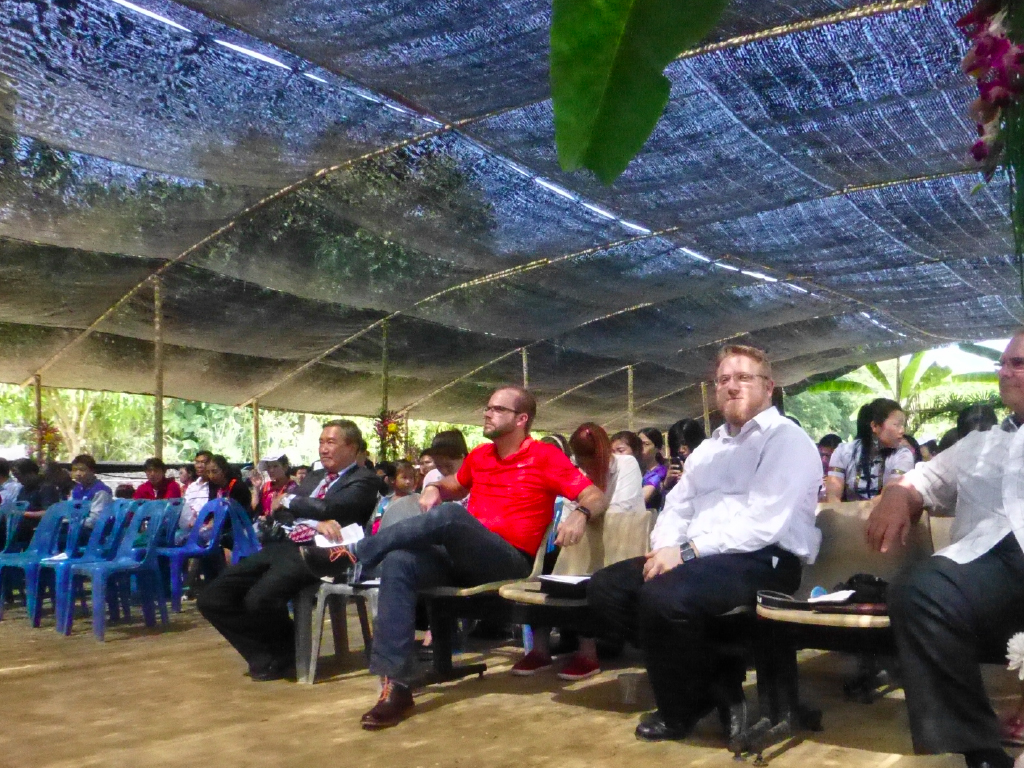
    23:32-23:54

    certain name that was given to you in high school or something a friend said to you in a moment of anger and you still even feel the pain of that to this day. Remember that how you speak to and about others is a huge deal and God cares about every single word that comes out of your mouth. The Bible even says that we're all going to be held accountable for every word that we speak.

    23:56-24:22

    So let me ask you, how is your speech? How is your speech? Are you known as someone who is honest or someone who is dishonest and lies to get their way? Are you known as someone who builds up and encourages? Or are you known as someone who discourages and tears people down every single turn? You know what, we need to stop hiding behind the excuse of, "Oh, I'm just joking." Who said that this week? My hands raised. I said it to my wife the other day. I'm just joking. Does that really help at all?

    24:23-25:45

    Does that really help heal somebody from the wounds that you caused to them with your words, it doesn't. It doesn't help at all. We need to stop hiding behind that excuse. Maybe at your church today you have to find someone in your life and apologize for something you said to them recently. Maybe that person is here in this room today. Don't let this day pass you by without apologizing and asking for forgiveness for the careless words you've spoken in the past. St. Paul ends this section by saying, "Here there is no Greek and Jew circumcised and uncircumcised, barbarian, Scythian, slave, free, but Christ is all and in all." What's Paul saying here? It's kind of a weird way to end the passage, right? What's he even talking about here? Paul is saying that sin leads us to pride, which causes us to think we are better than other people. He says there is no room at all in the body of Christ for pride. No one is better than anyone else. Paul says whether you're a Gentile, a Jewish person, a slave, whether you follow all the Old Testament rules, we're all equal in the eyes of God. And the same goes to this congregation. No one is better or more important than anyone else here in this room today. No matter what family you come from, no matter how much money you have in your bank account, whether you have a position of authority in this church or not, we're all equal in the eyes of God and equally loved by Him.

    25:46-26:35

    All of us struggle with pride in one of its two forms. One of its two forms. We either struggle with self-exaltation or self-pity. We either think we're better than everybody else or less valuable than everyone else. And both those are prideful because we're focusing all of our attention and energy upon ourselves and our status. If you exalt yourself above other people, you'll think you're better than them and you won't think your sin is a big deal because you think you have it all together. So if that's you, if you struggle with that form of pride, come before the Lord this morning and say, "Lord, I need you to humble me. Help me to realize how much I need you every single day." I think a lot of us here, we fall on the opposite end of the spectrum, right? We think we're worthless and we think we have nothing to offer anyone. And that's an equally sinful thought.

    26:37-27:25

    Because God loves you, God created you with dignity, value, and worth, and you have a purpose, and it's wrong to think otherwise, because you're telling God, "You're a bad creator, you made a mistake with me," and God never makes mistakes, ever. Pride has no room in the body of Christ. It will infect us and spread if we don't destroy it. So listen to me, your sin never just affects you, it affects everyone that you know. Sin is never just your problem, it's and private because it affects how you treat other people. Sin affects this church, you know that? The sin in your life affects this church. Sin always destroys and it always ruins relationships if we let it.
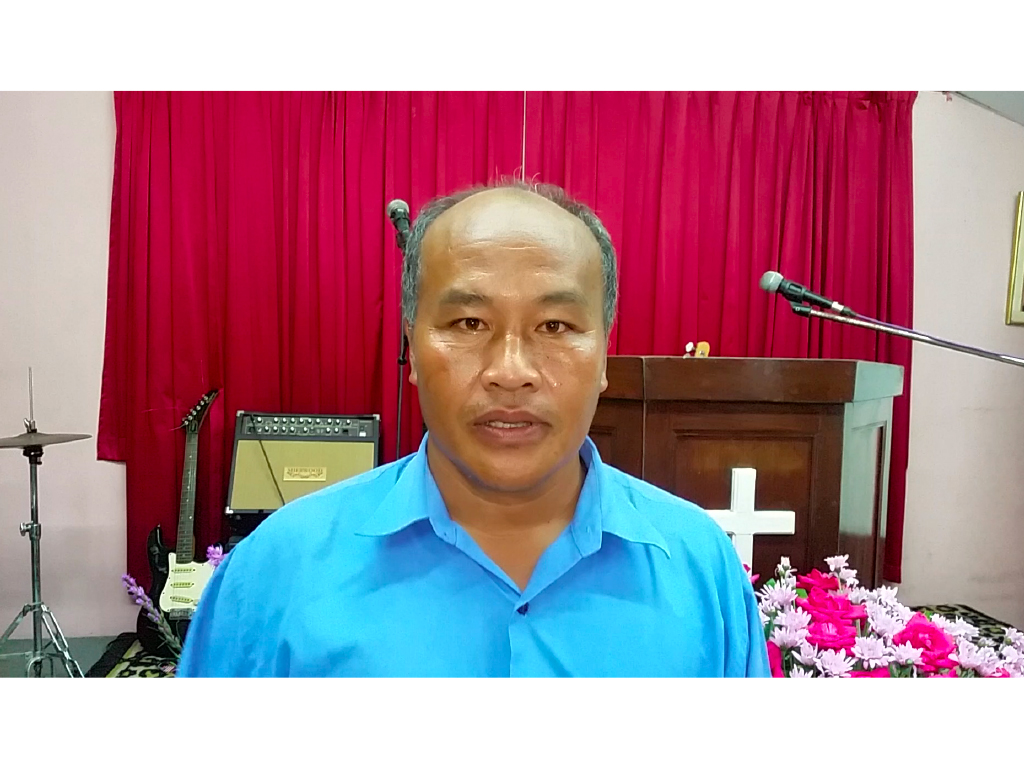
    27:27-27:42

    I know in a room this size there are many people who feel like they are helpless to fight against a certain sin in their life. You're thinking to yourself, "Taylor, this all sounds really great, but you have no idea what I'm struggling with. I've been facing this sin and this temptation for years and I I have no idea how to get away from it.

    27:42-27:43

    It's impossible.

    27:44-27:48

    If that's you this morning, please know your situation isn't hopeless.

    27:50-27:52

    Listen to this promise from God in 1 Corinthians 10.13.

    27:53-27:57

    "No temptation has overtaken you that is not common to man.

    27:57-28:01

    God is faithful, and he will not let you be tempted beyond your ability.

    28:01-28:12

    But with the temptation, he will also provide the way of escape that you may be able to endure it." God promises that he will always provide a way of escape.

    28:12-28:13

    You never have to give in.

    28:14-28:20

    You have been made new in Jesus Christ, and you've been given the desire and ability to fight against your sin.

    28:20-28:23

    Call out to him this morning for his strength and his help.

    28:23-28:27

    Turn to your spouse, a family member, or a friend for their accountability.

    28:29-28:30

    You can't fight your sin on your own.

    28:31-28:32

    It's not possible.

    28:32-28:34

    Don't be embarrassed to ask for help.

    28:34-28:34

    You need it.

    28:36-28:42

    Today can be the day that stronghold in your life is torn down. Today can be the day where your shackles to that sin are broken.

    28:42-29:29

    Today can be a brand new start for you. The Bible says that God's mercies are new every single day. There may be some people in this room who don't know Jesus Christ their Lord and Savior. If that's you, don't wait another day to repent or turn away from your sins and ask God to forgive you. Jesus says, "I will never send anyone away if they come to me." So if that's you, stop running away from the Lord, the Bible says today is the day of salvation. Turn to him for his grace and forgiveness. And for the rest of us who are Christians, realize that your sin dishonors God, it brings consequences into your life, it belongs in your past, not your present, and that will ruin relationships in your life if you let it.
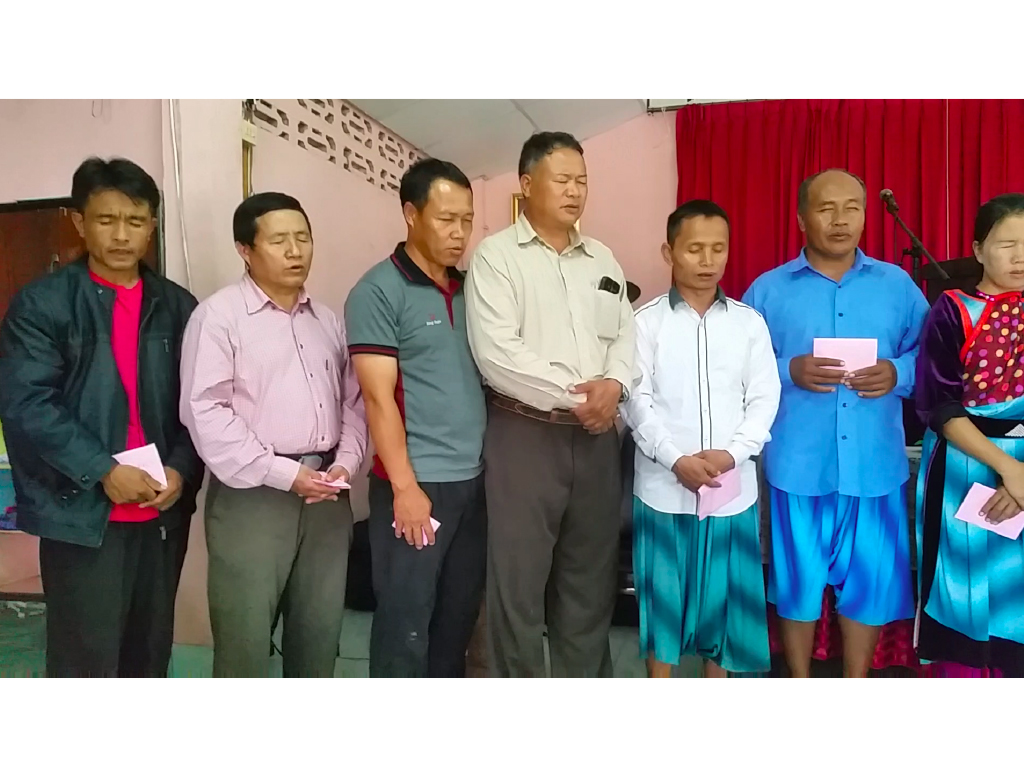
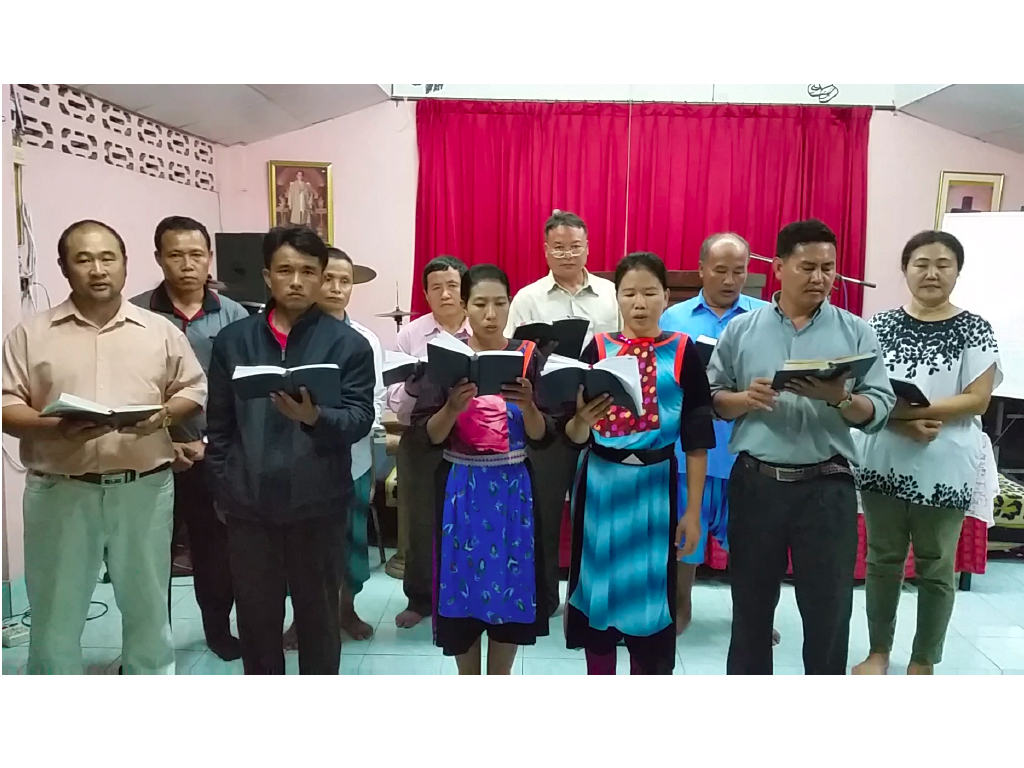
    29:31-29:55

    Never look back in longing at the old self and go back to that sin which you used to enjoy. Instead, keep your eyes fixed on Jesus, the author and perfecter of your faith, and run after him with all that you have. In Jesus alone is all that you're looking for. Don't look back at your old life and your old self. Fight against your sin by the grace of God and by the power of the Holy Spirit. Let's pray.

    29:58-30:33

    Lord, we come before you this morning and we admit that fighting against our sin is really hard. It's difficult, it's challenging, and we feel so helpless to fight against it on our own. We thank you that you've made us new, you've helped us to put on the new self, to put off the old self. By the power of the Holy Spirit, you give us the ability to fight against our sin and put it to death. I know there are people in this room who've been struggling with a certain sin for months, maybe even years, would I pray you'd help them today to end it.

    30:34-30:37

    They would stop hiding it, stop keeping it private.

    30:38-30:41

    They would confess it to you and confess it to someone else and seek help.

    30:43-30:51

    I pray for people in this room who don't know you, that for the first time, they would admit that they need to be saved and that they can't save themselves.

    30:51-30:52

    They need you.

    30:52-30:54

    They need your grace and your mercy and your forgiveness.

    30:56-30:59

    Lord, let this be a brand new day for all of us.

    31:01-31:02

    In Jesus' name, amen.

Small Group Questions (Whole Group):
Read Colossians 3:5-11

  1. When you sin, what are you telling God with your actions? Why do we at times

    believe that sin is more satisfying than God? Why can sin never compare to a

    relationship with Christ?

  2. Even though we are new in Jesus, why do we choose to go back to our old ways

    of living? How can we fight against the temptation to go back to the old self?

  3. Does sin only ever affect us? How does it hurt other people? How can we help each other to fight against sin?

Breakout Questions:

  1. Confess the recurring sin(s) in your life that you struggle with. Pray for one another and develop an accountability plan to grow in your support among each other.