
My Everlasting Father

Introduction:

For to us a child is born,
to us a son is given;
and the government shall be upon his shoulder,
and his name shall be called
Wonderful Counselor, Mighty God,
Everlasting Father, Prince of Peace.
~Isaiah 9:6

You Will Call Him... (Isaiah 9:6)

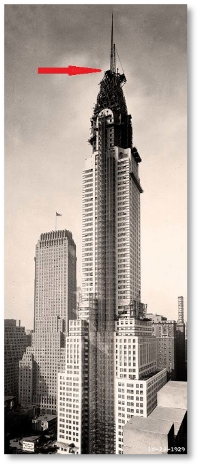
2020-DEC-RichSprunk_ChrystlerBuilding01.png
2020-DEC-RichSprunk_ChrystlerBuilding02.png

How Can a Baby Be an Everlasting Father?

  1. Everlasting: Born , but without Beginning .

    Luke 2:25-32 - ...waiting for the consolation of Israel...
    ...revealed to him by the Holy Spirit that he would not see death before he had seen the Lord's Christ.
    ...my eyes have seen your salvation
    that you have prepared in the presence of all peoples,

    John 8:56-58 - "Truly, truly, I say to you, before Abraham was, I am."

  2. Father: Unique , but Exactly Identical .

    Hebrews 1:2-3 - ...the exact imprint of his nature"

    Colossians 1:15-19 - in him all the fullness of God was pleased to dwell...
    ...you do know him and have seen him.
    "

    John 14:6-10 - Whoever has seen me has seen the Father."

  3. What Do We Need from a Father?

    • Provider (Luke 11:9-13)
    • Role Model (Eph 4:32-5:2)
    • Selflessness

Sermon Notes (PDF): BLANK
Hint:
Highlight blanks above for answers!

  • 01:20-01:33

    Good morning, everyone. In the late 1920s, Walter Chrysler, the president, owner of Chrysler Motor Company, had a dream. He wanted to build the world's tallest building in New York City.

    01:34-01:40

    Chrysler involved himself in every aspect of that construction, its design.

    01:40-01:43

    It was going to be a monument to himself, to his company.

    01:45-02:05

    He poured over the drawings that his architect would send him, and he made changes, and he wanted to incorporate automotive elements, things like hubcaps on the outside of the building and gargoyles in the shape of eagles that looked like the eagles that they put on the hood ornaments of his cars.

    02:06-02:09

    And he just invested himself in every way in this building.

    02:09-02:11

    He paid the full price out of his own pocket.

    02:12-02:17

    And he had an elaborate office built for himself in the building.

    02:17-02:23

    He had an apartment, including what he liked to boast was the highest bathroom in the city of New York City.

    02:25-02:29

    He was going to have a showroom on the first couple floors of the building.

    02:29-02:33

    and it was ultimately going to be Chrysler's world headquarters.

    02:34-02:42

    It was just an Art Deco masterpiece of modern design, technology, power, prestige.

    02:42-02:48

    Well, as I said, he involved himself in every way in the construction of this building.

    02:49-03:19

    And the day after the spire was raised up through the roof and installed, Walter Kreisler and his architect William Van Allen took a construction elevator up to about the 60th floor or so and from there they started climbing ladders inside the building up to the peak of the building. Now I'm sure you've probably seen pictures of the Kreisler building, right? You're familiar with this.

    03:20-03:27

    It's just a beautiful building. But they climbed all the way up as high as they could go inside the building.

    03:28-03:32

    And then they crawled out that window at the very top.

    03:32-03:36

    Now you can barely see it, but there's a window at the very top of that building.

    03:36-03:41

    They crawled out of that window onto scaffolding.

    03:41-03:45

    So you can see the picture of the scaffolding there, where that arrow is.

    03:45-03:47

    They crawled out there on scaffolding.

    03:47-03:52

    No railings, no harnesses.

    03:52-03:54

    Osho wasn't around then.

    03:54-03:56

    They're out there.

    03:57-04:02

    I'm like, "Oh my, oh my." This is insane.

    04:02-04:03

    But there they are.

    04:03-04:10

    Because Chrysler wanted to put his hand on that spire and get his picture taken doing it.

    04:10-04:30

    Now, if you think Walter Chrysler went to extreme measures to connect with the pinnacle of his creation, well, you ain't seen nothing yet because what God did to connect with the pinnacle of His creation is in many ways beyond our comprehension, but not beyond our ability to understand.

    04:31-04:39

    Because God so loved the world that He gave His only Son, that whoever believes in Him would not perish, but have everlasting life.

    04:40-04:40

    Let's pray.

    04:41-04:44

    Our gracious Father, give us eyes to see.

    04:45-04:48

    Give us eyes to see Jesus as our everlasting Father.

    04:49-04:58

    This is, it beggars the imagination that you would do this, but you have and you are.

    04:59-05:00

    Teach us this morning.

    05:00-05:04

    I ask that you help me to speak clearly so that we all understand.

    05:05-05:09

    And we ask in the great name of our Savior Jesus, amen.

    05:11-05:13

    So we return to our text, Isaiah 9.6.

    05:14-05:33

    For to us a child is born, to us a son is given, and the government shall be upon his shoulder, and his name shall be called Wonderful Counselor, Mighty God, Everlasting Father, Prince of Peace." Now before I get started here, I have a couple of housekeeping notes for us.

    05:33-05:38

    The first is that Isaiah 9.6 does not describe the Trinity.

    05:38-05:41

    We don't see Father, Son, Holy Spirit here.

    05:42-05:54

    Now there was probably a time in my walk with Christ where I first read Isaiah 9.6, "Oh, wonderful counselor, that's the Holy Spirit, everlasting Father, God the Father." All three, they're all right here.

    05:54-05:58

    Well, that passage does not describe the Trinity.

    05:58-06:08

    These are all names for the Messiah, who is 100% human, 100% God, without any blurring or blending of those two natures.

    06:09-06:25

    The second housekeeping note is, when Jeff gives me an opportunity to speak, I get really excited and my mind starts racing and I just think if I'm going to say something about anything, I want it to be about everything.

    06:26-06:35

    I want to get up here and explain this grand cosmological, Christological meta-narrative and Jeff is like, "You know what I think.

    06:36-06:37

    I'll tell you what I think.

    06:37-06:39

    I think you don't know what you're talking about.

    06:39-06:43

    You don't know what any of those words mean, Rich." I'm like, "Jeff, you're right.

    06:43-06:44

    You keep it simple.

    06:45-06:47

    Keep it simple, but here we are.

    06:48-06:49

    Here we are.

    06:50-06:53

    A son is given and he's an everlasting father.

    06:55-07:07

    The goal of today's message is not just to see how Jesus is an everlasting father, but for you to understand and for you to be able to say, "Jesus is my everlasting father." So that's our question.

    07:07-07:10

    How can a baby be an everlasting father?

    07:11-07:12

    How can this be?

    07:13-07:16

    Well, let's look at the two parts of this name.

    07:17-07:18

    First, we'll look at everlasting.

    07:19-07:23

    Jesus was born, but he's without beginning, right?

    07:24-07:25

    We have some common ideas about Jesus.

    07:26-07:28

    Maybe before we're saved, we have ideas about Jesus.

    07:29-07:36

    Maybe even after we're saved, we're like, well, let's see, Jesus came into being when he was born.

    07:36-07:39

    He didn't exist before he was born.

    07:39-07:47

    They just talked about him, but he came into being when he was born and he became divine through his good works.

    07:48-07:51

    God was so pleased with him, he made him a God.

    07:52-07:53

    That's not the case.

    07:54-08:08

    Or maybe Jesus became divine on the day when he was baptized and the Holy Spirit came down as a dove and the Father said, "This is my beloved son with whom I'm well pleased." That's when Jesus became God.

    08:08-08:09

    No, no.

    08:10-08:21

    And of course, there were all kinds of crazy ideas throughout the history of the church that well, Jesus wasn't even human, he was just like an aura, because the body's evil, so God couldn't take on a body.

    08:21-08:28

    So Jesus was just kind of like this spirit being, and not only was he not really human, he didn't even really die on the cross.

    08:28-08:31

    All these ideas are wrong, right?

    08:31-08:33

    Jesus wasn't created when he was born.

    08:34-08:41

    He is eternally existent, present before and at the foundation of the world.

    08:42-08:43

    Jesus simply is.

    08:44-08:47

    You see, Isaiah wasn't just predicting Jesus' birth.

    08:48-08:50

    He wasn't predicting his incarnation.

    08:50-08:56

    He wasn't looking down like in a vision through the tunnels of time, and he saw this event.

    08:56-09:02

    Oh, there's a baby out there, and oh, he's gonna have these names.

    09:02-09:03

    It's not what's happening.

    09:03-09:11

    He's not looking forward, and he's not standing, so to speak, in some future vision state looking at what's going on.

    09:12-09:15

    He saw what is.

    09:16-09:17

    He saw what is.

    09:18-09:20

    From his point in time, he saw what is.

    09:20-09:33

    This is hard for us to understand, but in the Hebrew, our passage, you will know it says, "To us a son is born, is given, "but then it shifts to the future tense.

    09:33-09:35

    "The government shall be upon his shoulder.

    09:37-09:41

    "His name shall be called." That's not what the Hebrew says.

    09:41-09:46

    For some reason when we translate this, we figure, okay, Isaiah's in the past, he's looking to the future.

    09:47-10:01

    The Hebrew says, "The government is upon his shoulder, "and his name is called." So Isaiah sees this child and says what he is.

    10:02-10:03

    He is an everlasting Father.

    10:04-10:08

    He is a wonderful Counselor, a mighty God, a Prince of Peace.

    10:09-10:15

    It's sort of like me, if I were to come up here and say, "Hey, the Steelers are Super Bowl champs.

    10:16-10:23

    I've seen this snowy night in February, and the Steelers are Super Bowl champs." And you'd say, "Well, of course they are!

    10:23-10:33

    They're six-pack." And I'm like, "No, no, let me put on my 'Seven is Heaven' hoodie, because the Steelers are Super Bowl champs." would disbelieve me.

    10:33-10:37

    If I was talking about the pirates winning the World Series you'd be more likely to disbelieve me.

    10:38-10:48

    But the fact is Isaiah is seeing what is and he's telling the people the Messiah is an everlasting father.

    10:49-10:50

    See we're confined by time.

    10:51-10:54

    Jesus is not at all confined by time.

    10:54-10:54

    He's eternal.

    10:55-10:59

    Whether he's present at creation as we read in John chapter one.

    10:59-11:18

    whether he appears as the angel of the Lord to Abraham or to Gideon or Moses, whether he is a newborn, whether he's transfigured on the mountain before his disciples, whether we see him as the resurrected Lord in glory in Revelation, Jesus is.

    11:19-11:30

    And since we're celebrating Jesus' advent, I think it's appropriate for us to turn to Luke 2 and an account that highlights Jesus' eternality as a newborn.

    11:31-11:44

    If you would turn to Luke 2, verse 25, "Now there was a man in Jerusalem whose name was Simeon, and this man was righteous and devout, waiting for the consolation of Israel.

    11:45-11:47

    And the Holy Spirit was upon him.

    11:47-11:54

    And it had been revealed to him by the Holy Spirit that he would not see death before he had seen the Lord's Christ.

    11:55-11:57

    And he came in the Spirit into the temple.

    11:58-12:11

    And when the parents brought in the child Jesus to do for him according to the custom of the law, he took him up in his arms and blessed God and said, "Lord, now you are letting your servant depart in peace according to your word.

    12:12-12:28

    For my eyes have seen your salvation, that you have prepared in the presence of all peoples a light for revelation to the Gentiles and for glory to your people Israel." See, Simeon was waiting for Messiah.

    12:29-12:30

    He knew the time was right.

    12:30-12:33

    He was looking, as it says, for the consolation of Israel.

    12:34-12:35

    That means he's looking for Messiah.

    12:35-12:38

    He's any day now, right?

    12:38-12:41

    And Simeon, he didn't see any miracles.

    12:42-12:43

    He never saw any healings.

    12:43-12:47

    He didn't see Jesus lay his hand on lepers and cleanse them.

    12:48-12:51

    Right, he didn't see any dead people raised.

    12:51-12:53

    He never even heard Jesus preach or teach.

    12:54-12:56

    He didn't see his death and resurrection.

    12:57-13:02

    And yet Simeon considered the work of Messiah as good as done.

    13:03-13:03

    Why?

    13:04-13:06

    Because he knew the promises of Isaiah 9.

    13:07-13:11

    He knew the promises that Messiah would be the salvation of all people, even Gentiles.

    13:12-13:17

    And of course now he is seeing the personal promise made to him by the Holy Spirit fulfilled.

    13:18-13:30

    For Simeon seeing the child was enough because he knew the eternality of the one who promised the eternal Messiah, whom he's now holding in his arms.

    13:31-13:32

    We just sang that song.

    13:32-13:33

    Mary, did you know?

    13:34-13:37

    Simeon's holding God in his arms and he knows.

    13:38-13:39

    It's done, it's good as done.

    13:40-13:40

    We're saved.

    13:41-13:43

    God has delivered us.

    13:44-13:51

    The fact that the child had been born was assurance that everything else necessary for salvation was going to be accomplished.

    13:53-14:01

    Simeon saw not just the baby, he saw and believed in the finished work, even though he was not going to live to see it.

    14:01-14:03

    But Simeon also knew there was more to come.

    14:04-14:10

    He knew the child would grow and become both suffering servant and the righteous ruler of Israel.

    14:11-14:18

    Simon knew what the law and the prophets said about Messiah, which leads us to what Jesus said as an adult.

    14:19-14:22

    And we've covered this with Jeff in his messages.

    14:23-14:29

    In John chapter eight, Jesus is contending, disputing with the Pharisees.

    14:30-14:39

    And he gets to the point where he says, "Your father Abraham rejoiced "that he would see my day, "and he saw it, and he was glad.

    14:40-14:51

    "So the Jews said to him, "'You're not yet 50 years old, "'and you have seen Abraham.' "Jesus said to them, Truly, truly, I say to you, before Abraham was, I am.

    14:52-14:58

    You can't get a clearer declaration that Jesus is God than that right there.

    14:58-15:01

    And they knew it, and they were gonna stone him for it.

    15:02-15:10

    Yes, Abraham, Abraham saw him, as did Moses and Gideon and Isaiah and Simeon.

    15:10-15:14

    They all saw the eternal Messiah, Jesus.

    15:15-15:17

    and seeing, as they say, is believing.

    15:18-15:23

    I tell you, it's difficult to have a temporary outlook on life.

    15:23-15:29

    It's difficult to have a temporary theology when your God says, "I am eternal.

    15:30-16:13

    "My steadfast love is forever." Right, when God revealed himself to Moses, he said in Exodus 34, verse six, He said, "The Lord, the Lord, a God merciful and gracious." But really what he's saying there is, "I am, I am a God merciful and gracious, slow to anger and abounding in steadfast love and faithfulness, keeping steadfast love for thousands." When we contemplate that Jesus is God and He is God with us, we can have the assurance that things aren't just gonna be okay, but everything is gonna be great.

    16:14-16:15

    So let's look at the next part, Father.

    16:17-16:18

    What do we know about Father?

    16:18-16:25

    Well, His everlasting Father, Jesus, is unique, but He's exactly identical.

    16:26-16:29

    So again, we have common ideas about God the Father, right?

    16:30-16:37

    In some religions, some systems of Christianity, God's mad at you.

    16:38-16:39

    He's really mad at you, and you know what?

    16:39-16:41

    Jesus isn't too pleased with you either.

    16:42-16:44

    So what you've got to do, you've got to pray to Mary.

    16:45-16:46

    She's like mom.

    16:46-16:47

    You know, mom's nicer.

    16:48-16:49

    And you can pray to the saints too.

    16:50-16:51

    They'll help you out.

    16:54-16:58

    Some people think that the Old Testament God is not like the New Testament God.

    16:59-17:01

    He's all wrath and anger.

    17:03-17:05

    Whereas the New Testament God, Jesus is love.

    17:05-17:07

    Everything's love. Everything's good.

    17:07-17:09

    No judgment zone here.

    17:10-17:21

    But the verse I just read, Exodus 34, a God merciful and gracious, slow to anger, and abounding in steadfast love and faithfulness, that's Jesus.

    17:23-17:25

    Another view is that he's kind of remote.

    17:26-17:29

    God the Father, it's far away.

    17:30-17:33

    I don't get him, I know he doesn't get me.

    17:33-17:54

    He's just remote, he's disconnected, he's up there, handing out rules like, "Do this, follow these rules. You better do this now or I might zap you." He's just this imposing faraway God who's totally a do as I say supreme being.

    17:55-17:59

    Beloved, those ideas are completely wrong. This is what the scripture says.

    18:00-18:06

    Hebrews chapter 1, I only have verses 2 and 3 up here, but I'm going to start at verse 1.

    18:06-18:11

    Long ago, at many times and in many ways, God spoke to our fathers by the prophets.

    18:12-18:20

    But in these last days, he has spoken to us by his son, whom he appointed the heir of all things, through whom he also created the world.

    18:21-18:26

    He's the radiance of the glory of God and the exact imprint of his nature.

    18:27-18:36

    And then Paul tells us in Colossians 1.15-19, he is the image of the invisible God, the firstborn of all creation.

    18:37-18:48

    For by him all things were created in heaven and on earth, visible and invisible, whether thrones or dominions or rulers or authorities, all things were created through him and for him.

    18:48-18:52

    And he is before all things, and in him all things hold together.

    18:53-19:02

    For in him all the fullness of God was pleased to dwell." See, the Greek word for imprint is character.

    19:03-19:05

    It's the basis of our word character.

    19:07-19:12

    And it can mean the tool used to engrave something.

    19:12-19:16

    It can also mean the one doing the engraving, creating the image.

    19:16-19:26

    But for our purposes, the meaning is the exact expression or a precise reproduction in every respect.

    19:26-19:30

    So Jesus is not like a carbon copy of God.

    19:31-19:32

    He's not a mimeograph.

    19:33-19:33

    You know what that is?

    19:33-19:40

    I know some of you, just by my saying mimeograph, you can see the purple print and smell that fluid.

    19:42-19:43

    I'm very old.

    19:46-19:50

    Jesus is not even like a Xerox of God, right?

    19:50-19:58

    Because if you know something about Xeroxes, you know, when you start making a copy, the multiple copies begin to degrade, right?

    19:59-20:01

    They're not like the original, right?

    20:01-20:07

    And you've seen copies, you know, they got all these little speckles all over 'em and they're crooked, right?

    20:08-20:14

    So no, Jesus is exactly like the Father.

    20:15-20:22

    Quite simply, Jesus is the glorious exact representation of God the Father and in him, all the fullness of God dwells.

    20:23-20:44

    If you wanna know who God is, what he's like, what he thinks of his creation, what he thinks of people, "What he thinks of you, look at Jesus in the scripture." And Jesus also had quite a few things to say about his relationship to the Father, and perhaps nowhere more clearly than on the night before he was crucified.

    20:45-20:54

    Jesus was talking with his disciples, and he's talking to Philip, and he says to Philip, "I am the way, the truth, and the life.

    20:55-20:58

    "No one comes to the Father except through me.

    20:58-21:01

    "If you had known me, you would have known my father also.

    21:02-21:16

    "From now on, you do know him, and you have seen him." Philip said to him, "Lord, show us the father, "and it's enough for us." Jesus said to him, "Have I been with you so long, "and you still do not know me, Philip?

    21:17-21:19

    "Whoever has seen me has seen the father.

    21:20-21:22

    "How can you say, 'Show us the father'?

    21:22-21:25

    "Do you not believe that I am in the father, "and the father is in me?

    21:26-21:34

    "The words I say to you I do not speak on my own authority, "but the Father who dwells in me does his work." It can't be any clearer.

    21:35-21:36

    Do you want to know the Father?

    21:37-21:39

    Then fix your eyes on Jesus.

    21:40-21:45

    Now I thought about what is it we need from a father?

    21:46-21:47

    Well, we need many things.

    21:47-21:51

    And to list them all would keep us here for a week, so I'm not gonna do that.

    21:52-21:56

    But I would like to look at three things that we do need from a father.

    21:56-21:57

    We need a provider.

    21:58-22:00

    We need a role model.

    22:01-22:03

    And we need a man who is selfless.

    22:04-22:14

    Now our earthly fathers, they are or they were, they demonstrated these qualities, perhaps to greater or lesser degrees.

    22:15-22:22

    But Jesus is the exact imprint of God the Father is all of these things far more abundantly than we can ask or think.

    22:23-22:26

    Let's look first at provider.

    22:26-22:40

    Jesus, after he taught his disciples to pray and told them a parable about asking urgently and persistently, says at Luke 11:9, he says, "And I tell you, ask, and it will be given to you.

    22:40-22:42

    "Seek, and you will find.

    22:42-22:44

    "Knock, and it will be opened to you.

    22:45-22:53

    "For everyone who asks receives, "and the one who seeks finds, "and the one who knocks, it will be open.

    22:53-22:59

    "What father among you, if a son asks for a fish, "will instead of a fish give him a serpent?

    23:00-23:02

    "Or if he asks for an egg, will give him a scorpion?

    23:02-23:15

    "If you then, who are evil, "know how to give good gifts to your children, "how much more will the heavenly father "give the Holy Spirit to those who seek him?" So as children, we need our needs provided for.

    23:16-23:21

    And our fathers, again, to a greater or lesser extent, took care of our needs.

    23:22-23:31

    My father rarely gave me all the things I wanted, but I don't think he ever gave me anything that I wanted, come to think of it.

    23:32-23:33

    (audience laughing)

    23:33-23:37

    But he always gave me the things that I needed.

    23:38-23:41

    And God knows we have needs.

    23:42-23:43

    And he wants us to ask.

    23:44-23:46

    But this is not prosperity gospel.

    23:46-23:48

    Please don't misunderstand me here.

    23:48-23:49

    This is not prosperity gospel.

    23:50-23:51

    It's not the things that we want.

    23:52-23:57

    God wants us to pray and talk with him about what we need.

    23:57-24:04

    And 'cause what happens over time is God impresses on our mind, oh, Lord, you're right, that's what I really need.

    24:04-24:08

    I wanted this, but you're telling me I need this and you're right.

    24:09-24:14

    And what he tells us most of all that we need is God himself, the gift of the Holy Spirit.

    24:15-24:18

    The second thing we need from a father is a role model.

    24:19-24:22

    And this sort of partakes of presence.

    24:22-24:27

    I use role model, but there's an aspect of presence to this, right?

    24:28-24:31

    Because as little children, we need examples.

    24:32-24:37

    We need an example to follow, to imitate, and to understand what right looks like.

    24:37-24:42

    And for that to happen, it requires the father to be present.

    24:43-24:46

    And I understand, some of us, we haven't always had a father who was present.

    24:47-24:49

    And that was a bad role model.

    24:50-24:52

    But we're looking at a good role model this morning.

    24:53-24:57

    And by being present, we speak even without words.

    24:58-25:04

    I was reminded of this recently by my grandson who is staying with us.

    25:04-25:07

    He loves to help me feed the cats at night.

    25:07-25:16

    We have three cats and he's like, "I help, I help, eat, eat, I help." And he gets up there and he helps me put the food in the bowls.

    25:16-25:18

    Well, one of our cats has to take some medication.

    25:19-25:21

    So I smash that up in there, mix it up in the food.

    25:22-25:23

    And then we'd go down and we'd put the bowls down.

    25:25-25:29

    And because the one cat has medicine, we don't want the other two eating it.

    25:30-25:32

    Well, the other two, they're dum-dums, they don't know that.

    25:33-25:39

    So we got a gray cat, he just like comes over, pushes the orange one out of the way and tries to eat his food.

    25:39-25:45

    And I have to stand there and watch them and I'm like, okay, no, I promise you, I don't kick my cats.

    25:45-25:47

    but I just move him with my foot.

    25:48-25:50

    Go back to your own bowl.

    25:51-25:53

    My grandson's standing there watching this.

    25:55-25:57

    He's pushing the cats around.

    25:57-26:05

    And I'm like, wow, I have to be careful what I say and do because he's going to copy me instantly.

    26:06-26:14

    So as you can see, I by no means hold myself out as a paragon of fathering or an ideal to follow.

    26:14-26:20

    But Jesus, yes, he is the ultimate fatherly role model for us to imitate.

    26:21-26:31

    Listen to the qualities that Jesus models and that Paul says we should imitate in Ephesians 4:32-5.

    26:32-26:38

    He says, "Be kind to one another, tenderhearted, "forgiving one another, as God in Christ forgave you.

    26:39-26:52

    "Therefore, be imitators of God as beloved children and walk in love as Christ loved us and gave himself up for us, a fragrant offering and sacrifice to God.

    26:53-26:54

    You see, our culture denies it.

    26:55-27:03

    We ourselves may not always be conscious of it, but a father is the center point around which children's lives orbit.

    27:04-27:10

    For good or for ill, the father is the one to whom we all refer back.

    27:11-27:21

    Even when we're grown, even as adults, even if our fathers are gone, we look back and we either have a good example or there's absence.

    27:21-27:32

    And for some looking to our father, that's soulless and for others it's pain because they yearn for a father who wasn't present.

    27:33-27:37

    But for us, the good news is Jesus is always present.

    27:38-27:51

    The Bible says, "I will never leave you nor forsake you." And Jesus said, "Behold, I am with you always to the end of the age." In John 14, verse 18, he says, "I will not leave you as orphans.

    27:51-28:00

    I will come to you, yet a little while, and the world will see me no more, but you will see me, because I live, you also will live.

    28:01-28:13

    In that day, you will know that I am in my Father, and you in me, and I in you." Jesus is the God-man who connects us directly to the triune God.

    28:14-28:15

    There's no separation.

    28:15-28:17

    He's got a hand on us.

    28:17-28:18

    He's laid hold of us.

    28:18-28:24

    He's laid hold of the Father, and he connects us directly to the Trinity.

    28:25-28:27

    There's no separation.

    28:27-28:30

    Jesus is always present with us.

    28:31-28:35

    And then the last thing, we need a Father who is selfless.

    28:36-28:41

    You see, a good father will give time, spend time, give attention to his children.

    28:42-28:43

    And that partakes of sacrifice.

    28:44-28:49

    It partakes of laying down one's life a little bit at a time.

    28:49-28:55

    A father has to set aside his own wants and desires for his children's needs.

    28:56-28:57

    And again, not all fathers do this.

    28:59-29:01

    But a good father would do this.

    29:02-29:10

    And I dare say a good father would give his life for his child, would substitute his own life if it meant that his child could live.

    29:11-29:21

    You know, go back to Walter Kreisler, standing up there in the wind and the cold on top of his building, you know, kind of teetering up there.

    29:21-29:26

    What if he had fallen headlong off the building, plunged to the sidewalk below?

    29:27-29:30

    That's all we would remember about Walter Kreisler, wouldn't it?

    29:30-29:41

    "Oh yeah, that guy that fell off of his building 'cause he was just so proud he wanted to go up there and touch the top of it." What a fool, what folly.

    29:41-29:45

    You know, we wouldn't think about this beautiful Art Deco building anymore, right?

    29:45-29:51

    We would, oh, we would remember about Walter Chrysler as he's the guy that plunged headlong off his building.

    29:52-29:52

    Guess what?

    29:53-29:57

    Jesus plunged headlong into our existence.

    29:58-30:06

    He emptied himself by taking on the form of a servant and being born in the likeness of men and selflessly gave his life to redeem ours.

    30:06-30:12

    Jesus gave the last full measure to connect with us, the pinnacle of his creation.

    30:13-30:24

    This might seem like foolishness and folly to some people, but we know the foolishness of God is wiser than men and God chose what is foolish to shame the wise.

    30:25-30:43

    Now you may be wondering, "Well, what do I do in response to this message?" "I really don't want you to do any specific thing." "I don't want you to do something." The goal of this message is to renew your mind and cause you to think about Jesus in ways perhaps you haven't before.

    30:44-30:54

    Because as your mind is renewed and transformed and conformed to the truth of God's word, you will quite naturally do what God wills.

    30:55-30:58

    and it will come naturally to keep God's commands.

    30:59-31:28

    See, in our case today, whether you've had a great earthly father or you're among those of us who did not, I want you in your inmost being to lean into the truth that you have an everlasting father in Jesus who provides what you need, who is always present, and who selflessly gave himself and gives of himself for you who loves you with a steadfast everlasting love.

    31:29-31:37

    I want you to say with great confidence that indeed Jesus is my everlasting Father.

    31:37-31:38

    Let's pray.

    31:39-31:44

    Oh great God, merciful, kind, loving, gracious.

    31:45-31:52

    We praise you for the gift, for your indescribable gift of our Lord Jesus Christ.

    31:53-32:03

    Help us, Lord, to see Him always as our wonderful Counselor, our mighty God, our everlasting Father, our Prince of Peace.

    32:04-32:07

    And it's in His great name we ask, amen.

Small Group Discussion
Read Isaiah 9:6

  1. What was your big “take-away” from this passage / message?

  2. Do you think of Jesus as eternal? How has your understanding of Jesus’ eternality increased as you have matured in Him?

  3. If available, read different translations of Isaiah 9:6 (HBC uses the English Standard Version, or ESV). How do those translations differ, if at all? How does the present tense of the verb “to be” (used in the Hebrew text) affect your understanding of Jesus?

  4. In what ways are we helped by knowing Jesus is “the exact imprint” of God? How does that affect your understanding of God?

  5. What are ways Jesus models God the Father for us?

  6. If you do not or did not have a positive relationship with your earthly father, how can Jesus as your everlasting father transform and satisfy your need for that essential relationship?

Breakout
Pray that Jesus will reveal Himself to you as your everlasting father.

My Mighty God.

Introduction:

For to us a child is born,
to us a son is given;
and the government shall be upon his shoulder,
and his name shall be called
Wonderful Counselor, Mighty God,
Everlasting Father, Prince of Peace.
~Isaiah 9:6

You Will Call Him... (Isaiah 9:6)

  1. My God .
    • Romans 10:9 - Jesus is Lord
    • John 20:31 - Jesus is the Christ, the Son of God
    • John 8:24 - unless you believe that I am (he)
    • Matthew 12:32
  2. My Mighty God.
    • 2 Chronicles 14:9-12a
    • 2 Chronicles 16:7-9 - For the eyes of the LORD run to and fro throughout the whole earth, to give strong support to those whose heart is blameless toward him.
2020-DEC_YouWillCallHim-Part2_Powerlift01.jpg
2020-DEC_YouWillCallHim-Part2_MMA.jpg

Sermon Notes (PDF): BLANK
Hint:
Highlight blanks above for answers!

  • 01:20-01:22

    We are in week two of our Christmas series.

    01:22-01:25

    Open up your Bibles to Isaiah 9, verse 6.

    01:26-01:28

    Rich Sprung kicked us off last week.

    01:29-01:42

    The series is called "You Will Call Him." And we're looking at a very familiar passage, Isaiah 9, verse 6, but we're slowing down.

    01:45-01:57

    in each of these phrases, "that you will call Him." It was a time of political corruption, oppression, inverted morality.

    01:57-02:02

    What was evil was considered good, and what was good was considered evil.

    02:02-02:04

    And it was a time of fear.

    02:05-02:10

    And it was a time of a wicked king named Ahaz.

    02:10-02:12

    You can read more about him in 1 Kings 16.

    02:15-02:30

    But before you complain too much about the leaders that we have in our country today, or in our state, or whatever, A has - he was a wicked human being.

    02:33-02:36

    He was pro-child killing.

    02:39-02:41

    to the point that He sacrificed His own Son.

    02:45-02:52

    I guess to appear woke to the other people that worship the false gods.

    02:53-02:55

    He promoted idolatry.

    02:55-02:57

    He was terrible with foreign affairs.

    02:57-02:59

    He was a true worshiper.

    02:59-03:01

    It was a terrible time.

    03:04-03:09

    And God's people need to know God was still in control.

    03:12-03:19

    And if it sounds familiar, people living in fear, under corrupt leadership.

    03:23-03:25

    Israel was suffering.

    03:26-03:27

    Israel needed hope.

    03:28-03:33

    And you know, there's a lot of people today feeling the same.

    03:34-03:34

    Like, where's the hope?

    03:35-03:36

    Where's the hope?

    03:36-03:37

    Christmas, did you hear?

    03:38-03:39

    Where's the hope?

    03:40-03:45

    Well, through Isaiah, the Lord said, "Hope is coming." Hope is coming.

    03:46-03:50

    And you see, God's answer wasn't political reform.

    03:52-03:55

    God's answer wasn't social justice.

    03:57-03:59

    God's answer wasn't even religion.

    04:00-04:11

    God's answer to all of the problems that Isaiah's culture was facing, his answer was a baby.

    04:13-04:14

    And that's Isaiah 9.6.

    04:15-04:19

    He says, "For to us a child is born.

    04:21-04:23

    To us a son is given.

    04:24-04:26

    And the government shall be upon his shoulder.

    04:28-04:37

    And his name shall be called, Wonderful Counselor, Mighty God, Everlasting Father, Prince of Peace.

    04:39-04:44

    In the Bible, especially in the Old Testament, names were often a commentary on character.

    04:46-04:49

    And here, the name of the Messiah will be called.

    04:49-04:55

    In other words, you will call Him - first of all, we saw wonderful Counselor Rich cover that last week.

    04:55-05:00

    The counsel of Jesus Christ is timeless and it's personal, and it's life.

    05:01-05:03

    You will call Him my wonderful Counselor today.

    05:05-05:08

    You will call Him my mighty God.

    05:10-05:15

    So on your outline, if you're taking notes, it doesn't get much simpler than this.

    05:16-05:18

    Number one, you will call Him my God.

    05:19-05:20

    Write that down.

    05:20-05:24

    You will call Him my God.

    05:28-05:30

    Matthew or Isaiah promises a baby.

    05:32-05:32

    Right?

    05:32-05:36

    But not just a baby and not just a man.

    05:36-05:44

    We see here very clearly, God says this baby is going to be born, and you're going to call this baby God.

    05:47-06:26

    And I have to remind you here, for some this isn't a reminder but new information, but believing that Jesus Christ is God for salvation. I'm going to say that again. Believing that Jesus Christ is God is essential for salvation. You know, there are a lot of religions out there that acknowledge Jesus on some level. You can talk about the Mormons and the Jehovah's Witnesses and the Muslims and the Christian scientists and even the Scientologists. You realize all of those cults are pro-Jesus, right?

    06:27-06:43

    If you would sit down with one of the members and say, "Jesus, thumbs up or thumbs down?" They would all say, "Thumbs up, Jesus!" But none of those cults believe that Jesus Christ is actually God in the flesh, and they're not saying.

    06:47-06:55

    And you're like, "Well, Jeff, what about somebody, "like what about my neighbor that maybe thinks He said, "Jesus was just this really good teacher.

    06:56-07:01

    He was this really good moral person, but I don't necessarily believe that He's God.

    07:01-07:04

    You know, what would you say about that person?

    07:04-07:12

    It's like, I think Jesus was a good person and I believe His teachings, but I don't believe He was God." That person's not saved.

    07:15-07:16

    Like, how can you say that?

    07:16-07:19

    Well, there's no - listen to this closely.

    07:20-07:28

    There's not one verse in the Bible, not one, that allows for believing in Jesus simply as a good teacher.

    07:29-07:37

    But there are many verses, many verses in the Bible, that teach you must believe that He is God in order to be saved.

    07:38-07:39

    Let me give you some examples here.

    07:39-07:44

    Romans 10, 9 says, "If you confess with your mouth that..." What?

    07:44-07:52

    "Jesus is Lord." That means so much more than Jesus is just my boss.

    07:52-07:55

    This is Jesus is the exalted God.

    07:56-08:02

    If you confess with your mouth that Jesus is Lord, believe in your heart God raised him from the dead, you will be saved.

    08:03-08:04

    John 20, 31.

    08:06-08:10

    We're gonna get here Lord willing, unless he returns before that in our series in John.

    08:11-08:13

    But he tells us the whole purpose for his writing.

    08:13-08:19

    He says, "But these are written that you may believe "that Jesus is the Christ." Look at this next phrase.

    08:20-08:25

    "The Son of God." And some people say, "Well, 'Son of God' means that He wasn't God.

    08:25-08:29

    He was like the Son of God." And that is completely ignorant thinking.

    08:30-08:37

    Because in Jesus' day, if you're walking around telling people, "Hey, by the way, I'm the Son of God," they knew exactly what you were saying.

    08:37-08:41

    You were saying that you were the embodiment of Almighty God in the flesh.

    08:41-08:42

    That's what that phrase means.

    08:42-08:44

    Not lesser than God.

    08:44-08:46

    I am God in the form of a man.

    08:46-08:47

    That's what that means.

    08:49-08:54

    And John says he wrote everything he wrote for that reason, that you would believe he's the Son of God.

    08:54-08:57

    And then, what would Jesus Himself say?

    08:57-08:59

    What would Jesus Himself say?

    08:59-09:00

    Well, here's what Jesus said.

    09:01-09:05

    Jesus said, "I told you that you would die in your sins.

    09:07-09:14

    For unless you believe that I am He, you will die in your sins." Now, I put "He" in parentheses because you know He's not in the original language.

    09:15-09:25

    Jesus was literally saying here, He says, "For unless you believe that I am, you will die in your sins." I am - what's I am?

    09:26-09:27

    I am is God's name.

    09:27-09:30

    The Old Testament name for God.

    09:30-09:30

    Yahweh.

    09:31-09:33

    God said that's what My name is.

    09:33-09:35

    It means I am. I am who I am.

    09:36-09:53

    And Jesus said, "Unless you believe that that's who I am," look what He said, "you will die in your sins." and I stand up here and tell you, you must believe that Jesus Christ is God in the flesh in order to be saved, I did not make that message up.

    09:53-09:55

    That comes from the Bible.

    09:57-10:00

    So if you're struggling to believe that, your struggle is with God.

    10:01-10:02

    Best of luck to you on that.

    10:06-10:13

    Okay, I see what you're saying, but why do I have to believe that Jesus is God?

    10:13-10:15

    Why is that essential for salvation?

    10:15-10:16

    I mean, think about that.

    10:18-10:24

    I have to subscribe to a particular theological framework in order to be saved.

    10:24-10:26

    Why do I have to believe He is God?

    10:26-10:27

    I'm going to tell you why. Listen.

    10:27-10:35

    Because until you recognize Jesus for who He is, you will never receive what He offers.

    10:38-10:40

    I'm going to rephrase that in a positive way.

    10:43-10:44

    You might want to write this down.

    10:44-10:48

    When you believe who He is, you'll receive what He gives.

    10:50-10:51

    That's why it's so important.

    10:53-10:55

    That sounds like a Dan Smith thing, right, Mike Wolsky?

    10:55-11:00

    Until you believe who He is, you'll never receive what He gives.

    11:04-11:10

    In other words, if you think Jesus was just good moral teacher, you'll always receive Him on that level.

    11:10-11:14

    "He has a little nugget of information to help me get through my day and help me be a good mom today," or whatever.

    11:16-11:17

    He is so much more than that.

    11:19-11:22

    Or Jesus says, "Jesus is my life coach." Really?

    11:25-11:31

    No. Jesus is nothing less than Almighty God in the form of a man.

    11:32-11:34

    And that's what Isaiah was prophesying here.

    11:35-11:38

    And when you believe who He is, you'll receive what He gives.

    11:39-11:41

    I want to illustrate this for you.

    11:41-11:45

    You don't have to turn there now, but I want you to turn there later.

    11:45-11:46

    Matthew 12.

    11:48-11:57

    I just want to use this passage to sort of illustrate this idea that you absolutely have to receive Jesus as He is.

    11:58-12:00

    Believe who He says He is.

    12:01-12:05

    In Matthew 12, Jesus healed a demon-possessed man.

    12:05-12:14

    And the Pharisees come along and they're like, "Well, he did that by the power of Satan, you know." And Jesus said, "Well, a house divided against itself can't stand, right?

    12:14-12:20

    Satan wouldn't go around casting out Satan." But listen to what Jesus says here in Matthew 12.32.

    12:21-12:23

    I think we'll have this on the screen here. Yeah.

    12:24-12:42

    Jesus said, "Whoever speaks a word against the Son of Man will be forgiven." But whoever speaks against the Holy Spirit will not be forgiven, either in this age or in the age to come.

    12:45-12:48

    Jesus said you can speak a word against the Son of Man and be forgiven.

    12:49-12:54

    In other words, someone could initially reject Jesus Christ.

    12:56-13:01

    out of ignorance, but then repent.

    13:01-13:03

    And say, "I was wrong about who Jesus is.

    13:04-13:13

    And I see who He is now, and I believe that Jesus is who He said He is." And that person could be saved, for sure.

    13:13-13:15

    That happens all the time.

    13:16-13:17

    What's happening in this passage?

    13:17-13:18

    Again, I want you to look this up.

    13:19-13:27

    Because I'm going to explain what's happening you understand that when you believe who He is, you'll receive what He gives.

    13:28-13:33

    In this passage, the Pharisees saw the Holy Spirit at work through Jesus.

    13:35-13:41

    What the Holy Spirit was doing was giving everyone clear evidence that Jesus is God.

    13:43-13:53

    So the Pharisees witness, again, through the Testament, the Holy Spirit, God at work, and they walk away with the conclusion Jesus is satanic.

    13:56-13:57

    Here's what this means.

    13:59-14:01

    You better listen really close to this.

    14:02-14:08

    When you see Jesus for who He is - God.

    14:12-14:23

    Through the Word of God, and instead of receiving Jesus as God, You choose to dismiss the evidence.

    14:27-14:32

    You are denying what the Holy Spirit is testifying to you.

    14:33-14:37

    You are denying what the Holy Spirit is speaking into your heart.

    14:40-14:43

    And there is no hope for you, whatsoever.

    14:46-14:55

    When you hear the Word of God proclaimed, and the Spirit of God works with the Word of God, The Holy Spirit is saying to you, "Jesus is God. Jesus is God.

    14:55-14:56

    Jesus is God.

    14:57-14:57

    Put your faith in Him.

    14:58-14:59

    Believe Him. Trust Him.

    15:00-15:00

    Cry out to Him.

    15:00-15:03

    Jesus will save you because He's God.

    15:03-15:13

    Jesus is God." And the Holy Spirit is speaking that to your heart, and you know the Holy Spirit is speaking to your heart, and you just dismiss Him.

    15:14-15:14

    No.

    15:18-15:19

    There's no hope for you.

    15:20-15:21

    It's just not.

    15:22-15:25

    That's what some people call blasphemy of the Holy Spirit.

    15:30-15:37

    Right now I can tell by the look on some of your faces, you're asking, "Have I ever done that?" Have you ever wondered that?

    15:37-15:38

    Don't raise your hand, but have you ever wondered that?

    15:39-15:41

    Like, "Oh my gosh, this is serious business.

    15:41-15:42

    Have I ever done that?

    15:42-15:50

    Have I ever committed the unpardonable sin?" Well, if you're asking that question, you haven't done that.

    15:52-15:57

    Do you feel the air pressure just raised with the sighs of relief that went in the room?

    15:59-16:02

    If you're asking the question, you haven't done that.

    16:02-16:06

    Because the person who truly does this doesn't care to ask.

    16:07-16:08

    You see, that's the difference.

    16:09-16:20

    The person who blasphemes the Spirit, the person who wholesale rejects the person of Jesus Christ, they're not sitting around asking, I wonder if I committed the unforgivable sin.

    16:20-16:23

    They don't give a rip. They don't care.

    16:25-16:26

    They've made up their mind.

    16:27-16:31

    They're not going to believe despite what the Holy Spirit has revealed to them.

    16:31-16:33

    And the point is this.

    16:36-16:39

    You have to receive Jesus Christ for who He is.

    16:42-16:58

    and a refusal to acknowledge clear testimony from the Holy Spirit of the deity of Jesus Christ, that's an unforgivable sin.

    17:00-17:02

    Because God doesn't have plan B.

    17:04-17:07

    God's not going to say, "Oh, you're not interested in My Son?

    17:07-17:12

    Well, let me see what other option I have for you to get you into Heaven." There is no plan B.

    17:15-17:24

    Your eternal destination hinges upon Jesus is who Isaiah said this baby is, and that is He is God.

    17:25-17:26

    He is God.

    17:27-17:27

    Okay?

    17:28-17:40

    So if you've been visiting this church, or you've been coming for a while, you've been watching online, and you're wondering what do we really think about Jesus, can I make it any more clear to you?

    17:41-17:42

    He is God!

    17:42-17:44

    That's what we believe at Harvest Bible Chapter.

    17:46-17:48

    He's God. You will call Him my God.

    17:50-17:54

    Secondly, you will call Him my mighty God.

    17:55-17:56

    My mighty God.

    17:59-18:06

    You know, like you, I've read this passage hundreds of times, or heard sermons on it.

    18:06-18:08

    It's on the Christmas cards.

    18:09-18:10

    Charlie Brown might have said it.

    18:11-18:23

    But when I heard "My mighty God," I used to think that that word "mighty" just spoke to His power, like creation power.

    18:23-18:25

    Like God speaks and He creates.

    18:26-18:27

    Or like His miracles.

    18:28-18:30

    I used to think that that's what "mighty" meant.

    18:30-18:35

    And listen, yes, God does have that kind of power, creation, miracles.

    18:36-18:37

    He can do that.

    18:37-18:42

    Now this, this word "mighty" is speaking very specifically to something else.

    18:43-18:55

    The Hebrew word is "gabor," which literally means "to prevail." In the Hebrew, it's a military term.

    18:57-18:59

    It refers to military might.

    18:59-19:05

    You could say a proven soldier, or a champion, or someone who is unconquerable.

    19:07-19:11

    That's the flavor that the word "mighty" has here.

    19:13-19:19

    And to try to illustrate this in a human sense, "mighty" doesn't look so much like this.

    19:23-19:26

    Now before you ask, give back to that, no give back.

    19:27-19:29

    Before you ask, that is me.

    19:31-19:34

    Some of you might not recognize me because I didn't have a beard, my hair was darker back then.

    19:36-19:39

    I used to think, "Well, this is what'mighty' looks like.

    19:39-19:40

    Power, right?

    19:40-19:44

    But that's really not the Hebrew word "gebur." "Mighty" doesn't look like this.

    19:44-19:45

    Okay, go to the next picture.

    19:45-19:46

    Here's what "mighty" looks like in the Hebrew.

    19:50-19:53

    That's "mighty." Do you understand the difference between the two?

    19:54-19:55

    See the difference?

    19:58-20:04

    In other words, this Hebrew word is telling us That Jesus is a warrior.

    20:08-20:10

    Jesus is a fighter.

    20:13-20:17

    That no enemy can prevail against Him.

    20:21-20:24

    That's the message that Israel needed to hear.

    20:27-20:29

    And church, that's the message that we need to hear today.

    20:30-20:39

    because let's be honest, doesn't it feel right now that we are being smothered by evil?

    20:40-20:42

    Doesn't it feel like that? Right?

    20:45-20:54

    We've got wicked leaders, we've got sex trafficking, we've got abortion, we've got violent protests, we could go on and on and on and on.

    20:55-20:58

    I can't even turn the news on anymore, honestly.

    20:59-21:03

    I'm like, I'd rather just not know what's happening today.

    21:05-21:07

    Because it just got to be so much.

    21:11-21:24

    And not just what's on TV, think of the battles that we face personally with sin, and with sickness, and with anxiety, and with autism, and with addiction, and with depression.

    21:27-21:33

    We feel smothered and overwhelmed.

    21:33-21:40

    And like Israel, what we need, we need someone who's going to fight for us.

    21:41-21:47

    We need somebody that's going to overcome that which we cannot overcome ourselves.

    21:49-21:50

    That's what we need.

    21:52-21:55

    And like Israel, our answer comes in the form of a person.

    21:56-22:01

    He's a child born, He's a son given, Jesus Christ, the mighty God.

    22:02-22:03

    That's God's answer.

    22:06-22:07

    I could be done now.

    22:10-22:11

    But I'm not going to be.

    22:12-22:13

    Now I'm going to tell you why.

    22:15-22:24

    I don't think saying that Jesus is God, I don't think that's a hard sell in a church like this.

    22:24-22:35

    I imagine most of us sitting here, and most of the people that watch us on TV, and all over the world people watch this stream, I just, I don't imagine it's a hard sell.

    22:35-22:41

    To say Jesus is God, I imagine most people are like, yep, yep, yep, not a hard sell, not a hard sell.

    22:41-22:46

    I think the harder sell for the church, honestly, I think the harder sell is that He's mighty.

    22:50-23:04

    I believe the harder sell, even for Christians, is believing that we can, today, experience the power of God on our behalf.

    23:06-23:06

    Like today.

    23:07-23:08

    I think that's the harder stuff.

    23:09-23:12

    We talked about this recently going through John.

    23:13-23:16

    We talked about Jesus being the "I Am," which is the name of God.

    23:18-23:22

    He said, you know, it's interesting that God revealed that as His name.

    23:23-23:24

    I am.

    23:25-23:28

    That God didn't say, "I'm the I was." Like God's like, "Hey, you know what?

    23:28-23:30

    You should have seen me back in high school.

    23:31-23:37

    I was great back then." He didn't say He's the I was, and God didn't say I'm the I will be.

    23:37-23:47

    Like someday, someday I'm going to be something in this town, and I'm training, and I'm saying my prayers, and I'm taking my vitamins, and I'm going to be awesome someday.

    23:47-24:25

    you wait. God's not the I was and He's not the I will be. He's the what? I am. Jesus Christ is the I am. And back when we talked about this in John, we said, sometimes in the church, we read our Bibles and we say, "Wasn't God awesome back then?" Remember back in like Moses' day and Noah's day and Abraham's day and David's day. Wasn't God awesome back then? Wasn't he just, God was always like, you know, every day just doing really awesome things and boy God was awesome and then we turn to Revelation and we're like, isn't God gonna do awesome things in the future?

    24:25-24:31

    Like someday when he comes back he's gonna do awesome things. Isn't that gonna be awesome? Awesome, awesome, awesome. You're like, please stop saying awesome.

    24:32-24:46

    God's gonna do awesome things in the future and I think sometimes in the church that's what we've done is we've put the awesomeness of God in the past in the past and the future, but not the present.

    24:50-25:07

    And that's why when I say, "He's a mighty God!" You're like, "Yeah, someday He will be." And I'm saying, "No, He is right now." And I want to ask you, what battle are you facing today?

    25:10-25:12

    What enemy are you staring down today?

    25:12-25:15

    What victory do you need the Lord to win today?

    25:18-25:24

    Because when Isaiah says, "He's mighty God," it doesn't just mean He can pick up heavy things mighty.

    25:25-25:28

    Mighty God means He whoops the enemy mighty.

    25:28-25:29

    That's what that means.

    25:33-25:52

    But you're like, "Okay, so how can I experience our Lord as my mighty God?" I'm going to tell you, it's not so much something that you need to do as much as it's something you need to stop doing.

    25:56-26:00

    2 Chronicles 14, that's another passage.

    26:00-26:03

    Bookmark it. You can turn it off if you like, but I want you to bookmark it and read it later.

    26:04-26:07

    I'm going to paraphrase it for you as we're coming down the homestretch here.

    26:07-26:12

    2 Chronicles 14, Asa was the king of Judah.

    26:14-26:16

    And Asa, he was a good king. He honored the Lord.

    26:16-26:22

    And the Bible says that Asa had an army of 580,000 men.

    26:23-26:27

    but we're going to look at verses 9 through 12, first part of 12.

    26:28-26:37

    It says, "Zerah the Ethiopian came out against them with an army of a million men and 300 chariots." I can stop here.

    26:39-26:40

    That just always cracks me up.

    26:42-26:44

    They had a million men and 300 chariots.

    26:44-26:47

    Do you think they ever thought about who got the chariots that day?

    26:50-26:54

    And they're like, "Hey, Mr. Zerah, there's a million of us.

    26:54-26:58

    Do you think we can make a couple more chariots?" It just always cracked me up.

    26:59-27:05

    Like, how big was his army? "A million men and 300 chariots!" Okay, sorry. Continue.

    27:07-27:16

    "He came as far as Mirashah, and Asa went out to meet him, and they drew up their lines of battle in the valley of Zephathah at Mirashah.

    27:17-27:19

    And Asa, look at this.

    27:21-27:26

    Remember, he's got a little over half a million, and the Ethiopian's like a million, right?

    27:28-27:36

    Asa cried out to the Lord his God, "Oh Lord, there is none like You to help between the mighty and the weak.

    27:38-27:44

    Help us, oh Lord, our God, for we rely on You, and in Your name, we have come against this multitude.

    27:44-27:46

    Oh Lord, You are our God.

    27:47-27:51

    Let not man prevail against you." So the Lord defeated the Ethiopians.

    27:55-27:57

    There's more of the story, but you can go back and read.

    27:57-27:59

    But fast forward to chapter 16.

    28:03-28:22

    In an act of civil war, Basha the king of Israel - remember Israel and Judah were split at this time - Basha the king of Israel, He built this town called Ramah in order to block all of the traffic that was going in and out of Jerusalem.

    28:22-28:24

    It was an aggressive act of war.

    28:25-28:47

    Like, "I'm going to put this town here, and I'm going to stop all the traffic from coming in and out of Jerusalem." Okay, so Asa in chapter 14, "Cried out to the Lord and saw the Lord defeat a million men and 300 chariots." And now, he sees an act of aggression from Israel.

    28:48-28:54

    Let me ask you, what should Asa do in this situation?

    28:54-28:55

    What do you think he should do?

    29:00-29:03

    I don't know, cry out to the Lord like he did before, right?

    29:03-29:07

    I mean, didn't God show up and win the battle two chapters ago?

    29:09-29:10

    Another threat?

    29:11-29:15

    Fall on your face, cry out to the Lord, trust God to do what only God can do, right?

    29:17-29:18

    But do you know what Asa did?

    29:20-29:31

    He took money from the temple, and he took money from the king's house to pay off Ben-Hadad, who was the king of Syria, to help him.

    29:31-29:34

    See, Ben-Hadad at that point had a covenant with Israel.

    29:34-29:49

    And Asa goes to him and he's like, "Hey, if I give you a truckload of money, will you break your covenant with Israel and join us and help Judah out?" And he did.

    29:50-29:53

    What I want you to see is what was said to him afterwards.

    29:54-30:16

    "At that time, Hanani the seer came to Asa king of Judah and said to him..." Look at this, "Because you relied on the king of Syria, and did not rely on the Lord your God, the army of the king of Syria has escaped you." Weren't it the Ethiopians and the Libyans?

    30:16-30:20

    A huge army with very many chariots, 300, and horsemen?

    30:23-30:26

    To that prophet, 300 was a lot of chariots.

    30:26-30:32

    Yet because you relied on the Lord, He gave them into your hand." Look at this last phrase.

    30:34-30:38

    How can I experience mighty God on my behalf, Pastor Jeff?

    30:38-30:38

    Right here.

    30:39-30:43

    "For the eyes of the Lord run to and fro throughout the whole earth.

    30:44-30:56

    He gives strong support to those whose heart is blameless toward Him." Your Bible says the Lord's looking right now.

    30:58-30:59

    He's searching the earth.

    31:00-31:02

    Right now the Lord is saying, "Who loves Me?

    31:04-31:25

    Who's seeking Me? Who really trusts Me?" Because it's to that person, "I'm going to show up and give strong support." It's that person, I'm going to show up and I'm going to win their battle for them.

    31:30-31:32

    But we have this tendency.

    31:34-31:38

    You and I, we have this tendency to be like Esau.

    31:39-31:49

    We know God's power, we've seen God's power, but we forget God's power and we start to rely on other things and other people.

    31:51-31:52

    Why do we do that?

    31:56-31:59

    And you're like, "Well, I bet you Asa learned his lesson after this, right?" No.

    32:00-32:06

    Because your Bible says three years later Asa became ill, and instead of seeking God, he sought the physicians.

    32:08-32:12

    Now, we are not condemning going to the doctor.

    32:13-32:16

    I know for a fact that God is pro-doctor.

    32:16-32:17

    Do you know how I know that?

    32:18-32:20

    Because a doctor wrote about half of the New Testament.

    32:21-32:22

    Okay, so God is pro-doctor.

    32:24-32:25

    That's not the point.

    32:25-32:40

    The point is this, church, why are we so quick to exhaust every other option, explore every other avenue, and try to solve our problems with our own resources instead of crying out to the Lord?

    32:40-32:42

    Why do we do that?

    32:44-32:48

    Why is God so often our last resort instead of our first resort?

    32:49-32:50

    Why do we do that?

    32:53-33:02

    Why is it that when we're in a financial crunch, we'll whip out the credit card instead of seeking and asking God to provide?

    33:02-33:03

    Why do we do that?

    33:06-33:13

    Why do we trust the government to help us instead of crying out to the Lord to help us?

    33:13-33:40

    that. Why do we turn to medication before we cast our cares upon Him? And again, I'm not anti-medication, but do you understand the point? So often, people that struggle with anxiety think that the answer is going to rely on medicine, and it's not. When you You need to cast your cares upon Him.

    33:42-33:44

    The Lord is looking right now.

    33:45-33:46

    And He's saying, "Who?

    33:46-33:48

    Who is going to let Me fight their battle?

    33:48-33:48

    Who?

    33:49-33:50

    Who's going to let Me?

    33:51-34:05

    Who here has faith to believe that I not only can show up and win their battle, but I will show up and win their battle?" Were you?

    34:08-34:09

    Were you?

    34:16-34:19

    We've faced a lot of things together in 2020, haven't we?

    34:23-34:32

    Sickness, fear, division, economic collapse.

    34:34-34:38

    I saw an advertisement a couple of weeks ago for a Christmas ornament.

    34:40-34:44

    It looked like a little dumpster, and there were flames coming out the top.

    34:45-34:57

    And it said, "Christmas 2020." And I thought, "That is an icon for our year, the year of the dumpster fire." And it sure has felt like that to a lot of people.

    35:01-35:10

    I just want us to close by crying out to God the way Asa did.

    35:12-35:18

    To God when he was facing the Ethiopians back in 2 Chronicles.

    35:21-35:26

    I'd like you to bow your heads as the worship team makes their way up.

    35:26-35:28

    I'd just like you to bow your heads for a moment.

    35:28-35:34

    I just want you to think about the enemy over which you need victory.

    35:35-35:41

    I want you to think about what battle needs to be won.

    35:46-35:48

    Do you believe that Jesus Christ is the mighty God?

    35:52-35:55

    to lead us in praying exactly what Asa prayed.

    35:59-36:09

    When he said, "Oh Lord, there is none like You to help between the mighty and the weak." God, we echo that prayer to You today.

    36:10-36:11

    There is none like You, God.

    36:12-36:20

    There is no one who matches Your sovereignty, Your authority, Your power, Your majesty.

    36:22-36:28

    There's no one who matches your omniscience, your omnipotence, your omnipresence, God.

    36:28-36:33

    No one comes anywhere close to being who you are.

    36:36-36:50

    Asa continued, "Help us, O Lord our God, for we rely on You, and in Your name we have come against this multitude." And God, I cry out on behalf of this church, help us, God.

    36:50-36:51

    We rely on You.

    36:53-36:56

    Father, it's in Your name that we've come against many battles.

    37:00-37:03

    God, we need You to show up and do what only You can do.

    37:04-37:06

    We rely on You, God.

    37:09-37:12

    Asa said, "Oh Lord, You are our God.

    37:12-37:17

    Let not man prevail against You." Father, we echo that.

    37:19-37:22

    We say Jesus Christ is our God.

    37:25-37:27

    And He will not let man prevail against Him.

    37:28-37:30

    God, we've read the book and we know how it ends.

    37:31-37:33

    And we know that victory is available today.

    37:34-37:42

    I'm asking God, please, grant us the grace to repent from seeking other solutions first.

    37:46-38:04

    And instead, Father, let our knee-jerk reaction, let our impulse be in any battle, the first thing we do is to fall on our faces and cry out to my mighty God, Jesus Christ.

    38:05-38:06

    It's in His name that we pray.

    38:07-38:07

    Amen.

Small Group Discussion
Read Isaiah 9:6

  1. What was your big “take-away” from this passage / message?

  2. Why is believing “Jesus is God” necessary for salvation? Why can't someone be saved by believing “Jesus was just a great prophet and example for mankind”?

  3. What is “blasphemy of the Holy Spirit” (Matthew 12:32)? Why is that an unforgivable sin? How do you know when someone has committed that sin?

  4. Name some ways people look to other avenues for help instead of seeking the Mighty God’s help. Why are we so prone to do this?

Breakout
Pray for one another, specifically to seek the Lord to fight your battles, instead of enlisting other help.

My Wonderful Counselor.

Introduction:

For to us a child is born,
to us a son is given;
and the government shall be upon his shoulder,
and his name shall be called
Wonderful Counselor, Mighty God,
Everlasting Father, Prince of Peace.
~Isaiah 9:6

Three Reasons Why Jesus is The Wonderful Counselor (Isaiah 9:6):

2020-DEC_YouWillCallHim-1400sq.jpg
  1. His counsel is Timeless . (Isaiah 46:9-10)
  2. His counsel is Personal . (Hebrews 2:17-18 | Hebrews 4:15)
  3. His counsel is Life . (John 12:46 | John 8:12 | Matthew 11:27-30)

Sermon Notes (PDF): BLANK
Hint:
Highlight blanks above for answers!

  • 01:20-01:42

    What a year, huh? What a year. I mean what didn't happen? I mean where do you begin with this disease, rampant fear and dread and conspiracy theories everywhere, a coalition of political forces threatening to tear everything down and delivering ultimatums. If you're not for us, you're against us.

    01:43-02:10

    Empty shelves, hunger, economic ruin, people profiting off of others' misery and taking advantage of crises while others suffered and lost their livelihoods. Unrest, riots, oppression, turbulent youths causing dissension. There's foreign and political intrigue involving large sums of money and bribes and corruption at all levels of government.

    02:10-02:15

    A great economic and military power in the Far East threatening the nation's security.

    02:15-02:41

    Worship, where it actually happened, was characterized by fearfulness, compromise, worldliness, and outright ungodly practices. The destruction of children, injustice, and there's really a topsy-turvy society where evil is called good and good is called evil. And people so fearful about the future that they're looking everywhere for answers, even consulting mediums to talk to the dead.

    02:42-02:56

    You could find out what's going to happen next and over all of this just gloom and darkness. What a year. I'll tell you there there are people, there were people who just could not wait for 735 BC to be over.

    02:58-02:59

    Wait, did you think I was talking about 2020?

    03:00-03:32

    No, no, if we're gonna talk about 2020 you got to add hurricanes and massive wildflower flower wildflowers wildfires cancel culture censorship and government shutdowns now all the things I mentioned are described in the first eight chapters of Isaiah he has had just become the king of Judah and the kings of Israel and Syria well they wanted a Ahaz to join them in a war against a superpower, Assyria, far to the east.

    03:33-03:38

    And then when Ahaz refused to do that, Israel and Syria came down and they attacked Jerusalem.

    03:39-03:47

    And Isaiah counseled Ahaz, look, trust God, ask him, ask him whatever you want, as high as the heavens, as deep as Sheol, whatever you ask, he'll give it to you.

    03:47-03:50

    And Ahaz is like, nope, nope, I'm not gonna do that.

    03:51-04:06

    Instead, Ahaz goes to Assyria and pays out all the gold and silver in his treasury and in the temple to the King of Assyria to come down and attack Syria and Israel and drive them away.

    04:07-04:08

    And he was more than happy to do that.

    04:09-04:26

    And after he got the King of Assyria's help, Ahaz went off to Assyria and visited the king there and was so impressed with Assyria's pagan worship practices that he replaced the bronze altar in the temple with a copy of the one in Damascus.

    04:27-04:35

    And then when the king of Assyria visited Jerusalem, he himself goes into the temple and offers sacrifices on this altar.

    04:36-04:43

    Ahaz made other alterations to the temple to please the king of Assyria, and he even sacrificed his own son by fire.

    04:44-04:51

    You can read all of this in 2 Kings 16, And it's obvious Ahaz was not going to take God's counsel.

    04:51-04:54

    He was not gonna do what was right in the eyes of the Lord his God.

    04:55-05:11

    See, Ahaz may have thought he had appeased the king of Assyrian and that he would be an ally, but in Isaiah chapter eight, the prophet warns that Assyria would soon wipe out Syria and Israel, ultimately carrying the 10 northern tribes off into exile.

    05:12-05:15

    And eventually, Assyria is gonna come for Jerusalem.

    05:16-05:20

    Isaiah describes what's gonna happen next in chapter eight, verses 19 through 22.

    05:21-05:29

    It says the people will grow to despise God and will instead consult mediums and conduct seances so they can find out from the dead what will happen in the future.

    05:30-05:34

    So Isaiah rightly asks, "Should not a people inquire of their God?

    05:35-05:37

    "Should they inquire of the dead on behalf of the living?

    05:38-05:39

    "To the teaching and to the testimony.

    05:40-05:43

    "If they will not speak according to this word, "it is because they have no dawn.

    05:44-05:54

    "They will pass through the land greatly distressed "and hungry, and when they are hungry, "they will be enraged and will speak contemptuously "against their king and their God "and turn their faces upward.

    05:54-06:08

    "And they will look to the earth, "but behold distress and darkness, "the gloom of anguish, "and they will be thrust into thick darkness." Isaiah urges the people to turn to God and his commandments, but the people will have none of it.

    06:08-06:10

    They wanna go their own way.

    06:10-06:12

    They wanna do things their way.

    06:12-06:16

    The result will be distress, darkness, hunger, and contempt for God.

    06:17-06:21

    Whether it's 735 BC or 2020 AD, the result is the same.

    06:22-06:23

    Gloom, anguish, thick darkness.

    06:24-06:35

    If you turn to Isaiah chapter nine in your Bibles, you see in the midst of all this bleak, black darkness, Isaiah makes a startling promise.

    06:36-06:38

    I'm gonna read verses two, six, and seven.

    06:39-06:42

    The people who walked in darkness have seen a great light.

    06:43-06:47

    And those who dwelt in a land of deep darkness, on them a light has shown.

    06:48-06:58

    For to us a child is born, for to us a son is given, and the government shall be upon his shoulder, and his name shall be called Wonderful Counselor.

    06:58-07:06

    Mighty God, Everlasting Father, Prince of Peace, and of the increase of his government and of peace, there will be no end.

    07:06-07:15

    On the throne of David and over his kingdom, to establish it and uphold it with justice and righteousness, from this time forth and forevermore.

    07:17-07:19

    The zeal of the Lord of hosts will do this.

    07:20-07:29

    Over the next four weeks, we're going to unpack Isaiah 9.6, the promise of a Messiah who is the absolute divine sovereign king over all things.

    07:29-07:36

    And yet, a fully human child born to us, the Son of God given to us.

    07:37-07:40

    Messiah has given four descriptive and meaningful names.

    07:40-07:43

    This week, we're gonna focus on the first, Wonderful Counselor.

    07:44-07:47

    We should ask, why is Wonderful Counselor the first title listed?

    07:48-07:53

    Well, in Hebrew, the words translated Wonderful Counselor are Pele Ya'atz.

    07:54-08:08

    Now, we say things are wonderful if we like them, or if they're pleasing or beautiful or kind of lovely, but Pele refers to something extraordinary, incomprehensible or inexplicable.

    08:08-08:15

    It refers to a phenomenon lying outside the realm of our explanation and separated from the normal course of events.

    08:16-08:21

    Jesus is wonderful in a way that is mind boggling and beyond our full comprehension.

    08:22-08:24

    And then, "yahatz" means to give counsel or to advise.

    08:25-08:29

    In the Bible, it refers to a wise leader or a king like Solomon.

    08:30-08:37

    So together, these words show us that the child given to us is an extraordinary advisor, both in his appearing and his counsel.

    08:38-08:42

    Wonderful counselor is listed first because God knows that's what we need.

    08:43-08:45

    We need counsel to gain understanding.

    08:46-08:51

    There's never been a time in your life that you haven't received counsel of some sort.

    08:51-08:57

    You call it parenting, training, rearing, teaching, coaching, even preaching.

    08:57-09:00

    It's all been a form of counseling.

    09:00-09:04

    But if we want to understand God and his purposes, We can't just get any counsel.

    09:05-09:09

    We need awesome, miraculous, life-transforming counsel to understand him.

    09:10-09:16

    And that's why God sent a baby, and not just any baby, but a child who is a wonderful counselor.

    09:17-09:23

    Now we of course know that this child is Jesus, the Messiah, and we know it because Luke tells us so.

    09:24-09:29

    The angel said to the shepherds, "Fear not, for behold, I bring you good news of great joy "that will be for all the people.

    09:30-09:41

    "For to you is born this day in the city of David a Savior who is Christ the Lord, and this will be a sign for you, you will find a baby wrapped in swaddling cloths and lying in a manger.

    09:42-09:46

    This morning we're going to look at three reasons why Jesus is the wonderful counselor.

    09:47-10:02

    The first is that his counsel is timeless. What do you think of when you hear the word counselor? Maybe a therapist, you know, someone you go to and they listen to you and they to give you some things to work on until you come back for your next appointment.

    10:02-10:09

    Or maybe an attorney, like a counselor at law, or a school counselor who advises you on the classes to take and helps you with your schedule.

    10:09-10:17

    Or maybe a person who's an advisor, you know, like a life coach, or one of those internet influencers who claims they can help you get your life together.

    10:17-10:18

    And why do we seek out counselors?

    10:19-10:25

    Because we recognize we need help with our finances or our careers, our health, for instance.

    10:26-10:29

    But we also seek out counselors because we crave direction.

    10:30-10:31

    We want control.

    10:31-10:38

    We want to know what's gonna happen, especially in a really fearful and irrational world that's gone mad.

    10:38-10:43

    We gravitate towards those people who we think know what they're talking about.

    10:43-10:44

    We think they know something.

    10:44-10:51

    Anything that can explain in a simple way what's going on in the world and perhaps give us assurance that things are gonna be okay.

    10:52-11:00

    But the problem with all of these counselors is they all have limitations that prevent them helpful over the long run or even in the short term.

    11:00-11:01

    They have limited knowledge.

    11:02-11:04

    They have limited perspective, limited experience.

    11:05-11:14

    And most of all, their advice is limited by sin, such as pride and selfish ambition, self-interest, and really what do they have to offer?

    11:15-11:16

    Self-help programs.

    11:17-11:20

    10 steps to this or that, seven highly effective habits.

    11:21-11:24

    Pep rallies topped off by walking through hot coals.

    11:24-11:30

    And all for a very low price, payable by credit card and easily monthly installments.

    11:31-11:35

    You know, neither these counselors nor we know the future.

    11:35-11:39

    We don't know what's gonna happen in, say, 10 years, let alone the next 10 minutes.

    11:40-11:48

    We can put things on our schedule, but we have no assurance those things are gonna happen, and that we're even gonna be alive to do them.

    11:49-11:51

    But Jesus is not limited.

    11:52-11:57

    Jesus' counsel is not limited by time or circumstance or culture or anything else.

    11:57-12:01

    As the wonderful counselor Jesus, the Messiah's guidance can be trusted.

    12:02-12:08

    His view of things is always true because he's eternal, because his counsel is timeless.

    12:08-12:13

    It's an understatement to say that he takes the long view of things because he knows all things.

    12:14-12:20

    Isaiah 46, verses nine and 10 says, "I am God, there is no other.

    12:21-12:35

    "I am God and there is none like me, "clearing the end from the beginning, "and from ancient times, things not yet done, "saying, my counsel shall stand, "and I will accomplish all my purpose." We see this in scripture.

    12:36-12:38

    We see timeless counsel.

    12:38-12:42

    The counsel he gave to Abraham about his offspring, timeless.

    12:42-12:47

    To Moses from the burning bush, or up on the mountain, or in the tent of meeting, timeless.

    12:48-12:51

    To Elijah when he was hiding in the cave, Timeless.

    12:52-13:00

    The counsel to David that inspired the Psalms, convicted David of his sin with Bathsheba, and promised to David that he would have a son that ruled forever?

    13:01-13:02

    Timeless.

    13:02-13:06

    His teachings and counsel to his disciples by the Sea of Galilee?

    13:07-13:09

    Beloved, it's as timeless and relevant today as it was then.

    13:10-13:11

    And how do I know?

    13:12-13:13

    I have it right here.

    13:14-13:19

    We have the oracles of God from all history at our fingertips.

    13:20-13:22

    How marvelous, how wonderful.

    13:23-13:31

    You know, throughout the coronavirus, we have had a multitude of counselors and advisors and experts all telling us different things.

    13:31-13:33

    The virus lives on surfaces.

    13:34-13:35

    Sanitize, sanitize everything.

    13:36-13:39

    Oh, nevermind, it doesn't persist on surfaces.

    13:39-13:43

    Hey, we're gonna have 100 million deaths or more.

    13:43-13:46

    Oh, nevermind, nevermind, that was a faulty model.

    13:47-13:50

    If you follow the science, you don't need to wear a mask.

    13:51-13:54

    But if you follow the science, everybody needs to wear a mask.

    13:55-13:59

    You know, we have to close everything down to prevent the disease from spreading.

    14:00-14:03

    But protests and looting and riots, that's an exception.

    14:04-14:08

    We got to close all the restaurants and all the businesses and everybody stay home.

    14:09-14:18

    Except if you make the rules and you're the governor or the mayor and you got a swanky birthday dinner or a wedding to go to. That's okay.

    14:19-14:22

    I mean you get the gist. Who can you trust?

    14:23-14:32

    I'll tell you who you can trust. You can trust Jesus, the wonderful counselor who knows all things, who knows the end from the beginning, the alpha and the omega, the first and the last.

    14:34-14:40

    His counsel alone can be trusted because in Jesus we have a perfect and reliable counselor.

    14:41-14:50

    Jesus always leads us according to that which is good and right, and his timeless counsel is rooted in his eternal existence.

    14:51-14:56

    Next, Jesus' counsel is personal. Look again at verse 6.

    14:57-15:18

    "For to us a child is born, to us a son is given." You know, perhaps because we have heard it so much, because, you know, we set up our manger and little baby Jesus, And it's also familiar that we don't fully appreciate that when Jesus appeared, he didn't come as a fully mature human being.

    15:19-15:28

    He didn't come as a high-born ruler, but as a newborn dependent upon the parents he created and sustained.

    15:29-15:38

    You see, by experiencing human existence from its beginning to its end, Jesus endured and went through the same things every one of us goes through.

    15:39-16:04

    In Hebrews 4.15, we are told, "He is able to sympathize with us because in every respect, he has been tempted as we are, yet he was without sin." And in Hebrews 2.17 and 18, that "He had to be made like his brothers in every respect, so that he might become a merciful and faithful high priest in the service of God, to make propitiation for the sins of the people.

    16:04-16:10

    For because he himself has suffered when tempted, He is able to help those who are being tempted.

    16:11-16:12

    What does that mean for us?

    16:13-16:17

    Simply it means that whatever you're going through, Jesus has been there and done that.

    16:18-16:20

    Are you grieving the death of a loved one?

    16:20-16:21

    You know, he gets it.

    16:23-16:29

    Remember a couple of weeks ago, Jesus weeping with Mary and Martha and weeping for Lazarus.

    16:30-16:33

    You've been betrayed, he gets that too.

    16:33-16:35

    He was betrayed by a good friend.

    16:35-16:38

    Have you been falsely accused or despised or ridiculed?

    16:39-16:40

    He knows what that's like.

    16:41-16:43

    Are you sharply tempted in some way?

    16:43-16:44

    Well, he has been too.

    16:45-16:48

    Do you experience distress over unsaved loved ones?

    16:49-16:55

    I'll tell you, his sorrow for the lost exceeds that of all humanity combined.

    16:56-17:05

    You see, Jesus is able to counsel us on our level with understanding and empathy for our situation in our circumstances.

    17:06-17:13

    He knows everything about us, our fears and our insecurities, our hopes and desires, our situation and our sin.

    17:14-17:18

    And yet he comes alongside to patiently and humbly counsel us.

    17:18-17:25

    After John the Baptist was born, his father, Zechariah, praised God in a song and concluded with these words about the Messiah.

    17:26-17:54

    In Luke 1, verses 78 and 79, Zechariah is saying that because of our God's merciful compassion. The dawn from on high will visit us to shine on those who live in darkness and the shadow of death to guide our feet in the way of peace." Do those words sound familiar? The light of dawn from on high coming down to shine on those who live in darkness and to guide our feet in the way of peace?

    17:56-19:30

    It's exactly what Jesus does as a wonderful counsel. He illuminates everything for you with the light of his truth and guides and instructs you how to walk in peace. Peace with God the Father and peace with others. How so very good of God to guide us and save us not with a multi-step program, not with a self-improvement program or habits of highly effective people, not even a system of social justice, but with a person. Jesus Christ, the light of the world who illuminates our lives with his truth. Jesus, God in the flesh, is the wonderful counselor who comes to show us that all his ways are better than our ways. His thoughts are better than our thoughts. His wisdom is far higher and better, more beneficial, more beautiful than all the wisdom of all earthly counselors combined. Finally, his counsel is life. I've spent 35 years in government service as an attorney and occasionally someone will call me counselor and that makes me feel like my counsel is appreciated and followed. But I also had a commander who after I provided some what I thought was sound legal advice, he'd say, "I appreciate that advice, counselor, but this is what I'm gonna do. You've probably heard that too, right? From co -workers or bosses, your kids, your spouse or significant other. Unless your counsel lines up with what they wanted to hear, they don't want to hear.

    19:31-20:52

    The best counsel is useless unless you act on it. And you may have listened to this whole sermon and you may understand that the counselor promised in 735 BC was actually Jesus and you may even think he's sort of wonderful but if your response to this astounding message in Isaiah is yeah I'm not so sure it applies to me today you got anything else to tell me about God anything that will soothe my conscience while I do things my own way as a matter of fact no there really is nothing else there is no other truth no other way besides Jesus there is only Jesus the wonderful counselor. There's no plan B, as Pastor Jeff often reminds us. There is no other way out of darkness to God. And I tell you, living life your own way is darkness and death. Just consider the past year. A whole society pursuing only human counsel. I don't see much human flourishing going on, do you? I see dread and fear and despair. I see oppression wreck lives and businesses. I see a In a world full of idols that have proved vain and unable to help or save, I see a nation in almost the same situation as Judah in 735 BC.

    20:53-20:56

    People greatly distress. People are starting to go hungry.

    20:57-21:04

    People are enraged and they speak contemptuously to each other, to their government, and of God.

    21:05-21:08

    People are not looking to God but to the earth.

    21:08-21:16

    "And behold, distress and darkness, the gloom of anguish, "we're gonna be thrust further into thick darkness." You've heard that somewhere.

    21:17-21:18

    It's gonna be a dark, dark winter.

    21:19-21:23

    You see, I see very few people advocating that we should cry out to God for help.

    21:24-21:29

    And I only recall a few people this year suggesting we ought as a nation to corporately repent.

    21:30-21:34

    But you know, that is the very first thing that Jesus counsels all people to do.

    21:35-21:36

    He commands them to repent.

    21:37-21:51

    In Mark 1, verses 14 and 15, at the beginning of his ministry, we read that Jesus came into Galilee, proclaiming the gospel of God and saying, "The time is fulfilled, and the kingdom of God is at hand.

    21:52-22:05

    "Repent and believe in the gospel." Now at this point, you probably expect a brief recitation of the gospel as Jesus dying on the cross, according to the scriptures, and then he was buried, and then he rose again the third day, according to the scriptures.

    22:05-22:11

    And all of that is true, and those singular events in history make possible and guarantee salvation.

    22:12-22:17

    But we're pondering Jesus in his advent, and Jesus is the wonderful counselor.

    22:18-22:32

    And there are many, many, many things I could recite that Jesus preached about and counseled his disciples on during his three years of ministry, but I would like to draw your attention to three statements that align with Isaiah chapter nine.

    22:32-22:37

    Three statements from Jesus by which he identifies himself as the wonderful counselor.

    22:37-22:41

    So to ask you, what would it be like if you went to Jesus for a counseling session?

    22:42-22:45

    More likely, he would come to you because he makes house calls.

    22:46-22:47

    He would meet you where you are.

    22:48-22:49

    What would he say to you?

    22:50-22:52

    What counsel will he give you?

    22:52-22:56

    Well, first, he will counsel you to believe in him.

    22:57-23:08

    See John 12, verse 46, where Jesus says, I have come into the world as light, so that whoever believes in me may not remain in darkness.

    23:09-23:12

    Second thing he would counsel you is to follow him.

    23:13-23:16

    See John 8, 12, where he says, I am the light of the world.

    23:17-23:21

    Whoever follows me will not walk in darkness, but will have the light of life.

    23:22-23:29

    You see, whether you were among Jesus's listeners in 33 AD, or you're hearing him today in 2020, his message is clear.

    23:29-23:33

    The light promised in Isaiah chapter nine is Jesus.

    23:33-23:38

    Not simply a light in the world, but the light of the world.

    23:38-23:41

    And if you believe in him, you're delivered from the domain of darkness.

    23:41-23:50

    And if you follow him, that is if you listen to his wonderful counsel, you will no longer walk in darkness, but you will have life in his light.

    23:50-23:54

    You have ears to hear and eyes to see these two verses.

    23:55-23:56

    Jesus is calling you.

    23:57-24:05

    He is counseling you right now come out of the darkness into his marvelous, life-giving counsel in the light.

    24:06-24:08

    And 30 will tell you to learn from him.

    24:09-24:16

    This is the counsel that penetrated my heart over 35 years ago and opened my eyes to the life that Jesus affords.

    24:17-24:20

    It's found in Matthew 11, verses 27 and 30.

    24:21-24:53

    Jesus said, "All things have been handed over to me by my Father, and no one knows the Son except the Father, and no one knows the Father except the Son, and anyone to whom the Son chooses to reveal Him. Now listen to this. "Come to Me, all who labor and are heavy laden, and I will give you rest. Take My yoke upon you and learn from Me, for I am gentle and lowly in heart, and you will find rest for your souls. For My yoke is easy and my burden is light.

    24:54-25:03

    These verses show us why exactly Jesus is the wonderful counselor, because his counsel produces real change.

    25:03-25:07

    I said 35 years ago, I was in the darkness.

    25:08-25:13

    Let's take my word for it, I was a wicked, despicable person.

    25:14-25:23

    And I was destroying myself, but worse, I was destroying and had destroyed other people and their lives.

    25:24-25:27

    And this was all piling up on me.

    25:28-25:32

    And then I read these verses and I said, this is what I'm looking for.

    25:33-25:38

    I am, I'm heavy laden, I'm burdened.

    25:39-25:41

    I need someone to take this off of me.

    25:42-25:46

    Sometime after reading that, I was sitting in the back row of the church.

    25:47-25:48

    The message had been preached.

    25:49-26:12

    An altar call had been given, sitting in the back row with my head in my hands, and in an instant, I guess I would call it a vision, an instant I'm looking into the abyss of the blackest darkness I could imagine, but it was the abyss, and I knew this is where I am going.

    26:12-26:37

    Jesus was right there, and he said, "Come now, I won't call you again, And I'll tell you, dear heart, it didn't take another verse of "Just as I am" to convince me, no, no, I bolted down that aisle to the pastor and I said, "I need to confess my sins." And he said, "Which ones?" I mean, like, "All of them." What do you mean, which ones?

    26:37-26:37

    All of them.

    26:38-26:45

    And my life changed that day and I have been learning from Jesus ever since.

    26:46-26:47

    Those three things.

    26:48-26:50

    Well, four, you include repent.

    26:51-26:56

    Those things, repent, believe, follow, learn.

    26:57-26:59

    That's not just good counsel.

    27:01-27:02

    It's not even excellent counsel.

    27:03-27:06

    Beloved, that is wonderful counsel.

    27:06-27:16

    Whether you are a new believer or you have been walking with Christ for most of your life, that is wonderful counsel.

    27:16-27:28

    Because we live in a dark and a sin-wrecked, irrational and wicked world, in which Satan seeks to beat us down and load us with fear and despair and shame and guilt, anger and hate.

    27:29-27:32

    But Jesus, our wonderful counselor, calls us out of that darkness.

    27:33-27:34

    Learn from Jesus.

    27:35-27:39

    Take his counsel, and you will find rest for your souls.

    27:39-27:46

    His yoke is indeed easy, and his counsel will direct you in the way of light and life and rest.

    27:47-27:47

    Let's pray.

    27:48-27:51

    Oh, gracious Father, thank you for our wonderful counselor.

    27:52-28:10

    Thank you for instructing us and teaching us, but most of all calling us through your son, Jesus Christ, out of the darkness, for giving us a wonderful counselor who comes alongside and directs our path and gives us life, and that's life abundant.

    28:11-28:13

    We thank you for this and celebrate him.

    28:14-28:15

    We celebrate you, Lord Jesus.

    28:16-28:19

    In your great name, we praise you and bless you.

    28:20-28:20

    Amen.

Small Group Discussion
Read Isaiah 9:6

  1. What was your big “take-away” from this passage / message?

  2. Why are we prone to take counsel from “experts” whose perspective is limited?

  3. Does the timelessness of Jesus’ counsel affect the value you place on it? Why or why not?

  4. Can you recall a time when Jesus gave you counsel, e.g., through the Scripture, through a sermon, during prayer, etc.? What was that counsel, and what did you do in response?

  5. Light and darkness are recurring themes in Scripture. What does light make possible? What does the light of Christ do to or for us? (John 12:46)

  6. What is the relationship between light and counsel? (see John 8:12)

Breakout
Pray that God will illuminate the Scripture and your mind more and more to better understand and apply Jesus’ wonderful counsel.

Therefore, Let Us...

Introduction:

Therefore, let us... (Hebrews 10:19-25)

  1. Let us Draw near . (Heb 10:22)

    (Heb 10:22) - let us draw near with a true heart in full assurance of faith, with our hearts sprinkled clean from an evil conscience and our bodies washed with pure water.

Guest Speaker - Fred Neal III https://redemptionpa.org/

Guest Speaker - Fred Neal III
https://redemptionpa.org/

  1. Let us Hold fast . (Heb 10:23)

    Heb 10:23 - Let us hold fast the confession of our hope without wavering, for he who promised is faithful.

  2. Let us Consider one Another (Heb 10:24-25).

    Heb 10:24-25 - And let us consider how to stir up one another to love and good works, not neglecting to meet together, as is the habit of some, but encouraging one another, and all the more as you see the Day drawing near.

Sermon Notes (PDF): BLANK
Hint:
Highlight blanks above for answers!

  • 00:00-00:06

    All right. That's a lot to overcome.

    00:08-00:10

    Thank you for having me. I am on, right?

    00:11-00:13

    I realized when I got up here, I have no idea how to.

    00:14-00:15

    I just started pushing buttons.

    00:15-00:17

    It sounds like I pushed the right one.

    00:19-00:20

    All right. Well, we got to get down to it.

    00:20-00:23

    Jeff said I only have 90 minutes to preach today.

    00:23-00:26

    So I want to make sure we don't run over that time limit.

    00:26-00:27

    I'm excited to be here.

    00:27-00:30

    As Jeff mentioned, we've been friends for a few years.

    00:30-00:32

    Likewise, he's been an incredible encouragement.

    00:33-00:40

    I spent my first 15 years, 16 years of ministry at one church, that was Harvest Community Church.

    00:41-00:53

    At the beginning of 2019, left there, started a new church plant in the lower Borough, New Kensington area, and we've been leading Redemption Church since the beginning of 2019.

    00:54-01:06

    Church planting is quite a journey, And some of the best advice that I got as I was launching into church planning came from Jeff, and really got me through some pretty difficult challenges.

    01:07-01:16

    Just the, really the darkness that sometimes comes when you step out and do something that you feel the Lord wants you to do that you know is significant for his kingdom by his grace.

    01:17-01:21

    And so I'm very grateful for that friendship and for the relationship with this church.

    01:22-01:44

    Many of you probably don't know, we hosted a preaching workshop here, Harvest Bible Chapel opened your doors and welcomed in about 17 guys from six or seven different churches to come and hold a preaching workshop here a couple weeks ago, so your hospitality has already been impactful and felt by me and by many of my brothers in Christ, so thank you.

    01:44-01:46

    I'm excited to preach from Hebrews this morning.

    01:46-01:49

    Would you turn in your Bibles to Hebrews chapter 10?

    01:51-01:54

    In Hebrews 10, we're going to look at verses 19-25.

    01:57-01:59

    I'll read those. You can follow along.

    01:59-02:25

    Verse 19, "Therefore, brothers, since we have confidence to enter the holy places by the blood of Jesus, by the new and living way that He opened for us through the curtain, that is, through His flesh, and since we have a great priest over the house of God, let us draw near with a true heart and full assurance of faith, for our hearts sprinkled clean from an evil conscience and our bodies washed with pure water.

    02:26-02:32

    Let us hold fast the confession of our hope without wavering, for He who promised is faithful.

    02:33-02:50

    And let us consider how to stir up one another to love and good works, not neglecting to meet together, as is the habit of some, but encouraging one another in all the more as you see the day drawing near." Let's just briefly pray as we look at this Scripture together.

    02:50-02:56

    Father in Heaven, thank You for Your Word which is true, which is perfect in every way.

    02:57-02:58

    May we be encouraged.

    02:59-03:01

    May we be reminded of the Gospel.

    03:02-03:06

    May we be challenged to live out our faith in many ways.

    03:07-03:12

    May we be led to love one another boldly as we look at Your Word together this morning.

    03:12-03:14

    In Jesus' name we pray. Amen.

    03:16-03:31

    One of the first things that you notice about this passage and it begins with the word "therefore." And there's a saying that when you see the word "therefore" you should always ask the question, "What is it therefore?" "Therefore" points us back to something that's already been spoken of.

    03:31-03:36

    In this case, this is a transitional verse in the entire book of Hebrews.

    03:36-03:45

    If you look at the book of Hebrews and try to dissect it structurally, you'll see that the first nine and a half chapters are really a description of the Gospel.

    03:45-04:00

    They're a description and an explanation what Jesus has done in establishing the New Covenant by His body and by His blood, and then when we get to verse 19 of chapter 10, we're going to get into some very specific applications.

    04:01-04:07

    But those applications are meant to be viewed in light of the Gospel, and so we should begin with the Gospel.

    04:09-04:18

    A very brief overview of the first nine chapters of the book of Hebrews tells us that Jesus is better than the old covenant.

    04:19-04:28

    That what Jesus actually did in His coming to the earth was He established a new covenant, a new agreement of how God would relate to man and how man would relate to God.

    04:30-04:33

    Jesus, the book of Hebrews tells us, is better than the Old Testament prophets.

    04:35-04:38

    Jesus, as the book of Hebrews tells us, is better than the angels.

    04:39-04:41

    Jesus is better than Moses.

    04:42-04:45

    Jesus is better than the Sabbath, you find out in Hebrews.

    04:45-04:51

    "For He is our rest from works." Jesus is better than the high priests who came before Him.

    04:51-05:02

    He's better than the entire priesthood that came from Aaron, and that He established a better covenant through His body and His blood because He was the better sacrifice.

    05:03-05:08

    What Jesus did when He came to the earth is He fulfilled all of the Old Testament law.

    05:08-05:10

    He fulfilled the Old Covenant.

    05:10-05:21

    He made perfect the sacrifice that needed to take place in order for us as simple human beings to be able to come to God and relate to God.

    05:22-05:29

    You understand, of course, that we have a problem, that we are born into a world that has a problem when it comes to our relationship with God.

    05:29-05:43

    If God is as He says He is, perfectly holy, perfectly just, perfectly righteous in all that He is and does, and you and I have a problem.

    05:44-05:51

    Because imperfect, unholy, unrighteous people cannot stand in the presence of a righteous God.

    05:53-05:59

    He would have to compromise something of His character to allow us into His presence.

    06:00-06:08

    He would have to compromise something of His justice to allow us to go unpunished for the ways that we have sinned against Him.

    06:08-06:17

    that He has found a way to perfectly satisfy His justice and yet to display His mercy and His grace.

    06:19-06:25

    The way that He does that is that He sends His Son, Jesus, to be the sacrifice that purifies us.

    06:26-06:28

    To be the sacrifice that makes us holy.

    06:28-06:38

    You see, the whole Old Testament system was built upon this idea that in order for sinful man to come before God, He needed to be purified.

    06:39-06:57

    He needed to be made holy in some way, and so there was very detailed religious ceremonial laws that people would put themselves through in order to be able to approach God and His holiness and not be consumed by His wrath for our sins.

    07:00-07:07

    The Gospel is the good news that Jesus Christ has forever that way to God.

    07:09-07:19

    That Jesus Christ has forever made it possible for sinners like you and I to be able to come before a holy God and live in a perfectly peaceful relationship.

    07:20-07:23

    It's an incredible thing that Jesus has accomplished.

    07:23-07:30

    And so the author of Hebrews goes to great lengths to detail exactly how Jesus did that.

    07:31-07:42

    And how the covenant that He has instituted by His body and His blood is superior to the covenant that was carried out through the body and blood of sacrificial animals.

    07:43-07:45

    What does He want us to do in response to all of that?

    07:46-07:47

    That's our passage today.

    07:48-07:52

    What is our response to the Gospel supposed to be?

    07:52-08:15

    Therefore, in light of everything that He says in the first nine and a half chapters about the Gospel, about the work of Jesus, therefore, brothers, since we have confidence to enter the holy places by the blood of Jesus, by the new and living way that He opened for us through the curtain, that is through His flesh.

    08:16-08:39

    Since we have a great priest over the house of God, in other words, since every provision has been made in order for you and I to come to God, since every provision has been made to bridge the gap between sinful man and a holy God, since there has been made a perfect way for us to come before our Creator.

    08:40-09:00

    Therefore, do these three things." There's three things in this passage that I want to point out there, all indicated by these two simple words, "let us." The first one is this, "let us draw near." In light of the Gospel, in light of what Jesus has done, let us draw near.

    09:03-09:07

    the first thing that we're instructed to do in response to the Gospel is to actually come near to God.

    09:08-09:12

    Is to actually put into application what Jesus has accomplished.

    09:12-09:20

    If Jesus came so that we can come near to God, our response ought to be that we come near to God.

    09:22-09:47

    "Let us draw near," it says in verse 22, "let us draw near with a true heart in full assurance of faith." not half-hearted assurance, not hesitant assurance, but with full assurance of faith, with absolute confidence, not in ourselves, confidence in what Jesus has done.

    09:48-09:52

    Confidence in the way that He has made for us to come to God.

    09:55-10:05

    With a true heart and full assurance of faith with our hearts sprinkled clean an evil conscience, and our bodies washed with pure water." I love that language.

    10:05-10:09

    We speak often, I think, in Christian circles of being cleansed of our sins.

    10:10-10:12

    That's exactly what Jesus has done.

    10:12-10:14

    He's made us holy.

    10:14-10:15

    He's made us pure.

    10:17-10:20

    The old covenant set a precedent for that.

    10:20-10:25

    In the old covenant, you would physically wash yourself in preparation to come before God.

    10:26-10:27

    In fact, I love the story.

    10:27-10:29

    We're going through the Gospel of John as well.

    10:30-10:33

    in our church, and we just started.

    10:34-10:42

    We're in John chapter 2, and I preached last week this awesome story of Jesus turning the water into wine.

    10:43-10:50

    And if you dig into that story a little bit, you see that it's far more significant than Jesus just flexing and showing His power to do miraculous things.

    10:51-10:58

    But that He's actually hinting at, not hinting at, but declaring that He's replacing the old covenant with the new covenant.

    10:59-11:07

    because He takes the jars that were set aside for the ceremonial washing representing the Old Testament law, and He turns them into something better.

    11:08-11:25

    But there's this precedent set - my point is there's this precedent set by the Old Testament that there needs to be this cleansing, and they used to cleanse themselves with water, but Jesus says that we're going to be cleansed as gruesome as it may sound by His broken body and by His blood.

    11:28-11:37

    in response to John 2 after Jesus turns the water into wine, is that He has saved the best for last.

    11:38-11:48

    What we have in the New Covenant, what we have in what Jesus has done, what we have in the Gospel, is that God has actually saved the best for last.

    11:48-11:52

    He has revealed His perfect plan of redemption.

    11:52-11:56

    He has shown us the true way to come before Him.

    11:57-12:00

    So we're called to be cleaned from an evil conscience.

    12:01-12:04

    To have our bodies washed with pure water.

    12:05-12:09

    Here's what we need to understand from this verse though.

    12:10-12:26

    In order to draw near to God with full assurance of faith, we have to mentally and emotionally relate to God based on what Jesus has done on our behalf, not based on our own sinfulness.

    12:28-12:38

    Too many times we as Christians get caught in that cycle of hesitating before God because of our own sinfulness.

    12:39-12:41

    I'm not saying we should throw off humility.

    12:41-12:43

    I'm not saying we should throw off reverence.

    12:44-12:51

    But it becomes a pattern in many Christians' lives, even in my own life, that I hesitate coming before God.

    12:51-12:59

    I hesitate in my relationship with Him because I am painfully aware of my own sinfulness.

    13:01-13:12

    But if we're going to draw near to God as we're instructed to right here in Hebrews 10:22, we need to do it with a heart and full assurance of faith.

    13:12-13:18

    Faith says that I'm not coming to God on my own merit.

    13:20-13:23

    I'm not coming to God based on my own resume.

    13:24-13:27

    I'm coming to God based on Jesus' resume.

    13:29-13:47

    That somehow there's this incredible miracle that has happened at the moment of salvation wherein which God no longer views me based on my behavior, that God no longer views me based on my own righteousness, but that God sees me as He sees Jesus.

    13:49-13:53

    I have been covered with Jesus' own righteousness.

    13:55-14:01

    And if that is how God sees me, I can come to Him in full assurance.

    14:03-14:04

    I don't need to hide.

    14:05-14:06

    I don't need to shrink back.

    14:07-14:07

    I don't need to hesitate.

    14:08-14:12

    I don't need to let my own sinfulness keep me from coming.

    14:14-14:16

    I get to come to Him in the righteousness.

    14:19-14:20

    That brings humility.

    14:20-14:22

    And that brings reverence.

    14:22-14:25

    But it also brings the full assurance of faith.

    14:26-14:32

    It brings confidence, not in ourselves, but in the sacrifices.

    14:35-14:37

    It's the only way you'll draw near.

    14:38-14:46

    If you draw near in assurance of anything other than what Jesus has done for you, will fall flat on your face.

    14:49-15:00

    But instead, we ought to draw near with a true heart and full assurance of faith, having our hearts and our minds sprinkled and cleansed with the Gospel.

    15:01-15:04

    With what Jesus has done on our behalf.

    15:07-15:10

    See, when we relate to God according to our own sins, we hold back.

    15:11-15:16

    When we relate to God according to the Gospel and what Jesus has done, we draw near.

    15:16-15:17

    And we come close.

    15:18-15:27

    And every one of these three commands, there's sort of a reason for the confidence or there's a reason given for that command.

    15:27-15:35

    And this one I would say this way, I would say, "Let us draw near because He has cleansed us." Because He has made us clean.

    15:35-15:37

    Because He has prepared us.

    15:38-15:50

    He has done what they attempted to do through the old covenant in preparing people to come to the presence of God, Jesus has done once and for all, He has made us ready for God's presence.

    15:50-15:56

    Now, we've got to reconcile that with the fact that we still live sinful lives.

    15:57-16:03

    Your flesh is going to make you think day in and day out, I can't possibly come near to God.

    16:03-16:05

    I can't possibly draw near to Him.

    16:05-16:08

    I can't possibly be ready to be in His presence.

    16:08-16:19

    And that's where faith has to step in and say no, because of Jesus, because of the Gospel, because of the new covenant established by His body and by His blood, I drunk.

    16:21-16:23

    So let us draw near because He has cleansed us.

    16:23-16:25

    Number two, let us hold fast.

    16:28-16:29

    Let us hold fast.

    16:32-16:40

    Verse 23 tells us, "Let us hold fast the confession of our hope without wavering, for he who promised is faithful.

    16:43-16:46

    Holding fast requires ongoing attention.

    16:47-16:53

    You know, a saving confession of hope, that's a one-time brief moment of faith.

    16:53-16:56

    It's one thing to have a moment of faith.

    16:57-17:01

    But to live a life of faith means that we hold fast.

    17:02-17:08

    That there's an ongoing trusting in the work of Jesus Christ It was your only hope of salvation.

    17:09-17:11

    What does it look like to hold fast?

    17:12-17:19

    It looks like you're holding on for dear life, not willing to let go, no matter what happens.

    17:22-17:24

    Maybe this is a helpful illustration.

    17:24-17:31

    Picture yourself shipwrecked out in the middle of the sea somewhere with no hope of being rescued.

    17:32-17:33

    And you're just trying to stay alive.

    17:35-17:37

    and you're fighting to stay alive, you notice you're getting tired.

    17:39-17:40

    You're growing weary.

    17:41-17:45

    You're losing hope that you're ever going to get out of this situation.

    17:45-17:50

    And then, out of nowhere, comes Pastor Jeff, flying a helicopter in.

    17:52-17:53

    He hovers over you.

    17:54-17:55

    He lets down a rope.

    17:56-17:59

    And it's within your grasp, and he's got but one command.

    17:59-18:14

    "Hold on tight!" Now here you are, you've got no hope of survival, you've begun to give up, you have no way out of this yourself, and there is a saving rope dangling over your head.

    18:15-18:18

    What is your response going to be to that rope?

    18:19-18:39

    Are you going to sort of half-heartedly reach out and say, "Maybe I'll get a hold of this thing, maybe I won't." Are you going to take everything that you have everything that is left within you, and grab a hold of that thing with both hands and say no matter what happens, I'm not letting go.

    18:41-18:43

    That's what it means to hold fast.

    18:45-18:46

    It's a resolve.

    18:47-18:54

    It's a determination that no matter how bad it gets, I'm not letting go.

    18:55-19:00

    We're told to hold fast the confession of our hope without wavering.

    19:01-19:04

    There are so many things that tempt us to waver.

    19:04-19:09

    So many things that cause believers to be tempted to let go of the rope.

    19:09-19:12

    To be tempted to let go of our confession of faith.

    19:12-19:19

    To be tempted to back down in our adherence to the Gospel and our proclamation of it.

    19:19-19:22

    Some of the things I think of are one, pain.

    19:23-19:27

    When we experience pain in life, it challenges our confession of faith.

    19:29-19:30

    that we really believe this.

    19:31-19:36

    That we really believe that God is good and He's on our side.

    19:37-19:44

    One of the things that brought Jeff and I together is the pain that we have in raising children who have experienced disability.

    19:46-19:48

    That'll challenge your faith.

    19:49-19:58

    I remember well the day that my youngest daughter, we knew something was wrong.

    19:59-20:00

    She was six days old.

    20:02-20:03

    My wife woke me up in the middle of the night.

    20:04-20:06

    She said, "You gotta look at Reagan." That's our daughter's name.

    20:06-20:07

    She's doing something.

    20:12-20:15

    Something weird that she was doing turned out to be a seizure.

    20:16-20:20

    And fortunately for us, she stopped that night, but we didn't rest.

    20:21-20:23

    We were nervous, we were concerned.

    20:25-20:29

    She seemed to be okay, so we let her go back to sleep, But we called the doctor first thing in the morning.

    20:30-20:34

    We said, "Hey, something happened last night." And they said, "Why don't you bring her in?

    20:34-20:36

    "We'll take a look at her." And we take her in.

    20:37-20:39

    And I remember it well.

    20:39-20:41

    I have two daughters.

    20:41-20:44

    The older one at that time was about 18 months old.

    20:45-20:47

    And her name's Reese, and she's a wild one.

    20:47-20:48

    She's still a wild one.

    20:48-20:50

    She's 14 years old now.

    20:51-20:52

    And it's not good.

    20:54-20:54

    (laughing)

    20:56-20:57

    It's just not good.

    20:58-21:05

    But we took Reagan to the doctor that morning, and I was outside on Reese duty.

    21:05-21:06

    That's what I still call it.

    21:07-21:12

    Reese duty means she couldn't be inside with the other humans because somebody was going to get hurt.

    21:13-21:15

    And so I'm outside keeping her occupied.

    21:15-21:21

    I remember my mom, who was a registered nurse at the time, went with us because she was concerned, as grandmothers always are.

    21:21-21:30

    And they're in there with the doctor, I'm out here with Reese, and I'm just kind of killing time expecting they'll figure this thing out.

    21:30-21:32

    There's probably nothing major going on.

    21:33-21:39

    And our pediatrician's office at that time was on the same campus as our local hospital, but in a different building.

    21:40-21:52

    And as I'm outside with Reese, I see the door open, and the doctor come running out of there carrying my six-day-old daughter, who's no bigger than my two hands.

    21:54-21:55

    He's carrying her and he's running.

    21:56-21:57

    And I'm thinking, that's not good.

    21:57-21:59

    I've never seen a doctor do that before.

    21:59-22:02

    And he was headed towards the emergency room.

    22:03-22:09

    And what had happened in that doctor's office is that Reagan entered into a major seizure while he was examining her.

    22:10-22:13

    And he wanted to get her to the emergency room, ASAP.

    22:13-22:19

    Long story short, they had a very difficult time getting the seizures to stop.

    22:19-22:23

    They could not get an IV into Reagan to administer medicine.

    22:23-22:35

    And the doctor pulled us aside at one moment, he said, "Mr. and Mrs. Neal, "we really need to get some medicine into Reagan "to stop this seizure before there's damage done "that we can't undo.

    22:37-22:44

    "And we can't get a needle into any of her veins." We found out she was a bit dehydrated at that point, she was only six days old.

    22:44-22:47

    This was not a pediatric hospital, they didn't specialize in this.

    22:48-22:55

    They said, "We gotta do a procedure "where we're gonna drill into her shin bone and administer medicine that way.

    22:55-22:57

    I thought that's not good.

    22:58-23:00

    He said we need you to step out while we do that.

    23:01-23:10

    So we went outside, and I just remember the world was spinning in a way that I had never experienced.

    23:11-23:14

    In a way that just made me go, God, what's going on?

    23:15-23:17

    I was in ministry at the time.

    23:17-23:21

    Felt like we were doing what we were supposed to be doing in terms of obedience to Him.

    23:21-23:24

    Why was He letting this happen to us?

    23:25-23:26

    The doctor calls us in.

    23:27-23:30

    A few minutes later, pulls us aside and says, "I've got bad news.

    23:31-23:33

    She formed a clot where we did that procedure.

    23:33-23:40

    We need you to step out so we can do it in the other leg." Man, I was just really undone.

    23:41-23:47

    I was just really at a moment where I had to make a decision what I was going to do in terms of holding on to faith.

    23:47-23:49

    Was I going to trust God through this?

    23:50-23:53

    And fortunately, by his grace, we did.

    23:55-23:59

    She also formed, just to kind of finish that story, she did form another clot there.

    23:59-24:00

    She never got the medicine.

    24:01-24:06

    After both of those procedures, Children's Hospital medevac team showed up.

    24:06-24:18

    They got an IV into her foot, and the technician pulled us aside and said, "This thing's barely in there." And it's the only hope she has of getting any medicine.

    24:18-24:21

    So whatever you do, don't let anybody take this out.

    24:21-24:22

    Guard it with your life.

    24:23-24:23

    And we did that.

    24:23-24:25

    She got flown to a children's hospital.

    24:26-24:33

    She would later be diagnosed with cerebral palsy, autism, and a whole list of disabilities and challenges.

    24:34-24:35

    She's 12 years old today.

    24:35-24:36

    She's doing great.

    24:37-24:39

    She certainly has her challenges.

    24:39-24:42

    She creates many challenges for our family.

    24:42-24:56

    But as I look back over the last 12 years I think God allows our faith to be challenged in a whole different variety of ways.

    24:56-24:58

    He allows our faith to be tested.

    24:59-25:06

    But regardless of the ways in which your faith gets tested, His command remains the same.

    25:08-25:26

    In its verse 23 of Hebrews 10, "Let us hold fast the confession of our hope without wavering, for He who promised is faithful." I wish I could say that I had mastered the "without wavering" part.

    25:26-25:27

    I can't say that I have.

    25:28-25:30

    It's difficult not to waver.

    25:31-25:37

    Nonetheless, we're called to hold fast the confession of our hope.

    25:38-25:46

    When things go wrong, when pain enters into your life, whether it's physical pain or emotional pain.

    25:47-25:52

    When things don't go the way you want them to go, we must hold fast.

    25:53-25:56

    It's good to be reminded of what Jesus said in John 16:33.

    25:57-26:00

    He said, "I've said these things to you that in Me you may have peace.

    26:01-26:43

    In the world you will have tribulation, but take heart, I have overcome the world." To hold fast requires that we have confidence in the fact that Jesus is who He says He is, because what He says He is going to do and that He truly has overcome the world, we're reminded in Romans 8.28, a very familiar and popular verse of Scripture says, "And we know that for those who love God, all things work together for good for those who are called according to His purpose." If you're going to hold fast, you need to trust that that is the God that you're holding fast to.

    26:44-26:48

    The God who causes all things to work together for good.

    26:48-26:50

    The God who has overcome the world.

    26:50-26:55

    The God who, as our verse here in verse 23 says, is faithful.

    26:57-27:05

    "For He who promised is faithful." I said for each one of these three points there's a command, and then there's an encouragement of why that command is doable.

    27:05-27:07

    The command is let us hold fast.

    27:07-27:10

    The encouragement is that He is faithful.

    27:12-27:16

    and let us hold fast because He is faithful.

    27:17-27:22

    And then thirdly, number three, let us consider one another.

    27:24-27:29

    Let us draw near because He has cleansed us.

    27:29-27:32

    Let us hold fast because He is faithful.

    27:33-27:35

    And let us consider one another.

    27:36-27:42

    Verse 24 says, "And let us consider We've got to stir up one another to love and good works.

    27:46-27:49

    I think the first is a response to God that we draw near.

    27:51-27:55

    The second is perhaps a response to ourselves that we hold fast.

    27:56-27:57

    That we don't give up on faith.

    27:58-28:02

    That we trust in Him and trust that He who promised is faithful.

    28:02-28:05

    I think this one's a response to each other.

    28:07-28:09

    Let us consider one another.

    28:09-28:10

    That's the actual command.

    28:10-28:16

    The wording presents, I guess, the need for some thoughtfulness here.

    28:16-28:20

    Let us consider how to stir up one another to love and good works.

    28:20-28:25

    And so is the command to stir up one another, or is the command to consider?

    28:25-28:34

    And I think as best as I could understand, even looking at the original language here a little bit, is that the command is actually to consider.

    28:35-28:42

    to consider one another in a couple of ways, how to stir up one another towards love and good works, and then we'll get to the other.

    28:42-28:46

    So how do we stir up one another to love and good works?

    28:47-28:50

    Our response to the Gospel in this passage should be threefold.

    28:51-28:56

    One, that we draw near to God, that in light of what He's done, we come near to Him in assurance of faith.

    28:56-29:00

    The other is that we don't give up, that we hold fast considering that He is faithful.

    29:00-29:07

    And then thirdly, that we consider the people around us and how we might stir up one another to love and good works.

    29:08-29:12

    I think first and foremost we can stir up one another to love and good works by example.

    29:14-29:22

    By example of other believers who are living a life of love and good works that we can be encouraged.

    29:23-29:30

    And so we ought to seek to be an example that we first and foremost should live lives of love and good works.

    29:32-29:34

    It's not always easy to do that.

    29:34-29:49

    I think we're living in a society that's becoming increasingly divisive, that seems to value hate over love, that seems to not value doing good for your neighbor, but doing good for yourself.

    29:49-29:58

    And so we've got to fight against the culture of our day and the culture of our world, that we might live lives of love and good works.

    29:59-30:00

    So we do that by example.

    30:01-30:03

    We can actually live that out ourselves.

    30:04-30:09

    And then, I think we also have the normal means by which you might expect we would encourage one another.

    30:09-30:11

    That's found in verse 25.

    30:13-30:35

    "Not neglecting to meet together, as is the habit of some, but encouraging one another, and all the more as you see the day drawing near." Now, not neglecting to meet together is a little bit loaded in today's day because there are perhaps good reasons to neglect to meet together at times in certain situations for certain people.

    30:37-30:39

    But let's think outside the box a little bit.

    30:40-30:43

    We certainly can live out this command.

    30:43-31:06

    It's not a coincidence that we're facing the challenges of COVID today and yet have the resources of 2020 wherein which there are, I assume, many people gathered online right now viewing this service out of a desire to fulfill this command, to not neglect meeting together, even when it can't happen in person, that it happens a bit creatively, virtually, or in other ways.

    31:08-31:08

    I think that's appropriate.

    31:10-31:14

    I think that this is a time when we're all called to do the best that we can do, whatever that looks like.

    31:15-31:19

    So not neglecting to meet together, as is the habit of some.

    31:19-31:29

    It's discouraging to see that I think throughout the church as a whole, a lot of people who were with us at the beginning of the year aren't with us now.

    31:30-31:31

    They've fallen off.

    31:31-31:33

    They've given up on meeting together.

    31:34-31:36

    Again, maybe I'm overstating this.

    31:36-31:39

    I don't want to bring condemnation on anybody who's not meeting personally.

    31:40-31:41

    That's not what I'm talking about at all.

    31:41-31:45

    I'm talking about people who have disconnected completely from the body of Christ.

    31:46-31:56

    Who have not taken advantage of the other opportunities that there are to be together and to stir up one another and to encourage one another as we're commanded here in verse 25.

    31:57-32:03

    This is a day now more than ever when we need to commit to some sort of togetherness.

    32:05-32:08

    Some sort of carrying out this command.

    32:08-32:24

    You know, the New Testament describes us as a body made up of many parts, and just as when any one part of your body is missing or suffering or not operating in its intended fashion, the whole body suffers, So it is with the body of Christ.

    32:27-32:29

    So let's not neglect meeting together.

    32:29-32:30

    Let's persevere.

    32:32-32:33

    Whatever that looks like for you.

    32:34-32:38

    Let's persevere in committing to the body of Christ.

    32:39-32:46

    And by doing so, it says in verse 25, that we will encourage one another, and then all the more as you see the day drawing near.

    32:48-32:50

    All the more as you see the day drawing near.

    32:51-32:57

    The command, "Let us consider one another." How to stir up one another to love and good works.

    32:57-32:58

    Not neglecting to meet together.

    32:58-32:59

    That's the command.

    33:01-33:04

    The motivation for the command is this, because He has come.

    33:06-33:17

    All the more as you see the day drawing near, can you see that the day is in some way, shape, or form drawing near?

    33:20-33:21

    Our world is in chaos.

    33:24-33:28

    Our world is not evolving towards something better.

    33:28-33:30

    I don't know if you've picked up on that or not.

    33:32-33:33

    The day is drawing near.

    33:35-33:47

    Now we don't know when that is, but there is coming a day when either by death or by Jesus' return to the earth, all of us will stand before Jesus and give an account for how we've lived our lives.

    33:49-33:51

    not just us, but the people around us.

    33:51-33:52

    The people in our lives.

    33:53-33:58

    The people who are professing to be part of the body of Christ, but perhaps have fallen off.

    33:58-34:00

    What can we do to bring them back in?

    34:00-34:02

    What can we do to pursue them?

    34:02-34:06

    To stir up in them love and good works?

    34:07-34:10

    So let us consider one another because He is coming.

    34:13-34:18

    In conclusion, and dark times for our world.

    34:20-34:22

    These may be dark times for you personally.

    34:24-34:29

    I think the past several months have challenged each of us in a lot of unique and difficult ways.

    34:30-34:34

    May they not be dark times for the church of Jesus Christ.

    34:35-34:47

    May we take seriously Hebrews 10 in light of the Gospel, therefore, in light of what Jesus has done for us, He has gone near because He has cleansed us.

    34:47-34:50

    Hold fast because He is faithful.

    34:50-34:53

    And consider one another because He is coming.

    34:54-34:55

    Let's pray.

    34:57-35:06

    Jesus, I thank You that You have made perfect the way for us to come to our feet.

    35:09-35:15

    Thank You for cleansing us of sin through the sacrifice of Your body and of Your blood that we might draw near.

    35:20-35:27

    May we not miss this opportunity today to set the pace for the rest of this week by drawing near to You now.

    35:30-35:43

    The opportunity to act in response to faith, to act in response to the Gospel, to act in response to what You have done, not in response to what we have done for our own sinfulness.

    35:44-35:47

    Help us to relate to You on those terms this week.

    35:48-35:51

    Help us to relate to You based on what You have done for us.

    35:55-35:59

    Jesus, help us to hold fast considering that You are faithful.

    36:01-36:20

    Jesus, I pray that for any particular brothers or sisters in this room today who are struggling to hold fast, perhaps because of the pain they're experiencing, perhaps because of just the persistent pull of this world away from faith in You.

    36:22-36:23

    Help them to hold fast.

    36:25-36:31

    Help them to never let go of the rope, but to continue to confess our faith in the Gospel.

    36:33-36:37

    Jesus, help us consider one another because we know that You're coming.

    36:39-36:41

    Time is not on our side.

    36:42-36:50

    So may we consider the people around us, how we, through the gifts that You've given us, may encourage them and stir up love and good works in them.

    36:50-36:52

    In Jesus' name we pray, Amen.

Small Group Discussion
Read Hebrews 10:24-25

  1. What was your big “take-away” from this passage / message?

  2. What are some of the things that keep us from drawing near to God?

  3. What is required of us to draw near to Him according to Hebrews 10:22?

  4. What can you do this week to draw near to God?

  5. Do you think COVID is making it easier or harder for Christians to hold fast to the confession of our hope? How about you personally… how has this situation strengthened your own commitment to the gospel? How has this weakened it?

  6. In regard to holding fast, Hebrews 10:23 points us to God’s faithfulness. How does being reminded of HIS faithfulness help us to hold on during times when our faith is being challenged?

  7. Tell of a time when another believer really stirred you up to “love and good works” (Hebrews 10:24).

  8. Who are you going to try to “stir up” this week and how?

Breakout
Pray for one another and to be strengthened to stir up those on our hearts this week.

Knowing Jesus - Knowing His Providence.

Introduction:

God@Work Results In 3 Different Reactions (John 11:45-57):

  1. Those that Obey Jesus. (John 11:45)

    (Luke 9:35) - And a voice came out of the cloud, saying, "This is my Son, my Chosen One; listen to him!"

    See: Acts 2:38 | Acts 3:19 | Acts 17:30 | Romans 1:5

  1. Those that Oppose Jesus (John 11:46-54).

    Isaiah 53:6 - ...the LORD has laid on him the iniquity of us all.

  2. Those that Observe Jesus (John 11:55-57).

    Luke 11:23 - Whoever is not with me is against me, and whoever does not gather with me scatters.

Sermon Notes (PDF): BLANK
Hint:
Highlight blanks above for answers!

  • 00:48-00:51

    John chapter 11, this is going to be our last message in John for a while.

    00:52-00:56

    And it is an extremely appropriate place to stop.

    00:57-01:00

    We'll see why as we go through God's Word together.

    01:01-01:14

    As you're turning there, a couple of years ago, we were having our immediate family's Christmas and the boys were opening their presents and Cade got this box.

    01:14-01:19

    He's in Harvest Kids today, so you're going to have to get on his case about this later.

    01:19-01:24

    But he opened up this box and it was a laptop computer.

    01:24-01:26

    It was his big gift of the year.

    01:27-01:28

    And this was his reaction.

    01:29-01:34

    He took the paper off and he goes, "A laptop computer." And set it aside.

    01:35-01:48

    I'm like, "Whoa, whoa, whoa, whoa!" I said, "There's actually a computer in that box!" He goes, "Oh, okay." And Aaron and I looked at each other from across the room like that was not the reaction that we were expecting.

    01:48-01:53

    So fast forward about, I don't know, five or seven minutes.

    01:54-01:59

    He's opening up another present, It was a big bag of Sour Patch Kids.

    01:59-02:01

    He lost his mind!

    02:02-02:03

    Sour Patch Kids!

    02:03-02:06

    He ran over and jumped on Aaron and gave her a hug.

    02:06-02:08

    I love you guys!

    02:08-02:11

    Then he ran across to the other end of the living room and jumped on me.

    02:11-02:14

    He goes, thank you, you guys are the best parents ever!

    02:14-02:21

    And I looked at Aaron again and we thought, that's not the reaction that we were expecting.

    02:22-02:23

    Aaron and I talked afterwards.

    02:24-02:26

    We could have saved a lot of money that Christmas.

    02:27-02:31

    Not the reaction we were expecting.

    02:32-02:38

    And as we're in John chapter 11, Jesus just performed his greatest public miracle.

    02:39-02:40

    Remember the story?

    02:41-02:53

    Here's a man dead, buried in the tomb, stone rolled over, four days in the tomb, Jesus shows up, move the stone, Lazarus, come forth!

    02:53-02:58

    And the dead man comes walking out of the grave.

    02:59-03:04

    So my question, church, is what kind of a reaction would you expect from that?

    03:05-03:06

    I mean, just think about it.

    03:06-03:16

    Think of a funeral that you attended where the person was laying there dead, and imagine some person walks in and says, "Hey, get up." And the dead person gets up.

    03:16-03:18

    I mean, what kind of a reaction would you expect?

    03:19-03:22

    I would expect mass revival.

    03:23-03:28

    Everybody on their knees, on their face, "I can't believe what I just saw!

    03:28-03:35

    Here is a man who can reverse man's greatest problem, which is death!" Well, some people believed.

    03:36-03:37

    Which isn't surprising.

    03:37-03:43

    But what is surprising is the reaction that some people had to the resurrection of Lazarus.

    03:44-03:46

    The reaction to Jesus.

    03:46-03:49

    There are some people that said, "He resurrected a man?

    03:50-03:53

    Well, then we have to kill him." But let's not get ahead of ourselves.

    03:53-03:57

    We're going to see this in the passage today, just very simply on your outline.

    03:58-04:01

    This is the aftermath of Lazarus' resurrection.

    04:02-04:03

    I've got this down on your outline today.

    04:03-04:06

    God at work results in three different reactions.

    04:07-04:08

    This is just the way it is.

    04:08-04:12

    When God is at work, there are three different reactions that take place.

    04:12-04:16

    And the first one is number one, those that obey Jesus.

    04:16-04:19

    There are those that obey Jesus.

    04:20-04:22

    Look at verse 45, John chapter 11.

    04:22-04:30

    It says, "Many of the Jews, therefore, who had come with Mary and had seen what he did, believed in him." Stop there.

    04:30-04:37

    These were the Jews that were at the funeral and they were also there at what I think we can call the reverse funeral.

    04:38-04:43

    They saw Jesus' miracle and they came to believe in who He is.

    04:43-04:51

    And I would say that after watching Lazarus resurrect from the dead, believing in Jesus just seems like a logical response, right?

    04:52-04:56

    I mean, the appropriate response, the emotional response.

    04:56-05:11

    But I want to remind you today, whether you're sitting here, you're watching this online, you're watching the recording later or whatever, I need to remind you that believing in Jesus Christ, receiving Jesus Christ, repenting from your sin, all the same event.

    05:12-05:18

    Believing in Jesus is a command, and commands are meant to be obeyed.

    05:18-05:28

    Here's what I mean. Oftentimes when we preach, or when we evangelize, or when we witness, or whatever you want to refer to that, we talk about sharing our faith, right?

    05:29-05:31

    That's how we describe it, we're sharing our faith.

    05:31-05:34

    And it is sharing our faith.

    05:34-05:43

    But you know something we don't often talk about is the truth that the gospel of Jesus Christ commands people to believe.

    05:44-05:46

    In other words, the gospel is not just sharing something.

    05:47-05:55

    If you really take a hard look at your Bible, proclaiming the gospel is reiterating a command from God.

    05:55-05:56

    You understand that?

    05:57-06:01

    The gospel is not just, "Hey, I have this suggestion for you.

    06:02-06:06

    If your thing's not working, why don't you give Jesus a try?

    06:07-06:08

    That's not the gospel.

    06:09-06:12

    The gospel is at its very base, it's a command.

    06:13-06:16

    You are lost in your sin and you are commanded to believe.

    06:17-06:22

    You're like, "Jeff, can you back that up?" Well, here's a few verses. Let's look at Luke 9.35.

    06:23-06:24

    It'll be on the screen here for you.

    06:24-06:28

    This is the Lord speaking at the transfiguration of Jesus Christ.

    06:28-06:35

    It says, "And a voice came out of the cloud, saying, "This is my Son, my Chosen One, listen to Him." That's a command.

    06:35-06:43

    "Hey, listen to what He's saying." Acts 2.38, "Peter said to the crowd..." This is a command.

    06:43-06:49

    "Repent and be baptized every one of you in the name of Jesus Christ." Again, turn to page... Acts 3.19.

    06:50-06:57

    Again, Peter says, "Repent therefore and turn back that your sins may be blotted out." Believing is a command.

    06:58-07:01

    Acts 17.30, in case it's still fuzzy for you.

    07:02-07:14

    It says, "The times of ignorance God overlooked." Meaning the past times, God overlooked that, but now He commands all people everywhere to repent.

    07:14-07:16

    Do you see that? It's a command.

    07:17-07:20

    God doesn't suggest. He does what?

    07:21-07:23

    Say it, come on, what does He do?

    07:23-07:26

    He commands all people.

    07:26-07:27

    Who? All people!

    07:28-07:30

    Like, what people? People everywhere!

    07:30-07:32

    To repent, it's a command.

    07:32-07:38

    In Romans 1-5, Paul talks about the obedience of faith.

    07:38-07:40

    I could go on and on, but we're going to stop there.

    07:41-07:46

    I just want to remind us that believing in Jesus Christ is a command to be obeyed.

    07:46-07:47

    It's a command.

    07:48-07:59

    If you need to think of the gospel not as God saying, "Hey, I have a suggestion for you, possibly would you please consider?" You need to think of the gospel as God speaking this way.

    08:00-08:06

    God is saying, "Hey, the path that you are on is dishonoring me, and it is destroying you.

    08:07-08:10

    I made a new path for you by the blood of my Son.

    08:11-08:13

    Get on the path." That's the gospel.

    08:14-08:17

    So church, I'm not asking you, I'm telling you.

    08:18-08:24

    Believe in Jesus Christ for the forgiveness of sin, for the promise of eternal life.

    08:24-08:31

    And there were people in this crowd when Jesus resurrected Lazarus, there were people totally on board with that, but not everyone.

    08:31-08:33

    There were those that obeyed Jesus.

    08:33-08:35

    Let's look at the second group here.

    08:35-08:37

    There are those that opposed Jesus.

    08:38-08:39

    Look at verse 46.

    08:39-08:44

    It says, "But some of them went to the Pharisees and told them what Jesus had done.

    08:44-08:51

    So the chief priests and the Pharisees gathered the council and said, 'What are we to do, for this man performs many signs?

    08:51-08:58

    If we let him go on like this, everyone will believe in him, and the Romans will come and take away both our place and our nation.

    08:58-08:59

    Let's stop there.

    08:59-09:11

    Some people, according to this, wrap your brain around this with me because it's hard, some people watched Lazarus walk out of his tomb, and their reaction was they ran to the Pharisees to tell them. Why?

    09:14-09:15

    Help me out, young people.

    09:15-09:23

    What's the term for people that get on social media and make a comment just for the sake of igniting people, getting people fired up.

    09:23-09:24

    What's that called?

    09:25-09:25

    Trolling?

    09:26-09:26

    Okay.

    09:27-09:29

    First century trolls right here.

    09:30-09:30

    That's what they were doing.

    09:31-09:31

    They were trolling.

    09:32-09:36

    And I've got to be honest with you, I have a hard time conceptualizing this.

    09:37-09:41

    They watched a man walk out of the tomb, and they said, "You know what we should do?

    09:41-09:50

    We should tell the Pharisees because they are going to be so ticked off when they hear about this." But that's exactly what happened.

    09:50-09:52

    They knew. They knew!

    09:53-09:55

    The Pharisees were going to be livid.

    09:56-09:59

    And what was their reaction when they went to the Pharisees?

    10:00-10:04

    Were the Pharisees impressed that we found a man who knows how to resurrect the dead? No.

    10:05-10:07

    The miracle itself meant nothing to them.

    10:07-10:10

    Do you see that? They said, "Hey, we've got to call a meeting.

    10:10-10:15

    Let's get to council together. Emergency meeting." Like, well, who was meeting?

    10:15-10:19

    Well, this was sort of, you could call it Israel's Supreme Court.

    10:19-10:26

    And what they did was they came up with what one person called a plausible disguise.

    10:27-10:31

    They had this meeting and they're like, "Okay, here's the thing, guys.

    10:32-10:42

    Word gets out about this, the Romans are going to crush us." Now, they weren't really concerned about political matters at all.

    10:42-10:47

    Now this might be a hard concept for us to grasp, but I want us to try.

    10:47-10:54

    What they did here, again you're going to have a hard time conceptualizing this, so don't tune out.

    10:55-11:04

    What they did here was invent an imaginary crisis in order to get everyone on board with their insane plan.

    11:04-11:08

    I know, right? I mean, have you ever seen such a thing in your life?

    11:09-11:11

    I'm going to take another run at that here.

    11:12-11:23

    Because there's a couple people that are like, "What's going on?" They invented an imaginary crisis to get everyone on board with their insane plan to eliminate Jesus.

    11:25-11:29

    Because they can't just be like, "We're sick of Jesus, kill Him." They have to have some reason.

    11:30-11:35

    Like, "Oh, if the Romans find out about this, they're going to come and they're going to..." Really?

    11:35-11:40

    You know, that's an interesting line of thinking, because Jesus wasn't some revolutionary.

    11:40-11:42

    Jesus had no army.

    11:42-11:43

    Jesus never killed anyone.

    11:44-11:48

    In fact, He was literally going around doing the exact opposite of killing.

    11:49-11:57

    And their conclusion to the man who resurrects the dead was, "We've got to get rid of Him." Pick an excuse, any excuse will do.

    11:57-12:04

    By the way, just parenthetically, never underestimate the power of unbelief.

    12:04-12:06

    It's staggering!

    12:07-12:09

    Like, how staggering is it?

    12:09-12:11

    We're going to get there eventually, Lord willing.

    12:12-12:17

    But do you realize when you get to John chapter 10, they made plans to kill Lazarus!

    12:18-12:18

    Why?

    12:19-12:22

    Because everybody was believing in Jesus, because Jesus resurrected Lazarus.

    12:22-12:29

    So they're like, "Oh, we're going to kill him too!" That is how disgusting unbelief gets.

    12:29-12:32

    Oh, and by the way, also parenthetically, they were wrong.

    12:32-12:40

    You know, this false crisis thing they created was dead wrong because killing Jesus didn't protect Israel, did it?

    12:40-12:45

    Forty years later, Jerusalem, the temple, everything destroyed.

    12:46-12:47

    So, they were wrong.

    12:48-12:49

    Back to the text, verse 49.

    12:50-13:04

    "But one of them, Caiaphas, who was high priest that year, said to them, 'You know nothing at all, nor do you understand that it is better for you that one man should die for the people, not that the whole nation should perish.

    13:05-13:11

    He did not say this of his own accord, but being high priest that year, he prophesied that Jesus would die for the nation.

    13:12-13:18

    And not for the nation only, but also to gather into one the children of God who are scattered abroad.

    13:19-13:20

    So enter Caiaphas.

    13:20-13:28

    He was the son-in-law of Annas, who was the former high priest, and Caiaphas was the current high priest.

    13:28-13:34

    And in the Old Testament, when you were high priest, you were high priest for life.

    13:35-13:38

    In the New Testament, when you were high priest, you were high priest for money.

    13:40-13:46

    At this point, it was a political position and Rome would give it to whoever had the highest bid.

    13:47-13:48

    Like, why are you telling us this?

    13:48-13:52

    Because that tells you the quality of person you're going to get in that office.

    13:52-13:53

    Are you with me?

    13:54-13:54

    Are you with me?

    13:55-13:55

    Okay.

    13:56-14:07

    So this high priest, the leader of the religious elite of Israel, comes right out of the gate with a great opening statement.

    14:08-14:21

    Did you see that? He's like, "You know nothing at all." The high priest interjects the Pharisees and basically he goes, "You people are idiots. You don't have a clue what's going on, do you?

    14:21-14:32

    You're that dumb. You know nothing." He says, verse 50, check this, he says, "It is better for you that one man should die for the people." We're going to talk about that statement in a second.

    14:33-14:48

    But you have to see that he says, "It is better." Not, "It is right." Not, "It is just." Not, "It is God-honoring." None of those things were a factor for his decision here, for his sales pitch.

    14:48-14:52

    All he cared about was what was beneficial, what's good for us.

    14:53-15:03

    What was beneficial for him and for them was to get rid of the one who's threatening them, undermining their rules, distracting their people.

    15:05-15:14

    So Caiaphas and really the whole court sort of viewed the Jesus situation as, "How does it affect me?" So he gives this sales pitch.

    15:15-15:18

    And notice, again, try to imagine with me please.

    15:19-15:28

    to try to conceptualize that He gives His sales pitch for His insane plan under the guise of patriotism.

    15:29-15:29

    Did you see that?

    15:30-15:34

    Either one man dies, or the whole nation dies.

    15:35-15:36

    How much do you love Israel?

    15:37-15:38

    Would you like to see Israel perish?

    15:39-15:42

    Then don't you think it's better that one man die than our whole nation?

    15:43-15:44

    I thought you loved our country.

    15:44-15:47

    Do you see Him waving the flag of Israel as He's saying this?

    15:48-15:53

    I have to see how the Word of God points out the statement.

    15:53-16:03

    He says basically, "If we kill Jesus, Israel can be saved." If we kill Jesus, Israel can be saved, and that is a true statement, but not the way he meant it.

    16:04-16:04

    Right?

    16:06-16:15

    Caiaphas here actually made a sound doctrinal statement of substitutionary atonement, but he had no idea what he was saying.

    16:16-16:18

    Some people might call that irony.

    16:19-16:21

    Boy, that was really ironic the way he said that.

    16:21-16:24

    Some of us might call it providence.

    16:24-16:29

    But God somehow in this instance used Caiaphas to prophesy.

    16:29-16:48

    Caiaphas meant one thing, but God so arranged Caiaphas' very words coming out of his mouth to prophesy, to echo Isaiah 53.6 that says, "The Lord has laid on him, the Messiah, "the iniquity of us all." It's going to be a whole other sermon, but it's not going to be.

    16:49-17:04

    Just how awesome God's providence is, that He would take the words of a man who intended to kill Jesus for malicious and sinful and selfish reasons, and He would orchestrate the very words to be prophetic.

    17:06-17:06

    It's staggering.

    17:07-17:08

    Look at v. 53.

    17:09-17:11

    It says, "So from that day on, they made plans to put Him to death.

    17:12-17:38

    Jesus therefore no longer walked openly among the Jews, went from there to the region near the wilderness to a town called Ephraim, and there he stayed with the disciples." So Caiaphas' little sales pitch, his little speech, it worked, because by the end of the next week, they will have, also by God's providence, they will have successfully killed Jesus Christ.

    17:39-17:43

    But Jesus withdrew because he knew it wasn't God's time yet.

    17:44-17:49

    It had to happen according to God's calendar, and Jesus said it's not time, so he withdrew for a while.

    17:49-17:51

    What's our big takeaway here, church?

    17:51-17:51

    Well here it is.

    17:52-17:54

    Some people just flat out oppose Jesus Christ.

    17:55-17:57

    Today, more than ever.

    17:57-17:57

    Why?

    17:58-17:59

    Because Jesus is a threat.

    18:00-18:04

    Jesus is a threat to every single person in this room.

    18:05-18:07

    Jesus is a threat to every single person watching this stream.

    18:08-18:12

    Jesus is a threat to every single person that's ever walked on this planet.

    18:13-18:15

    Jesus Christ is not just some ticket to heaven.

    18:16-18:24

    If the Bible is true and we believe it is, Jesus Christ is the Lord of the universe and that is a challenge to every single one of us.

    18:25-18:31

    Because I can't be Lord of my life and Jesus Christ be Lord of my life at the same time.

    18:32-18:34

    You know that throne that you have on your heart?

    18:35-18:36

    It's not a two-seater.

    18:36-18:42

    Either you're sitting on it or Jesus Christ is sitting on it, but you're not both sitting on it.

    18:42-18:53

    And that's why repentance, believing in Jesus, it means getting off of the throne of your life and allowing Jesus Christ His rightful place as your Lord.

    18:54-19:02

    Believing means turning from your sin and embracing the life-changing transformation that Jesus Christ offers.

    19:03-19:12

    But if you love your self-centered ways too much, like the Pharisees, Jesus Christ is just simply a threat that you want rid of.

    19:13-19:17

    So there are those that obey Jesus, and we saw there are those that oppose Jesus.

    19:17-19:22

    Finally today, Jot this down, number three, there are those that observe Jesus.

    19:23-19:34

    Verse 55 says, "Now the Passover of the Jews was at hand, and many went up from the country to Jerusalem before the Passover to purify themselves." That was just part of the Levitical law.

    19:35-19:35

    Look at this.

    19:36-19:58

    "They were looking for Jesus and saying to one another as they stood in the temple, 'What do you think, that he will not come to the feast at all?' Now the chief priests and the Pharisees had given orders that if anyone knew where he was he should let them know so that they might arrest him." It says that here's a group of people that were seeking Jesus.

    19:59-19:59

    Why?

    20:00-20:01

    Why were they seeking Jesus?

    20:02-20:03

    Because this was the Passover.

    20:03-20:07

    Let's talk for a second about Jesus' Passover track record.

    20:07-20:12

    The first time we see Jesus at the Passover was John chapter 2.

    20:13-20:13

    Do you remember what he did?

    20:14-20:18

    He made a whip and drove out the money changers and the animals.

    20:19-20:25

    And I'm sure that was all anybody talked about for months or years after that.

    20:25-20:26

    Could you imagine?

    20:26-20:28

    Well, that was the first Passover we have recorded in John.

    20:28-20:39

    Then you get to the next Passover Jesus attends, is in John chapter 6, and that's when Jesus fed the thousands of people with the little boy's lunch.

    20:39-20:47

    So you can imagine, here's a group of people, like, okay, at one Passover he drove out the money change, at another Passover he fed thousands.

    20:47-20:49

    Like, what do you think Jesus is going to do this year?

    20:50-20:52

    Like, how's he going to top what he did last year?

    20:53-20:54

    Is he coming?

    20:55-20:56

    What do you think he's going to do?

    20:57-21:01

    You see, these people, they weren't obedient, and they weren't opposed.

    21:02-21:05

    They were just observers, right?

    21:06-21:06

    They were just observers.

    21:07-21:13

    And you're like, "Okay, well, where are these people today?" They're in church. They're in church.

    21:13-21:17

    They fill churches everywhere.

    21:18-21:23

    People who personally haven't received Christ, but they're not against Him either.

    21:24-21:25

    Now listen to me, please, closely.

    21:26-21:36

    I'm not talking about the person that's coming to church and really seeking, "And you know what, Jeff, I'm not there yet, but I'm seeking, and I want to know, and I want to grow." I'm not talking about that person.

    21:37-21:55

    I'm talking about the person that warms a seat for years, and has heard the gospel a hundred times, and has been part of worship, and has not personally received Christ, has no intention to personally receive Christ.

    21:56-21:59

    Why do those people go to church? I don't know.

    22:00-22:02

    Maybe it makes them feel better about themselves.

    22:03-22:07

    Maybe it's a habit. Maybe they're under compulsion to go with their family.

    22:07-22:11

    Their wife wants them to go, their parents make them go. Whatever.

    22:12-22:16

    But I've got to be honest with you, I don't understand the mindset.

    22:17-22:22

    I don't understand how somebody can sit in a church and you can hear what God has done for you in Jesus Christ.

    22:23-22:24

    He spared not His own son.

    22:25-22:29

    You hear the call to respond and you hear what God has done for others.

    22:29-22:44

    We just watched a video of a family from our church that gave incredible testimony to the work of the Lord and you hear it and then you just leave, unmoved, unchanged, indifferent.

    22:45-22:46

    I don't get it.

    22:47-22:51

    I don't get how you can be in the presence of the Almighty and just be...

    22:52-22:54

    You're not in awe of God's power.

    22:54-22:56

    You're not astonished by God's love.

    22:56-22:58

    You're not amazed by God's grace.

    22:58-23:01

    You're not trembling at God's judgment.

    23:01-23:04

    You're not terrified of God's wrath.

    23:04-23:07

    Nothing just really gets to you.

    23:07-23:16

    And somehow there are people that leave church with the emotional reaction of somebody who who just watched an infomercial about gutter guards.

    23:17-23:17

    Are you an observer?

    23:19-23:24

    For a lot of people, church is to you what Passover was to this crowd.

    23:24-23:27

    Meaning it's merely the event that you show up to observe.

    23:28-23:30

    But Jesus Christ has no place in your life.

    23:30-23:31

    He's given no thought.

    23:32-23:33

    He's not your Lord.

    23:33-23:39

    From the time you leave here until the time you return, Jesus Christ has no place in your life.

    23:40-23:44

    And honestly, I think observers can be some of the hardest people to reach.

    23:45-23:50

    Because I can stand up here and say, "You need Jesus Christ in your life!

    23:50-24:00

    He needs to be your Lord and Savior!" I can stand up here and I can say that week after week after week, and you can just sit there and say, "He's not talking to me.

    24:01-24:02

    I'm not against Jesus.

    24:02-24:07

    I'm here, ain't I?" But just being here and watching doesn't take away your sin.

    24:08-24:32

    Just being here and observing what's happening doesn't grant you heaven, Jesus' gift must be received, and He's a Lord to bow down to. So which one are you? Which one are you? There's three groups, right? You either obey the gospel, you're opposed to the gospel, or you just observe the gospel. There's three groups, but you realize, understand, biblically, there's only two categories.

    24:32-24:37

    There's really only two categories. There are people that obey and there are people that don't obey.

    24:37-24:39

    Here's how Jesus said it in Luke 11, 23.

    24:40-24:50

    He said, "Whoever is not with me is against me, and whoever does not gather with me scatters." So opposing Jesus Christ and observing Jesus Christ really are the same category.

    24:51-25:04

    You can reject with animosity, or you can reject with complete indifference, but it's still rejecting either way, because Jesus Christ is Savior and He is Lord at the same time.

    25:05-25:07

    He always was and He always will be.

    25:08-25:09

    Do you believe that?

    25:10-25:11

    Do you know Him?

    25:11-25:12

    Let's pray.

    25:12-25:26

    Father in heaven, Father in heaven, we're astounded as we come to Your Word and see that people watched You resurrect a dead man and still not everybody fell on their face to worship You.

    25:27-25:34

    Father, we know that same phenomenon is taking place in churches everywhere, every week.

    25:34-25:38

    Father, opening our spiritual eyes, that's a work that your Holy Spirit has to do, Father.

    25:39-25:41

    I can't do it, our worship team can't do it.

    25:41-25:45

    Father, only You can open a person's eyes.

    25:46-25:50

    So Father, I pray this morning that You would open some eyes.

    25:50-25:53

    That we would see Jesus Christ for who He is.

    25:54-25:56

    Not just some ancient teacher.

    25:57-26:01

    Not some moral, religious guy to follow.

    26:02-26:07

    He is Lord of all who is still in the business of resurrecting people.

    26:08-26:23

    Father, I pray for those who have opposed the Gospel, and I pray, Father, for the countless people who just observe that Your Holy Spirit would wrestle them to the ground and bring them to that place of repentance.

    26:24-26:36

    Father, we thank You for the power of Your Word and Spirit, both of which are so powerfully and actively working together Even right now, we glorify Your name through Jesus Christ, our Lord and Savior.

    26:37-26:38

    Amen.

Small Group Discussion
Read John 11:45-57

  1. What was your big “take-away” from this passage / message?

  2. Explain how believing in Jesus is an act of obedience.

  3. Why do people see Jesus as a threat? In what way is Jesus a “threat” to a person? Explain how that keeps people from believing.

  4. If someone does not truly believe in and follow Jesus, why would that person continue to attend church?

Breakout
Pray for one another.