
SACRIFICE
Lay down a FORK .
Lay down a BUNT .
Lay down a LIFE .
ACTION
HOSPITALITY .
SERVICE to others.
MINISTERING to others.
MISSIONARY work.
Developing a RELATIONSHIP with the one who loves you!
OBEDIENCE
Check out this logic:
- We will not OBEY Him if we don't BELIEVE and TRUST Him.
- We will not BELIEVE and TRUST Him if we don't LOVE Him.
- We cannot LOVE Him unless we KNOW Him.
- If you come to KNOW Him, you will LOVE Him.
- If you LOVE Him, you will BELIEVE and TRUST Him.
- If you BELIEVE and TRUST Him, you will OBEY Him.
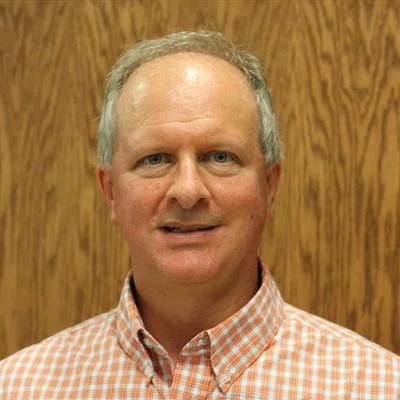
Jay Knauer - HBCPN Elder
Sermon Notes (PDF): BLANK
Hint: Highlight blanks above with your cursor for answers!
-
00:00-00:09
I've got a question for you, a question that's been asked a lot down through the years to people probably just to themselves.
00:10-00:12
The question is, what is love?
00:13-00:18
And today we're going to talk about that because love is a very complicated word.
00:20-00:27
It's so complicated that the ancient Greeks, with some major contributions from guys like Plato and Aristotle.
00:28-00:30
Plato, Aristotle, or Socrates.
00:31-00:51
These guys actually had some major contributions into breaking down the word love into four different totally separate words in Greek, which is great. I'm gonna tell you what they are and I'm gonna spell them for you because I could not figure out how to spell them if I just looked at it or heard them. So the first one I want to tell you about is storge.
00:51-00:54
It's S-T-O -R -G-E.
00:54-00:58
Storge is like a family love. It's an affection of the family.
00:58-01:04
It describes the bond between father, mother, sister, and brother.
01:05-01:08
And that's storge love, okay?
01:09-01:15
Philia, or philos, P-H-I-L-I-A, is like a friendship.
01:15-01:27
It's regard, usually between equals, that requires some familiarity between the two, and it also includes great concepts like virtue and loyalty.
01:27-01:28
That's philia.
01:30-01:35
Philadelphia gets the name from philia, it's brotherly love.
01:36-01:38
Philadelphia's the city of brotherly love.
01:38-01:50
The third one is eros, and that is one that you may not know that term, but you're really familiar with eros, because we are bombarded with Eros messages.
01:51-01:56
Even driving down the highway, the freeway, look at a billboard, I bet it has some Eros on it.
01:57-02:00
All TV shows anymore have Eros in it.
02:00-02:08
Eros is romantic, it's intimate love, it includes sexual desire, and that's Eros.
02:08-02:10
Okay, so that's the third one.
02:10-04:01
The fourth one is agape, and that is the highest form of love that is unconditional love, it is selfless love, it is sacrificial love. It's the love that's higher than the other three. Okay? So that's what the Greeks came up with. And it's great for them because a lot of interpretation is done already for them when you use the right word. Storge, philia, eros, or agape. But in this country today, we just have the one word, love. So, to avoid misinterpretations of when the word love is used, it's imperative to accurately determine the context in which the word love is used. For example, if a stranger walked up to me and introduced himself and said, "Hi, I just met you and I love you." The concept of awkward would soon dominate my thinking, I'm sure, because I have no context. Like, where does this guy come from? Does this person mean like Eros love for me? Does this person mean like Philia love, Storge? I can't imagine Agape, I just met the guy. That would be really weird. So you need to have some context and understanding love is, the word love is a lot more challenging here in the United States than for example in Greece. So in our country we have just that one word. So having said that, in order to find out what love is, we got many sources that can help us to find the definition of love, which makes it even more complex than, you know, Greece. Greece has its four words to help you understand it. In America we have one word and then we have lots of different sources that can tell you what love is or give you a definition of what it is.
04:02-04:39
There are soap operas, there's movies, there's novels, there's friends, your associates, there's also the Hallmark Channel, and a host of others. There's that I ran into in the seventies, it was created back then in 1970s when I was this tall called "Love Is." "Love Is..." dot dot dot, like in quotes. You know, the cloud above the guy's head with her picture in it, so he is thinking of her and he's trying to pick out something for her and spend all his money.
04:39-04:48
Okay, that's what love is. November 1st had an example, "Love Is" when he licks the cotton candy off the tip of your nose.
04:48-05:15
Okay, that's what love is. Kind of cute, you know. And here's October 31st. Love is what brings generations together and it's a picture of grandma holding a little baby and the two parents standing behind the chair. So it was actually a picture of a storge love, family love. So that's kind of like some of the things that are out there. They're basically designed to tug on your heart strings.
05:18-05:34
The problem is that these sources like soap operas and movies and "Love Is" - all these sources that the world has out there for you - they're all very interesting, but most of them never give you a full idea of what love is.
05:35-05:38
In fact, some are downright inaccurate or even evil.
05:39-05:43
So my advice, if you're looking for the definition for love, just go to the Bible.
05:44-05:50
And like all the others, love is defined in the Bible by the person who created it.
05:51-05:52
By the one who created it.
05:52-05:56
And disciple John talks a lot about love.
05:56-05:58
He wrote a ton of stuff about love.
05:58-06:02
He is the disciple whom Jesus loved.
06:04-06:07
And he put that in his book.
06:08-06:09
That was important to him.
06:10-06:56
love is important to him as I think no one else in the Bible. So John wrote a lot about love. He wrote so much that we can't cover this all today, just so you know. So I just I tried. I looked and I said, "Okay, I'm going to talk about love." And it is all over the place. I would need six years to tell you about love. So I just took a small little piece of it, which is in 1 John. You can turn to that in your Bibles too. First John, we're going to base off this text in 1st John 3, 16 through 24, so you can turn there. And in this passage, John highlights three aspects of love. And the first is sacrifice.
06:58-06:59
There are levels of sacrifice.
07:00-07:11
I don't know if you know that, but you know there's the one that we talk about in church a lot, but there are three levels and it's basically determined by what motivates the sacrifice.
07:12-07:21
I have a friend at work, and we have this thing that happens every year right after winter is starting to end.
07:22-07:26
It's called the Great Weight Loss Race or something like that.
07:28-07:30
Anybody work for UPMC?
07:31-07:33
You know what I'm talking about, the Great Weight Race?
07:33-07:42
Well, I'm the leader of our little group, and we're five guys that all live in the north, and we call ourselves the knuckleheads of the north.
07:42-07:44
And we try to lose weight every year.
07:44-07:50
So one of the things that this one guy says to me, "Okay, Jay, it's time to lay down a fork.
07:51-07:55
Lay down a fork." What he's doing is he's laying down his fork.
07:55-08:05
What he means by that is he's going to give up that piece of cake over there that he could have, or that meal over there that he can have, those snacks, like right before he goes to bed, they could have.
08:06-08:07
It's time to lay down a fork.
08:07-08:14
He's sacrificing that meal or food or whatever because he likes it.
08:15-08:18
He has it, so that's a sacrifice on a certain level.
08:19-08:20
There's also another kind of sacrifice.
08:21-08:24
I know that there's a few baseball fans in the room.
08:24-08:25
Here's Ryan Stroop back there.
08:25-08:27
There's Matthew Nauer over there.
08:28-08:44
And I'm the biggest baseball fan I know, so I wanted to tell you about in baseball, it also has a sacrifice. It's usually when the ball comes in and you put your bat down and you sacrifice your at-bat because you're up there to get a hit to try to get a home run.
08:45-08:55
So you lay down a sacrifice, bunt, and you give up your at-bat. And it's for the team. It's to advance a runner from first to second or second to third or first and second to second and third.
08:56-09:02
So that's a kind of a sacrifice. You forfeit the chance to hit a home run.
09:02-09:27
So you lay down the fork, you forfeit that piece of cake, you lay down a bunt, you forfeit your chance to hit a home run, and there's another level of sacrifice and you can lay down a life and that's a forfeit your life. And that's what the greatest act of sacrifice in history is and that's what Jesus did for us. That sacrifice is the greatest act of love for God and man And it cannot be matched.
09:27-09:28
It won't be matched.
09:29-09:29
It's just incredible.
09:30-09:31
And we talk about that a lot.
09:32-09:35
And we are so thankful for Jesus for doing that for us.
09:35-09:45
But there's, I want to focus a little bit on a part of Jesus' sacrifice that we don't often focus on, and that's His sacrificial daily walk.
09:46-09:51
Jesus sacrificed, He dedicated His days to serving others.
09:51-09:58
In fact, Matthew 20, 28 says, "The Son of Man did not come to be served, but to serve." Are you familiar with that verse?
09:59-10:01
And that's what He did every single day.
10:01-10:11
Every single day He exhausted Himself preaching, healing, exercising unclean spirits, comforting people, teaching anyone who would come to Him.
10:11-10:12
He never married.
10:13-10:14
He never had His own family.
10:15-10:40
He sacrificed the opportunity to gain wealth and prestige, and popularity, success, all which he could have had. In fact, didn't the devil take him out into the desert for 40 days and he said, "You could have the world." I mean, he was tempted by the devil and he shunned it. So he sacrificed that opportunity in favor of loving and serving both us, man, and his father, God.
10:41-10:50
And there's another one, another guy from the Bible, Apostle Paul, he had all the prerequisites to be a big cheese in Jerusalem, didn't he?
10:51-11:03
He had ambition, he had passion, he had enthusiasm, he had a reputation, he had successes, he had education, he had social status, he had connections, he had authority.
11:04-11:09
But if you look back in Philippians 3, 7 through 11, I'm going to read that.
11:10-11:12
Actually, I'm going to read a little bit, part of 4.
11:13-11:18
He says, "If anyone thinks he has reasons to put confidence in the flesh, I have more.
11:19-11:32
Circumcised on the eighth day of the people of Israel, of the tribe of Benjamin, a Hebrew of Hebrews, in regard of the law, a Pharisee, as for zeal, persecuting the church, as for legalistic righteousness, faultless.
11:33-11:52
But whatever was to my prophet," so all those things that were going to make him a big cheese, He says this, "But whatever was to my prophet, I now consider loss for the sake of Christ." So he sacrificed, in fact later on he calls it rubbish, okay, it's garbage.
11:53-12:00
All that stuff that the world was going to give him, he shunned it away in favor of gaining Christ.
12:01-12:02
And we're all to do that too.
12:02-12:14
If you check out verse 16 of our text in 1 John, 1 John 3:16 says, "This is how we know what love is.
12:15-12:26
Jesus Christ laid down His life for us, and we ought to lay down our lives for our brothers." Okay, so we're to sacrifice too.
12:26-12:30
Now, what does it mean to lay down our lives for our brothers?
12:32-12:39
Well, this is where sacrifice starts to transition into the next aspect of love on your outline there which is action.
12:39-12:52
This passage talks about sacrifice, this passage talks about action, and because sacrifice has many levels and Christ sacrificed His life on every level, we so must do that for our brothers.
12:53-13:13
There's a story, I know Jeff's in Thailand and I want to be sensitive to his wife and their kids, but there was a story that Ravi Zachariah told on his radio program a couple weeks ago about his best friend.
13:14-13:18
And his best friend in Bible college went on a missionary trip.
13:19-13:34
And during the missionary trip, he was doing a session, and at the end of the session, people were clapping, people had learned, they were appreciative, but somebody walked up and it was in a Muslim country, he walked up and just filled him full of bullets and he was dead.
13:35-13:40
That's an amazing sacrifice, but it also included action.
13:40-13:42
He was over there doing something.
13:43-13:58
So that's what John is talking about too here in verse 17 and 18, which say, "If anyone has material possessions and sees his brother in need but has no pity on him, how could the love of God be in him?
13:59-14:09
Dear children, let us not love with words or tongue, but with actions and in truth." I kind of saw a video a little bit ago that showed some of that.
14:10-14:11
That was a great video.
14:11-14:15
It really showed some action that small groups are taking here.
14:16-14:22
There's probably a thousand stories we could go into, but we've got to do something to help our brother in need.
14:22-14:30
If we have been blessed by God, we should be ready and willing to sacrifice to help serve a needy brother.
14:31-14:41
You know, at our small group, we had an amazing real-life story about someone who actually had some material possessions, plenty of them, and he saw a need in someone else's life.
14:41-15:46
life and he jumped right into it. The story goes like this, there was a little girl who is terminally ill, she's dying, and her father is an employee for this company and was paying for this the health care with his health insurance and apparently he was afraid he was going to lose his job because the girl was in a different city, a different state, and so he was with her but he had to go back to work. He didn't want to lose his job in order to keep his insurance which was paying for the care of his daughter. So he went back to New Jersey, right Steve? He went to New Jersey, so he was doing his job. One of his big bosses, not his immediate supervisor but a level above, heard about this guy and his daughter and he came down, he came right down to his desk and he said, "What are you doing here?" He said, "Well, I don't want to lose my health insurance. I've got all this care. I mean, my daughter requires machines and medicine that cost a fortune. I need that health insurance and if I get fired, I won't have it.
15:48-16:04
Long story short, the guy got a plane ticket for the guy to fly him back to the city where his daughter was so he could be with her. He paid for the ticket. He paid for all kinds of all kind of details and it came out to a fair amount of money.
16:05-16:09
And that's exactly what the Lord is asking us to do in this verse.
16:09-16:16
He says, "If you have possessions, use them to help your brother in need." That's a great example of that.
16:17-16:20
Just a tremendous example of sacrifice and action.
16:21-16:29
Now doing good deeds with the right motivation and the genuine love for God and man really changes lives, including your own.
16:29-17:02
we saw in that video. You know, some of these guys, their lives are changed, maybe a little bit, maybe a lot, for the good. I've listed a few examples of actions on your paper there that can be done in everyday life. I'm not sure what order they're in, but under action, one thing that I really don't have a gift for, but I thank God that some people do, and that is the first one, that's hospitality. Hospitality is seeing to others comfort, seeing others' well-being, and I'm just not good at those details.
17:03-17:10
Like, I'm walking around with this thing on my head, and people are looking at me and they're saying, oh, he must be talking today.
17:10-17:11
You know, I said, oh, wow.
17:12-17:19
And Debbie came over and said, OK, I've got water for you, and I've got mints for you.
17:20-17:20
Here's to you, Deb.
17:21-17:21
Thank you very much.
17:22-17:23
I mean, that's hospitality.
17:23-17:28
I mean, that actually-- I don't know if I could even talk if I didn't have this water right now.
17:29-17:30
My mouth would be so dry.
17:30-17:32
I really appreciate that hospitality.
17:33-17:35
The next one is service to others.
17:36-17:37
And that's what we saw in the video.
17:37-17:41
You know, going to a soup kitchen, maybe going to a place where people need help.
17:42-17:43
How about chores?
17:43-17:45
Doing your chores around the house.
17:45-17:46
Are there any teenagers here?
17:47-17:51
Oh, there's Matthew back there hiding under the seat.
17:52-17:53
Doing chores around the house.
17:53-17:55
That's service to others.
17:55-17:58
Man, people appreciate that.
17:58-18:02
You know, our small group went out to Deb's house and just did clean up.
18:02-18:09
We just cleaned up trees and chopped down trees, cleaned the place up, did some things around there.
18:10-18:11
These chores, and they were appreciated.
18:12-18:13
And that changes people's lives.
18:14-18:18
Deb knows that her small group did that because they love her.
18:19-18:19
Love changes.
18:20-18:21
Love changes your life.
18:22-18:24
Another one is ministry to others.
18:25-18:53
to others. A big one is hospital visits. Like I know that Audrey was in the hospital recently, I know that Jeff visited her, I know that a good friend, well actually a new friend of mine, I mean it's like I just met this guy and I love him. It's really weird. But Mark Bowden who is a sound guy, he's a professional sound guy, he's been coming recently, had heart surgery.
18:53-18:57
they found that he had a hole in his heart at age 50 or something like that.
18:57-19:23
He's older than that now, but he had surgery on Wednesday and I know that Darren has gone to see him and Matt, Muckle and I are going to see him in the next couple days and man is he appreciative of it. He's like, "Okay, settle down. Your tubes are gonna pop out of your chest. Settle down." I mean, he's got a temporary pacemaker in there. He was so excited to hear that someone was going to come visit him. He really appreciated that, Darren.
19:23-19:24
He told me that.
19:25-19:47
So ministering to others is big. It's letting people know that you care about them, that you love them, and that God cares about them. There's another part of it, and that's missionary work. We talked about Jeff being in Thailand right now. He is doing missionary work. He's teaching others how to preach, which is big.
19:47-19:48
I wish he'd teach me how to preach.
19:50-19:57
There's missionary trips that we, I'm sure you're all familiar with Moldova, our trip to Moldova and our trip to Romania, missionary work.
19:58-20:04
We do missionary work locally even, going to like local food banks and things like that.
20:05-20:10
Missionary work, spreading the love of God through missions is another one.
20:11-20:14
And the last one listed there is a big one.
20:15-20:43
In fact, if you can highlight that or underline it or put a star next to it, it plays a big part and the next aspect of love in this passage, developing a relationship with the one who loves you. Very, very important. So we have in this passage, love is, it's not licking the cotton candy off your nose or whatever, it's sacrifice, it's action, and it's obedience.
20:44-20:45
And that's the third one.
20:46-20:56
If we could read verse 19 through 20. Actually, there's a piece like to throw out to you because it doesn't really fit, but it's kind of good.
20:58-21:11
Verse 19 through 20 says in 1 John 3, it says, "This then is how we know that we belong to the truth, and how we set our hearts at rest in His presence whenever our hearts condemn us.
21:12-21:17
For God is greater than our hearts, and He knows everything." You know what that actually means?
21:18-21:20
And it's a very big encouragement to me.
21:21-21:30
John is saying here that actions truly done out of genuine love are evidence of belonging to the truth.
21:31-21:36
And that's a great comfort because when our hearts condemn us, what does that mean?
21:36-21:45
When our hearts condemn us, that's like when we feel guilty about something, when we've fallen short, when we've had shortcomings, when we've sinned, and we're feeling guilty about it.
21:45-22:02
be assured of our salvation because God knows our deeds of genuine love that we've done and they are evidence of our salvation and that we are still within God's truth and that we are still His, even though we fall short.
22:02-22:04
What a great comfort to that.
22:04-22:15
Because sometimes we do all these great, sometimes, we should talk about this a little bit, you do great acts of service, but you don't do them with genuine love in your heart.
22:16-22:20
You do them because it makes you feel good. I know people at work that do that.
22:20-22:56
There's one in particular, she does everything in sight. I mean, she is the social chairman. She brings in cookies and she gets all these events set up for team building and stuff like that, and she does everything for the team, and it makes her feel good. That's not what we're talking about. That's not what John's talking about here. He's talking about doing acts of service and hospitality out of love for Christ, just as overflow, because you just are so appreciative of what he's done for us. So, with that said, let's get into obedience.
22:57-23:30
Passage, "Love is sacrifice, love is action, love is obedience." Let's read 21 through 24. Dear friends, if our hearts do not condemn us, we have confidence before God and receive from Him anything we ask because we obey His commands and do what pleases Him. And this is His command, to believe in the name of His Son Jesus Christ and to love one another as He commanded us. Those who obey His commands live in Him and He in them. And this is how we know that He lives in us.
23:30-23:44
We know it by the spirit he gave us the spirit that Jeff just been talking about in Acts. That's the Holy Spirit Now do you think God loves us when he says things like in the Old Testament when he says?
23:45-24:03
Do not steal When he says do not commit adultery Is anybody thinking I know people that have thought this actually they have thought that you know Oh God. He's he's just He's limiting us, you know, He's restricting us.
24:03-24:08
This is not commands of limitation and restriction.
24:08-24:08
What are they?
24:10-24:10
God knows.
24:10-24:17
It's a protective command because God knows that if you commit adultery, relational rupture occurs.
24:18-24:23
Hurt and guilt, bitterness, distrust all follow.
24:23-24:28
I mean, those are just byproducts of that sin of committing adultery.
24:28-24:29
What if you were stealing?
24:30-24:31
God says, "Do not steal." What if you steal?
24:32-24:35
God knows that if you steal, you might get caught.
24:35-24:38
If you're caught, you might be thrown into jail.
24:39-24:40
He knows that that's not good.
24:41-24:43
He knows that He wants to help you avoid that.
24:44-24:45
What if you don't get caught?
24:46-24:52
You could feel guilty and your heart might condemn you, as it says in John.
24:52-24:54
You might feel guilty for a long time.
24:54-24:59
You may never get over that, that you didn't come clean about that sin.
25:00-25:05
Even worse, what if, to me, what if you don't get caught but you don't have any guilt?
25:07-25:18
That could be the worst thing because that indicates that your heart is being hardened and that you're getting farther away from the possibility of even entertaining that Christ could be your Savior.
25:19-25:20
To me, that could be the worst thing.
25:21-25:23
And God, see God sees all this stuff.
25:24-25:26
We don't a lot of times.
25:27-25:28
So He wants the best for us.
25:29-25:30
And the best is Himself.
25:31-25:34
The best is what God has in mind for us.
25:34-25:37
He calls it abundant life in certain sections.
25:37-25:38
It has nothing to do with money.
25:39-25:48
Abundant life is being with Christ and being free from the results of sin, the collateral damage that occurs because of our sins.
25:49-25:51
He wants the best because He loves you.
25:52-25:54
So this is going to be real quick.
25:54-25:56
I want you to check out this logic.
25:57-26:02
Because God has given us commands that are designed to guide us towards life's best.
26:03-26:04
Check out this logic.
26:05-26:18
First one is, "We will not obey Him if we don't believe and trust Him." The second one is we will not believe Him if we don't love Him.
26:19-26:24
The third one is we cannot love Him unless we know Him.
26:26-26:32
So conversely, if you come to know Him, you will love Him.
26:35-26:38
If you love Him, you will believe and trust Him.
26:41-26:44
If you believe and trust Him, you will obey Him.
26:46-26:51
So obedience through love follows that kind of logic a lot of times.
26:53-26:56
Pastor Jeff knows what's best for his son Cade.
26:57-26:57
You think?
26:58-26:58
He knows.
26:59-27:06
He's told the story about his son Cade when he got behind a horse and it kicked him into Venango County.
27:06-27:07
I mean, it kicked him hard.
27:08-27:12
And he went flying through the air, and he saw his son flying through the air.
27:12-27:14
He actually saw it, right?
27:14-27:17
He's flying through the air, and he saw his son bounce.
27:18-27:18
Boom, boom, boom.
27:19-27:30
Like, "Well, I know exactly what that's like," sort of, because my wife has seen the same thing out our back door when the big six-footer back there was only two years old, my son Aaron.
27:31-27:33
He was on a swing set.
27:33-27:53
climbing up the ladder and he's standing on one of the rungs and he's reaching for the monkey bars. But he was two or three years old. He wasn't big enough. He couldn't reach it. His arm wasn't long enough. He just went right down and he went boom, boom, boom, bounced like three times. And so we know what that kind of fear is like.
27:54-28:16
But, you know, so actually Cade doesn't remember too much of that, right? So I would imagine if Cade visits a horse farm next week, after Jeff gets back, I'm going to just guess that Jeff is going to have some very clear, concise, and passionate instructions for Cade about where he should stand around a horse, don't you think?
28:17-28:21
And as we had for Aaron, you know, Aaron, don't climb that.
28:22-28:23
You're too small to climb that.
28:24-28:25
Don't do that until you get a bit older.
28:26-28:30
Because we know, the parents know what is in store, what can happen.
28:31-28:34
In fact, Jeff knows what has happened to Cade.
28:34-28:40
So he was like, I'm sure Jeff would have some very clear instruction for him.
28:40-28:46
Now do you think that Cade will complain about being limited or restricted by his father's rule?
28:47-28:50
No way, because Cade knows his father.
28:51-28:52
He knows his father.
28:53-28:54
He loves his father.
28:54-28:57
He trusts his father and he will obey his father.
28:58-29:00
That's kind of like the way it works.
29:02-29:06
Cade knows that the rule is instituted because his father loves him.
29:07-29:11
Now the same principles apply to us and our relationship with God.
29:12-29:14
We are the child and God is the father.
29:15-29:28
In fact, if you turn over one page to 1 John 5, you can see that verse 3 says, This is love for God to obey His commands.
29:29-29:32
Actually, if you're obedient, that's showing love.
29:33-29:35
God knows that, parents know that.
29:36-29:40
Because if their kids show obedience to them, they're showing them that they love them.
29:41-29:43
And that's biblical, as we just saw.
29:44-29:58
If you look back at your step, it says, "If you come to know Him," That is right under where it says "so." If you come to know Him, you will love Him.
29:58-29:59
That's where we stumble.
30:00-30:04
That's the part that we don't always get.
30:05-30:06
That's where we falter.
30:07-30:16
If we know Him, all the steps to obedience can't help but fall into place because we know Him, then we love Him, and that logic falls into place.
30:16-30:18
So how do we get to know Him?
30:19-30:27
And this is where I think we're going to wrap up, because I'm passionate about small groups.
30:28-30:29
I love my small group.
30:30-30:31
Small groups are fantastic.
30:31-30:33
I can't say enough about it.
30:33-30:46
That video, you know, I just almost had a tear coming out because, you know, that shows God's love and people know that and they'll want to get to know God.
30:46-30:47
So how do we get to know God?
30:48-30:57
A lot of small groups, in our small group, we are working on getting to know God, making disciples so that we can be obedient to God.
30:58-30:58
Because you know what?
30:59-31:04
When we're obedient to God, that's when we have the easiest.
31:04-31:05
We have it the easiest.
31:06-31:06
We don't have any guilt.
31:08-31:16
You know, God is really impressing upon us that love is sacrifice, action, and obedience.
31:17-31:21
And one last thing, where did the concept of love come from?
31:21-31:32
If you turn over to 1 John 4:7, it says, "Dear friends, let us love one another, for love comes from God." That's where it comes from.
31:32-31:34
That's where the concept comes from, comes from God.
31:35-31:36
Why do we love?
31:37-31:58
over at 1 John 4, 19. It says, "We love because He first loved us." So, the point is, is that love is never generated by us. God loved us first, giving us the idea and the model for how to do it. And that is how to be obedient to God through loving actions and sacrifice.
32:00-32:09
So to wrap this up, actually in conclusion, according to this passage, when you see that, I don't know if you ever see that little "Love is" cartoon.
32:09-32:12
If you would see that and say, "Love is sacrifice.
32:12-32:13
Love is action.
32:13-32:16
Love is obedience." Let's pray.
32:18-32:20
Lord God, we have heard your word this morning.
32:21-32:22
We thank you for that.
32:23-32:26
What a tremendous blessing you have given us through this Bible.
32:27-32:29
This is how we can get to know you through this Bible.
32:30-32:33
If we get to know you, then we get to love you.
32:33-32:38
If we learn to love you, then all the steps to obedience fall into place.
32:40-32:46
We know that the rules that you have are not to keep us down, to keep us under your finger, to keep us controlled.
32:47-32:56
We know that the rules and the commands that you have are because you love us and you want the best for us.
32:56-32:57
You don't want to see us stumble.
32:59-33:15
Father Lord, I just pray that as we as a church learn to love one another more deeply and through small groups and through worship, Father, I just pray that your hand will be working with us, working on us.
33:16-33:17
We pray this in Jesus' name.
33:17-33:18
Amen.
Small Group Questions (Whole Group):
Read 1 John 3:16-24
How did this concept of love ever start? Would humans have ever come up with the idea of loving each other?
When you are truly motivated by love, describe how different it is performing tasks or acts of service than when motivated by more self-serving motives?
How would you respond to someone who says the Bible is just a book of "don'ts" meant to make us miserable?
What does the concept of sacrifice mean to you? In 1 John 3:16, it says "we should lay down our lives for our brothers." Are we really doing that? How do we do that?
Breakout Questions:
Pray for one another. Pray for Pastor Jeff while he is in Thailand teaching the pastors at the conference.