How Can Adversity Be Good

Introduction:

5 Fantastic Things You Only Get from Adversity:
(Ecclesiastes 7:1-14)

  1. Perspective . (Eccl 7:1-4)
  2. Maturity . (Eccl 7:5-6)
  3. Patience . (Eccl 7:7-9)
  1. Wisdom . (Eccl 7:10-12)

    Numbers 11:4-6 - Now the rabble that was among them had a strong craving. And the people of Israel also wept again and said, "Oh that we had meat to eat! We remember the fish we ate in Egypt that cost nothing, the cucumbers, the melons, the leeks, the onions, and the garlic. But now our strength is dried up, and there is nothing at all but this manna to look at."

  2. Reliance . (Eccl 7:13-14)

Sermon Notes (PDF): BLANK
Hint: Highlight blanks above for answers!

  • 00:00-00:01

    All right, we're going to start with a little game.

    00:01-00:02

    You want to play a game?

    00:04-00:07

    I love the enthusiasm from both of you.

    00:09-00:11

    This is an easy game, okay?

    00:12-00:14

    We're going to play which is better.

    00:14-00:24

    I'm going to give you two things, and I'm going to give you a second to think about it, and then you're going to raise your hand on which one you think is better, okay?

    00:25-00:25

    All right.

    00:27-00:27

    Coke and Pepsi.

    00:28-00:29

    How many?

    00:30-00:31

    That's not how the game works.

    00:32-00:35

    Those of you who said neither, that's not how it works.

    00:35-00:37

    I'm gonna, let me explain again.

    00:37-00:42

    I'm gonna give you two things, and you're going to say which one is better, all right?

    00:45-00:47

    There's always a couple in every crowd, isn't there?

    00:48-00:50

    All right, Coke and Pepsi.

    00:51-00:52

    How many of you would say Coke is better?

    00:53-00:53

    Show of hands.

    00:55-00:56

    Wow, how many Pepsi?

    00:58-01:00

    Looks like there's more Coke people here.

    01:01-01:02

    All right.

    01:04-01:05

    Ford and Chevy.

    01:06-01:08

    How many people-- no, don't say Toyota.

    01:08-01:10

    How many people say Ford?

    01:12-01:12

    All right, Chevy?

    01:14-01:15

    That's a lot.

    01:16-01:18

    Looks like we're leaning a little more towards Ford.

    01:18-01:19

    OK, this is an easy one.

    01:21-01:23

    Marvel movies and DC movies.

    01:26-01:28

    How many of you say Marvel movies are better?

    01:29-01:30

    Yeah, that's the right answer.

    01:30-01:32

    How many of you say the DC movies are better?

    01:33-01:34

    A couple of you.

    01:38-01:38

    Well, party on.

    01:40-01:43

    All right, iPhone or Android?

    01:43-01:45

    How many of you say iPhone is better?

    01:47-01:49

    All right, Android.

    01:51-01:53

    I'm gonna give you one more, you ready?

    01:54-01:57

    Which is better, prosperity or adversity?

    01:58-02:00

    I'm gonna give you a second to think about that one.

    02:02-02:05

    How many of you would say that prosperity is better?

    02:08-02:10

    It just got really uncomfortable in here.

    02:11-02:17

    If you're watching this stream at home, or you're watching this recording later, you can cut the tension in this room with a knife right now.

    02:18-02:23

    Because it's like, I know what, okay, how many say adversity is better?

    02:27-02:35

    Really? I mean, let's think about this for a second. If I were to say to you, which is better, getting a new job or getting fired from a job, which would you say is better?

    02:38-02:41

    You're like, "It depends on the job." That's not how the game works!

    02:43-02:51

    But, okay, if you, if I were to say, um, which is better, getting a raise or getting a major demotion. Which is better?

    02:55-03:04

    That's not how you just voted though. I would say which is better going to a baby shower or going to a funeral? Which is better?

    03:06-03:08

    But that's not how you voted.

    03:10-03:23

    And you see we're on this quest for meaning through Ecclesiastes and you could say that this book is really an extended spirit-inspired rant.

    03:24-03:26

    Samuel, do the kids still call it a rant?

    03:27-03:28

    Ok, thank you.

    03:29-03:30

    That's a current term.

    03:31-03:31

    But it's a rant.

    03:31-03:39

    It is a spirit-inspired rant of Solomon saying, this is what gives meaning to life, and this is not going to help.

    03:39-03:45

    And last week we saw - and this was a hard sell - money won't make you happy.

    03:47-03:50

    Last week we saw Solomon said prosperity isn't always good.

    03:51-03:57

    And today we're looking at the other side of the coin, where he says adversity, it isn't always bad.

    03:59-04:11

    And if we were to have Solomon sitting here and say which is better, prosperity or adversity, I believe that he would say hands down adversity is better than prosperity.

    04:14-04:15

    Why is that?

    04:17-04:17

    And here's the sermon.

    04:19-04:21

    Adversity will make you a better person.

    04:22-04:24

    So much more than prosperity ever will.

    04:27-04:34

    There have been so many people throughout history who have become stronger through adversity.

    04:35-04:43

    And if we're honest, prosperity has ruined more people than adversity ever has or ever will.

    04:45-04:45

    That's the sermon.

    04:47-04:48

    You can go if you like.

    04:49-04:56

    But if you're still not convinced, you're outlined five fantastic things you only get from adversity.

    04:57-05:07

    There are things - I wouldn't just say important things, but probably the most important things about life - you only get it through adversity.

    05:09-05:11

    And that's where Solomon takes us here.

    05:11-05:13

    Number one, write this down - perspective.

    05:14-05:17

    Here's something you only get from adversity perspective.

    05:17-05:18

    Look at verse 1.

    05:18-05:30

    He says, "A good name is better than precious ointment, and the day of death than the day of birth." Interestingly, something you don't see in the English is this is a play on words in the Hebrew.

    05:31-05:41

    Because the word for name in Hebrew is "shem." And the word for ointment or perfume is "shemen." So it's kind of a pun.

    05:41-05:47

    He's like, "A good shem is better than a good shemin." What's your point, Solomon?

    05:47-06:00

    He says, "Well, perfume doesn't last very long, but a good name absolutely does." And then he says, "The day of death is greater than the day of birth." Like what are you talking about?

    06:00-06:05

    Well, you're going to see as we go through these verses, he's taking us to the funeral home.

    06:06-06:06

    Right?

    06:06-06:08

    That's where he's going with this.

    06:08-06:12

    And what he's doing in doing that is giving us perspective.

    06:14-06:23

    In other words, it's better to evaluate a life well lived than to evaluate a life not yet lived.

    06:23-06:24

    You see?

    06:24-06:28

    That's why he's talking about it's better to have a good name.

    06:29-06:30

    Look at verse 2.

    06:32-06:33

    Here's his point.

    06:33-06:47

    He says, "It is better to go to the house of mourning than to go to the house of feasting, For this is the end of all mankind and the living will lay it to heart." Again, like a lot of things in God's Word, it seems backwards.

    06:49-06:58

    I mean, if I called you up on a Saturday morning and said, "Hey, what are you doing?" You're like, "Nothing." I'm like, "Hey, I'd like to hang out with you.

    06:58-07:03

    Would you rather go to a party tonight, or would you rather go to a funeral tonight?

    07:04-07:06

    Which would you rather attend?

    07:08-07:35

    And honestly, I would guess Not giving the Sunday school answer. Okay, but I would guess a hundred percent of us would say I'd rather I'd much rather go to a party into a funeral Solomon says no, it's better To go to the house of mourning. He says the living lay it to heart Meaning it gets us It changes our lives by the way that we think about it.

    07:36-07:37

    Go on here, look at verse 3.

    07:37-07:52

    He says, "Sorrow is better than laughter, for by sadness of face the heart is made glad." Actually, "made right" is a better translation than "made glad." The heart is put right in approaching life.

    07:52-07:54

    And again, verse 4, same point.

    07:54-08:26

    He says the house of the wise or the heart of the wise is in the house of mourning But the heart of fools is in the house of mirth See see his point it's about taking an honest assessment of your life It's about perspective and Solomon's point in these four verses is if you're wise Looking death in the face is going to make you evaluate your own life.

    08:29-08:36

    Because as it's been said so often, every funeral we attend anticipates our own.

    08:38-08:47

    Someday people are going to be lining up to pay their last respects to you, and your name is going to be on the little marquee outside the room.

    08:49-08:51

    That's going to happen to you and it's going to happen to me.

    08:53-08:56

    And attending funerals now should make us think about that.

    08:57-09:04

    To think, "You know, someday I'm going to die." I hope that wasn't a spoiler alert for anybody here.

    09:04-09:10

    But someday, your life on this earth is going to be over.

    09:13-09:37

    And the question you have to ask regarding that is, "What's going to be said about me?" In other words, "How did I spend my time here? What was my life about?" Those are the questions that we should consider that should change our lives, knowing that death is coming for us.

    09:40-09:46

    You know, in my time I've done a lot of what are called community funerals.

    09:49-10:00

    And there are people that die that they don't have a church home or a pastor, so they call me up and they're like, "Hey, would you do a funeral for us?" The funeral home calls.

    10:01-10:06

    I've got to tell you, some of those are the most heartbreaking stories.

    10:09-10:16

    I remember one time years ago there was a 28-year-old girl who died in an automobile accident.

    10:16-10:27

    And in these cases when I don't know the person, you know, personally, I like to sit down with some family members and just say, "Hey, can I get some general just information?

    10:27-10:40

    "I don't wanna be presumptuous and stand up "and pretend like I know the person, "but you know, just to give some general eulogy information "and kind of set the table for the family "to share personal things, right?" So I'll sit down with a family member to talk about this.

    10:40-10:42

    And I sat down with this girl's father.

    10:44-10:54

    And I said, "So tell me a little bit about her." And he just kind of looked down and kind of stuttered and muttered a little bit.

    10:54-11:31

    And he's like, "I don't know what to say." I said, "Well, what kind of hobbies did she have?" And he's, "I don't, I don't, uh, "she really didn't have any hobbies." I'm like, "Well, what kinds of things "was she interested in?" I'm like, "You're not really giving me anything here." I said, "Is there anything that she liked to do?" I'll never forget the look in this man's face.

    11:33-11:53

    I said, "Is there anything that she liked to do?" and he looked up at me, and with a perfect mixture of anger and sadness, he said, "She liked to do drugs." And I'm thinking, "Oh." It's a sad legacy to leave behind, isn't it?

    11:54-12:00

    To think this girl lived 28 years on this earth, and that was the one thing her father could say about her?

    12:01-12:01

    Really?

    12:03-12:04

    It's heartbreaking.

    12:04-12:05

    It is so heartbreaking.

    12:07-12:13

    But you see, that's what Solomon's saying here is going to a funeral makes us think about what kind of legacy are we leaving?

    12:13-12:15

    What's gonna be attached to our name?

    12:16-12:17

    What are you doing with your life?

    12:19-12:20

    See, it's about perspective.

    12:22-12:27

    Nobody at a party is thinking about their time coming to an end.

    12:29-12:32

    Nobody at a party is thinking, am I living on purpose?

    12:33-12:41

    And while funerals are some of the hardest events that we experience in life, there's something fantastic about them.

    12:41-12:43

    They give us perspective, don't they?

    12:44-12:47

    Number two, five fantastic things you only get from adversity.

    12:48-12:51

    Here's something else that you get only from adversity, maturity.

    12:52-12:53

    Look at verses five and six.

    12:54-13:01

    He says, "It is better for a man to hear "the rebuke of the wise than to hear the song of fools.

    13:02-13:07

    "For as the crackling of thorns under a pot, so is the laughter of fools.

    13:07-13:19

    This also is vanity." Okay, speaking of partying fools that he sort of introduced in the previous section, he says they're like crackling thorns.

    13:19-13:21

    Like what's he talking about?

    13:21-13:27

    Well, thorns in the fire, they burn quick and they give no heat and they make lots of noise.

    13:29-13:30

    In other words, they're useless.

    13:32-13:32

    They're useless.

    13:33-13:37

    They just make a lot of noise, but they don't really help much.

    13:37-13:38

    Those are burning thorns.

    13:39-13:41

    And he said that's what the laughter of fools is like.

    13:42-13:48

    And I always think one time, Aaron and I were at a restaurant, and there were these two adult women in the booth behind us.

    13:49-13:51

    Adult women in the booth behind us.

    13:51-13:57

    And we were by no means eavesdropping, which I'm sure he'll be convinced of here in a minute.

    13:57-13:59

    But they were talking so loud.

    13:59-14:04

    Have you ever been to a restaurant where people are talking so loud it's like they want everybody to hear what's going on?

    14:04-14:04

    Do you know what I'm talking about?

    14:05-14:07

    Well that's what these ladies were doing.

    14:08-14:10

    And this was the content of their entire conversation.

    14:10-14:25

    "Oh my gosh, last Friday night I got so hammered!" "Oh I must have drank six and then whatever, I can't remember, fireballs or whatever." But they were naming the alcohol.

    14:25-14:28

    "Oh I was so hammered!" You thought you were...

    14:28-14:30

    I was so wasted!

    14:30-14:32

    I was sloshed!

    14:33-14:36

    And that went on and on and on.

    14:37-14:38

    These were adults.

    14:38-14:39

    Did I mention that?

    14:39-14:41

    On and on and on.

    14:42-14:48

    And just bragging about how much we drank, how drunk we were.

    14:49-14:51

    And Solomon says, "You know what that sound is like?

    14:52-14:54

    It's like thorns on the fire.

    14:54-14:58

    Lots of noise, but really..." Senseless.

    15:00-15:04

    Some people never grow up, and some people never grow out of that mindset.

    15:07-15:21

    And Solomon's here says, "Better than that noise of the thorns on the fire, better than that noise is hearing the rebuke of a wise person." I suppose we can file that under adversity, right?

    15:22-15:23

    It's never fun.

    15:24-15:31

    When you mess up and you refuse to acknowledge it, and then God sends somebody to point that out, ooh, let the good times roll.

    15:33-15:35

    Rebukes are hard to hear, aren't they?

    15:36-15:39

    And if you've ever been on the receiving end of one, you know.

    15:40-15:51

    But a rebuke can be so good for you, because if it's accurate, and if you receive it, it changes your course, and it makes you a better person.

    15:51-15:52

    It leads to maturity.

    15:53-15:57

    And I know some of you right now are saying, "What's a rebuke?" And I would say, yeah, exactly.

    15:58-16:01

    Because it's hard in our day because we're taught we have to affirm everything.

    16:03-16:11

    Your orientation, your preferred pronouns, who you prefer to be with intimately.

    16:11-16:14

    We have to affirm everything.

    16:15-16:18

    That constant affirmation is a little more than thorns in the fire.

    16:19-16:28

    This could be a whole other sermon, Listen, we have to have the courage to prayerfully and humbly and wisely address people who are out of line.

    16:30-16:34

    And we need people in our lives who aren't afraid to tell us when we're out of line.

    16:35-16:36

    Do you have somebody like that in your life?

    16:38-16:39

    Do you?

    16:40-16:45

    Do you have somebody in your life that when you're out of line, they're not afraid to tell you, "Hey, knock it off.

    16:46-16:51

    you're thinking so wrong about this.

    16:51-16:52

    Do you have somebody in your life like that?

    16:53-16:54

    Because you need someone.

    16:55-16:58

    Here over the next few weeks, we're going to be relaunching our small groups.

    16:59-17:01

    That's one of the key purposes of small groups.

    17:01-17:03

    We need to be watching each other's backs.

    17:04-17:06

    Not harsh, not condemning, but loving.

    17:07-17:10

    Solomon says that's wisdom, right?

    17:10-17:13

    Five fantastic things you only get from adversity.

    17:13-17:14

    You get perspective, you get maturity.

    17:14-17:15

    Thirdly, you get patience.

    17:16-17:17

    You get patience.

    17:17-17:17

    Look at verse 7.

    17:18-17:26

    He says, "Surely oppression drives the wise into madness, and a bribe corrupts the heart." He gets real specific here.

    17:27-17:28

    "Have you ever been oppressed?

    17:28-17:32

    Have you ever been treated unfairly, treated unjustly?

    17:32-17:37

    If not, get ready, you will." And it's infuriating if you've been on the other end of that.

    17:38-17:39

    You just want to retaliate.

    17:39-17:40

    This isn't right.

    17:40-17:41

    You shouldn't treat me like this.

    17:41-17:43

    You shouldn't treat anybody like this.

    17:43-18:17

    I'm on the receiving end of this and you just want to you just want to lash out then and look at verse 80 says Better is the end of a thing then it's beginning and the patient in spirit is better than the proud in spirits So the first part of the phrase he's saying first of all things will get better. No trial. No adversity lasts forever The second part of this is a another figure of speech He said the patient in spirit is better than the proud in spirit of another way you could say that is it's better to be long in spirit than to be high in spirit.

    18:18-18:32

    In other words, he says this trial you're going through right now and we know a lot of you are, whatever this adversity is that you're going through right now, you want to get to the other side like a champ, you want that to be your testimony?

    18:32-18:39

    Like yeah, I persevered, I endured, I grew and God brought me through. Do you want that to be your testimony?

    18:39-18:43

    He says patience is going to get you there, and pride will not.

    18:43-18:45

    Like, well, what will pride do?

    18:46-18:47

    I'm so glad you asked.

    18:47-18:48

    Look at verse nine.

    18:48-18:59

    He says, "Be not quick in your spirit to become angry, "for anger lodges in the bosom of fools." Pride is at the very root of anger.

    19:02-19:05

    The second things don't go our way, we lose it.

    19:07-19:15

    And if you're an angry person, you know, I don't think I'm an angry person, well, let's use some synonyms and see if that fits.

    19:15-19:18

    Are you a person that is very easily annoyed?

    19:18-19:22

    Are you a person that is extremely frustrated all the time?

    19:24-19:27

    Are you a person that constantly feels put out?

    19:28-19:34

    See, the problem is that turns into resentment, that turns into bitterness, and he says that lodges in your heart.

    19:36-19:39

    In other words, it makes its home in you.

    19:39-19:44

    It dishonors God, it makes you miserable, and you will never be equipped to deal with adversity.

    19:45-19:50

    You see, learning patience is one of the greatest lessons you will ever learn.

    19:51-19:58

    Because as the old cliche goes, life is not a sprint, but it's a marathon.

    19:59-20:00

    You've heard that one too, right?

    20:01-20:04

    But listen, it's a marathon in every arena of your life.

    20:05-20:11

    In other words, you have to learn how to go the distance in everything.

    20:12-20:12

    Right?

    20:14-20:16

    Married people, it's a marathon.

    20:17-20:20

    You have to learn how to go the distance.

    20:21-20:26

    And if you have children, you have to learn how to go the distance.

    20:27-20:31

    At your job you have to learn how to go the distance.

    20:31-20:33

    At school you have to learn what?

    20:34-20:35

    How to go the distance.

    20:35-20:37

    Go the distance if you're dealing with a chronic illness.

    20:39-20:40

    You have to learn how to go the distance.

    20:41-20:44

    And see, this is the love and the wisdom of God.

    20:44-20:53

    He allows adversity in our lives to teach us patience because we need patience in every single area of life that's worthwhile.

    20:54-20:56

    You only get that from adversity.

    20:57-20:59

    You don't learn patience in prosperity.

    21:01-21:03

    You see, five fantastic things you only get from adversity.

    21:04-21:07

    Well, you get perspective, you get maturity, you get patience.

    21:08-21:10

    Number four, you get wisdom.

    21:12-21:13

    You get wisdom.

    21:14-21:17

    Here's something that people say when facing adversity.

    21:18-21:31

    Verse 10, "Say not, 'Why were the former days better than these?'" Solomon says, "For it is not from wisdom that you ask this." Let's be honest, how many people have said that at some point?

    21:32-21:36

    the good old days. The good old days. Come on, just me. All right. Awesome.

    21:37-21:46

    Just me. All right. A couple of you, a couple of you DC movie lovers back in the good old days.

    21:46-21:50

    When I was a kid, when I was a kid, people didn't act like that.

    21:50-21:53

    When I was a kid, it was so much better. People were nicer.

    21:54-21:58

    When I was a kid, uh, there wasn't all this garbage on TV.

    21:59-22:03

    You know, back in the day, back in the good old days, things were easier.

    22:04-22:09

    And looking back, everything looks so much better than it actually was.

    22:10-22:15

    And Solomon reminds us that sometimes, it seems like time dims our memories.

    22:16-22:20

    Because when you lived through those times, they weren't really any better than things are now.

    22:21-22:22

    They really weren't.

    22:24-22:25

    Right? They really weren't.

    22:26-22:28

    Like when I was a kid, I couldn't wait to get to high school.

    22:29-22:33

    And then when I was in high school, I couldn't wait to get out of high school and get to college.

    22:33-22:35

    And then when I went to college, i couldn't wait to graduate from college.

    22:35-22:37

    And when I graduated from college, I couldn't wait to start my career.

    22:37-22:40

    And then when I started my career, I couldn''t wait to get married.

    22:40-22:41

    When I got married, I couldn't wait to have kids.

    22:41-22:44

    And then when I had kids, I'm like, I can't wait till my kids are older and I can do stuff with them.

    22:45-22:48

    And now I'm like, I just wish I was a kid again.

    22:48-22:49

    Right?

    22:50-22:52

    Because things were soo much better back then.

    22:53-22:54

    But they weren't.

    22:55-22:56

    They really weren't.

    22:57-22:58

    And do you realize?

    22:59-23:06

    In 10 years, if our Lord doesn't return before then, in 10 years, today is going to be the good old days.

    23:07-23:11

    You're going to look back at 2022 like, man, remember how awesome 2022 was?

    23:12-23:13

    Oh, those were the good old days.

    23:15-23:16

    True or false?

    23:18-23:22

    You can't face the difficulties of one age by pining for another, it is pointless.

    23:23-23:24

    It's pointless.

    23:26-23:26

    You know what we're like?

    23:27-23:28

    We're like Israel.

    23:29-23:29

    We're like Israel.

    23:30-23:39

    Do you remember Israel, you know, slaves in Egypt, and the Lord sent Moses, you know the whole story, Moses led the Israelites out of Egypt, and there was all these problems along the way.

    23:39-23:46

    They were heading to the promised land, and God promised Abraham, and all along the way there was just a lot of complaining.

    23:47-23:47

    Right?

    23:48-24:04

    Well, Numbers chapter 11, it says, "Now the rabble that was among them had a strong craving, and the people of Israel, look at this, also wept again and said, "Oh, that we had meat to eat.

    24:05-24:52

    "We remember the fish we ate in Egypt to cost nothing, "the cucumbers, the melons, the leeks, "the onions, and the garlic, "but now our strength is dried up, "and there is nothing at all but this manna to look at." First of all, just look at that last phrase, "There is nothing at all but this manna to look at." your brain around how obnoxious that is. You mean the food, the perfect food that God miraculously provided for you every day by putting it on the ground and all you had to do was bend over and pick it up and you had this this perfect food from heaven that God gave you? "Oh we don't have anything but that." Wow. Talk about being an ingrate. But secondly about, you know what I'm calling baloney on?

    24:52-24:54

    as them pining for the leaks.

    24:55-24:55

    Come on.

    24:56-25:03

    Who in the history of mankind has ever been like, "Oh, I miss the leaks!" No, you don't.

    25:04-25:05

    But you see the point.

    25:05-25:10

    They look back on, "Oh, life in Egypt was so much better than being out here.

    25:10-25:12

    It was so much better.

    25:12-25:13

    Oh, life in Egypt.

    25:13-25:17

    Remember the good old days?" Yeah, do you remember the good old days in Egypt?

    25:17-25:18

    Do you know what else was in Egypt?

    25:19-25:19

    Slavery.

    25:20-25:23

    Do you know what else was in Egypt abuse?

    25:24-25:26

    Do you know what else was in Egypt? How about in fantasy side?

    25:27-25:28

    The good old days, huh?

    25:29-25:45

    We're just like him and you're look you're gonna go through adversity Nobody goes through life without it The question is you're gonna do it as a fool. Are you gonna do it as a wise person?

    25:45-25:53

    Are you going to do it as a wise person that has right perspective, and is growing in maturity, and is growing in patience, and becoming even wiser?

    25:54-26:04

    You see, in Solomon's point in all of this is, adversity should be teaching you wisdom, because wisdom is your advantage in every single chapter of your life.

    26:04-26:18

    That's why he says in verse 11, "Wisdom is good with an inheritance, an advantage to those who see the sun, for the protection of wisdom is like the protection of money." And the advantage of knowledge is that wisdom preserves the life of him who has it.

    26:19-26:21

    That's a call back to last week, right?

    26:21-26:24

    Money won't make you happy, but you do need it to live.

    26:24-26:26

    And he uses it as an illustration.

    26:27-26:28

    Money is a protection.

    26:29-26:30

    It is.

    26:31-26:35

    But so much more so, wisdom is protection.

    26:37-26:40

    And hopefully, you're wise enough to learn.

    26:42-26:43

    you're wise enough to catch it.

    26:45-26:52

    That adversity will bring wisdom into your life that ultimately will protect you from future and worse harm.

    26:53-26:54

    Are you paying attention?

    26:55-26:57

    Some kind of wisdom you only get from adversity.

    26:59-27:02

    All right, finally, five fantastic things you only get from adversity.

    27:04-27:05

    The last one is reliance.

    27:06-27:07

    Reliance on God.

    27:09-27:10

    Reliance on God.

    27:11-27:12

    takes us back to the conclusion.

    27:13-27:15

    Verse 13, "Consider the work of God.

    27:16-27:21

    Who can make straight what He has made crooked?" What does he mean crooked?

    27:22-27:23

    What's that mean?

    27:24-27:28

    Well, crooked is just, it's a bucket.

    27:29-27:51

    It's a bucket that just catches all pain and injustice and mistreatment, and poverty, and sickness, and accidents, and trials, and adversity, and here he calls it the work of God.

    27:52-28:02

    And look, we can sit around all day and be like, "Well, does God cause it, or does God allow it?" Does it matter what the terminology is really?

    28:03-28:03

    Does it matter?

    28:05-28:06

    He has a purpose.

    28:06-28:08

    And you can't stop Him.

    28:09-28:11

    God has a purpose for your life.

    28:13-28:14

    Look at verse 14.

    28:15-28:17

    It says, "In the days of prosperity, be joyful.

    28:18-28:28

    And in the day of adversity, consider God has made the one as well as the other." You've got to mark this down.

    28:29-28:33

    We have this thing that we think, good days are from God.

    28:34-28:39

    And on bad days, well, I guess God didn't show up.

    28:41-28:42

    I guess God really wasn't there that day.

    28:44-28:45

    That's not true.

    28:46-28:48

    It says they're both from God.

    28:49-28:50

    It all comes from Him.

    28:50-29:06

    God, out of His infinite wisdom and His perfect love that we had just sung about, He has chosen for you this course for your life He wants to bring maximum benefit.

    29:06-29:07

    He wants to bless you.

    29:07-29:11

    And he's going to bring glory to his name through it.

    29:12-29:13

    But it's all from him.

    29:15-29:19

    And finally, it says, you know, like, why would why would God do this?

    29:20-29:24

    Why would God bring prosperity and adversity into my life?

    29:24-29:26

    And here it is. Look at this.

    29:26-29:29

    So that man may not find out anything that will be after him.

    29:31-29:36

    In other words, life is so full of the unexpected, so that we learn that we're not in control.

    29:37-29:40

    God brings good times and bad so that we learn reliance on Him.

    29:41-29:53

    So often when we're struggling, some well-intended person comes along and says, "Well, you know, God doesn't give you any more than you can handle." That is not in the Bible.

    29:54-30:03

    And if you're struggling with something and somebody comes up and says that to you, somebody that's from this church, if somebody from this church says that to you, God doesn't give you any more than you can handle.

    30:04-30:05

    You have my permission to bite them.

    30:08-30:13

    And I don't mean like hard enough to break the skin or like that would get the police involved.

    30:13-30:15

    I just mean hard enough so they know what time it is.

    30:15-30:20

    But this whole God won't give you any more than you can handle, that is, that's a lie.

    30:21-30:29

    God does give you much more than you can handle so that you learn that you need Him.

    30:30-30:48

    And you would say, "Well, you know what, Pastor Jeff, I think it's a tragedy to consider that this hard stuff that I'm going through my life, that God's allowing it or bringing it about, that seems so tragic to me, Jeff.

    30:49-30:59

    And I would say, "No, I think the bigger tragedy would be if God allowed you to go through life thinking that you didn't need Him." I got this.

    31:01-31:03

    You're not going to give me any more than I can handle?

    31:03-31:03

    Thank you.

    31:04-31:09

    Then I'll take care of this and I won't need you." That's tragedy.

    31:11-31:18

    And it is at this point in the message when somebody hears all this and says, "You know, I'm still not sold.

    31:18-31:32

    I'm still not sold that good can come from adversity." And it is my job to remind you again that God demonstrated once and for all that it is His specialty.

    31:34-31:40

    I would suggest to you it's His favorite thing to do, is to bring good out of adversity.

    31:41-31:47

    You know, if you're still not convinced that God brings good out of adversity, I just want you to consider the cross of Jesus Christ.

    31:48-31:50

    Just want you to think about the cross.

    31:51-31:55

    Can God bring good from adversity on the cross?

    31:56-31:57

    I mean, just think about that.

    31:59-32:05

    There's one sense in which you could say the cross is the worst thing that's ever happened, right?

    32:05-32:06

    I mean, think about it.

    32:08-32:09

    God himself came to the earth.

    32:10-32:17

    Our creator became a man and lived among us to teach us who he is and what he's like.

    32:17-32:19

    And he lived among us.

    32:19-32:24

    He never did anything but good and to love people.

    32:24-32:24

    And what did we do?

    32:27-32:28

    We hated him.

    32:29-32:40

    And we beat him and we pulled his beard out and we mocked him and we insulted him and we beat him with a stick.

    32:42-32:46

    And then we nailed him to a cross and we hung him in public shame.

    32:48-32:50

    That's the worst thing that's ever happened.

    32:51-32:55

    That God showed up and we would treat him like that.

    32:56-32:59

    But you see, God used that in his providence and in his sovereignty.

    33:00-33:07

    He used that to make that the best thing that's ever happened because it's through the death of Jesus Christ that our sin is taken away.

    33:09-33:12

    He is the lamb of God whose blood washes away our sin.

    33:13-33:19

    And it is through his sacrifice on the cross that we can be adopted children of God.

    33:21-33:23

    We can be co-heirs with Christ.

    33:24-33:26

    We have the promise of heaven.

    33:27-33:32

    We have the promise of his presence as his Holy Spirit indwells all of his people.

    33:35-33:38

    And nothing can ever take any of these promises away.

    33:40-33:42

    He rose from the dead to give us the promise of eternal life.

    33:43-33:52

    So when you look at the cross, Can you see how God took the worst thing that ever happened and he turned it into the best thing that ever happened?

    33:54-34:01

    So whatever you're going through right now, you're going to be tempted to think there's no way God can bring good out of this.

    34:02-34:07

    How could God possibly bring good out of this horrible situation?

    34:08-34:15

    You gotta look at the cross and know that not only can he, but he will.

Small Group Discussion
Read Ecclesiastes
7:1-14

  1. What was your big take-away from this passage / message?

  2. Why is attending a funeral more beneficial than attending a party? Has a death of a loved one ever brought you to self-evaluation?

  3. How well do you handle a rebuke? How do you typically respond?

  4. Are you apt to rebuke a brother or sister in Christ when you see that they are out of line? How do you go about that, or do you try to avoid / ignore it?

  5. Tell of how the Lord has used, or is using, adversity in your life. How have you grown?

Breakout
Pray for one another.
How Can Prosperity Be Bad?

Introduction:

Money Won't Make You Happy:
(Ecclesiastes 5:8-6:12)

  1. More money brings more Problems . (Eccl 5:10-17)
    1. More money = more Dissatisfaction . (Eccl 5:10)
    2. More money = more Moochers . (Eccl 5:11a)
  1. More money = more Disappointment . (Eccl 5:11b)
  2. More money = more to Worry about. (Eccl 5:12)
  3. More money = more Hurting . (Eccl 5:13-14)
  4. More money = more to Leave behind . (Eccl 5:15-17)
  1. Unless God gives you Power to enjoy it. (Eccl 5:18-6:9)
  2. Because God Said so . (Eccl 6:10-12)

Sermon Notes (PDF): BLANK
Hint: Highlight blanks above for answers!

  • 00:50-00:52

    Open up Ecclesiastes chapter five.

    00:52-00:53

    I probably said that like 20 minutes ago, right?

    00:54-01:01

    So just a quick review on ramp for us or catching us all up if you haven't been with us.

    01:01-01:07

    Ecclesiastes is Solomon, the wisest man who ever lived.

    01:07-01:08

    It's his quest for meaning.

    01:10-01:12

    And that's where he started this book.

    01:12-01:14

    He says, you know, life seems empty.

    01:15-01:19

    Life seems nothing but like endless repeating cycles.

    01:20-01:26

    And he said pleasure and projects and possessions, they don't matter.

    01:28-01:31

    And he was purely looking at life under the sun.

    01:31-01:36

    He goes, "If this is all there is, let's forget spiritual God, heaven, all of that stuff.

    01:36-01:44

    If this existence is all there is, then it's pretty empty." But then he introduces the Lord, right?

    01:44-01:48

    And he tells us that God appoints seasons for us, good and bad.

    01:49-01:57

    He puts eternity in our hearts and he calls us to fear him and meaning in life only comes from faith.

    02:00-02:06

    But there are some anomalies to that and that's sort of where we left off last time.

    02:06-02:09

    So let's bow our heads as we approach the word of God.

    02:09-02:13

    I'm going to ask that you would pray for me and I will pray for you.

    02:16-02:21

    Father in heaven, this church was planted on the belief that Your Word does Your work.

    02:23-02:24

    We still believe that.

    02:25-02:27

    We still see it changing lives.

    02:30-02:32

    We still see it bringing the dead to life.

    02:34-02:34

    Healing marriages.

    02:36-02:37

    Breaking addiction.

    02:39-02:52

    And I pray today, Father, that it would just simply do one thing, one of the biggest lies that we still want to tell ourselves.

    02:55-02:58

    Let your word destroy that today, Father, we pray in Jesus' name.

    02:59-03:03

    And all of God's people said, "Amen." Where did we leave off last time?

    03:03-03:07

    Chapter 5 and verse 8, you there?

    03:08-03:17

    It says, "If you see in a province the oppression of the poor and the violation of justice and righteousness, do not be amazed at the matter.

    03:19-03:24

    For the high official is watched by a higher, and there are yet higher ones over them.

    03:24-03:41

    But this is a gain for a land in every way, a king committed to cultivated fields." This is a callback to the beginning of chapter 4 when he talks about people being oppressed.

    03:42-04:17

    He circles back to that and he says, "Hey, hey, hey, look, don't be shocked when you see injustice because someone's always higher and someone's always higher and someone's always higher and maybe if there's injustice, somebody's going to see the injustice and they're going to correct it." But he says in verse 9, basically to paraphrase, he's saying, "Even though things sort of get Messy with the hierarchy, he says, bad government is better than no government, right?

    04:19-04:19

    Right?

    04:21-04:22

    I knew this was going to be a hard sell.

    04:25-04:29

    Because some of you are like, is it though?

    04:30-04:32

    I'm gonna take another run at that.

    04:33-04:35

    Bad government is better than no government, right?

    04:37-04:40

    That was not much better.

    04:43-04:44

    Bad government is better than no government.

    04:46-04:49

    So you just have to trust the Lord on that one, all right?

    04:50-04:51

    Bad government is better than no government.

    04:51-04:52

    Let's move on now.

    04:52-04:57

    Let's move on because I know what you're thinking, right?

    04:58-05:03

    And Solomon certainly knew what you'd be thinking at this point because again, he's talking about oppression again.

    05:04-05:07

    He says the oppression of the poor.

    05:09-05:13

    And it is true, it is often the poor who are disadvantaged.

    05:14-05:17

    It is often the poor who are oppressed, so I know what you're thinking.

    05:17-05:19

    You're like, well, that is an easy workaround.

    05:22-05:24

    Just don't be poor, right?

    05:25-05:32

    I mean, honestly, if money's an advantage and poor people are oppressed, here's how you fix that.

    05:33-05:34

    Just don't be poor, all right?

    05:36-05:37

    We can get the worship team back up here.

    05:37-05:43

    We're gonna close and, but hang on, hang on.

    05:44-05:45

    Easier said than done, right?

    05:50-05:57

    Because in this next section that we're looking at, what Solomon says is this, look, money isn't the magic wand to happiness.

    06:01-06:02

    And today we're gonna talk about money.

    06:04-06:05

    Awesome, right?

    06:07-06:11

    It's on our minds a lot lately, especially very recently, isn't it?

    06:12-06:12

    Inflation.

    06:14-06:16

    Have you noticed the price of gas, ladies and gentlemen?

    06:22-06:31

    And I heard that we're in a recession, but then I heard that we're not in a recession because we've changed the parameters of what, Are we in a recession or not?

    06:33-06:35

    Okay, we'll go with whatever you just said.

    06:36-06:40

    But look, we're gonna talk about money here 'cause that's where the text goes.

    06:40-06:45

    And there are so many lies that surround money.

    06:46-06:52

    And one of the big ones is promoted in the world today from worldly people, rich people are bad, right?

    06:53-06:53

    No, they're not.

    06:56-06:59

    And then you go to church and here's a lie about money.

    06:59-07:01

    If you have enough faith, you'll be wealthy.

    07:03-07:03

    No, you won't.

    07:04-07:05

    That's a lie.

    07:06-07:11

    But today we're going after the biggest lie surrounding money, and it's this one.

    07:12-07:13

    More money would make me happy.

    07:15-07:26

    If I just had more, if I got like this big raise, this big windfall, if a big inheritance, if I just had more, I would be happier.

    07:27-07:29

    And that is the worst lie.

    07:32-07:40

    So on your outline, if you're taking notes, and we always encourage you to do that, here's your heading, money won't make you happy.

    07:41-07:51

    And I know you make a statement like that, and you're saying, "I still kind of think it might." Well, let's see what God says.

    07:52-07:54

    Money won't make you happy, number one, write this down.

    07:55-07:57

    More money brings more problems.

    08:00-08:01

    More money brings more problems.

    08:04-08:10

    You know, when I originally wrote this down, I had like, "Mo' money, mo' problems." Can I confess something to you?

    08:10-08:12

    This isn't in my notes, but I gotta confess something to you.

    08:13-08:24

    When I wrote that down, 'cause I referenced that back when we talked about this before, I thought I was being kind of like hip and current and like, I'm gonna resonate with the kids because I thought that was like kind of new-ish.

    08:25-08:27

    So I did a quick Google search.

    08:27-08:30

    Do you know that's from like a song from the 90s?

    08:31-08:32

    You knew that?

    08:33-08:33

    You knew that?

    08:34-08:38

    And not one of you said anything to me the last time I thought I was cool saying that.

    08:43-08:46

    All right, more money brings more problems.

    08:46-08:51

    In other words, Solomon's going to drop a bomb on us.

    08:53-08:57

    Despite what you hear some preachers say, listen, prosperity isn't always good.

    08:59-09:02

    And he gives us six problems surrounding it.

    09:02-09:06

    First of all, more money brings more dissatisfaction.

    09:07-09:07

    Look at verse 10.

    09:08-09:14

    He says, "He who loves money will not be satisfied with money, nor he who loves wealth with his income.

    09:14-09:19

    This also is vanity." Note, he says it twice so you don't miss it.

    09:19-09:22

    Listen, loves money.

    09:22-09:24

    Loves, well, do you see that?

    09:24-09:26

    Money is not the problem.

    09:27-09:30

    Loving money is the problem.

    09:31-09:40

    And these are just these strange paradoxes that are absolutely true about life that God's word points out that we want to deny.

    09:42-09:47

    But here it is, listen, the more you have, the more you want.

    09:48-09:49

    And you think it's opposite, right?

    09:49-09:52

    The more I have, the less there is that I should want.

    09:52-09:54

    You think that's what it is, but that's not true.

    09:54-09:57

    The more you have, the more you want.

    09:57-10:04

    And he says, again, another paradox, "The more you get, the less it satisfies." Again, we think it's the opposite, right?

    10:05-10:11

    The more I get, the more satisfied I should be because there's not as much stuff that I don't have.

    10:11-10:12

    And he goes, "That's the opposite.

    10:14-10:17

    The more you get, the less you're satisfied." Think about it this way.

    10:19-10:32

    Let's say that you give Jay Leno your car, because you know, he has like every amazing exotic car in the world, and you're like, "You know what?

    10:32-10:43

    He would love to have my Honda Civic as part of his collection." But I'm going to give you a newsflash here, it's not going to impact him that much.

    10:46-10:51

    He might throw it in the back with some of his other ones and not give another thought.

    10:51-10:59

    "Surely that was my car, that thing was so valuable." Not to somebody who has that much.

    11:00-11:12

    But on the other hand, if you go to one of these Thai villages where these kids have nothing and you give them a wicker ball, they will be ecstatic.

    11:15-11:28

    from experience in that. More money is more dissatisfaction. When you love money, it's never enough. It never satisfies. Secondly, let's look at the first part of verse 11.

    11:28-11:42

    More money equals more moochers. More moochers. Look at verse 11. He says, "When goods increase, They increase who eat them.

    11:45-11:45

    Stop there.

    11:47-11:52

    So the more money you get, here comes the parade of the parasites.

    11:55-11:56

    True or false?

    11:57-12:02

    The more you have, the more people come who want a piece, including the government.

    12:04-12:04

    True or false?

    12:07-12:09

    You know something that fascinates me?

    12:10-12:13

    a lot of things, but in particular right now, I'm thinking about the lottery.

    12:15-12:18

    I heard somebody say the lottery is just a tax on people who are bad at math.

    12:21-12:27

    But did you see last week, the one lottery went over a billion dollars.

    12:27-12:28

    Did you see that?

    12:31-12:37

    Well, because of like lottery fever happening, I had an article, you know, these articles go out.

    12:37-12:42

    I had an article emailed to me just with a list of things, but I clicked on it because it caught my attention.

    12:42-12:44

    It was talking about a man named Tim Schultz.

    12:45-12:52

    He won $28 million in 1999 in the Iowa Powerball.

    12:53-12:54

    And they interviewed him about that.

    12:55-12:56

    Like, what was your experience like?

    12:57-13:05

    And he said, "I felt like an outcast." And this was the quote that caught my attention.

    13:05-13:13

    He said, "If I wanted to go on vacation, I had to pay for other people to go." How annoying would that be?

    13:14-13:20

    Like we're going to get away from a little family time, you know, we're just going to have a little time with my wife and kids.

    13:20-13:21

    Oh, you're going on vacation.

    13:22-13:25

    Okay, we'll go, we'll pack, but you're going to pay.

    13:25-13:28

    He said it was just like nonstop, right?

    13:28-13:35

    And it reminds me, I saw years ago this television program, I don't know if it's still on, it was called "Lottery Ruined My Life." You ever see that?

    13:36-13:39

    I just remember this guy they interviewed who won how many millions of dollars.

    13:40-13:41

    And he was getting all these letters from people.

    13:41-13:43

    He had no idea who they were.

    13:43-13:47

    It's like, I got a sick kid, I got a flat tire, I got, you know, whatever.

    13:47-13:50

    And like, he's like, I'm trying to meet all these needs.

    13:50-13:51

    I'm sending all of these checks.

    13:51-13:52

    It was never enough.

    13:52-13:55

    And that's Solomon's point here, right?

    13:55-14:00

    The more you have, the more people are gonna come and say, hey, why don't you give me some of that?

    14:00-14:01

    More money's more moochers.

    14:03-14:06

    And thirdly, more money is more disappointment.

    14:09-14:11

    More money is more disappointment.

    14:12-14:14

    Look at the second part of verse 11.

    14:14-14:15

    I love this.

    14:16-14:27

    He says, "And what advantage has their owner "but to see them with his eyes?" In other words, the more you have, the more you realize it doesn't meet your real needs.

    14:28-14:29

    What's the advantage?

    14:30-14:32

    What's the advantage you get with more stuff?

    14:33-14:36

    Ooh, you get to look at it with your eyes.

    14:39-14:40

    Isn't that amazing?

    14:42-14:52

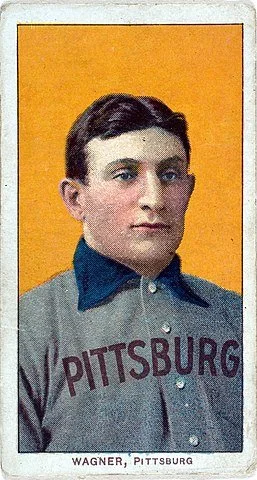
    Did you see last week the Honus Wagner baseball card from about 1909 sold for $7.25 million.

    14:53-14:54

    And there it is.

    14:57-14:57

    Handsome fellow.

    15:00-15:01

    He is, look at him.

    15:05-15:08

    That's old for seven and a quarter million dollars.

    15:09-15:14

    That article, I saw that article so many times, the pop-ups and those pushes and stuff.

    15:15-15:18

    I saw that so many times, but that's not the thing I'm interested in.

    15:19-15:22

    I wanna hear the story about like, then what?

    15:22-15:25

    Like, let's talk to that guy in two weeks.

    15:27-15:32

    Like, "Hey, what you doing with that Honus Wagner card?" You know what his answer is?

    15:33-15:39

    "I occasionally get to look at it." You spent seven and a quarter million dollars on something to look at?

    15:40-15:42

    I got that for free off of Google Images.

    15:43-15:43

    (audience laughing)

    15:47-15:50

    Now, true or false, I can do the same thing that that guy did.

    15:51-15:52

    Look at that, right?

    15:53-15:54

    And now you're looking at it for free.

    15:55-16:00

    We can do the same thing, and we didn't spend seven and a quarter million dollars.

    16:03-16:04

    That's what Solomon said.

    16:04-16:07

    We think more stuff will make us happy.

    16:08-16:10

    It won't, it'll just bring more disappointment.

    16:12-16:13

    Here's another thing.

    16:13-16:17

    More stuff is more to take care of, right?

    16:17-16:18

    And that's a pain.

    16:19-16:27

    Somebody's like, "Hey, Pastor Jeff, I got a boat." I'm like, "No, you got a part-time job." More money is more disappointment.

    16:28-16:30

    Moving on, more money is more to worry about.

    16:31-16:32

    More money is more to worry about.

    16:32-16:33

    Look at verse 12.

    16:35-16:49

    He says, "Sweet is the sleep of the laborer, whether he eats little or much, but the full stomach of the rich will not let him sleep." He says, "The working man gets a good night's sleep.

    16:49-16:53

    The rich man cannot get a good night's sleep because he's got too much going on.

    16:53-17:00

    "I can't unwind, I just got so much to think about." You know the primary reason for insomnia?

    17:00-17:01

    Do you know what it is?

    17:01-17:02

    Tension.

    17:03-17:05

    Do you know what the primary reason for tension is?

    17:07-17:07

    Money.

    17:09-17:11

    That's what Solomon's talking about here.

    17:12-17:26

    He goes, "It's hard for rich people to get the rest because it's worry, it's so much worry." They lay down and, "Well, what if the stock market crashes, or what if it dropped, what if you have a significant drop again?

    17:27-17:31

    Am I going to be able to get this tax thing figured out that I've been working on all week?

    17:31-17:33

    Oh, I'm going to call some people about that.

    17:33-17:36

    And how's inflation going to affect my spending?

    17:37-17:38

    Because we really had to adjust some things.

    17:39-17:40

    Oh, I've got to make sure I talk to accounting.

    17:41-17:42

    You see?

    17:45-17:46

    The more you have, the more you have to worry about.

    17:48-17:58

    Perhaps that's why in Matthew 6, in the Sermon on the Mount, Jesus taught about treasure, and then immediately, He taught about worry.

    18:01-18:02

    Maybe there's a connection.

    18:03-18:06

    Next, where money is more hurting, look at verses 13 and 14.

    18:07-18:12

    He says, "There is a grievous evil that I've seen under the sun.

    18:14-18:17

    Riches were kept by their owner to his hurt.

    18:19-18:21

    And those riches were lost in a bad venture.

    18:22-18:25

    And he is a father of a son, but he has nothing in his hand.

    18:28-18:29

    More money is more hurting.

    18:30-18:32

    Ouch, ouch, ouch, ouch, ouch, ouch.

    18:32-18:32

    Did you see it?

    18:33-18:36

    Three times in this passage, here comes the pain.

    18:37-18:40

    First, he hurt himself by hoarding.

    18:43-18:49

    You're like, "Well, how do you hurt yourself by hoarding?" Speaking of another TV show, have you ever seen that show "Hoarders"?

    18:51-18:53

    Okay, that's how you hurt yourself by hoarding.

    18:53-18:54

    Just watch an episode of that.

    18:57-19:07

    So he hurt himself by hoarding, then he hurt himself by losing it all suddenly, which you know how easily that can happen, an illness, crime, fraud, bad investment, lawsuit, et cetera.

    19:08-19:13

    Then there was hurt by not having anything to leave his son.

    19:15-19:18

    Solomon's point here is yeah, yeah, yeah, money will hurt you.

    19:19-19:25

    The love of money will hurt you, but sadly it will hurt those closest to you as well.

    19:27-19:30

    More money is more hurting and then more money is more to leave behind.

    19:32-19:34

    More money is more to leave behind, right?

    19:34-19:50

    Look at verse 15, it says, "As he came from his mother's womb, he shall go again naked as he came "and shall take nothing for his toil "that he may carry away in his hand." You can't take it with you, right?

    19:50-19:51

    Guess what?

    19:51-19:57

    Someday you're gonna leave the earth and you are taking with you exactly what you brought with you to the earth.

    19:58-20:01

    You've never seen a hearse pulling a U-Haul, right?

    20:03-20:06

    I read this past week about the top earning dead celebrities.

    20:07-20:08

    Did you know this was a thing?

    20:09-20:10

    They track this.

    20:10-20:23

    There are celebrities, people who have been dead for a long time, but because of like album sales and royalties and et cetera, et cetera, et cetera, they're still making tens of millions of dollars.

    20:26-20:28

    Here's the top five, are you interested?

    20:28-20:29

    Let me skip this part.

    20:31-20:34

    Okay, number five, we're gonna count down five to one, okay?

    20:35-20:37

    Number five, Elvis.

    20:38-20:39

    Tens of millions of dollars, Elvis.

    20:39-20:41

    Who had Elvis on their list?

    20:41-20:43

    Under dead celebrity, top-earning bingo card.

    20:43-20:45

    Thank you very much, thank you very much.

    20:47-20:48

    Yeah, Elvis.

    20:48-20:50

    Next is number four, Arnold Palmer.

    20:51-20:53

    Shocker, shocking entry on this list.

    20:54-20:54

    Arnold Palmer.

    20:56-21:01

    Number three, probably the most surprising to me on this list, Charles Schultz.

    21:03-21:05

    You know, the Charlie Brown guy, the Snoopy guy.

    21:06-21:07

    Still making tens of millions of dollars.

    21:10-21:14

    Number two, Dr. Seuss.

    21:15-21:17

    I found out, not a real doctor.

    21:18-21:25

    And then number one, the number one top earning dead celebrity, do you know who it is?

    21:26-21:27

    Anybody take a guess?

    21:27-21:28

    I thought I heard somebody say it, say it loud.

    21:30-21:31

    Michael Jackson, right?

    21:32-21:32

    (laughing)

    21:33-21:36

    Yeah, Michael Jackson, top earning dead celebrity.

    21:36-21:38

    And here's the point, here's my point in sharing this.

    21:39-21:41

    None of these people are seeing a dime of that money.

    21:44-21:46

    Tens of millions of dollars, they're not seeing it.

    21:48-21:48

    Why?

    21:49-21:51

    Because the more you make, the more you leave behind.

    21:52-21:58

    Verse 16, he says, "This also is a grievous evil.

    21:59-22:01

    "Just as he came, so shall he go.

    22:01-22:04

    "And what gain is there to him who toils for the wind?

    22:05-22:08

    Moreover, and this verse is sad.

    22:08-22:12

    I know we're having fun and kind of joking around and stuff here, but this is sad.

    22:12-22:14

    Look at verse 17.

    22:14-22:23

    Moreover, all his days he eats in darkness and much vexation and sickness and anger.

    22:25-22:32

    Here Solomon says, if you make your life about money, you're still gonna die.

    22:32-22:45

    "you're just going to die unhappy and unfulfilled." And he says the love of money ultimately brings, you see this picture, the guy's like sitting alone and eating and he has everything in the world.

    22:46-22:47

    But you see what else he has, three things.

    22:47-22:52

    He says vexation, that's like all the fighting and greed that come with it.

    22:55-23:11

    He says sickness, that's from all the worry, the sleepless nights, the ulcers and anger, so much bitterness and resentment surround people who love money.

    23:13-23:22

    So getting more will make you happy is literally the oldest lie in the world.

    23:25-23:26

    We're still buying it.

    23:28-23:31

    When it comes to money, Solomon says, look, more is not better.

    23:31-23:34

    More is just more problems.

    23:35-23:37

    All right, money won't make you happy.

    23:38-23:39

    Number two, write this down.

    23:40-23:42

    Unless God gives you power to enjoy it.

    23:43-23:55

    I'm gonna go through this part quickly because way back when we started the series, we had a whole sermon just about this topic, but we're addressing it again because it's in the text again and Solomon keeps hammering the point home.

    23:56-23:56

    Why?

    23:56-23:58

    because people don't believe it.

    23:59-24:01

    This is like the theme of Ecclesiastes.

    24:01-24:02

    Look at verse 18.

    24:02-24:40

    He says, "Behold, what I have seen to be good and fitting is to eat and drink and find enjoyment, and all the toil with which one toils under the sun the few days of his life that God has given him, for this is his law." He says, "Everyone also to whom God has given wealth and possessions, and" - here it is - "power to enjoy them, and to accept his lot and rejoice in his toil, this is the gift of God." Stop there.

    24:43-24:46

    Just a word here for the person that's like, "Yeah, you know what?

    24:46-24:47

    You're right.

    24:47-25:00

    Rich people are bad and greedy." If you think wealth and possessions are bad, he reminds us that God gives that.

    25:02-25:03

    God gives wealth and possessions.

    25:04-25:17

    So when you look at disgust with somebody that has stuff, or you want to criticize or condemn someone who has stuff, I want to remind you where they got it.

    25:18-25:21

    Because according to God's word, He is the one who gives it.

    25:24-25:25

    So you can take it up with Him.

    25:26-25:31

    But money, listen, this is why we're so backwards on this.

    25:32-25:33

    Money isn't bad.

    25:34-25:37

    It's not inherently good either.

    25:38-25:39

    Money's a tool.

    25:41-25:41

    That's really all it is.

    25:42-25:45

    And what's bad or good is your attitude towards it.

    25:47-25:50

    What determines my attitude towards it?

    25:50-25:51

    He tells us again right here.

    25:52-25:54

    It's when God gives you the power to enjoy it.

    25:56-25:57

    That makes the difference.

    25:58-25:59

    That's a call back to chapter 2.

    26:00-26:02

    Enjoyment is a gift from God.

    26:02-26:07

    You have to have, you have to live a life of faith.

    26:10-26:17

    You're like, "Well, okay." Now that you say that, that does sound familiar, but what does the life of faith look like?

    26:17-26:43

    like? Well, he tells us. Look again at verse 19, this is so important. He says, "To accept your lot and rejoice in your work." You see that? Accept your lot and rejoice in your work. Do you know another way of saying that? It's called contentment. That's what that This is where I am.

    26:44-26:44

    This is what I do.

    26:45-26:46

    And I'm okay with that.

    26:47-26:48

    Contentment.

    26:51-26:52

    Joy is knowing God.

    26:54-27:05

    Joy is taking everything in life from the hand of God with gratitude and being content with whatever He gives you.

    27:08-27:09

    Think of verse 20.

    27:09-27:17

    He says, "For he will not much remember the days of his life, because God keeps him occupied with the joy in his heart." There it is again.

    27:17-27:20

    God keeps him occupied with the joy in his heart.

    27:20-27:21

    What does that sound like?

    27:23-27:27

    Same thing, contentment, contentment.

    27:29-27:34

    Some people only live in the past, good or bad, right?

    27:34-27:36

    Some people only live in the past.

    27:36-27:38

    Back in the day, I was awesome and I was in shape.

    27:38-27:43

    You should have seen me back then and I was good looking and I was really something.

    27:43-27:47

    I was really amazing back in high school.

    27:47-27:50

    Like that was years ago.

    27:52-27:55

    But for some people, they live in the past, the bad.

    27:56-28:03

    You don't understand when I was in fourth grade, a teacher said something mean to me and I haven't really been able to get over it.

    28:03-28:05

    And it was just so hard.

    28:05-28:13

    And you know, when I was growing up, my parents would only buy the generic Rice Krispies and you don't know how hard my life was.

    28:13-28:16

    And some people just, they live in the past.

    28:16-28:21

    And he's like, "No, no, no, "when you live life from the hand of God, "I'm just focusing on today.

    28:22-28:39

    "Everything he has for me today, "everything that he's giving me today, "everything he wants me to do today, "I'm just gonna rejoice in that." Look at chapter six, he says, "There's an evil that I've seen under the sun, and it lies heavy on mankind.

    28:41-28:47

    A man to whom God gives wealth, possessions, and honor, so that he lacks nothing of all that he desires.

    28:48-28:54

    Yet God does not give him power to enjoy them, but a stranger enjoys them.

    28:54-28:55

    This is vanity.

    28:56-29:02

    It is a grievous evil." Again, you can have it all, but not the power to enjoy it.

    29:02-29:05

    God has to enable enjoyment.

    29:05-29:10

    And again, Solomon keeps talking about it because we can't get it in our heads.

    29:10-29:12

    We're like, "No, no, no, I deserve this.

    29:12-29:13

    I have a right to this.

    29:14-29:19

    I'm gonna get this and it's gonna make me so happy." Not without God, it isn't.

    29:22-29:27

    Look at verse three, he says, and you'll notice a little hyperbole inserted here.

    29:28-29:35

    He says, "If a man fathers a hundred children, You know that family would come to this church.

    29:38-29:39

    True or false?

    29:41-29:59

    If a man fathers a hundred children and lives many years so that the days of his years are many but his soul is not satisfied with life's good things and he also has no burial, I say that a stillborn child is better off than he.

    30:00-30:03

    comes in vanity and goes in darkness and in darkness its name is covered.

    30:04-30:13

    Moreover, it has not yet seen the sun or known anything, yet it finds rest rather than he." More hyperbole here.

    30:13-30:24

    He says even though he should live a thousand years, twice over, yet enjoys no good, you and it all go to one place?

    30:27-30:37

    Long life, big family without enjoyment, without contentment, it's grievous.

    30:37-30:45

    And he uses a pretty hard illustration here, doesn't he?

    30:47-31:03

    He says, "A stillborn child is better off than a man who lives a long life and has everything, but doesn't enjoy anything." Why is that, Solomon?

    31:03-31:28

    He goes, "Look, you have this stillborn child, and you have this rich guy that never enjoyed it." He goes, "Look, they're both going to die, but the stillborn child has the advantage because they never had to face the pain of an empty life apart from God." He says, "All the toil of man is for his mouth, yet his appetite is not satisfied." Like, how much is enough?

    31:29-31:30

    It's never enough.

    31:32-31:34

    "What advantage has the wise man over the fool?

    31:35-31:39

    And what does the poor man have who knows how to conduct himself before the living?

    31:40-31:42

    Better is the sight of the eyes than the wandering of the appetite.

    31:42-31:53

    This also is vanity and a striving after wind." Look, he's just saying, look, it has to come from God.

    31:53-32:05

    It has to come from where you can't get it by your own efforts, not hard work, not wisdom, not charm, enjoyment, satisfaction, contentment, all of that only comes from God.

    32:08-32:12

    Again, church, listen, money isn't good or bad.

    32:14-32:30

    But I have to say this, the rich people are at a huge spiritual disadvantage according to Jesus.

    32:32-32:36

    Remember Jesus said how hard it is for the rich to enter the kingdom of heaven.

    32:39-32:42

    And it's not because God doesn't love the rich.

    32:44-32:50

    It's because in many cases, the rich don't love God.

    32:51-33:03

    Because their affections have been so spent on everything else, and their capacity to seek and pursue and love is spent on so many other things, there's none for God.

    33:06-33:11

    There's no recognition of need at all.

    33:14-33:17

    And it's so hard to preach the gospel here.

    33:20-33:34

    In this area, and I know there are people that stream this all over the world, I'm talking about geographically where this church sits, and geographically where most people are coming from in this neighborhood to this church.

    33:35-33:42

    This is a hard place to preach the gospel because listen, if you're sitting there today with your arms folded and you're like, "Shame on those rich people.

    33:43-33:51

    Shame on those rich people." Listen, every single person in this room and who is usually in this room, we are all rich people.

    33:54-33:54

    We're all rich.

    33:55-33:57

    Every single one of us have more than we need.

    33:57-34:04

    Who can honestly stand today and say, "I am seriously lacking something." Anybody at all.

    34:05-34:10

    Anybody, anybody in all here say, you know, I'm not sure when my next meal is coming.

    34:14-34:20

    And that's not to condemn you for having stuff because wealth and possessions come from God.

    34:20-34:31

    But listen, Solomon's point here is if you're not living in conscious gratitude and contentment, that means God hasn't given you the power to enjoy what you have.

    34:31-34:35

    And you will never be satisfied no matter what you acquire.

    34:38-34:42

    So money won't make you happy unless God gives you the power to enjoy it.

    34:42-34:46

    And then finally, and I know this was a chunk, but listen, I didn't preach for a month.

    34:47-34:50

    I've just been stockpiling this stuff for a month.

    34:50-34:51

    You had to know this was coming.

    34:54-34:55

    You had to know.

    34:55-34:58

    Money won't make you happy, number three, right this time because God said so.

    34:59-35:01

    You're like, man, you should have started with that.

    35:02-35:03

    because that's like settles it, right?

    35:05-35:07

    Money won't make you happy because God said so.

    35:09-35:11

    And that's the fun thing about money.

    35:12-35:14

    Because as soon as you mention it, it starts arguments.

    35:15-35:15

    Right?

    35:16-35:20

    Do not raise your hand, but how many of you have had arguments in your home about money?

    35:23-35:23

    It happens.

    35:25-35:29

    Don't raise your hands, but how many of you have had arguments at work about money?

    35:30-35:35

    How many of you have been in a church that has argued about money?

    35:37-35:39

    Money brings arguments, right?

    35:39-35:41

    But here's the worst, people don't wanna argue with God.

    35:42-35:43

    And that's where we're going here.

    35:43-35:58

    Solomon says, "Despite everything that I just said, "there are still going to be some people "that wanna argue with God about this." Like, yeah, I know what you're saying, and that's for other people, and that doesn't really apply to me because I'm gonna be honest with you, if I did have more, I would be happy.

    35:58-36:04

    I wouldn't be one of those discontented people, and I don't know why my arm's waving like a noodle, but I wouldn't be that guy.

    36:07-36:08

    Money will make me happy.

    36:09-36:10

    Money will make me enjoy life.

    36:11-36:25

    Having more won't ruin me, because I'm not like that." Well look at what he says, "Whatever has come to be has already been named.

    36:26-36:36

    And it is known what man is, and that he is not able to dispute with one stronger than he." The more words, the more vanity, and what is the advantage to man?

    36:38-36:41

    He's saying, "You're going to argue with God on this?

    36:42-36:46

    Really?" He says, "God knows what we are.

    36:47-36:48

    God knows how we function.

    36:49-37:11

    God knows what will satisfy us, and God knows what will not satisfy us, because He created us. He's like, "My whole thesis of real joy only coming from the hand of God, that's as indisputable, that's as unchangeable as the law of gravity." He's still not convinced.

    37:12-37:30

    Two more questions. He says, "For who knows what is good for man while he lives the few See, the first question, he says, "Who really understands what's good for man?

    37:31-37:35

    Who knows what truly brings value to life?

    37:35-37:39

    Who knows?" The problem is we think we do.

    37:39-37:40

    I know.

    37:40-37:41

    I know what's best for me.

    37:41-37:42

    I know.

    37:44-37:49

    Have you ever really wanted something so desperately and then you got it and you instantly regretted it?

    37:49-37:50

    Has that ever happened to you?

    37:52-37:56

    Are you really arrogant enough to think that you always know what's best for you?

    37:58-38:00

    That's what Solomon's saying here, like, no, no, no.

    38:01-38:02

    God knows what's best for you.

    38:04-38:05

    God knows how you were made.

    38:08-38:09

    Look at the second question.

    38:09-38:20

    He says, "For who can tell man "what will be after him under the sun?" In other words, who knows what's coming ahead?

    38:20-38:20

    Who knows?

    38:22-38:25

    Who? God does.

    38:25-38:30

    Who knows the consequences of the choices that we're making today?

    38:33-38:38

    So is it possible that we don't always know what's best for us?

    38:40-38:43

    That the one who created us knows us better than we know ourselves?

    38:43-38:44

    Is that possible?

    38:47-39:18

    And that's sort of Solomon putting his final stamp on this to say, "Well, money's not gonna make you happy because God said so." Church, trying to be happy using money is not only wrong, is not only completely unsuccessful, but it's impossible because it's just not how we were made.

    39:21-39:26

    If you gave a salad to a lion, would he be satisfied?

    39:29-39:31

    Kind of violates nature, doesn't it?

    39:32-39:36

    If you gave a steak to a cow, would she be satisfied?

    39:37-39:38

    She'd be a little offended.

    39:41-39:42

    But that violates nature.

    39:43-39:57

    Listen, in the same way, You are a spiritual being, and you cannot satisfy the spiritual with the material.

    39:58-40:00

    It goes against nature.

    40:00-40:01

    It doesn't work.

    40:02-40:04

    It never has, and it never will.

    40:04-40:16

    And Solomon tells us, and a couple thousand years ago, Jesus told us again, God's word today, sitting in your lap, still tells us money will not make you happy.

    40:17-40:21

    Not just it won't, but it can't.

    40:22-40:25

    There's only one thing that can satisfy the spiritual.

    40:27-40:33

    There's only one thing that can really bring contentment to the inner person.

    40:34-40:37

    And that's having a relationship with your God.

    40:39-40:41

    It's having your sin forgiven.

    40:44-40:46

    Because the Bible says we're all guilty before God of sin.

    40:47-40:51

    and we all deserve eternal separation from Him.

    40:51-40:52

    That's our real need.

    40:53-40:59

    But the Bible says that God met that need when Jesus Christ died on that cross.

    41:00-41:05

    He died to take your sin away so that you can stand before God forgiven.

    41:06-41:13

    And Jesus rose from the dead so that we might have His righteousness, so we can stand before God perfect.

    41:16-41:17

    That's the need.

    41:18-41:20

    That's the biggest need that we have.

    41:22-41:36

    And you're never going to find enjoyment or satisfaction in anything because you're a spiritual being and you need satisfied on the spiritual level.

    41:39-41:55

    And you have to get to this place where you stop chasing after the things, when I get this promotion, when I get this raise, when I get this new job, when I get this, when I am able to buy that boat, when I'm able to get...

    41:58-42:07

    None of that's gonna matter until you get to the place where you say, Jesus Christ is enough for me.

    42:08-42:09

    So I want you to stand.

    42:11-42:15

    And today, I want that to be the declaration of your heart.

    42:18-42:22

    That maybe there are some people that have been there and you're like, I haven't been there in a long time.

    42:23-42:24

    I kind of drifted from that.

    42:25-42:27

    Can we renew that commitment today?

    42:27-42:29

    Say, no, no, no, Christ is enough.

    42:31-42:37

    Maybe there are some people here that need to make that declaration for the first time.

    42:38-42:44

    Say, yeah, I've spent my life chasing after stuff and you're right, Solomon's right, it hasn't brought me any happiness.

    42:45-42:47

    Jesus Christ, He is what I need.

    42:50-42:54

    But as a church, I want this to be the declaration of our hearts.

    42:56-42:58

    That we lift up our voices before the Lord.

    42:59-43:02

    We say, Christ is enough.

    43:02-43:04

    Christ is enough.

    43:06-43:07

    Christ is enough.

Small Group Discussion
Read Ecclesiastes
5:8-6:12

  1. What was your big take-away from this passage / message?

  2. Why do you think people look to money for happiness, despite the fact that the Bible and history both say that this has never happened?

  3. Have you ever seen someone hurt themselves in the pursuit of more, or when they got more (no names!)? Do you have a personal experience in this?

Breakout
Pray for one another to go after healthy relationships.

Armor Up

Introduction:

  1. What is Spiritual Warfare?
    (Ephesians 6:11-12)

    1. Evil spiritual forces actively trying to intervene in our pursuit of a relationship with Jesus.
    2. Most often associated with Satan , who is clearly identified as the enemy of our Soul.
  1. How do I recognize I'm in a spiritual battle?

      Three ways Satan attacks us:

    1. Satan attacks us through Accusations
    2. Satan attacks us through Temptation
      1. Desires of the Flesh
      2. Desires of the Eyes
      3. Pride of Life
    3. Satan attacks us through Deception
  2. How do I fight a spiritual battle? (Eph 6:13-17)

    1. We are called to Stand not Fight .
    2. We must adorn the full Armor of God .
  3. How do I win a spiritual battle?

    1. Jesus won the battle for us!
    2. Colossians 2:15 - He disarmed the rulers and the authorities and put them to open shame, by triumphing over them in Him.

Sermon Notes (PDF): BLANK
Hint: Highlight blanks above for answers!

  • 00:00-00:26

    Good morning everyone. How's everybody today? Good. If you could open your bibles to Ephesians chapter 6. I just have to tell you Marina and I we were married in 2013 and ever since then my father-in-law Nick has been asking me if I've been preaching in our church. I always laughed it off I really had no interest in preaching but fast forward to about a year ago and Pastor Jeff asked me that same question.

    00:26-01:05

    He asked if I would be interested in going through the preaching course here harvest and eventually being here and preaching. Now I can't imagine the look on my face because I hadn't been coming here that long, maybe eight months or so, right? And I was shocked, you know, I never had any desire to do it. And I had no intentions on telling him yes, but I humored him a little bit and told him I would think and pray about it, having every intention of turning him down sometime at a later date. Well, like I said, I had no intentions on preaching, but these things kept popping up, different verses or topics that piqued my interest as something I could preach on, if I ever decided to.

    01:06-01:15

    I couldn't really explain some of them besides the fact that God must be leading me somewhere, so I decided to pursue it just a bit and see where it led me. I wasn't gonna preach, so it couldn't hurt anything, right?

    01:17-01:31

    So the more I dug into the topics, studied the passages, the more the thought of preaching started to interest me, and the more I began being hit with these negative thoughts, thoughts of fear and self-doubt, incompetence, inadequacy.

    01:32-02:13

    Couldn't understand why Jeff would want me, of all people, to stand in front of our church and preach a message. I'm certainly not qualified enough, I don't have enough biblical knowledge to stand here and preach to guys like Rich and Jeff and Mark and all these experts who know the Bible front to back, but I'm not good enough to stand here and preach to a room full of believers. And even if I get past that and fumble my way through writing some sort of sermon, there is no way I could get up and deliver it without screwing it up. But above all that, the biggest question on my mind was, if God is calling me to do this, if this is something he wants, why am I having these thoughts? Why is it so difficult?

    02:15-03:15

    Well, a little while later, when Jeff and I discussed it again, I had every intention of of telling him no because of all these things I was feeling, but I just couldn't do it. Couldn't bring myself to tell him no. So against my better judgment, I agreed to go through the process. And at that point I had a general idea of the topic that I was gonna preach on, the verses I was gonna use, but again I was pulled in a different direction, which is good because it led me to an understanding of my preaching journey thus far. I realized that all the negative thoughts I was having weren't from God, they were from Satan and they were the result of spiritual warfare. Satan was working to pull me in the opposite direction God was and trying to prevent me from doing this, from standing here today. Now as you can see I'm here so it's probably pretty clear which side won and I guess I can give my father-in-law a different answer after nine years of asking me. So here you go Nick.

    03:17-03:19

    So, I know I'm not the only one.

    03:20-03:21

    Have any of you ever been there?

    03:22-03:23

    Ever felt that God was calling you to something?

    03:24-03:25

    A ministry position?

    03:26-03:27

    Volunteering for a need?

    03:27-03:28

    A church?

    03:29-03:31

    Even just preaching the gospel to a non-believer?

    03:32-03:34

    Maybe it wasn't even ministry related.

    03:35-03:36

    Maybe it was a move to a new area.

    03:37-03:38

    A job change.

    03:40-03:41

    Ending an unhealthy relationship.

    03:42-03:44

    Or proposing to solidify a good one.

    03:45-03:49

    You thought that God was calling you to these things, but it felt harder than it should have been?

    03:50-03:57

    You had these negative thoughts, all this fear, all these things for something that you thought God was asking you to do?

    03:58-04:02

    Well, I'm here to tell you, those negative thoughts aren't from God.

    04:03-04:05

    They're from Satan, and they're the result of spiritual warfare.

    04:07-04:08

    And that's exactly what we're gonna talk about today.

    04:10-04:12

    So we're gonna pick up in Ephesians, verse 10.

    04:15-04:17

    "Finally, be strong in the Lord "and in the strength of his might.

    04:18-04:22

    "Put on the whole armor of God "that you may be able to stand "against the schemes of the devil.

    04:23-04:35

    "For we do not wrestle against flesh and blood, "but against the rulers, against the authorities, "against the cosmic powers over this present darkness, "against the spiritual forces of evil "in the heavenly places." Stop there.

    04:36-04:41

    So that brings us to number one on our outlines, if we're keeping notes, which Pastor Jeff always encourages.

    04:44-04:51

    So point A, spiritual warfare is evil spiritual forces actively trying to intervene in our pursuit of a relationship with Jesus.

    04:53-04:54

    Now we're all in Pennsylvania, right?

    04:55-04:58

    We have any road construction around here that we have to deal with?

    04:59-05:05

    Think of all of that road construction interfering with your drive to work, like Satan's interference in your walk with Jesus.

    05:07-05:11

    It's true you might get there eventually, but it would have been a lot easier without the construction, right?

    05:11-05:12

    Gone a lot quicker.

    05:12-05:13

    (laughs)

    05:15-05:17

    So that brings us to point B on our outline.

    05:19-05:26

    We most often associate spiritual warfare with Satan, who is clearly identified as the enemy of our soul in 1 Peter 5, verse eight.

    05:27-05:32

    Now, just because we don't know or don't realize that we're under attack doesn't mean we're safe.

    05:33-05:38

    Think about the clueless antelope grazing in the field, doesn't know the lion is in the weeds waiting to pounce on him.

    05:39-05:41

    His ignorance doesn't change the fact that the lion is there, right?

    05:42-05:44

    and it also doesn't prevent the lion from attacking.

    05:45-05:48

    It's important to remember that Satan opposes God.

    05:49-06:00

    He knows he cannot prevent or take away your relationship with God through Jesus Christ, but he can hinder that relationship and effectively rob us of the blessings that God intended that relationship to include.

    06:01-06:05

    Satan wants to discredit all of the good work you've been doing for God's glory.

    06:06-06:13

    Earlier in Ephesians chapter one, Paul tells us that God wants us to know him and enjoy each and every blessing that comes from knowing him.

    06:15-06:19

    Now, just to be clear, not every blessing is something new and shiny that everyone else can admire.

    06:20-06:23

    My wife Marina blessed me with this nice shiny watch on our first anniversary.

    06:25-06:28

    Paying for it for the next year with 0% interest may not be a blessing though, right?

    06:29-06:29

    Right, Alex?

    06:29-06:29

    (audience laughing)

    06:30-06:30

    Okay, good.

    06:32-06:36

    What a blessing is, however, is a favor or gift bestowed onto you by God.

    06:38-06:42

    It's not necessarily social, financial, or material.

    06:42-06:45

    It can be those things, but it will not always be.

    06:46-06:52

    Peace, happiness, love, and stability are all examples of blessings that God can give us.

    06:53-06:59

    Just like my shiny watch that everyone can see, people notice when you're living a life filled with God's blessings.

    07:00-07:03

    So that brings us to number two on your outline.

    07:05-07:08

    So number two on our outline, How do I recognize I'm in a spiritual battle?

    07:10-07:14

    Well, Satan attacks us with the same tactics he has used throughout history.

    07:15-07:16

    Why do you think that is?

    07:17-07:18

    Because they work, right?

    07:19-07:21

    They've proven to work time and time again.

    07:22-07:26

    And as humans, every single one of us is inherently vulnerable to these tactics.

    07:28-07:31

    So we're gonna cover three examples of the ways Satan attacks us today.

    07:32-07:34

    First way Satan can attack us is through accusations.

    07:35-07:40

    In Revelations 12, Satan is referred to as the accuser of our brothers.

    07:41-07:43

    I know we've all had those Debbie Downer days, right?

    07:43-07:46

    Days where you just can't seem to get yourself into a good mood no matter what you do?

    07:48-08:00

    Thoughts like, "Man, I am such a failure," or "Why is everybody against me in this?" or "If only my wife loved me more." These thoughts often consume our minds during those days.

    08:01-08:02

    Have you ever gotten out of bed angry?

    08:05-08:13

    bickered with your spouse for no apparent reason? How about snapping at your kids when they're asking too many questions? That's what kids do, right?

    08:15-08:26

    Instead of realizing that these are spiritual attacks, we often succumb to them and relate them to things like not getting enough sleep, having a rough day at work, or not having enough coffee in my case.

    08:28-09:07

    The second way Satan can attack us is through temptation. 1st John chapter 2 verse 16 says, "For all that is in the world, the desires of the flesh, the desires of the eyes, and the pride of life is not from the Father, but is from the world." So three temptations here. Desires of the flesh, desires of the eyes, and pride of life. So what are desires of the flesh? Think of good things that God created for us. Things like food, drinks, sex. Things that, again, God created for us that aren't inherently evil, but Satan uses them to create evil.

    09:08-09:14

    Like food, food addictions, alcoholism, unfaithfulness in marriage, and so on.

    09:16-09:25

    Second temptation, desires of the eyes. These are things that we see and that that we're attracted to and think it might be nice to have for ourselves.

    09:26-09:29

    Nice house, nice car, nice watch.

    09:31-09:36

    Things, again, that aren't necessarily bad on their own, nor are they bad to pursue if your heart is in the right place.

    09:37-09:41

    But Satan uses them against us to create things like covetousness and jealousy within our hearts.

    09:43-09:45

    Third temptation is pride of life.

    09:47-09:53

    These are personal achievements, things that you've worked hard for in your life, maybe a promotion at work, graduating college.

    09:56-10:06

    Things again that aren't inherently evil to pursue when your heart is in the right place, but Satan uses them against us to create things like pride and arrogance within our hearts.

    10:08-10:10

    Third way Satan attacks us is through deception.

    10:12-10:14

    Now, does anybody remember Satan's very first attack in the Bible?

    10:15-10:16

    Tell me.

    10:18-10:18

    Thanks Marina.

    10:20-10:20

    Good.

    10:22-11:23

    Yes, she's right, obviously. It was through deception when he convinced Eve to go against God in need of the only tree that she was commanded not to. Now when God came into the garden and asked Eve if she ate of the tree, she told him that she was deceived by the serpent, so she ate. Satan twists facts and uses partial truths to deceive us into questioning God. These are situations where we might justify a sin or convince ourselves that we're good our own and don't need God's help. My daughter Nora is an expert in the field of partial truths, especially when it comes to her dessert. She knows she doesn't get a sweet until she finishes her dinner, but it never fails that she sits down with her plate, takes one bite, and comes running to us and tells us she's done with her food and ready for dessert. Now obviously we ask to see her plate, right? At that point she either completely disappears or comes back with her plate in her hand, mouth gorged with as much food as she can fit, trying to convince us that she's done and ready for dessert. That doesn't work.

    11:26-12:16

    Now listen, you would be a fool to believe that Satan waits until you're expecting it or you're ready for him to attack. Just like the lion ready at any moment to pounce on the antelope, Satan is always at work, always waiting for us to give him even the slightest opportunity. And it can happen at any point in your walk with Jesus. It doesn't matter if you're newly saved or you've been a follower for 30 years, it can happen at any time. So now that we have an idea what spiritual warfare is and who we're fighting against, I bet you're wondering how you fight it, right? Well, unlike the antelope who has no protection from the lion, we as Christians are equipped by God to fight against our enemy. And that brings us to number three on our outline. How do I fight a spiritual battle? We're gonna pick up in verse 13 and find out.

    12:18-12:26

    Therefore, take up the whole armor of God that you may be able to withstand in the evil day and having done all to stand firm." Stop there.

    12:27-12:31

    After hearing that, it's probably pretty clear that this is a different kind of battle, right?

    12:33-12:37

    So that brings us to point A. We are called to stand, not to fight.

    12:38-12:41

    Paul didn't tell us to fight, but rather to stand firm.

    12:42-13:39

    As a matter of fact, Paul uses the term "stand" four times in these eight verses that we're covering today. Now I looked up the idiom for "stand firm" online just to get an idea how it was identified and described and the best one I could find for this situation is "to remain determined, stalwart, and unyielding as in one's position." Which brings us to point B on our outline. To stand firm according to Paul, you must adorn the full armor of God. It's important to note the word full here. Every piece of the armor works together in a specific way and none are as effective individually as they are when used together. Do you think a soldier would go into battle without taking every available resource at his disposal? In the same manner, it makes sense for us to prepare ourselves for battle with every resource God provides us. So what exactly are those resources?

    13:40-13:43

    we are going to pick up in verse 14 and find out.

    13:45-14:41

    "Stand therefore having fastened on the belt of truth and having put on the breastplate of righteousness." Stop there. So Mike if you could put the armor. A couple disclaimers here. So first, on the screens is a picture of the armor that was commonly worn by a Roman soldier at this time and this is the type of armor that Paul was describing when he was writing this. And second, each of these items could be a sermon of their own. So this is just going to be a brief overview of each one and kind of an idea of how they're used. So in verse 14, Paul talks about two things, the belt of truth and the breastplate of righteousness. So what are they? Well, the belt of truth, a Roman soldier's belt, when it was worn properly, secured the rest of his armor and held scabbards for his weapons in addition to providing support for his breastplate. Now, contrary to Satan being referred to as the father of lies, God is referred to as the truth.

    14:43-14:51

    Understanding and trusting in the gospel provides us that same type of support as the armor of God, as a Roman soldier's belt for his other items.

    14:53-14:54

    How many guys in here wear a belt every day?

    14:56-14:59

    Yeah, me too. (laughs) You know that uncomfortable feeling when you forget it?

    15:00-15:03

    You're always tugging at your pants, feeling like they're falling down, even if they're not.

    15:04-15:07

    But you know when your belt is on and it's fastened tightly, your pants aren't going anywhere.

    15:09-15:09

    True, right?

    15:10-15:11

    (laughs)

    15:13-15:18

    In the same way, when your belt of truth is on, and it's fastened tightly, your face is secured.

    15:19-15:22

    And without the belt of truth, wouldn't the rest of the armor be ineffective?

    15:23-15:27

    Without accepting God's word as true, wouldn't everything else be pointless?

    15:28-15:29

    That's the first step, right?

    15:31-15:34

    The second thing Paul talks about here is the breastplate of righteousness.

    15:36-15:42

    So the breastplate, if you look at the screen, is the part that covers the largest target on the soldier, his torso.

    15:43-15:47

    And we know there's many vital organs in there, the liver, lungs, and most notably, the heart, right?

    15:49-15:55

    Do you think a soldier, if given the choice, would wear a cardboard box or a Kevlar vest going into battle?

    15:57-15:58

    What do you think?

    15:59-16:01

    Yeah, obviously the vest, right?

    16:03-16:13

    Wearing a cardboard box is exactly what we would be doing to use our own righteousness. Paul tells us that none is righteous, no, not one.

    16:14-16:31

    Soldier would obviously choose the Keblar, right? That gives him his best chance of protection. When Jesus died on the cross, he took on our sin. He gave us his righteousness. He took our cardboard and gave us his Keblar. Isn't that great?

    16:33-16:34

    Let's continue in verse 15.

    16:36-16:42

    "And as shoes for your feet, having put on the readiness given by the gospel of peace." We'll stop there.

    16:43-16:51

    So an interesting thing I learned in studying this is that Roman soldiers would often drive spikes or nails through the soles of their shoes to help them stand firm during battle.

    16:53-16:56

    Now we all know our mission as followers of Jesus is to spread the good news of the gospel.

    16:56-17:09

    And these shoes, the shoes of the gospel of peace, give us the readiness to proclaim it anywhere God may lead us. Now Paul told the Romans that the sufferings of this present time are not worth comparing to the glory that is to be revealed to us.

    17:11-17:17

    Resting in the peace of knowing that we are recipients of the promises of the gospel, it's kind of like the nails in the soldier's shoes, right?

    17:19-17:25

    Gives us a stability to stand firm in our faith and endure the trials of life without fear.

    17:27-17:28

    Let's continue in verse 16.

    17:30-17:48

    "In all circumstances, take up the shield of faith with which you can extinguish all the flaming darts of the evil one." So I also learned when studying this that the shield was often regarded as the most important part of a Roman soldier's armor, as it protected them from arrows launched by their enemies.

    17:49-18:27

    Flaming darts used during this period were intended to ignite a fire and destroy whatever they hit. Things like fortifications and barricades, stuff that was often made from wood. Obviously Satan doesn't launch actual flaming darts at us, right? That would be wild. But he does barrage us with things like lies and impulses that can ignite and spread through our mind and spirit, damaging the foundation of our relationship with God. By shielding ourselves in our faith in God and in his promises we protect ourselves from those flaming darts shot by Satan.

    18:28-18:41

    Let's continue in verse 17. "Take the helmet of salvation and the sword of the Spirit which is the Word of God." So two things in verse 17, helmet of salvation and the sword of the Spirit.

    18:42-19:01

    I bet if we took a survey in this room most people would probably agree that the head is the most vulnerable part of a soldier's body, right? One blow could be fatal. Now unlike a Roman soldier who as you can see wore a metal helmet, as Christians our heads are protected by what's inside of them.

    19:02-19:48

    The security of our salvation through Jesus Christ. We know that our minds are what Satan attacks, right? But as followers of Christ we are comforted by the knowledge that Satan can never take your salvation away. He also talked about the sword of the Spirit here. Now a skilled soldier is deadly with his weapon, right? Why do you think that is? Think they just wake up one day and have that skill? No, they train and practice constantly. Do you think Chuck Norris just woke up one day with the ability to roundhouse kick people in the face? Maybe weapon in our arsenal, it's probably pretty important that we keep it sharp and stay proficient with it, right?

    19:51-20:21

    Hebrews 4.12 says, "For the Word of God is living and active, sharper than any two-edged sword, piercing to the division of soul and of spirit, of joints and of marrow, discerning the thoughts and intentions of the heart." The only way to keep your sword sharp and be proficient with it is by constantly staying in God's word, which is how we gain wisdom and understanding and the ability to discern good versus bad. In other words, what does Pastor Jeff always tell us to do with these?

    20:24-22:00

    So now that we know what kind of battle we're fighting, who we're fighting against, and what resources we have available to fight it, the next question is probably, "How do you win?" That brings us to point four on our outline. How do I win a spiritual battle? So imagine for a second a soldier going into battle knowing that it's already been won. Knowing they're not even fighting but standing from a position of victory and not defeat. Don't you think their confidence and their mentality would be a little different than going in without that knowledge? Absolutely, right? And that's the beautiful thing about all of this. The battle has already been won by Jesus. According to Colossians 2 15, he disarmed the rulers and authorities and put them to open shame by triumphing over them in him. Remember who Paul identified as our enemy earlier in verse 12? The rulers, authorities, cosmic powers over the present darkness and spiritual forces in the evil and heavenly places? According to this verse, Jesus disarmed all of them and put them to open shame by triumphing over them and God. Jesus won the battle for us guys. Paul said our mission is to stand, to resist the attacks, and to remain faithful to God. James 4:7 says, "Submit yourselves therefore to God. Resist the devil and he will flee from you." I think of this situation like playing basketball with my kids, and they ask me to pick them up so they can make a basket.

    22:01-22:06

    It's true, they may sink the basket and score the points, but who really did the work to get them there?

    22:07-22:08

    Right?

    22:08-22:10

    I have another illustration for this.

    22:11-22:14

    It's pretty clear Eliza is mowing the grass, right?

    22:14-22:18

    She's doing the work, and I can guarantee you Marina is going to take the credit for it.

    22:19-22:28

    And we're not going to talk about why I'm sitting on the porch taking pictures while my wife and daughter - Sorry, babe.

    22:32-22:33

    But guys, you have to listen to me on this.

    22:33-22:38

    All kidding aside, even though the battle is won, we still have to show up.

    22:38-22:39

    We have to stand firm.

    22:40-22:43

    We don't get a free pass just because Jesus did the work for us.

    22:45-22:47

    Kid still has to carry the ball and sink it through the hoop, right?

    22:49-22:51

    Marina still has to start the mower and strap Eliza on so she can mow.

    22:53-22:54

    We don't get a free pass.

    22:56-22:58

    And nothing in here said it's going to be easy.

    23:00-23:03

    So we've all heard the phrase, don't bring a knife to a gunfight, right?

    23:04-23:04

    Pretty common.

    23:06-23:26

    Well, if you're sitting in here, and you're struggling, maybe with an addiction that you can't seem to get away from, you've tried the books, AA, patch, pill, gum, seemingly any other resource available, but you keep falling off the wagon, Maybe it's a porn addiction that you're struggling with.

    23:27-23:29

    You tried internet blockers and counseling.

    23:30-23:31

    But everybody knows how the internet works.

    23:32-23:34

    Just a couple clicks, you're right back down in the rabbit hole.

    23:36-23:38

    What about gossiping?

    23:40-23:40

    Trash-talking?

    23:42-23:45

    Are you always looking for opportunities to slander your brothers and sisters?

    23:47-23:50

    Are you always the one to share something you may have heard about a "friend"?

    23:52-23:57

    Now, I might have outshot Taylor Howland on May 13th, but I don't spread it around the whole church, do I?

    24:00-24:01

    Never. I would never do that.

    24:03-24:05

    What about an addiction to your cell phone?

    24:06-24:06

    Social media.

    24:07-24:10

    Feel like you can't go more than five minutes without checking it?

    24:11-24:14

    You've been sitting in here for an hour now. Is it uncomfortable that you haven't looked at it?

    24:17-24:58

    I'm here to tell you that every single one of these things are spiritual battles and you are never going to conquer them until you acknowledge the fact that they are spiritual battles and you've been trying to fight them with worldly resources. They're spiritual issues and God gives us the tools to overcome them. Isn't it a testament to God's love for us that he would give us all the tools we need to fight a battle that we started back in Genesis 3? The battle that he already sent his only son, Jesus Christ, to fight on our behalf, die in our place, and ultimately win for us?

    24:59-25:05

    Can you imagine the kind of love that he has for us to do that? Win it for us and then give us the tools we need to stand?

    25:06-25:42

    So finally, in verse 18, Paul tells us to pray in the Spirit on all occasions with all kinds of prayers and requests. With this in mind, be alert, and always keep on praying for all the Lord's people. So the most important takeaway from this verse is obviously to keep praying all kinds of prayers. In this context to reload during the ceasefire. Be alert for incoming attacks. Just as soldiers do in battle, they take any opportunity they can to regroup, check their armor, and ready themselves for the next wave. We should do the same thing, right?

    25:43-25:44

    Because we know it's coming.

    25:45-25:48

    Satan isn't going anywhere, and he's not gonna stop attacking us.

    25:50-25:59

    We also have to be sure that we're checking on the armor of our brothers and sisters, and those in our circles, and making sure that each and every one of them is ready to stand firm with us.

    26:01-26:03

    And that's exactly what we're gonna do together right now.

    26:04-26:09

    So if I could have everyone stand, if the worship team could come back up, and the elders could get to their positions, please.

    26:12-26:21

    So maybe something I said today hit a nerve with you and you realized that you've been trying to fight a spiritual battle with worldly resources and you've been unsuccessful.

    26:22-26:27

    Maybe you know somebody who's struggling with something and you would like to stand in their place.

    26:29-26:30

    Guys, I know I'm not the only one.

    26:30-26:35

    This entire process of writing this sermon has been one big spiritual attack for me.

    26:36-26:41

    And I can tell you, Googling verses, Googling stuff, worldly resources, didn't help me get through it.

    26:42-26:42

    You know what helped?

    26:43-26:43

    It's this.

    26:44-26:44

    And praying.

    26:46-26:49

    So if you look around the sanctuary right now, we have elders at all four corners.

    26:51-26:52

    And they are ready to pray with you.

    26:53-27:03

    So if anything, like I said, struck a nerve with you, and you feel that you have been unsuccessfully trying to battle a spiritual war with worldly resources, I would encourage you to go talk to one of the elders.

    27:04-27:05

    They would be happy to pray with you.

    27:05-27:09

    Now you can share as much about your struggle or as little as you're comfortable with.

    27:09-27:11

    Just know that they are there and they are ready.

    27:12-27:16

    And they're ready to help you take the first step to stand against the attacks by Satan.

Small Group Discussion
Read
Ephesians 6:10-18

  1. What was your big take-away from this passage / message?

Breakout
Pray for one another.
When Change Is Overwhelming

Introduction:

When we're rocked by change, God steadies us because (James 1:17-18)...

  1. He is Good . (Jas 1:17a)

    Numbers 23:19 - "God is not man, that he should lie, or a son of man, that he should change his mind."

    Deuteronomy 32:4 - "The Rock, his work is perfect, for all his ways are justice. A God of faithfulness and without iniquity, just and upright is he."

  1. He is Unchanging . (Jas 1:17b)

    Romans 8:28 - "And we know that in all things God works for the good of those who love him, who have been called according to his purpose."

When we're rocked by change, God steadies us because...

  1. He Chose you. (Jas 1:18)

Sermon Notes (PDF): BLANK
Hint: Highlight blanks above for answers!

  • 00:00-00:01

    All right, good morning church.

    00:03-00:11

    It is a great privilege and an honor to be up here. Again, I always feel never deserving of this opportunity, so I am incredibly thankful for it.

    00:12-00:17

    And have you ever found it hard sometimes to relate to someone?

    00:18-00:25

    You can try interests, you can try backgrounds, you can try hobbies, sometimes it just it doesn't hit.

    00:26-00:30

    And there is one thing that I'm confident everyone in this room can relate to.

    00:31-00:34

    And that is the concept of change.

    00:35-00:46

    Now, it's not exactly a great conversation starter, like, "Hey, nice to meet you, please tell me about all the changes in your life and how you feel about them." But, life is full of changes.

    00:47-00:50

    In fact, you can't go through this life without going through change.

    00:50-00:50

    It's inevitable.

    00:52-01:17

    That's why there's a million different songs and cliches out there that talk about change, right? I mean I could go on and on about how that's just the way it is, things will never be the same, and how you better start swimming or you'll sink like a stone because the times, they are a changing. Or maybe to tell you to turn and face the strange because of the changes.

    01:19-01:24

    Cliches like the only thing constant in life is change.

    01:25-01:28

    And yesterday I was clever so I wanted to change the world.

    01:29-01:31

    Today I'm wise so I'm changing myself.

    01:33-01:35

    I feel like that one might sound cool but really doesn't have much meaning.

    01:37-01:37

    How about this one?

    01:40-01:44

    Nothing is so painful to the human mind than a great and sudden change.

    01:46-01:49

    The late, great C.S. Lewis came up with this one.

    01:49-01:58

    He said, "Isn't it funny how day by day nothing changes, but when you look back, everything is different?" And one more, and this might be my favorite one.

    01:59-02:04

    I'm making some changes in my life, so if you don't hear anything from me, you're one of them.

    02:06-02:06

    (Laughter)

    02:08-02:09

    Actually, there is one more.

    02:09-02:12

    All good things come to an end.

    02:13-02:16

    That one I don't necessarily agree with, and I'll tell you why by the end of the sermon.

    02:18-02:23

    But I think there are so many of these sayings and cliches because everyone can relate to the idea.

    02:24-02:28

    Whether you've undergone major ones or minor ones, we've all experienced it.

    02:29-02:32

    I mean, think about the last 10 years of your life.

    02:33-02:40

    For me, I'm 28 years old, so 10 years ago I was 18, technically just becoming an adult.

    02:40-02:43

    So, so much has changed since then.

    02:44-02:48

    went to college, got married, first full-time job, all of that stuff.

    02:49-02:51

    Think about the last five years even.

    02:53-02:55

    What about the last couple of years pre-COVID?

    02:56-03:00

    We all went through some form of changes through all of that mess.

    03:01-03:04

    And how many changes have taken place even in that timeframe?

    03:06-03:12

    And I've experienced some changes in my own life recently, and it's a big reason why I wanted to talk about this subject today.

    03:13-03:18

    I mean, Ben Roethlisberger is no longer the quarterback of the Steelers and I just, I can't compute with that.

    03:19-03:20

    It's been there the bulk of my life.

    03:22-03:25

    But I have seen some more changes, more serious changes lately.

    03:26-03:35

    I think of Arrow and the fact that my sister-in-law Jocelyn has already graduated from high school and is about to move on from the youth group after having gone for the past seven years.

    03:36-03:39

    That's going to be a big change for me not having her there.

    03:41-03:50

    But another that sticks out for me recently is that my job, I switch shifts from the morning to the middays, same place, same general position.

    03:52-03:58

    But working in sports radio, a shift change means the landscape of your day to day has totally changed.

    03:59-04:09

    It's new people, new time slot when the show's on the air, which for me I didn't think was going to be a big deal, but it was a much bigger deal than I anticipated.

    04:10-04:16

    I didn't realize how entrenched into a routine I was after doing relatively the same shift for five years.

    04:19-04:24

    I mean, I had time for things later on in the day that I didn't have time for now.

    04:26-04:31

    Sleep patterns definitely improved overall, not having to wake up essentially in the middle of the night but those change too.

    04:32-05:09

    All of a sudden I had this hour and a half in the morning that I just didn't know what to do with and I just found myself like walking around my house like, "What's happening? I should be at work four hours ago. I don't know what to do." And for me, the change was sudden and the change was unexpected. And that can be a really nasty combination no matter what the circumstances. And as my shift and my roles changed, I realized that I needed some stability, maybe more than I thought I would need. And I didn't really I wasn't able to handle that transition as easily as I thought I would.

    05:11-05:16

    And you know what, maybe you've undergone a change or changes that are much bigger than mine.

    05:17-05:27

    And maybe those changes have been really difficult to deal with or scary to face, where you see change coming down the road and really just don't want to meet it.

    05:28-05:33

    It can be a good thing and it can be a bad thing and too much of it can be overwhelming.

    05:34-05:45

    especially when we look at how our world is always changing, and far too often that's not change in the right direction, especially as it relates to God.

    05:47-05:51

    And maybe you faced or are currently facing change that's much more serious than what I was just talking about.

    05:52-06:08

    So I'm here to contend with you today that it's our relationship with our God, with Jesus Christ, the lover of our souls and our Savior, that can ultimately steady things in our lives whenever we feel like we're being rocked by change.

    06:10-06:11

    So let's look at why.

    06:12-06:20

    With that, turn in your Bibles please with me to James 1, we'll go over verses 17 and 18.

    06:21-06:28

    And I wanna take us there today because James provides a couple of verses that can help us and comfort us when these changes get to be overwhelming.

    06:30-06:34

    Now James just spent time before these verses talking about temptation.

    06:35-06:44

    He just got done saying that temptation comes from our own fleshly desires, and when we give in to temptation, it conceives or it gives birth to sin.

    06:45-06:52

    And sin, when it's fully grown, meaning it has completely taken over our lives, brings forth death.

    06:53-06:57

    So he just got done giving this warning not to fall into temptation.

    06:59-07:25

    what does not giving into temptation have to do with change? Well, what James is talking about here is ultimately about being overwhelmed, right? I mean in this case it's being overwhelmed by temptation and ultimately our own sin rather than constant or big changes in our lives. And after he just laid all that out, he launches right into a few things that are true about us and and that are true about God.

    07:27-07:36

    These are things that are grounded in the word that are true no matter what the circumstances of life are or what things surround us may change.

    07:38-07:46

    So on your outlines, if you're taking notes, when we're rocked by change, God steadies us because number one, he is good.

    07:48-08:25

    Going to verse 17, he says, every good gift and every perfect gift is from above. Now I'll be honest with you, I've always kind of struggled with what the term good means in a biblical sense. I mean you hear all the time someone says, "Oh he's a good guy," or you know, "They're good people," or "She's got a good heart." But Jesus says in Matthew 19 17 that there is only one who is good and that's God. How can that be?

    08:27-08:47

    Well really what the goodness of God points to is His holiness. If there is only one who is good and it's God, then clearly there's a difference between God and everybody and everything else. And there is. There are huge differences between us as mere people and the God of the universe.

    08:48-08:51

    And that's what being holy is all about.

    08:51-08:54

    It's about being separated, being in a class of your own.

    08:56-08:58

    So what makes God good and what makes Him holy?

    09:00-09:19

    There are three things that scripture tells us that God cannot do. The first is that He cannot lie. Numbers 23 19 says God is not man that he should lie or a son of man that he should change his mind.

    09:21-09:27

    God is clearly incapable of lying, making him much different than us.

    09:29-12:10

    And this is kind of a silly example and this just came to mind right away when I thought about this, but it reminds me of a scene in the movie Liar Liar with Jim Carrey. Has anybody ever seen that movie? Not exactly the most wholesome movie all the way through, but nonetheless Jim Carrey is a lawyer and unlike some of the upstanding lawyers that we might have in this congregation, he is a perpetual liar. And his son for his birthday, is that for one day his dad couldn't lie. And of course, because it's movie, it comes true, and there's a scene where Jim Carrey is just losing his mind because he can't tell a lie. And he holds up a blue pen and he is he's staring at it and he's trying to get himself to lie and say that it's red. And he's trying so hard and he's saying this pen is royal blue. And I imagine it's maybe a little bit like that with God, although I know that God's never trying to lie, but He is literally incapable of it. That's what the Word says. And along with that, God also cannot sin or do wrong. Deuteronomy 32 4 says, "The Rock, His work is perfect, for all His ways are justice. A God of faithfulness and without iniquity, just without iniquity, cannot commit sin. And then James 1:13, right before the verses we're reading today, he tells us that God cannot be tempted by evil, nor does he tempt anyone. All signs that he is by nature good. Can't sin, can't be tempted by sin. Okay, so how does all of that come into play when we're dealing with with change? Well, I think it's very easy to get caught up in thinking that God isn't good when we're dealing with things we don't want to deal with. When things aren't going our way, it's easy to blame God and think he's behind all of it even. It's easy to blame God for terrible things happening in the world as a result of a fallen world, too. I mean, just turn on the news. Mass shootings, Innocent people being killed, babies being killed before they're born.

    12:11-12:15

    There are all results of a world that's ravaged by sin.

    12:16-12:20

    God doesn't create evil, but he is in control.

    12:21-12:25

    Bad things happening doesn't mean that God has lost control in any way.

    12:26-12:31

    In fact, he takes what the enemy meant for evil, and he turns it for good.

    12:31-12:33

    We sing about that, right?

    12:34-12:37

    None of those terrible things I mentioned take away from God's goodness.

    12:38-12:46

    Every good thing, every gift we have comes from Him. That's the God we serve.

    12:47-12:53

    That's the God we look to for guidance. That's also the God who created us and created all things.

    12:55-13:03

    And isn't that awesome that He is good? Isn't that reassuring in a life full of changes?

    13:04-15:05

    that he will always stand as a good God who provides us with good gifts. It's a lot easier to go through possibly unexpected changes knowing that God is good and incapable of anything evil. Verse 17 says that he is the father of lights, the source of all good things in our lives. So don't let the emotions of change that seem chaotic draw you away from the fact that every good thing in our lives is a gift from God. He's the provider of all things good, does not change when our circumstances change. His goodness is an essential part of who He is. Which leads me to my next point on the outline, and that is when we're rocked by change, God steadies us because He is unchanging. That's the back half of verse 17, where it says, "Coming down from the Father of lights with whom there is no variation or shadow due to change." I think this is vitally important to know and to remember when you're going through changes in life. That Jesus Christ is the same yesterday, today, and forever. Hebrews 13 8 tells us that and thank God for that truth. Because let's consider for a second that that wasn't true. Let's say that God and his character and what he stands for and what we know about him just changed as society changed. What then would happen to Scripture? If God changed with what was most popular in the ways of thinking during our time, or he adapted to how we we think we've evolved over the years in our society. What good then would his word be? All of a sudden the Bible is really totally unreliable and outdated.

    15:07-16:23

    What's true in here and what God said might not be true anymore. That's if there were variations to who God is. That's if God changed like shadows change when light hits it at a different angle. The Bible would never stand. We constantly need new versions of it, or for God to keep bringing new insights to us to add to the Bible. But we know that what is written in Scripture is already the complete Word of God. That'll never change, because God will never change. And there's a fancy word for it that I learned through this process of writing this and studying this and that is immutable, unchanging over time and unable to be changed. Just like we said earlier that God is unable to lie, He's also unable to be changed. He's unchanging in His purposes, in His character, and in His promises. So what are His purposes? Romans 8:28 says, "And we We know that in all things God works for the good of those who love Him, who have been called according to His purpose.

    16:25-16:34

    There's purpose there for those of us who call Jesus our Lord and Savior, that we have a good God working things out for our good.

    16:35-16:43

    He has purposes to glorify His name and does that by revealing His power in the Holy Spirit through our lives.

    16:45-16:54

    He creates us for His glory, and He'll glorify Himself in our lives no matter what changes in our lives if we focus on Him.

    16:55-16:57

    And His character remains the same.

    16:58-17:01

    And part of His character is His love.

    17:02-17:09

    And that brings me to a story about something that I once loved, and that was Dippin' Dots.

    17:11-17:12

    Anybody remember Dippin' Dots?

    17:13-17:40

    lovers of Dippin' Dots here. I was just at a pirate game and they call them mini-melts now. I'm not sure if Dippin' Dots got like bought out, but I didn't even know they still existed. But they do. They're out there. And oh man, I loved Dippin' Dots. And my very first Dippin' Dots experience was at Kennywood. Had a big bowl, biggest bowl you could get of Dippin' Dots, probably cotton candy like those.

    17:42-17:49

    And immediately after downing these Dippin' Dots, I proceeded to go on every single spinny ride possible.

    17:51-17:56

    Musical Express, Baron Curve when that was still around, just all of them.

    17:57-18:02

    And as you can imagine, right after that, things did not go well.

    18:04-18:26

    Needless to say, my love for Dippin' Dots changed after that day. Dramatically. As in didn't love them anymore. Not in the least. In fact, I was repulsed by dipping dots. Still I am a little bit, picture makes me a little nauseous. But God's love for us doesn't work that way.

    18:28-18:37

    If we are truly saved when we sin against him and grieve the Holy Spirit and do things that would kind of make God sick, He still loves us.

    18:39-18:42

    His love doesn't change like my love changed for Dippin' Dots.

    18:43-18:48

    In fact, the Bible says in Romans 5 that while we were yet sinners, Christ died for us.

    18:50-19:01

    While we were His enemies, responsible by our own deeds and by our own sin, and hanging Him up on that cross, He still died for us.

    19:02-19:03

    He still loved us.

    19:05-19:08

    His love won't change when our job changes.

    19:09-19:16

    His love won't change when a certain relationship in our life change, or we change where we live.

    19:17-19:18

    God's character doesn't change.

    19:19-19:21

    And God's promises won't change either.

    19:22-19:25

    He promised us a lot of things through His word.

    19:26-19:38

    He promises us that He'll always be in control, that He'll never leave us at Deuteronomy Psalm 23, that He will supply every one of our needs, Philippians 4.

    19:39-19:46

    The list goes on and on about His purposes, the attributes and the promises that God keeps because His Word tells us so.

    19:48-19:52

    So the point of all of that is, God is reliable.

    19:53-19:54

    He's dependable.

    19:56-20:20

    else in our lives is unchangeable like God is, because He cannot change. His words are true now, they were true when they were first written, when they were inspired by the Holy Spirit, and they'll always be true into the future. And in a world that's full of volatile change, where things can look differently in an instant, God is the rock that won't follow suit.

    20:21-20:29

    and nothing that happens to us, nothing that we do, no stage in our lives can separate us from the love of Christ.

    20:29-20:30

    You know how I know that?

    20:31-20:32

    Because His word says it.

    20:34-20:37

    And He's not going to ever change that truth, He can't.

    20:38-20:43

    And that brings us to our final point of when we're rocked by change.

    20:45-20:48

    God steadies us because He chose you.

    20:50-20:51

    Let's read verse 18.

    20:53-21:07

    It says, "Of his own will, he brought us forth by the word of truth, that we should be a kind of first fruits of his creatures." By his own will, he reveals that truth to us.

    21:09-21:11

    We know that God is by his very nature good.

    21:12-21:14

    We know that he is unchanging.

    21:15-21:20

    And now we know that he brings us his word because He cares about us.

    21:21-21:27

    James gives the best example of one of those great and perfect gifts God gives to us that he just mentioned a verse before that.

    21:28-21:33

    It's the greatest gift He ever could have given to us and ever has given to us.

    21:34-21:45

    He gave us Himself through His Word and He gave us something that He doesn't give any of His other creations, and that is salvation.

    21:46-21:48

    That's new life in Christ.

    21:50-21:57

    And this is a thought that we should absolutely hold onto when we're in the middle of change that we don't like in our lives.

    21:58-21:59

    God knows that we're broken.

    22:01-22:02

    He knows that we're sinful.

    22:04-22:15

    But he gave us a new life by sending his one and only son, Jesus, to become a man and spend a life on earth.

    22:16-22:27

    He humbled himself to live as we live, yet live the perfect and sinless life so that he could ultimately lay it down on our behalf.

    22:29-23:05

    That while we were still yet sinners and enemies of him, he was willing to be crucified on cross, suffered a horrifyingly painful death, only to raise from the dead while putting to death the sins of anyone who had put their faith in Him. And I know you've probably heard that so many different times, but your salvation should never become dull. It should always be a source of joy for you, that that you're his.

    23:07-23:08

    And it was all because he wanted to.

    23:09-23:09

    That's what the text says.

    23:11-23:13

    Now, I know that some of you might be thinking, well, wait a minute.

    23:15-23:21

    I mean, you're saying that he chose me, but don't I ultimately have to choose him?

    23:22-23:23

    I mean, I thought that's how it worked, right?

    23:23-23:27

    I have to choose him and what he's done for me to accept him.

    23:29-23:32

    And the answer is, yes, it's both.

    23:33-23:36

    And there's something beautiful in that, isn't there?

    23:37-23:47

    That somehow God can work to save us by his choosing and by our choice at the same time.

    23:48-23:53

    That is, there are some things that God is capable of and God does that it's just like, okay.

    23:54-24:00

    That is God being God and his amazing ways to work all of that out according to his will.

    24:02-24:05

    and some things maybe we don't ever quite comprehend.

    24:07-24:09

    But that's how amazing our God is.

    24:11-24:19

    And the text says, "Because of this new life he's given us, we are the first fruits of his creation." Now, what does first fruits mean?

    24:20-24:24

    It means that we have standing above the rest of creation.

    24:25-24:30

    We aren't like the birds or dogs or cats or lions or tigers or bears, oh my.

    24:32-24:34

    God chose us to have a relationship with.

    24:35-24:37

    He created us in His own image.

    24:37-24:40

    He wants to be in relationship with you.

    24:41-24:44

    No amount of change in your life can affect that.

    24:45-24:52

    And you can accept Jesus Christ as your Savior and Lord today and make that a reality for yourself.

    24:54-25:00

    And praise God that He doesn't just leave us tossing through the waves of change as we go about this life.

    25:02-25:07

    He is the most reliable and dependable aspect of our lives at any time.

    25:08-25:11

    It's who He is that He provides good and perfect gifts to us.

    25:12-25:16

    It's who He is that He never changes and never will change.

    25:17-25:27

    The God we know in the Bible and the one that we have our own personal relationships with is the same God as He was yesterday and the same one He'll be tomorrow.

    25:29-25:40

    And He's the God who desires relationship with us, who sought us out to give us eternal life with Him, so that one day our world will never change.

    25:41-25:48

    We'll be spending our days praising Him and worshipping Him in heaven for all of eternity.

    25:50-26:19

    And so with that mindset, I go back to the very beginning of one of those clichés, "All good things come to an end, right? Again, that's one of those cliches that I always hear, and is that true? I would say not when you know Jesus, because He is a relationship, and having a relationship with Him is a good thing that never ends.

    26:20-26:44

    In fact, it only gets better as you know Him more, and get to know Him more deeply as you rely on Him when you're going through trials or changes. And ultimately, you're made perfect in Him when you're glorified in heaven at His right hand. So how about that? So maybe you are in a season of change in your life right now.

    26:45-27:31

    And people can deal with change in different ways. Sometimes people embrace change. Other people hate it no matter what it is. Whether you chose it or you didn't, maybe it is a little too much and you're feeling overwhelmed. Things are spinning out of control. How do we respond? How do we commit to our lives to Christ as sons and daughters of Him? Well, I'd say we interact with the world and others around us knowing that God is always in control. That some things might not make sense. You'll probably get confused or sad or maybe angry at some of those things that happened to us that we didn't choose, or we wouldn't have chosen for ourselves, but we trust in Him because He's good.

    27:33-27:36

    Life might be full of change, but God is never changing.

    27:37-27:42

    We continue to seek Him and know Him because He won't change with the times.

    27:44-27:50

    He might reveal more and more of Himself to you and His greatness to you as you get to know Him and as you seek Him, but He's the rock.

    27:52-27:58

    And if you're feeling like God has forgotten about you in the midst of all your changes, know that He chose you.

    28:00-28:06

    He sought you out to have a relationship with you as God in His word promises He'll never leave you.

    28:08-28:09

    And changes will never stop coming.

    28:09-28:14

    I mean, we would be foolish to believe that that's going to be just a season of life.

    28:15-28:23

    We'll always have changes, even some bad ones, some uneasy ones, but trust Him, He's good.

    28:24-28:26

    He'll never stop being good.

    28:26-28:27

    He'll never change.

    28:28-28:30

    The anchor for our souls.

    28:31-28:32

    And He wants you to know Him.

    28:34-28:35

    Be in relationship with Him.

    28:37-28:42

    Talk with Him and glorify Him with your life.

    28:44-28:44

    Let's pray.

    28:47-28:59

    Father God, I thank you for Everything that you reveal to us in your Word, Lord, we know that change is something that we can never stop going through in life.

    28:59-29:02

    We don't choose some of the changes that go on around us.

    29:04-29:09

    But God, we know that no matter what happens, no matter what changes happen, that you're in control.

    29:10-29:11

    And you always will be.

    29:12-29:18

    God, you are that one thing in our lives that won't change.

    29:19-29:22

    That we don't have to keep up with what's new with you.

    29:22-29:27

    God, you lay it out there and you've laid it out there from the very beginning through your word.

    29:28-29:37

    We know exactly who you are, your promises, your character, and we know that our salvation rests in you.

    29:38-29:41

    That our relationship with you will not end.

    29:42-29:46

    It'll only get better whenever we're spending eternity with you, God.

    29:48-29:52

    And so I thank you for the comfort that that brings as we continue to go about this life.

    29:52-29:59

    And I pray that it would embolden us to face changes, and that we would still be witnesses for you through all of it.

    30:01-30:03

    And I pray this all in Jesus' name. Amen.

Small Group Discussion
Read James 1:17-18

  1. What was your big take-away from this passage / message?

  2. How have you handled unexpected change in the past? How can you handle it in light of your relationship with Jesus?

  3. Why is it so important that we serve and know an unchanging God?

  4. What are some ways you can avoid being overwhelmed or anxious about change in life?

Breakout
Pray for one another.

Why Obedience Matters

Introduction:

Why Obedience Matters (Jeremiah 40:1-6):

  1. God's word does not Change .
  2. There is consequence to both Disobedience and Obedience.
  1. Protection
  2. Provision
  3. Hope
  1. Obedience matters because it shapes our Character .

Sermon Notes (PDF): BLANK
Hint: Highlight blanks above for answers!

  • 00:00-00:46

    So good to be with you this morning, church. Today we're gonna be in the book of Jeremiah and we're gonna be honing in on the topic of obedience and specifically why obedience matters. But first I do have a little little story I'd like to share. So first by show of hands who has had the pleasure of putting together IKEA furniture? Anybody? Okay a lot of us in here. You might know exactly what I'm talking about. And I find it ironic that they don't sell back at IKEA. It's probably the number one thing needed to assemble their furniture, right? At any rate, so one Christmas my wife Janelle decides to purchase the IKEA equivalent dentist and doctor playset for our children Eli and Cody.

    00:47-02:22

    And like a good responsible father I gave myself plenty of time and started at 11 p.m. on Christmas Eve. Right, exactly. And so there was a bit of a problem however, when I went to unpackage everything the instructions were absolutely nowhere to be found. Yeah, so after about 15 minutes of frantic searching and mounting frustration, I discovered that someone at the packaging center had actually taped them between two overlapping folds in the cardboard box. So my initial thought was how much I'd like to flick the guy in the back of the head who would do something like that, but then an overwhelming sense of piece kind of came over me that our Christmas crisis was was averted but I want to ask a question would it have been enough for me to find the directions but not read them or maybe in that point I find them and I read them but I don't act on them or do what they say that would be silly wouldn't it however could it be that sometimes we view the Lord and his word in that very same way. For those of us who call ourselves Christians, maybe we say things like, "Lord, I know you and I know that I'm saved, but do I really have to read my Bible?" Or maybe we read the Bible and we don't quite agree with something that it says and it doesn't align with our lifestyle, so we say, "Lord, do I really have to obey what your Word says?" I've struggled in those areas in my life and so I'm sure that some of you may have as well. Things like, "Lord, do you really I want no profane thing to come out of my mouth.

    02:23-02:28

    Or how about, Lord, do you really want me to tie the portion of every single part of my income?

    02:30-02:34

    Maybe, Lord, do you really consider it murder if I hate someone in my heart without reason?

    02:35-02:39

    Or Lord, is it really lust if I look at anyone other than my spouse in that way?

    02:40-02:50

    So these things can be difficult to acknowledge, but if we truly obey what the word of God says, I believe that we will see why our obedience matters.

    02:51-02:53

    And we'll get a glimpse of that here in Jeremiah chapter 40.

    02:54-03:01

    So as we turn there, I'm gonna go ahead and bring you up to speed with what's been happening in the book of Jeremiah up to this point in chapter 40.

    03:03-03:14

    So Jeremiah was a prophet called by God since before his birth to oversee the destruction and captivity of Israel, and specifically the tribe of Judah.

    03:15-03:21

    So when he became of age, he was sent with a message to call the people to repentance, to their disobedience.

    03:23-03:32

    And every single day, year after year, Jeremiah went preaching the same message of repentance for their disobedience.

    03:32-03:43

    And instead of being met with repentance, Jeremiah was mocked, he was beaten, he was imprisoned, he was starved and almost murdered, and multiple times for some of these things.

    03:44-03:53

    and even at the hands of his own countrymen." So now we fast forward to Jeremiah 40, which is where we're going to pick up and read our text.

    03:55-04:12

    In Jeremiah 40, verse 1, "The word of the Lord that came to Jeremiah, Nebuchadnezzar, the captain of the guard, had let him go from Ramah, when he took him bound in chains, along with all the other captives of Jerusalem and Judah, who were being exiled to Babylon.

    04:13-04:19

    The captain of the guard took Jeremiah and said to him, "The Lord your God has pronounced this disaster against this place.

    04:20-04:28

    The Lord has brought it about, and he has done just as he said, because you sinned against the Lord and did not obey his voice.

    04:28-04:30

    These things have come upon you.

    04:31-04:34

    Now behold, I release you today from the chains on your hands.

    04:35-04:39

    If it seems good to you to come with me to Babylon, then come, and I will look after you well.

    04:40-04:43

    But if it seems wrong to you to come with me to Babylon, then do not come.

    04:44-04:45

    See, the whole land is before you.

    04:46-04:49

    Go wherever you think it good and right to go.

    04:49-04:59

    If you remain, then return to Gedaliah the son of Ahicham, son of Shaphan, whom the king of Babylon appointed governor of the cities of Judah, and dwell with him among the people.

    05:00-05:05

    So the captain of the guard gave him an allowance of food, a present, and let him go.

    05:06-05:22

    Then Jeremiah went to Gedaliah the son of Ahicham at Mizpah and lived with him among the people who were left in the land." So if you take notes, our first point on the outline is, we see that the word of the Lord has not changed.

    05:22-05:24

    God's word does not change.

    05:25-05:35

    It's kind of like when you tell your kids to do something and they delay for a couple minutes and then ask you the same question if they need to do that or they go ask your spouse to confirm what you just said.

    05:36-05:39

    It's not like we're gonna starve God out and he's gonna change his word towards us.

    05:39-05:40

    His word does not change.

    05:42-05:53

    And I think a great example of that is that we see Jeremiah recognize the word of the Lord, even being spoken through a Gentile non-believer, someone who did not know the Lord, and that was Nebuchadnezzar.

    05:54-06:02

    In fact, in verse one, it says, "The word of the Lord that came to Jeremiah," even though it was spoken through someone who did not know it.

    06:03-06:14

    It's kind of like when maybe you're out in public when someone tells you, "Hey, control your kids." And if you're like me, maybe your first thought is, "You don't know me or my kids.

    06:14-06:21

    Who do you think you are?" Well, maybe the first question we should be asking is, are they justified or are they right in what they're saying?

    06:23-06:24

    Let's bring it a little closer to home.

    06:25-06:32

    Maybe the Lord has been speaking to me in my heart about being more consistent in disciplining my children, leading up to that point.

    06:33-06:40

    Then it might not be a coincidence that the grumpy old lady at Target control my kids. Not that that's ever happened or anything. You get my point.

    06:42-07:06

    So here we have the Lord using the captain of the Babylonian army, Nebuchadnezzar, who is an unrighteous man, in order to confirm what the Lord was speaking to Jeremiah all along. And by all along, that's 23 years. We see that in Jeremiah chapter 25, verse 3. Day after day, week after week, month after month, and year after year for 23 years.

    07:07-07:09

    And I had to read that a few times before it actually sank in.

    07:10-07:13

    I mean, some of you in this room are listening, aren't even 23 years old yet.

    07:14-07:15

    That's a very long time.

    07:17-07:28

    And so after reading that, I began to think, and my first thought was how ridiculously stubborn were the children of Israel, that they didn't listen after 23 years.

    07:29-07:34

    But then I also started to think about how this truly speaks of God's mercy and His long-suffering.

    07:35-07:45

    And I couldn't help but consider the verse in the New Testament that God is long-suffering, not willing that any should perish, but that He wants all to come to repentance.

    07:46-07:51

    And I think we see that clearly, delivering the same message for 23 years, every day through Jeremiah.

    07:53-08:00

    But I did begin to see when those two thoughts mingled in my mind, how the Lord was justified in the judgment that He brought on His people.

    08:01-08:55

    So doing some basic math, which is pretty much all I'm capable of, so we're confident with these numbers, 365 days in a year times 23 years. That's just about 8,400 times. So we have to ask ourselves the question, would there have been enough times that the Lord could have spoken to his people? Are we to suppose that 8,401 times would have done it? 8,402 times? I don't think so. I believe that there were no amount of times at that point that the Lord could have asked His people because their hearts were so hard and jaded towards the word of the Lord. So that begs the question in this room for me and for anybody listening, are there areas in our life that we are putting off our own obedience, or maybe we are jaded to the Lord's message that he would want to speak to us.

    08:56-09:00

    Is it going to take the Lord 8,401 times in our life?

    09:02-09:07

    Maybe the Lord would speak to us and say, "Hey, drop that frivolous activity that you're doing.

    09:08-09:09

    Come spend time with me.

    09:09-09:12

    You know what you're doing is, it's meaningless right now.

    09:12-09:17

    Come spend time with your Creator." Or maybe the Lord would tell us, "You need to stop visiting those websites.

    09:17-09:18

    You know what's on there.

    09:18-09:41

    gonna pop up, or stop being dishonest in the work that you're doing. Maybe it's husbands love your wives as Christ loved the church, or wives submit to your husbands as unto the Lord. Maybe it's not specifically said, but you and your heart know where the Lord is calling you to obedience. I'm gonna tell you don't wait.

    09:41-09:59

    If you feel the Lord tugging on your heart in that area of obedience, it's not too late to obey. And just as obedience mattered to Jeremiah and the Israelites, thousands of years ago, it matters in the here and now. Why though, you might ask.

    09:59-11:26

    Someone might say, "Well, why does obedience matter right now or how does it matter in my life today?" And that brings us to point number two, because there is consequence to both disobedience and obedience. I think that's a pretty common thread that we can all agree on. I mean the speed limit on McKnight Road is 45 miles an hour. Let's say I had a beautiful Porsche 1911 and I decide to go a hundred miles an hour on 19. Antonio Brown, excuse me, something in my throat. I think we can agree that regardless of my prestige or status that I think I have, I'm punishable by law at that point. So picture of consequence to disobedience. And by default, we see that a result or consequence of obedience would be that I get to continue to enjoy my sports car responsibly. So I do want to take a closer look at the contrast between disobedience and obedience because I think there's a really great picture of that in this portion of the text. And the one key point that I want to consider under the consequence of disobedience and obedience is that disobedience separates us from God whereas obedience draws us closer to God. And how close or far that we are from the Lord it impacts some very important areas of our lives.

    11:27-13:07

    And those areas are threefold. The first one is protection, the second one is provision, and the third one is hope. And I do want to dig into that a little bit more but first whenever you're talking about obedience and disobedience as New Testament believers there's something that we have to address so we're gonna take a little segue off to address that but then we're gonna come right back and talk about those three areas and that's the topic of grace I know there might be someone listening or maybe someone in this room that says as a born-again believer in Jesus Christ aren't we under the law of grace aren't we adopted into God's family as his children, obey, disobey, I'm still covered by the by the grace of God and he'll forgive me, right? The short answer is yes, absolutely. But I would challenge anyone with that mindset and say that your heart is not in the right place based on Scripture. See we see in Hebrews chapter 10, it says that when we willfully or deliberately sin, we are trampling the blood of Jesus Christ and insulting the Spirit of Grace. Other translations say we outrage the Holy Spirit and I don't know about you but in the Holy Spirit's work in my life I don't want the word outrage to be any part of that. So speaking of the condition of the heart I want to use this illustration because I think it's a very good a good way to sum it up. About two months ago my wife and I we we decided to really teach our boys how to pray and how to repent.

    13:07-13:15

    Not just a surface prayer of thank you for this meal, Lord, which is good, but really ask the Lord for forgiveness for when they make mistakes.

    13:17-13:21

    And my nine-year-old son, Eli, began to truly repent.

    13:21-13:23

    And I could hear it in his voice.

    13:24-13:27

    And I can't remember his prayer verbatim, but it was something like this.

    13:27-13:30

    Lord, please forgive me for not listening to Mommy and Daddy.

    13:32-13:37

    It's just so hard when I wanna get my own way, but I know it doesn't honor you when I don't listen to them.

    13:38-13:43

    So please help me to do the right thing and listen when they tell me what to do.

    13:45-13:57

    And I'm standing here and telling you that there are fewer things that I have heard in my life that were more precious and beautiful to me than the honest, heartfelt repentance of my child.

    13:59-14:01

    But let's look at the other side of that.

    14:01-14:02

    What if his prayer would have been different?

    14:05-14:11

    What if his prayer sounded something like, Lord, I know you're gonna forgive me, whether I listen or not.

    14:12-14:17

    I'm covered by grace, so I guess I need to listen or don't listen, it really doesn't matter.

    14:19-14:23

    Basically, I can do what I want because I'm still my parents' child, they're not gonna put me up for adoption.

    14:25-14:27

    Can you see the difference in the heart there?

    14:29-14:35

    Both prayers were given, but which prayer do you think blesses a father's heart more?

    14:38-14:46

    And likewise, the Israelites, they're still God's chosen people, but they were missing out on the blessings that came along with being God's chosen people.

    14:48-14:51

    Blessings of protection, of provision, and hope.

    14:52-14:55

    So now bringing back around to those three points that I wanna get into.

    14:55-16:19

    Blessing, blessings of protection, provision, and hope lack thereof through disobedience. So the first one is protection. We clearly see a lack of protection for the Israelites in this portion of Scripture and in the whole book of Jeremiah to be candid. In fact, I would go as far as to call it a punishment. You see in verse 1, "They were bound in chains and they were taken away captive from their homeland and everything familiar to them." Whereas Jeremiah in verse 4, "He was set free." And I do think that this is a beautiful picture also of Jesus's words, "Whom the Son sets free is free indeed." And Jeremiah was truly set free. The captain of the entire Babylonian army, a man who answered only to the king of Babylon, stopped his entire convoy of over 750 people, and he took the time to seek out Jeremiah and find him. It's not like he could send a group text and say, "Hey, find me Jeremiah." And he sought him out and let him go. On top of that, he tells Jeremiah not once but twice, "Go wherever you want to go." So on one hand we see Jeremiah set free and free indeed, but we see the children of Israel suffering a lack of protection and punishment because of their disobedience.

    16:22-16:27

    See, in verse two and three, it clearly says, "The Lord pronounced this disaster on the land.

    16:27-16:35

    He brought it about, and he has done it just as he said." So the question in my mind was, how could God do such a thing?

    16:38-16:53

    And right away, I automatically thought of Pastor Jeff's words where he said, "Because he is God and I am not." There are gonna be some things we don't understand about the Lord, but don't allow that to erase all the things that you do understand about the Lord.

    16:56-17:01

    To help us understand a little bit more, because I really thought about this for some time, let me ask you this.

    17:02-17:06

    We all wanna see God as a loving and merciful God act in our lives, right?

    17:06-17:07

    Of course we do.

    17:09-17:11

    But does that mean we forget about his character of justice?

    17:13-17:19

    God's love and mercy is the characteristic we wanna see, but that doesn't negate God's character of justice.

    17:19-17:25

    He has every right to implement his character of justice when he sees fit, just as he does with his love and mercy.

    17:27-17:28

    Now I'll give you this example.

    17:28-17:36

    So if one of my children makes a mistake or does something deliberate, I can choose to have grace as their father, can't I?

    17:36-17:37

    Yeah, of course.

    17:38-17:47

    I can even choose to show grace a second or a third time, even for the same offense, but there will come a time where punishment will be metered out for their disobedience.

    17:49-17:56

    Even to the extent that I don't enjoy punishing my kids, but it's a necessary means to show them that I love them.

    17:57-18:05

    I love them enough to not let them continue in their disobedience and hurt themselves or others or develop a behavior of disobedience.

    18:07-18:10

    And that's a strong message for us today as believers.

    18:11-18:28

    And I stand here before you, even from personal experience, saying that if you're a professing Christian, and you are living in sin, there will come a time where the Lord, as a loving Father, will discipline and even punish you for your sin if you don't repent.

    18:29-18:42

    And maybe someone in here is thinking, or someone listening is thinking, well, I've done this sin before and nothing's happened, or this act of disobedience, and I didn't see any punishment or anything like that, so what do you make of that?

    18:43-18:49

    I would say the fact that you're still sitting here, the Lord is showing you mercy and grace and giving you time to repent.

    18:52-18:54

    And that's the very reason that you're hearing this message right now.

    18:55-18:57

    Think about what that looks like in your life for a moment.

    18:59-19:11

    So keeping in step with the parenting analogies, which I think are pretty appropriate since we do have many references in scripture to God as our Father, I do wanna go to our next sub-point of provision.

    19:13-19:21

    So by show of hands, who has ever had the punishment or metered out the punishment of being sent to bed without dinner?

    19:22-19:23

    Yeah, me, I have.

    19:23-19:25

    I know it doesn't look like it, but it happened.

    19:27-19:28

    So let me ask you this.

    19:28-19:43

    In that moment of the parents withholding a normal provision that the children would have had, if they obeyed, does that mean that the parents are never again gonna provide for their kids or withhold meals from them indefinitely moving forward?

    19:44-19:44

    Of course it doesn't.

    19:45-19:54

    It just means in that moment of separation and discipline that there is a punishment or lack of provision that is being metered out by the parents.

    19:56-20:07

    And in a similar way, in Jeremiah's time, the cities in Israel, including Jerusalem, would have been surrounded by the Babylonian army and their external food supply was cut off.

    20:09-20:16

    And many starved, and that's why we see it's so important, 'cause it struck me as odd, why didn't Nebuchadnezzar and the captain of the guard give Jeremiah food?

    20:18-20:24

    But if you read through Jeremiah up to this point, it's because there was famine in the land that was caused by the Babylonian siege.

    20:24-20:27

    And that's why we see it's very important that he was given food.

    20:27-20:30

    And along with that, he was given a gift and he was set free.

    20:33-20:38

    So thinking about Jeremiah's moment of freedom, I started to think of maybe the joy that he was feeling.

    20:39-20:49

    You know, his chains were removed, he was given food, he was given a gift, which is kind of random, and he was given the freedom to go wherever he wanted to go.

    20:52-20:56

    I think that Jeremiah understood why his obedience had been important up to that point.

    20:56-21:07

    Seeing no fruit for his 23 years of going to the people with not so much as any positive sign, except his word from the Lord.

    21:09-21:14

    But think about it, in that moment of his freedom, the joy that he was feeling, maybe even a sense of hope.

    21:17-21:29

    And I say hope because Jeremiah, although he was given this very severe message for the people of Israel, he was told that it would be a severe punishment, but that it would not be permanent, which is very important.

    21:31-21:38

    And so that's why I believe Jeremiah did have a future glimpse of the hope that this would not be permanent because the Lord said so.

    21:39-21:41

    Where does that leave the rest of the Israelites?

    21:43-21:47

    Can we also put ourselves in their shoes and imagine the hopelessness that they felt?

    21:49-21:53

    So earlier we read that the Lord was the one who pronounced the doom that would happen.

    21:53-21:58

    He brought it to happen and it was already done, just as the Lord said.

    22:00-22:02

    Consider that for an Israelite.

    22:02-22:22

    The same God that created the heavens and the earth, created an entire nation through one man, Abraham, through many, many miracles and signs, generation after generation after generation, is now allowing his people to be conquered and taken captive because of their disobedience.

    22:24-22:34

    So in thinking about the Israelites in that sense of hopelessness, but not a permanent hopelessness, I have to share with you a story from fifth grade.

    22:35-22:37

    So let's just say I wasn't the model student in fifth grade.

    22:40-22:43

    And those of you who are Seinfeld fans, you might appreciate this analogy.

    22:44-22:44

    We'll get there.

    22:45-22:51

    So we had a corresponding chart with pouches on the wall, with our name on the pouch.

    22:52-23:07

    And if you had a, let's call it an infraction, a fifth grade infraction, not bringing your homework, talking back to your teacher, pushing someone at recess, whatever it was, going outside principal's office, there was a corresponding colored index card that you had to shove in your pouch.

    23:08-23:19

    Let's just say that my pouch was like George Costanza's wallet on Seinfeld, where one more piece of paper in that pouch was going to cause it to explode and shower the room with confetti.

    23:21-23:30

    So, as a result, I was not able to go on my end of the year field trip to the LA County Zoo.

    23:31-23:40

    And instead, I had to sit in the second grade classroom and make up every assignment that I could and write standard upon standard upon standard.

    23:40-23:44

    For those of you young kids, that's when they make you write the same thing over and over and over.

    23:45-24:00

    Yeah, so you can imagine to my surprise, when everybody got back, they returned from the field trip, I noticed that getting off the bus was, 'cause the second grade classroom was, the window was right where the buses would pull in.

    24:00-24:02

    I noticed that there was another kid, his name was Junior.

    24:03-24:06

    And let's just say Junior and I were battling it out for the thickest pouch.

    24:07-24:08

    And he got to go on the field trip.

    24:09-24:16

    So I mustered up enough strength to ask my teacher, Mrs. Durkee, yes, that was her name, and I'm sure there was a card in there for making fun of that name.

    24:19-24:26

    But nevertheless, I mustered up the courage to ask her, Mrs. Durkee, why did Junior get to go on this end of the year field trip, but I didn't?

    24:28-24:30

    And I will never forget what she said to me.

    24:31-24:42

    She said, "James, if you would have just asked "for forgiveness and asked politely to go, "I would have let you go." Talk about a letdown.

    24:43-24:57

    Seriously, but nonetheless, an important lesson, one that stayed with me for, I'm not gonna say how many years, But looking back, I feel like there was such a disconnect because I didn't understand her character.

    24:58-25:07

    And even though she just wanted to be reconciled to me and wanted me to have the courage to reconcile with her, that's all she wanted.

    25:07-25:18

    But yet I felt a hopelessness that no matter what I did, that my fate was sealed, that there was no amount of pleading or forgiveness that I could have asked to go on that trip.

    25:19-25:21

    and that was a hopelessness I felt and I didn't get to go on the trip.

    25:22-25:23

    But that wasn't the case.

    25:24-25:26

    If I would have asked for forgiveness, I could have gone.

    25:27-25:43

    And I wonder how many times the Lord would plead with us, even as he played with the Israelites for 23 years, "Just come to me, repent, and I will forgive you." So lastly, discussing a little bit more about character.

    25:44-25:46

    This is our point three and the last one that we're gonna cover.

    25:47-25:48

    Why does obedience matter?

    25:48-25:50

    because it shapes our character.

    25:52-26:08

    So we've seen some clear differences between Jeremiah and the children of Israel, differences of how they dealt with and received the word of the Lord, how close or far they were from the Lord, or separated or near to the Lord, differences of protection, provision, and hope.

    26:09-26:13

    But now I wanna talk about the character difference between Jeremiah and the children of Israel.

    26:15-26:17

    So clearly we see that Jeremiah was faithful.

    26:18-26:26

    The fact that he went and spoke the same message for 23 years without wavering in the midst of all those trials and persecution speaks of his faithfulness.

    26:27-26:33

    But I think the most clear picture of Jeremiah's character is found in verse 6, and I want to read it again.

    26:34-26:36

    It's kind of subtle, so I don't want us to miss it.

    26:37-27:01

    "So then Jeremiah went to Gedaliah the son of Bahikam at Mizpah and lived with him among the people who were left in the land." So Jeremiah chose to go back to the land and dwell with the people of God, even when he was given the option to be provided for by one of the most prominent and powerful leaders in the entire land, Nebuchadnezzar, the captain of the entire Babylonian army.

    27:02-27:04

    What would cause him to do something?

    27:05-27:18

    I began to think of our youngest son, Cody, and you know, like good parents, we have nightlights in their room, and in the hallway, and in the bathroom, just in case they get scared in the middle of the night with a bad dream or have to use the restroom.

    27:18-27:21

    There's probably 57 nightlights between their room and the bathroom.

    27:23-27:26

    But my wife and I, we don't like sleeping with any lights on.

    27:26-27:28

    We love it as dark as we can.

    27:28-27:31

    We sleep very well like that, but we do leave our door ajar just a little bit.

    27:33-27:51

    So I was thinking, what would cause my son Cody, feeling the fear of a bad dream or whatever it is of the darkness, to leave the most well-lit area of the house at the night, his room, the hallway and the bathroom, to go into a room where all you can see is darkness.

    27:52-27:53

    What would possess him to do that?

    27:54-28:03

    And what would possess Jeremiah to go back to the land where there was famine, destruction, and hopelessness?

    28:05-28:10

    And I believe that Jeremiah knew who was waiting for him and knew that the Lord would be with him.

    28:11-28:25

    Just as my son Cody, even in that sliver of darkness where he can't see what's on the other side, he knows that his father is waiting for him there with open arms, ready to meet his needs and comfort him in that moment.

    28:27-28:36

    And I think that shows how Jeremiah understood and knew the Lord's character and how Jeremiah's character had been shaped by the Lord for as long as it was.

    28:39-28:43

    So I'm gonna close with this, in talking about why obedience matters.

    28:43-28:57

    Based on everything that we read, and looking at the lives of Jeremiah and the children of Israel, some pretty interesting childhood analogies from my kids, maybe from me, I'm here to tell you that obedience matters in your life as well.

    28:59-29:05

    And I truly believe that it matters more now than it did to Jeremiah and the Israelites.

    29:06-29:06

    Why?

    29:07-29:09

    Because that's the past, that can't be undone.

    29:10-29:10

    It's not changing.

    29:11-29:15

    But you have a choice today, to obey or not to obey the Lord.

    29:17-29:22

    There is still hope for you to make that choice and to make the right choice before the Lord.

    29:24-29:30

    And God being a loving and good father, he makes it as simple as he possibly can for us.

    29:30-29:34

    And I believe it boils down to one word, and that word is repent.

    29:36-29:49

    If you are a non-believer and you've never trusted God as your father and what he did for you in sending his son, Jesus, to die for your sins, you need to repent of your unbelief.

    29:50-29:51

    Ask God for forgiveness.

    29:51-29:52

    He will forgive you.

    29:53-29:54

    His word makes that clear.

    29:56-30:04

    Likewise, if you're a believer and maybe you find yourself in sin, you don't know how you got there, maybe it was intentional or not, maybe it is deliberate.

    30:04-30:07

    Either way, the same word, repent.

    30:08-30:09

    Ask your father for forgiveness.

    30:10-30:11

    He will forgive you.

    30:14-30:18

    I wanna close with the book of Acts, chapter 17, verse 30.

    30:19-30:26

    The verse says that God has overlooked times of ignorance, but now commands that all people everywhere repent.

    30:27-30:35

    The two things I really like about that verse is that there's not a caveat for believers that says, If you're a believer, you don't have to do this.

    30:36-30:43

    It specifically says, "All people everywhere." And that's exactly what it means.

    30:44-30:52

    And secondly, it says, "The word repent is a command." And what do you do with a command?

    30:54-30:55

    You obey or you disobey.

    30:57-30:57

    But it does matter.

    30:59-30:59

    Let's pray.

    31:02-31:06

    Heavenly Father, we thank you so much for this time.

    31:07-31:09

    Lord, we thank you for the mighty power of your word.

    31:11-31:28

    Lord, we're humbled to be your servants and to acknowledge, Lord, that your grace abounds and it abounds magnificently in our lives, Lord, but that we do have a choice to obey or disobey you.

    31:28-31:31

    And I pray that we would always choose you, Lord.

    31:33-31:38

    I pray that you would please minister, Lord, to our hearts this week.

    31:39-31:41

    Help us to be unified as a congregation.

    31:44-31:45

    And we thank you for this time.

    31:47-31:48

    In Jesus' name, Amen.

Small Group Discussion
Read
Jeremiah 40:1-6

  1. What was your big take-away from this passage / message?

  2. What does Jesus say about obedience?

  3. Are there any areas in your life where you may be putting off obedience?

  4. Considering the first two questions, why do you think it is important for us to obey God?

Breakout
Pray for one another.