Christ

The Fulfillment of the Law.

Jeremiah 31:31-34
  1. Who is Jesus?

    1. Jesus is the Christ.

      • Seed of woman that would crush Satan (Genesis 3:15)

      • King and priest like Melchizedek (Hebrews 7:15 / Psalm 110:4 / Genesis 14:18-20)

      • Prophet like Moses (Deuteronomy 18:15)

      • Descendent of David on the throne forever (2 Samuel 7)

      • Suffering servant (Isaiah 53)

      John 5:39 - You search the Scriptures bc you think that in them you have eternal life; and it is they that bear witness about me.
  1. Jesus is God.
  2. Review: John 1:1 | Zechariah 12:10 | Acts 20:28


  1. What did Jesus do for me?
  2. Review: Leviticus 16


  3. What should I do about Jesus?

    • Admit you are a sinner.

    • Believe Jesus died on the cross and rose from the dead for you.

    • Confess Jesus Christ as your Lord and Savior.

    • Daily follow Jesus Christ.

Sermon Notes (PDF): BLANK
Hint: Highlight blanks above for answers!

  • 01:04-01:15

    So the story goes, there was this Indian tribe where some things were turning up missing.

    01:17-01:20

    And they went to the Indian chief and they said, "You've got to do something about this.

    01:20-01:24

    There are things that are being stolen.

    01:24-01:46

    Somebody in our tribe is stealing." So, the Indian chief said, "When we find out who is stealing, you're going to get five lashes from the whipmaster." Well, some time went on and some more stuff was stolen.

    01:48-01:52

    The Indian chief, whose word was law, said, "Ten lashes.

    01:53-01:57

    And we find who stole 10 lashes from the whipmaster.

    01:59-02:03

    Well some more time went on and more things were stolen.

    02:05-02:05

    15!

    02:06-02:08

    15 lashes from the whipmaster!

    02:10-02:13

    And then shortly thereafter they found the thief.

    02:15-02:17

    It was the Indian chief's mother.

    02:19-02:21

    So what do you do in that situation?

    02:22-02:58

    you're the chief. When your word is law, and you have people following you because your word is law, but at the same time you can't bear the thoughts of your mother taking such a horrible beating. So as the story goes, the day came where they took the Indian chief's her hands around this hole and they stripped the clothes off of her back.

    03:01-03:08

    The whipmaster was ready to administer the beating when the Indian chief said stop.

    03:10-03:20

    And he went up behind his mother and put his arms around her so that his back was now exposed.

    03:21-03:36

    And he said, "You may not proceed in administering the punishment." And he stood there and he took all 15 for his mother, whom he loved.

    03:38-03:44

    See here was a man who couldn't violate his own law, but at the same time he wanted to be merciful.

    03:45-03:47

    And he found a way to make that happen.

    03:49-03:54

    And in a much greater sense, that's what we're here to celebrate today.

    03:56-04:03

    We have a holy and perfect God who cannot and will not violate His own law.

    04:06-04:12

    But at the same time is loving and merciful and gracious and wishes that none would perish.

    04:13-04:25

    So what would such a God do who gave us a law that we repeatedly broke and break, but He wants to be merciful.

    04:25-04:26

    He found a way.

    04:28-04:34

    The way was through the cross and the empty tomb of Jesus Christ.

    04:36-04:59

    We're going to continue Bible 101 today and the sermon title is "Christ, the Fulfillment of the law. And you're like, "Well, Pastor Jeff, that worked out well that you're going through this series and you're speaking about Jesus on Easter. That worked out pretty well." Amazing timing on that, isn't it? Because it would have been, let's be honest, it would have been awkward if it was Easter and we were talking about the Tower of Babel today.

    04:59-05:10

    That would have been really weird. We've been through this series looking at the Bible from from a fresh perspective with new eyes.

    05:11-05:14

    We've talked about the Bible being the Word of God.

    05:14-05:22

    We've seen creation where God created everything in six 24-hour days, and then man violated the one rule - you had one job!

    05:23-05:26

    And it was to not eat off of this particular tree.

    05:26-05:39

    Sin came into the world and things got so bad that God blotted out every living thing except those on the ark.

    05:40-05:50

    We did have a message on the Tower of Babel, and shortly after that time, we saw Abraham, through whom God created the nation of Israel.

    05:50-05:53

    And last week we talked about God's law.

    05:53-05:56

    That to the Israelites, God gave this law.

    05:56-05:57

    God says, "Here's my standard.

    05:58-06:08

    You must always do this, and you shall never do this." The violation of this law makes you a sinner.

    06:11-06:23

    So as we continue in this series, I want you to understand that yes, God made a covenant with Israel, but even in the Old Testament, God promised a new covenant was going to replace the old.

    06:25-06:34

    Jeremiah 31, verses 31-34 says, "Behold, the days are coming, declares the Lord." Look at this one.

    06:34-06:40

    I will make a new covenant with the house of Israel and the house of Judah.

    06:40-06:47

    Not like the covenant that I made with their fathers on the day when I took them by the hand to bring them out of the land of Egypt.

    06:48-06:54

    My covenant that they broke, though I was their husband, declares the Lord.

    06:56-07:02

    For this is the covenant that I will make with the house of Israel after those days, declares the Lord.

    07:04-07:19

    "I will put my law within them, and I will write it on their hearts." See, previously the law was written on stone tablets by the finger of God.

    07:19-07:29

    And God says, "No, I'm going to write the law again, but this time I'm going to write it on their hearts." It's going to be something that's internal, not something that's external.

    07:31-07:34

    He goes on, "I will be their God and they shall be my people.

    07:34-07:50

    And no longer shall each one teach his neighbor and each his brother, saying, 'Know the Lord.' For they shall all know me, from the least of them to the greatest,' declares the Lord." This is one of my most favorite verses in the whole Bible.

    07:50-07:52

    Part of the New Covenant, look what God promises.

    07:54-08:02

    "I will forgive their iniquity, and I will remember their sin no more.

    08:03-08:05

    Can you wrap your brain around that?

    08:06-08:07

    I can't.

    08:10-08:17

    I think many of us have struggled with shame and regret, and we remember our sin a lot.

    08:17-08:18

    We stare at it.

    08:19-08:20

    We think about it.

    08:22-08:31

    When the Lord says, "I'm going to forget." I'm going to choose not to remember your sin.

    08:33-08:35

    How in the world could that happen?

    08:35-08:38

    Because I'm the worst.

    08:40-08:41

    And I've been the worst.

    08:44-08:58

    How could God take somebody like me who has done so many selfish and irresponsible and stupid things and say, "I'm going to make a way that I'm not even going to remember your sin.

    08:58-09:05

    This new covenant is in Jesus Christ." So this is Bible 101.

    09:07-09:11

    And I'm going to be, as I was preparing this message, here's the mindset.

    09:12-09:18

    What would I tell somebody about Jesus that doesn't know anything about Jesus?

    09:20-09:27

    He says, "I've heard the name, but I don't know anything about Him." Well, here it is.

    09:29-09:31

    Who is Jesus, number one? Who is Jesus?

    09:32-09:42

    This is a great question, because every Christmas and Easter, have you noticed this? It drives me insane.

    09:42-09:48

    I read a blog from another pastor that it bothers him too, and I'm like, "Hey, I feel like I'm in good company." But it drives me insane.

    09:49-09:51

    Every Christmas and Easter, it doesn't fail.

    09:51-10:05

    You can go to the supermarket or wherever they sell magazines, and Time Magazine or Newsweek Magazine or some magazine, some of you nod your heads because you know where I'm going with this, you've seen it, they always come out with some new spin on Jesus, right?

    10:06-10:20

    And the headline on the front of the magazine always says something like, "Who was the real Jesus? Who was the historical Jesus? Who was Jesus really?" And there'll be TV specials on like a National Geographic and the History Channel.

    10:20-10:28

    "Who is the real Jesus?" And of course nobody wants like the biblical version because that story's been told countless times over the past 2,000 years.

    10:29-10:34

    So we're going to roll out some controversial new take so that people will tune in.

    10:34-10:36

    Things like, "Well, Jesus was married.

    10:36-10:37

    Have you heard that one?

    10:37-10:37

    He was married.

    10:38-10:39

    Jesus had kids.

    10:39-10:41

    He didn't really resurrect.

    10:44-10:46

    he thought he was dead, but he actually wasn't.

    10:46-10:51

    He sort of snuck off with Mary Magdalene and got married and had all these kids.

    10:51-10:53

    And like, where do you guys come up with this stuff?

    10:54-10:55

    Well, there's some writings.

    10:55-11:11

    These people wrote in like the, you know, the 300s and hundreds of years after Jesus lived, some historian decided they were gonna write a biography about Jesus and included the stuff that apparently the people that lived with Jesus didn't know about.

    11:13-11:22

    Who is more qualified if somebody had a lot of extra time on their hands, they were going to write a biography about me, who is more qualified to write that biography?

    11:22-11:25

    Somebody sitting here or somebody that's going to live 300 years from now?

    11:27-11:27

    No-brainer, right?

    11:29-11:42

    But that's what happens, they find, you know, the gospel of Douglas or whatever, and all of a sudden, Here we found out some interesting things about Jesus that aren't true.

    11:45-11:53

    But it's Satan's oldest ploy. I mean, it gets on my nerves, but I'm not surprised, because we saw this when we went through the account and sin in Genesis chapter 3, right?

    11:53-11:54

    What's Satan's ploy?

    11:55-11:59

    You doubt the Word of God, right? Did God really say that?

    12:00-12:02

    That's what he did to Adam and Eve. Did God really say that?

    12:03-12:12

    And then you deny the Word of God. "No, no, no, no, God didn't." Remember Satan? "You won't die?" This is Oldest Ploy.

    12:12-12:13

    Who is Jesus?

    12:14-12:15

    Here's two things you need to know about Jesus.

    12:15-12:17

    Number one is Jesus is the Christ.

    12:18-12:19

    He is the Christ.

    12:20-12:24

    This might be news to some of you, but Christ is not Jesus' last name.

    12:24-12:27

    I've talked to people that were shocked to find that out.

    12:28-12:30

    The Christ is actually a title.

    12:31-12:41

    In the Old Testament, it's the Messiah, the anointed one, the one who was promised to Israel all through the Old Testament.

    12:41-12:48

    And I don't have time if I spent the next month to talk about all of these things.

    12:48-12:49

    I just want to give you a few.

    12:50-13:02

    The Messiah promised throughout the Old Testament, the first mention is in Genesis 3, verse 15, when God says the seed of the woman, Eve, would eventually crush Satan.

    13:03-13:06

    That's pointing to a Messiah who was to come.

    13:07-13:12

    The Bible says that the Messiah was going to be a king and priest like Melchizedek.

    13:13-13:16

    Melchizedek is an interesting character you meet in Genesis chapter 14.

    13:16-13:18

    He's mentioned in Psalm 110 verse 4.

    13:19-13:21

    And the Hebrew writer spends a lot of time talking about Melchizedek.

    13:22-13:24

    What's the significance? Well, here's the significance.

    13:24-13:29

    In the nation of Israel, if you were a Levite, you were a priest.

    13:29-13:30

    You met the qualifications.

    13:31-13:38

    But you can't be a Levite priest and a king at the same time under Mosaic law.

    13:38-13:39

    That could not happen.

    13:40-13:44

    You couldn't be a priest and a king simultaneously.

    13:45-13:48

    And the Bible says that the Messiah, He will be.

    13:48-13:57

    He's not only going to be the priest that intercedes on our behalf before God, but He is also going to be a king at the same time.

    13:58-14:04

    a priest like the Levites, but a priest and king like Melchizedek.

    14:05-14:09

    The Bible says in the Old Testament that the Messiah who was coming is going to be a prophet like Moses.

    14:10-14:17

    Moses promised that in Deuteronomy 18.15, "God is going to raise up from among you a prophet like me." Somebody far greater.

    14:19-14:27

    2 Samuel 7, the Messiah was going to be a descendant of David who was going to reign on the throne forever.

    14:29-14:33

    Isaiah 53 says that the Messiah was going to be the suffering servant.

    14:33-14:40

    He was going to come and suffer on behalf of His people because of their, because of our sin.

    14:42-14:45

    In fact, Jesus said all of the Old Testament is about Him.

    14:45-14:45

    Did you know that?

    14:46-14:55

    John 5.39, Jesus said, "You search the Scriptures because you think that in them You have eternal life.

    14:56-14:59

    And it is they that bear witness about Me.

    15:01-15:13

    See, unlike the Indian chief story, you have to see that with all of these prophecies in the Old Testament, Jesus was not an afterthought.

    15:15-15:24

    You see, it wasn't like the earth was around for a few thousand years, and God was sitting around some conference table with His angels, He's like, "You know what, guys?

    15:26-15:29

    This whole Testament law thing, it's just not working.

    15:31-15:39

    In fact, they don't keep any of the commandments. Do you notice that?" The angels are like, "You're right. You're right. They don't." I mean, it's like a game to them.

    15:39-15:41

    How many of these can we break every day?

    15:42-15:43

    It's just not working. What should we do?

    15:43-15:47

    And then they bat around some ideas, and God's like, "Oh, I got this idea.

    15:48-15:52

    What if I came down there myself and I took care of it?" It wasn't an afterthought.

    15:53-15:54

    Nor was it a desperation move.

    15:55-15:58

    Where God was like, "Damage control?

    15:58-15:59

    What are we going to do?

    16:00-16:02

    Earth is really out of control here.

    16:02-16:08

    Maybe I'll just have to go down there and see if I can fix it." This was God's plan from the very beginning.

    16:09-16:18

    In fact, it was God's plan from before the beginning because the Bible says that Jesus Christ is the Lamb slain before the foundation of the world.

    16:20-16:22

    Don't ask me to explain that.

    16:22-16:31

    But even before there were people created to sin, the plan of Jesus was already laid out by God.

    16:33-16:35

    Jesus is the Christ.

    16:35-16:39

    That's what we see in the Old Testament, was God had this.

    16:39-16:40

    He knew this.

    16:41-16:42

    He was prepared for this.

    16:43-16:46

    Second thing you need to know about Jesus, there's a lot of things.

    16:46-16:48

    I'm just trying to boil it down here for the sake of time.

    16:48-16:49

    Jesus is God.

    16:51-16:52

    Jesus is God.

    16:53-17:01

    In the New Testament, John 1, verse 1, it says, "In the beginning was the Word, "the Word was with God, and the Word was God." That sentence makes no human sense whatsoever.

    17:02-17:03

    I'll admit that.

    17:04-17:10

    If I said to you last night, "I was with my friend Nathaniel, "and I was my friend Nathaniel," you'd be like, "What are you talking about?

    17:12-17:18

    "It doesn't make any sense." It doesn't, because we're people that live in time and space.

    17:18-17:20

    We don't know an existence outside of time and space.

    17:21-17:24

    But the Bible says that in the beginning was the Word.

    17:24-17:27

    We find out He's talking about Jesus in just a few verses later.

    17:28-17:31

    The Word was with God. Jesus is with God.

    17:31-17:34

    But Jesus also at the same time is God.

    17:36-17:42

    Again, I don't have time to go through the New Testament to show you all of the verses in the New Testament that say Jesus is God.

    17:44-17:46

    But I do want to share a couple with you, interestingly.

    17:47-17:51

    I want to share a couple of verses with you that say that God is Jesus.

    17:52-17:53

    You know the Bible says that?

    17:54-17:54

    God is Jesus.

    17:55-17:57

    Zechariah 12, verse 10.

    17:57-17:58

    This is in the Old Testament.

    17:58-18:08

    It says, "And I will pour out on the house of David and the inhabitants of Jerusalem a spirit of grace and pleas for mercy, so that when they look on Me..." Look at this.

    18:08-18:46

    "...on Him whom they have pierced, they shall mourn for Him as one mourns for an only child and weeps bitterly over Him weeps over a firstborn." Who does that sound like He's talking about? "They will look upon me whom they have pierced." Who does that sound like? Anybody? Go ahead, shout it out. Jesus, right? This is in the Old Testament there. This was before the earthly ministry of Jesus Christ, but God was prophesying ahead of time. Notice in the passage, God didn't say, "They will look on my Messiah whom they have pierced." God says, "They will look on me whom they have pierced." God's saying that He He is going to be the Messiah personally.

    18:48-18:50

    Spoiler alert, write Quran Acts chapter 20.

    18:50-18:51

    We're going to get there.

    18:51-19:07

    Acts chapter 20, Paul says to the Ephesian elders, "Pay careful attention to yourselves and all the flock in which the Holy Spirit has made you overseers, to care for the church of God." Look at this last phrase, "Which He obtained with His own blood." Who bought the church with His own blood?

    19:08-19:09

    Jesus did, right?

    19:12-19:12

    Right.

    19:13-19:28

    Notice in this verse, Paul very specifically says, "God bought the church with his own blood." So not only does the Bible say that Jesus, the Messiah, is God in the flesh, God himself says that he is the Messiah.

    19:31-19:38

    In fact, in the book of Hebrews 1, verse eight, I believe, God the Father refers to God the Son as God.

    19:38-19:39

    You're like, "Who's God's God?

    19:40-19:40

    God has a God.

    19:41-19:42

    God says his son is his God.

    19:45-19:47

    You're like, okay, pastor Jeff, stop right there.

    19:47-19:49

    You're gonna have to explain the Trinity and I can't.

    19:50-19:53

    You know, and I've heard some attempts at that.

    19:54-19:56

    You know, God is like a boom box.

    19:57-20:03

    I'm gonna explain this to younger people, but you know, boom box, where do I even start explaining this?

    20:04-20:09

    It was before we played our music on these little credit card size things.

    20:09-20:19

    We had these giant boxes, and they played the radio, and they would play cassette tapes, and they would play CDs.

    20:21-20:29

    And you're like, "Well, a boombox, it's three things, but it's one thing." That analogy breaks down a bit.

    20:30-20:41

    Some people say, "Well, God's like H2O, because H2O, It's like the same element. It can be ice, it can be water, it can be steam.

    20:42-20:46

    And that's true, but it's not those things at the exact same time.

    20:48-20:51

    But God is Father, Son, and Holy Spirit at the same time.

    20:51-20:54

    He's one God, but He has manifested Himself as three persons.

    20:56-20:56

    Here's what I know.

    20:58-21:03

    I know that Jesus is fully God and fully man at the same time.

    21:04-21:08

    In other words, Jesus is God's perfect man.

    21:10-21:13

    And Jesus is man's perfect God.

    21:14-21:15

    So what you need to know about Jesus.

    21:15-21:16

    Who is Jesus?

    21:17-21:20

    Jesus is the Christ and Jesus is God.

    21:22-21:25

    Here's the real thing I'm excited to share with you today is this.

    21:25-21:26

    What did Jesus do for me?

    21:27-21:28

    This is what you need to know.

    21:28-21:29

    What did Jesus do for me?

    21:30-21:40

    Jesus willingly subjected Himself to crucifixion, being nailed to a cross.

    21:42-21:45

    It was the Roman form of execution.

    21:46-21:50

    And then three days later, Jesus rose from the dead.

    21:51-21:52

    Why did He do that?

    21:54-21:57

    Jesus died on the cross to pay the penalty for my sin.

    21:57-21:59

    That should have been me on the cross.

    21:59-22:00

    That should have been me.

    22:01-22:02

    I was the one who messed up.

    22:03-22:04

    I was the one who rebelled.

    22:07-22:14

    But Jesus said, "No, I'll take your place." And understand, when Jesus was on the cross, He was bearing the wrath of God on my behalf.

    22:15-22:27

    Jesus was, in a sense, like that Indian chief with his arms around his mother, saying, "I'll take the blows so that she doesn't have to." That was Jesus on the cross.

    22:29-22:33

    But that's not the end of the story, because the Bible says in three days Jesus rose from the dead.

    22:34-22:46

    Not only did it validate who he was and what he said, but that was the means by which the eternal life that we forfeited in the Garden of Eden has been restored.

    22:47-22:51

    So understand, through Jesus Christ, eternal life isn't something you get someday.

    22:52-22:54

    Eternal life is something you possess now.

    22:55-22:57

    when you receive Him, and we'll talk about that in a moment.

    23:00-23:08

    The crucifixion of Jesus Christ was not some random event that God just kind of came along in rubber stamps.

    23:10-23:25

    But when you look at the message and you say, "Okay, well, there was a man who said he was God, and he died on a cross." The truth is, crucifixion wasn't really that unique.

    23:27-23:34

    Because somebody could argue and say, "Well, there have been lots of people that have been crucified under Roman rule.

    23:34-23:40

    What makes Jesus... what makes Him so different? What makes Him so special?

    23:42-24:01

    What makes His death so significant?" When you see the cross, the resurrection, it was the culmination and fulfillment of what was pictured and promised throughout the history of the Old Testament.

    24:03-24:19

    This might be a first for you, but I want you to look at the story of the crucifixion and resurrection And what I'm going to guess is the last book of the Bible you would have guessed.

    24:20-24:21

    We're going to be looking at this account today.

    24:23-24:27

    But you're going to see something that you're not going to be able to unsee.

    24:27-24:33

    And it is going to forever change the way you look at the death and resurrection of Jesus Christ.

    24:33-24:40

    You ready? Grab your Bible, and I want you to open up to the book of Leviticus, chapter 16.

    24:41-24:44

    This is absolutely mind-blowing to me.

    24:45-25:01

    But Leviticus, you're like, "Whoa, whoa, whoa, I thought we were talking about Jesus and what He did." Well, in the Old Testament, as we talked about last week, God had this whole system set up on how to offer sacrifices, and none of it was arbitrary.

    25:02-25:08

    God wasn't like, "Just offer whatever you want, whenever you want, however you want, with whoever you want." God was very specific.

    25:09-25:11

    Here is exactly how you do it.

    25:11-25:13

    Why was God so specific?

    25:14-25:21

    Because He was painting a picture that would ultimately be fulfilled in Jesus Christ.

    25:22-25:23

    Leviticus 16.

    25:23-25:29

    Also remember in the Old Testament, there was a building called the tabernacle.

    25:29-25:32

    That was the portable version of the temple.

    25:33-25:43

    In the temple there was this little room that was called the "Holy of Holies." And this room was behind a veil.

    25:45-25:47

    And in this room was the Ark of the Covenant.

    25:49-26:02

    And understand that nobody went in this room, because this was the room where the Lord resided, so to speak, where His glory dwelt.

    26:04-26:08

    So you didn't just walk in there, with one exception.

    26:10-26:26

    One time a year, the high priest, and only the high priest, would go into this room to offer a special sacrifice on behalf of the nation of Israel.

    26:29-26:32

    was one of the most important days, if not the most important day for the Israelites.

    26:33-26:35

    It was called the Day of Atonement.

    26:36-26:39

    And we're not going to read all this, but I want you to look at some of these verses with me.

    26:39-26:46

    First of all, verses 3 and 4 tells us that the high priest would have to make sacrifice for his own sin because he was a sinner.

    26:47-26:55

    But then the high priest would take off the elaborate robes that he wore, if you recall.

    26:56-27:03

    The high priest actually had these really lavish garments, including this breastplate that had stones for each of the tribes of Israel.

    27:04-27:07

    And for the Day of Atonement, though, he would have to take those off.

    27:07-27:11

    And he would have to just put on a plain linen robe.

    27:11-27:14

    It was a regular old thing.

    27:14-27:21

    He would actually look no different than any of the other priests, even though he was the high priest.

    27:22-27:24

    He's just dressed like a regular guy.

    27:26-27:27

    Look at verse 7.

    27:29-27:37

    It says, "Then he, the high priest, shall take the two goats and set them before the Lord at the entrance of the tent of meeting." That's the tabernacle.

    27:37-27:44

    "And Aaron shall cast lots over the two goats." Casting lots was like rolling dice.

    27:45-27:51

    It was something that the Lord used in Old Testament times all the way up until the coming of the Holy Spirit.

    27:51-27:52

    I talked about that earlier in Acts.

    27:54-28:00

    One lot for the Lord, and the other lot for Azazel.

    28:00-28:01

    You're like, well, who's that?

    28:02-28:11

    That was the name of a place in the wilderness, some scholars think, that was about 12 miles east of Jerusalem.

    28:11-28:14

    But the name of the place isn't what's important.

    28:15-28:17

    You see, Azazel referred to the scapegoats.

    28:18-28:19

    There's two goats.

    28:19-28:31

    is going to be killed and one, the scapegoat, Azazel, is going to be released.

    28:33-28:41

    Verse 9, "And Aaron shall present the goat on which the law fell for the Lord and use it as a sin offering." He was going to be killed.

    28:41-29:00

    Verse 10, "But the goat on which the law fell for Azazel shall be presented alive before for the Lord to make atonement over it, that it may be sent away into the wilderness to Azazel." Alright? So there were two goats.

    29:00-29:09

    Again, one killed, and then the priest would lay hands on the other goat to symbolize putting Israel's sin on the animal.

    29:10-29:11

    It was a symbol.

    29:13-29:43

    And then that goat would be released, to be heard from again and it was a picture to the Israelites of sin being removed from the camp. Okay, you with me? Look at verse 15, jump down there with me. "Then he shall kill the goat of the sin offering that is for the people and bring its blood inside the veil and do with its blood as he did with the blood of the bull, sprinkling it over the mercy seat and in front of the mercy seat.

    29:44-29:47

    Okay, the bull, that's referring to the sacrifice he made for himself.

    29:47-29:49

    The mercy seat was the top of the Ark of the Covenant.

    29:51-30:02

    Thus he shall make atonement for the holy place because of the uncleanness of the people of Israel, because of their transgressions, all their sins.

    30:02-30:10

    And so he shall do for the tent of meeting, which dwells with them in the midst of their uncleanness.

    30:10-30:11

    He went down to verse 20.

    30:12-30:21

    "And when he has made an end of atoning for the holy place and the tent of meeting and the altar, he shall present the live goat.

    30:22-30:37

    And Aaron shall lay both his hands on the head of the live goat and confess over all the iniquities of the people of Israel and all their transgressions, all their sins, and he shall put them on the head of the goat and send it away into the wilderness by the hand of a man who is in readiness.

    30:38-30:48

    The goat shall bear all their iniquities and he shall let the goat go free in the wilderness.

    30:50-31:00

    Continuing on, "Then Aaron shall come into the tent of beating," look at this, "and shall take off the linen garments that he put on when he went into the holy place, and shall leave them there.

    31:01-31:14

    He shall bathe his body in water in a holy place and put on his garments," those are the high priest robes, the breastplate, the stones, the whole nine.

    31:16-31:25

    And come out and offer his burnt offering and the burnt offering of the people and make atonement for himself and for the people.

    31:26-31:27

    Stop there.

    31:28-31:35

    Just to recap, the high priest takes off his elaborate robes and he dresses like a regular guy.

    31:35-31:39

    And then he offers a blood sacrifice behind the veil.

    31:42-31:44

    By the way, as the high priest, he's the only one that can do it.

    31:45-31:50

    And after he's done, he puts his ornate robes back on.

    31:52-31:54

    Does any of that sound familiar?

    31:56-31:58

    Because you see, God was painting this picture.

    31:59-32:01

    What did Jesus Christ do?

    32:03-32:09

    In the same way, The high priest took off those elaborate, glorious robes.

    32:10-32:12

    Jesus took off His glory.

    32:13-32:20

    He humbled Himself by taking off that glorious divinity that He shared with His Father.

    32:20-32:23

    And I'm not saying Jesus became less than God.

    32:24-32:25

    I'm not saying that at all.

    32:26-32:29

    But Jesus did fully become a regular human being.

    32:31-32:33

    What I mean by regular is this.

    32:33-32:35

    there was nothing about Jesus that made him stand out in a crowd.

    32:36-32:36

    Nothing.

    32:38-32:38

    How do you know that?

    32:39-32:52

    Because when Judas betrayed Jesus, he had to go kiss Jesus so that the guards would know which was the right guy, because Jesus looked just like all of the other Jewish men.

    32:54-32:58

    And the Bible says there's nothing about Jesus' appearance that would have drawn people to him.

    32:59-33:00

    He just looked like a regular guy.

    33:01-33:32

    So in that sense, holy God still, yes, but in that sense, Jesus took off the robes of the glory, become a regular flesh and blood man, then made a blood sacrifice, Then, took our sin away, and after resurrecting, what did Jesus do?

    33:34-33:38

    He went back to heaven, and he put his robes back on.

    33:39-33:44

    Jesus didn't just go behind the veil like the high priest did.

    33:44-33:50

    You recall, the Bible says that when Jesus died, that veil was torn.

    33:52-33:54

    He didn't just go behind it, He ripped it down.

    33:57-34:01

    Meaning that now you and I have full access to God.

    34:01-34:05

    God isn't behind the veil any longer because of Jesus Christ.

    34:05-34:07

    We can approach God.

    34:09-34:13

    So you see in this picture in Leviticus, Jesus is the High Priest.

    34:16-34:18

    And Jesus is the sacrifice.

    34:21-34:27

    Jesus is a Zazel. He's the scapegoat. He's the one who takes the sin away.

    34:29-34:33

    The one who stripped glory, became regular, put the glory back on.

    34:36-34:47

    And if that's not mind-blowing enough, these events, the crucifixion, the resurrection, happened during a very special holiday for the Israelites.

    34:48-34:49

    That was Passover.

    34:50-35:01

    It was funny, my wife Erin was telling me this morning, she said, "Yeah, I saw in the news that this news reporter was like totally fascinated, like, 'Wow, wasn't this interesting?

    35:01-35:09

    Christians have Easter and Jews have Passover, and it's like around the same time.'" Wow, does that happen every year?

    35:11-35:16

    But Jesus offered the sacrifice on Passover, and why was that significant?

    35:17-35:23

    Well, Passover was a holiday, a remembrance, where Israel celebrated the exodus out of Egypt.

    35:24-35:39

    And the Lord had the Israelites in Egypt cover their door frames in the blood of a spotless lamb, so that when the Lord came through the camp, if you were covered under the blood of a spotless lamb, you would be saved from death.

    35:39-35:40

    Does that sound familiar at all?

    35:41-35:48

    If you're covered under the blood of the lamb, the spotless Lamb, you will be saved from death.

    35:50-35:57

    So you see, Jesus' death and resurrection were really not like something out of left field.

    35:57-36:03

    It was something that was planned and pictured in the Old Testament, in the Passover and in the Day of Atonement.

    36:05-36:10

    God's holiness demanded bloodshed and death for sin.

    36:12-36:16

    God's love, let Jesus take our place.

    36:17-36:32

    That's why when I see the cross, I think of that cross very literally, graphically, I think of that cross like an intersection where God's holiness and His love intersect.

    36:33-36:37

    Because in Jesus, God's wrath was satisfied.

    36:39-36:43

    God's not mad at you for your sin anymore.

    36:44-36:47

    When you received Jesus Christ, His wrath was satisfied.

    36:47-36:49

    And also that intersection is love.

    36:51-36:58

    It was love that motivated God to take our place on the cross.

    36:59-37:02

    So as we close, here's the big question.

    37:03-37:05

    What should I do about Jesus?

    37:05-37:09

    We said, "What did Jesus do for me?" Here's a question, what should I do about Jesus?

    37:10-37:14

    The message of the cross, the message of the empty tomb, the message of He is alive.

    37:15-37:16

    This isn't just FYI.

    37:18-37:21

    You see, you don't come here like, "Jesus died and rose from the dead.

    37:24-37:27

    "Just thought you should know, enjoy your ham." Like what?

    37:27-37:34

    You have to do something with the message because according to Jesus, He's the only way of salvation.

    37:36-37:39

    Jesus said in John 14, 6, "I am the way, the truth, and the life.

    37:39-37:43

    No one comes to the Father except through Me." Why is that?

    37:43-37:46

    Because no one else paid the penalty for your sin.

    37:47-37:48

    No one else can put life back in you.

    37:49-37:50

    No one can do that.

    37:51-37:55

    Not Joseph Smith, not Charles Taze Russell, not the Buddha, not Muhammad.

    37:55-38:03

    Nobody is able to do that except Jesus Christ, the God-man, the High Priest and the Sacrifice.

    38:03-38:04

    He's the only one.

    38:07-38:08

    You have to do something with it.

    38:08-38:09

    What should I do?

    38:12-38:14

    Here it is, A, B, C, D. Drop these down.

    38:14-38:15

    A, B, C, D.

    38:16-38:18

    Letter A, first of all, you've got to get to this place.

    38:19-38:19

    Admit you are a sinner.

    38:20-38:21

    You have to get there.

    38:21-38:22

    Admit you are a sinner.

    38:24-38:25

    That's what we talked about last week, isn't it?

    38:26-38:27

    That was the purpose of the law.

    38:27-38:28

    The law was to break us.

    38:29-38:36

    The law wasn't to give us a pep talk, where God's like, "You're not that bad." The law was to show us we are horrible people.

    38:38-38:40

    We are rebellious against the Holy God.

    38:41-38:43

    You have to start there.

    38:43-38:45

    You have to start there to say, "You know what?

    38:45-38:46

    "I really am.

    38:46-38:53

    "I am a self-centered, wicked person." Admit you are a sinner.

    38:53-38:59

    Let it be believed Jesus died on the cross and rose from the dead for you.

    38:59-39:02

    You have to personalize the message, because God did.

    39:03-39:12

    This wasn't some event from some Jewish guy across the pond 2,000 years ago that's sort of detached historically and geographically from where we are.

    39:14-39:15

    He did that for me.

    39:16-39:19

    You have to say that, he did that for me.

    39:21-39:23

    Believe Jesus died on the cross and rose from the dead for you.

    39:24-39:51

    letter C, confess Jesus Christ as your Lord and Savior. In other words, personally receive the gifts. You do that through prayer. I'm going to lead you in a prayer here in just a moment. One of the ways we respond to that is through baptism. Now baptism doesn't save you. Baptism is an outward demonstration of what God has done in here.

    39:54-40:04

    Baptism, just like Leviticus 16, the picture day of atonement of the ministry of the Messiah, baptism also is a picture.

    40:04-40:05

    You're saying, "I'm dead.

    40:07-40:12

    I'm dead." Coming up out of the water is like coming out of your liquid tomb.

    40:13-40:14

    You're saying, "I'm alive in Christ.

    40:16-40:21

    Jesus Christ has risen me from the dead." You do have to confess Jesus Christ as your Lord and Savior.

    40:23-40:26

    In letter D, daily follow Jesus Christ.

    40:27-40:28

    There's not a list of rules.

    40:29-40:30

    Do this, don't do that.

    40:32-40:33

    It's about a love relationship.

    40:35-40:36

    You want to follow.

    40:36-40:42

    You want to humble yourself before this God who loved you so much.

    40:44-40:46

    Jesus didn't just die to be your Savior.

    40:48-41:00

    The song goes, "He lives to be my King." If you truly receive Him, truly receive Him, He will transform you and His Holy Spirit will come and reside in you.

    41:01-41:07

    And that is the law written on your heart that God promised.

    41:10-41:11

    I want you to bow your heads with me.

    41:13-41:14

    Bow your heads.

    41:16-41:24

    While you do, I just want to ask, Is there someone here today who maybe is understanding this for the first time?

    41:26-41:38

    Is there someone here today who heard and knew the message to some degree, but has never really taken the step to make it their own?

    41:41-41:48

    My question for you this morning is this, can you just walk away from so gracious a gift?

    41:49-41:56

    Can you ignore the love that God has demonstrated in His Son?

    41:59-42:01

    Or can today be a new day for you?

    42:03-42:04

    I am done with sin.

    42:06-42:08

    I am done trying to figure out life on my own.

    42:08-42:11

    I am done carrying guilt and regrets.

    42:13-42:13

    I'm done.

    42:15-42:22

    Jesus Christ died to take away my sin, so that God would remember my sin no more.

    42:22-42:25

    I'm done dealing with the shame of it.

    42:27-42:31

    If that's you, I'm going to lead you in a prayer.

    42:33-42:36

    A prayer that you need to personalize.

    42:38-42:42

    to accept Jesus Christ, which you never have before.

    42:42-42:46

    If you haven't done it, I would encourage you to pray something like this.

    42:48-43:01

    To pray, "Father, I realize that I'm a sinner, and I might have fooled other people, and I might fool myself sometimes, but I know deep down, I am seriously flawed.

    43:03-43:05

    Deep down, I am seriously self-centered.

    43:08-43:12

    Father, I believe the truth of your Word, that you love me.

    43:13-43:21

    And you sent your Son, Jesus Christ, you came here personally to die on that cross and to raise from the dead.

    43:22-43:25

    To forgive me of all the wrong things that I've done.

    43:25-43:27

    You put it all on Jesus.

    43:30-43:34

    And You've restored eternal life into me, Father.

    43:36-43:40

    And today, Father, I want to confess Jesus Christ as my Savior and Lord.

    43:42-43:43

    I'm done playing games.

    43:44-43:55

    I'm done just thinking about it, or putting it off another week, or another month, or until I'm worn out with this particular sin, or whatever.

    43:56-44:00

    Today, I want to confess Christ as my Savior and Lord.

    44:01-44:20

    Father, I know that your Word says your Holy Spirit is going to empower me to follow you, to be the person that you've called me to be, to be the person that you want me to be in your Son, to conform me into the image of your Son.

    44:21-44:23

    You'll give me the power to do that.

    44:23-44:26

    And I want that to be a daily decision.

    44:28-44:30

    And I'm going to seek your face.

    44:32-44:38

    I'm not gonna ask you to raise your hand, or to stand up or walk down front, anything like that.

    44:39-44:41

    'Cause here's the thing, this is between you and God.

    44:44-45:01

    And if you've prayed a prayer like that today, in your own words, that you've personalized this, And it was a genuine and true prayer from your heart that you are a born again child of God.

    45:04-45:11

    And Father, as I pray on behalf of this congregation here, there are many people here who know you.

    45:12-45:12

    And there are some who don't.

    45:15-45:16

    But I pray for all of us, Father.

    45:18-45:27

    When we take a fresh look at the significance of this event, some of us will spend hours preparing for a picnic.

    45:30-45:49

    When you spent thousands of years of history preparing the world through the nation of Israel for this event, the crucifixion and the resurrection of Jesus Christ, You've pictured it throughout Your Word.

    45:49-45:58

    You've prepared us through things like the Passover, through things like the Day of Atonement, all of the prophecies concerning the Messiah.

    45:59-46:05

    You've prepared us globally through the Israelites.

    46:07-46:11

    The event has come, and it has happened exactly as You said.

    46:12-46:42

    And I pray, Father, today, like those first century disciples. I pray that it continues in this church, in every other church in the Pittsburgh area, in every church in the Harvest Bible Fellowship. I pray that the impact is as fresh and world-shaking today as it was back then. By your power, Let it be.

    46:43-46:48

    In the glorious name of your Son, Jesus Christ, our Lord and Savior, Amen.


Small Group Questions (Whole Group):
Read Jeremiah 31:31-34

  1. What does "Christ" mean? Why is this word associated with Jesus?

  2. Read Jeremiah 31:31-34. What are the differences between the Old Covenant and the
    New Covenant?

  3. List a few examples of Old Testament prophecies about Jesus. Why are the OT
    prophecies important?

  4. Why was it necessary for Christ to suffer, die, and resurrect for my sins? Why didn't He
    just say, "I forgive you."?

Breakout Questions:

Have you understood Who Jesus is and what He calls us to? Have you been an active, growing follower of Jesus? Do you feel equipped to be able to tell someone else about Jesus?
Law

Revealing God's Standard and Man's Need

Review:
  1. What is the Law?

  2. Compilation of Decrees and Statutes given to Israel through Moses.


    1. The Law made Israel Distinct.
    2. Review: Psalm 147:19-20

    3. The Law reflected Israel's God.

    4. The Law was for Israel's Good.
    5. Review: Deuteronomy 6:24

    6. The Law provided Atonement for sin.

    7. The Law propared the world for Christ.

  3. What was the Purpose of the Law?
  4. The purpose of the Law was to clearly Explain and Expose human Sinfulness, in order to create desperation for Mercy and Grace.

    Review: Galatians 3:19, 22, 23 | Romans 7:7

Sermon Notes (PDF): BLANK
Hint: Highlight blanks above for answers!

  • 01:04-01:22

    We're going to continue our series, "Bible 101." And I would suggest to you, as far as understanding the message of God's Word, this week's and next week's message are probably the two most important in the series.

    01:23-01:24

    So where have we been so far?

    01:26-01:29

    Well, we started off our series by talking about the Bible.

    01:29-01:31

    The Bible is the Word of God.

    01:32-01:33

    That is the book that God wrote.

    01:34-01:42

    And at Harvest Bible Chapel, we have four pillars, and our first pillar is proclaiming the authority of God's Word without apology.

    01:43-01:45

    That's why we stand and say this is what God said.

    01:45-01:47

    He's not apologizing for it.

    01:48-01:49

    And neither are we.

    01:49-01:52

    Our job is to just proclaim what God has already said.

    01:54-01:58

    We spent the following week talking about creation.

    02:00-02:06

    In six days, God created the heavens and the earth, including mankind.

    02:08-02:10

    Then we spent a week talking about sin.

    02:10-02:21

    How God gave one law to Adam and Eve and they broke that law and brought sin into the world and sin got so bad that God decided to flood the entire world.

    02:23-02:30

    And after Noah's family got off of the ark, We spent a week talking about the Tower of Babel.

    02:32-02:36

    How man tried to exalt himself and how God brought him down.

    02:37-02:39

    And confused their languages and spread them out.

    02:40-02:47

    And then last week we talked about Abraham, who would be the father of a nation of people.

    02:48-02:53

    A nation of people we know even today as the nation of Israel.

    02:53-03:07

    Now, if you recall last week, God told Abraham His people, the Israelites, were going to be delivered from a nation and brought into this promised land.

    03:08-03:23

    And Jacob's family - Jacob, eventually his name changed to Israel - when you get to the end of the book of Genesis, Jacob's family ended up in Egypt because of a severe famine.

    03:25-03:35

    When you get to the book of Exodus, you see the Israelites were living in Egypt and they were multiplying and many babies were being born and it got to the point that the Egyptians were like, "Wait a minute.

    03:37-03:45

    If war breaks out, these Israelites might join the enemy and they're living right here with us.

    03:45-03:50

    They might attack us." So the Egyptians decided to make the Israelites slaves.

    03:52-04:01

    And God used Moses, an Israelite who was born in Egypt, to deliver them from Egypt.

    04:01-04:02

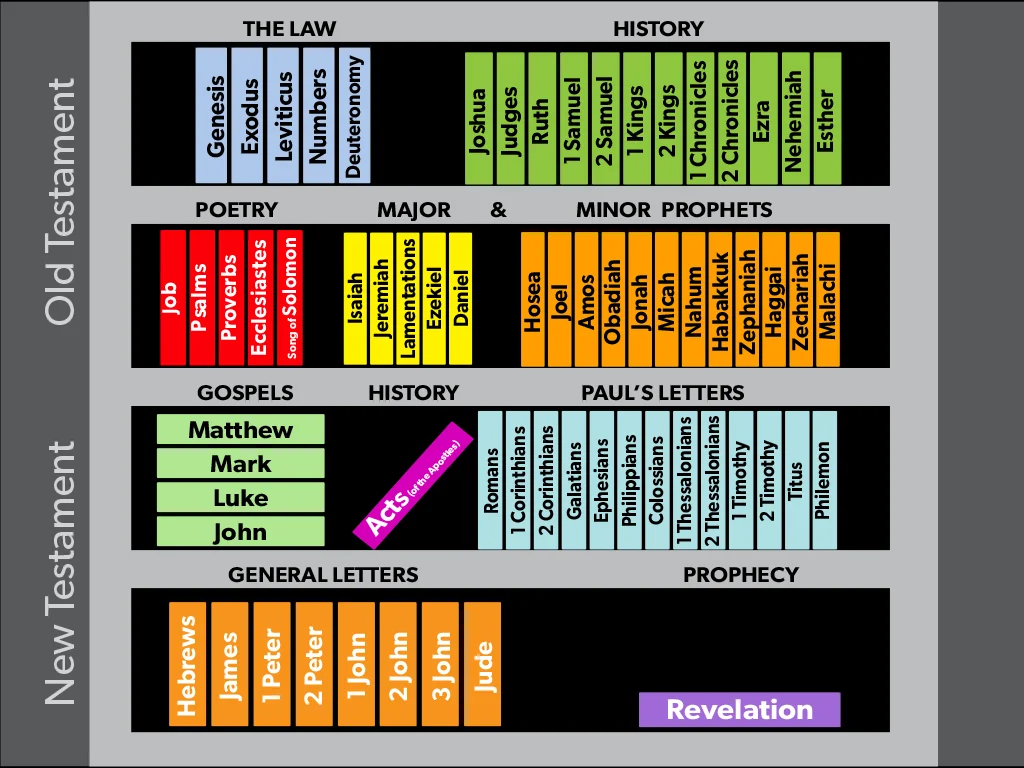
    Can we put our bookshelf up?

    04:04-04:07

    You see, this sets the stage for the rest of the Old Testament.

    04:09-04:14

    You see, we spend a lot of time in the book of Genesis talking about creation and the flood.

    04:15-04:23

    Well, the story of the Lord using Moses to deliver the Israelites out of Egypt, that's found in the book of Exodus.

    04:24-04:42

    And through this wandering in the wilderness, we're going to talk a little bit about that today, the Lord, through Exodus, Leviticus, and Numbers, gave the Israelites the Old Testament law and Deuteronomy was a repeating of the law.

    04:43-04:51

    So this was Moses leading the Israelites out of Egypt to the promised land, and then Joshua led them into the promised land.

    04:52-04:54

    And these books are called books of history.

    04:55-05:04

    And in these books, Israel gets into the land, drives out most but not all of the enemies that were living there, and God raises up judges.

    05:04-05:08

    They were these military leaders to lead the Israelites.

    05:08-05:13

    And these books here in the Old Testament basically talk about the history of Israel.

    05:13-05:19

    Israel decided they wanted to be like other nations and have a king, so God gave them King Saul.

    05:19-05:24

    He didn't work out so well, and God gave them King David, and he had his problems too.

    05:24-05:40

    And it went on down the line until you got to a generation after King Solomon that the The nation divided into northern Israel and southern Israel, which we know as Judah.

    05:42-05:54

    And God told Israel, "If you persist in sin, I'm going to judge you." And the way that God was going to judge them was He was going to send an enemy nation in to drive them out of this land.

    05:56-05:58

    Spoiler alert for those of you that haven't read it.

    06:00-06:01

    Israel persisted in sin.

    06:02-06:08

    In about 705 B.C., the Lord sent the Assyrians to conquer northern Israel.

    06:09-06:13

    Well, Judah - southern Israel - they lasted a little bit longer.

    06:14-06:16

    But even they persisted in sin.

    06:16-06:22

    And by 586 B.C., the Lord sent the Babylonians to conquer them.

    06:23-06:37

    So you see, there was a period of Israel's history where they were in the land, and then they were driven out of the land, And the whole time they were in the land, God was sending all these preachers, telling them you need to repent, stop sinning, knock it off.

    06:37-06:39

    And those preachers are the prophets.

    06:39-06:41

    We have major and minor prophets.

    06:42-06:44

    Major prophets, it just means their writings are bigger.

    06:44-06:50

    Okay, it's not like these guys are important and these guys were like all under the age of 18 or anything like that.

    06:50-06:52

    That's not what minor prophets means.

    06:52-06:54

    It just means their writings are shorter.

    06:54-06:59

    So these were preachers that the Lord had sent, saying you need to repent, you need to repent.

    06:59-06:59

    and they wouldn't.

    07:01-07:10

    So after the Lord drove them out of their land, eventually a new world power rose, and those were the Persians.

    07:10-07:15

    And they allowed the Israelites to go back in and start rebuilding their land.

    07:16-07:23

    And even at that, they persisted in some hard-heartedness and some procrastination and some sin.

    07:23-07:30

    And some of these prophets were actually preachers during that day, the Lord sent to get them back on track.

    07:33-07:48

    Now by the time you get to the New Testament, Israel is still in their land, brought back again from the rule of the Persians, but at this point the world power is Rome.

    07:50-08:01

    So as Israel was established and living in their land and God promised to judge if they disobeyed, the question is this, what guidelines did God use?

    08:01-08:07

    I mean, it wasn't just an arbitrary measure to determine whether or not they were allowed to stay.

    08:08-08:09

    What were the guidelines?

    08:10-08:22

    to Moses, during the exodus from Egypt, God gave the law, the Mosaic covenant.

    08:24-08:27

    Today we refer to this as the old covenant.

    08:27-08:30

    So if you're taking notes, I want you to jot some things down.

    08:31-08:33

    Number one, what is the law?

    08:35-08:36

    What is the law?

    08:37-08:38

    Now you have two points in your outline.

    08:38-08:40

    is the law and what is the purpose of the law?

    08:41-08:43

    You're like, well, aren't those the same thing?

    08:43-08:44

    And they're really not.

    08:44-08:46

    And I want to explain why we're taking this approach.

    08:47-08:47

    What is the law?

    08:48-08:51

    I want to talk about some of the features of the law.

    08:52-08:56

    And what is the intended purpose of the law?

    08:58-09:00

    We're going to be talking about the purposes.

    09:01-09:03

    And it's sort of like this.

    09:04-09:08

    If I was going to try to sell you on a pencil, first of all, I would tell you the features.

    09:08-09:15

    I would say it's yellow, it's smooth, it's got an eraser on the end in case you make a mistake, and it smells great, at least I think so.

    09:16-09:20

    Those are some features about the pencil, but that's not the purpose.

    09:21-09:23

    The purpose is you use it to write things down.

    09:24-09:27

    And that's sort of the approach we want to take to looking at the law here.

    09:27-09:36

    I want to share with you some of the features of the law, and then we're going to look at God's purpose for giving the law.

    09:38-09:39

    Number one, what is the law?

    09:41-09:43

    To jot this down, I have some blanks for in the outline.

    09:44-09:57

    This is a very simple definition, but the law is the compilation of decrees and statutes given to Israel through Moses.

    09:58-09:59

    Okay, that's a very generic definition.

    10:00-10:01

    We're gonna explain it.

    10:02-10:06

    It's a compilation of decrees and statutes given to Israel through Moses.

    10:07-10:18

    Again, while the Israelites were leaving Egypt, and while they were in the wilderness on the way to the Promised Land, God gave these laws, these rules to Moses.

    10:18-10:22

    They're found in the first five books of the Bible called the Pentateuch.

    10:23-10:25

    The law is also called the Torah.

    10:27-10:30

    And the law was a bilateral covenant.

    10:31-10:48

    You know, last week we talked about a unilateral covenant where God said, "Abraham, I'm going to do these things, and you're just gonna watch." Now, Abraham was faithful, but the covenant that God made with Abraham wasn't based on Abraham being faithful, it was based on God keeping his word.

    10:48-10:49

    That's a unilateral covenant.

    10:50-10:56

    But the Mosaic Law, the law that we're going to be talking about today, that was more of a bilateral covenant, meaning this.

    10:57-11:00

    God promised Israel, "If you obey, I will bless you.

    11:02-11:05

    And if you disobey, I will bring judgment.

    11:05-11:07

    That was in the Mosaic law.

    11:08-11:14

    As I said, they persisted in disobeying and God brought judgment.

    11:16-11:17

    So here's some features.

    11:17-11:18

    I want you to jot down these features.

    11:19-11:19

    They're on your outline.

    11:20-11:22

    These are some features of the law.

    11:22-11:25

    Letter A, the law made Israel distinct.

    11:27-11:29

    The law made Israel distinct.

    11:29-11:30

    They weren't just rules.

    11:32-11:34

    These were laws of the covenant community.

    11:36-11:40

    And I want you to note that they were specifically and exclusively for the nation of Israel.

    11:43-11:49

    Psalm 147 says, "He declares His word to Jacob, His statutes and rules to Israel.

    11:50-11:52

    He has not dealt thus with any other nation.

    11:53-11:56

    They do not know His rules." Praise the Lord.

    11:57-12:07

    So one of the purposes of the law was God says, "Israel, I want you to look, act, think, smell differently than everybody else in the world.

    12:07-12:09

    I want you to be distinct.

    12:09-12:15

    And in order for you to be distinct, you're going to have to follow these rules.

    12:15-12:17

    The rest of the world doesn't live by these rules.

    12:17-12:23

    You're going to live by these rules and you're going to stand out." So the law made Israel distinct.

    12:23-12:50

    be, the law reflected Israel's God. The law reflected Israel's God. You see in the law we often think of a list of rules, "Do this, don't do this, don't do this, you must do this." And these rules weren't arbitrary. You know, God wasn't up in heaven going, "I I wonder what I can get them to do today.

    12:51-12:52

    Like, you know, taco Tuesday.

    12:53-12:55

    You can only have tacos on Tuesday.

    12:55-12:55

    What else?

    12:56-12:59

    And polka dots on Friday.

    12:59-13:01

    You can only wear polka dots on Friday.

    13:01-13:05

    And he didn't give just these arbitrary rules.

    13:07-13:10

    The law reflected some things about the character of God.

    13:11-13:14

    For example, the 10 commandments, we'll be talking about those in a couple of minutes.

    13:15-13:18

    It's the part of the law that most people are familiar with.

    13:19-13:20

    God says do not commit adultery.

    13:21-13:21

    Why would God say that?

    13:23-13:25

    Because God is a God of being faithful to His covenant.

    13:26-13:30

    And He says if you're going to look like Me, you're going to be faithful to your covenant too.

    13:30-13:32

    So you're going to be faithful to your wife.

    13:32-13:34

    That's why you don't commit adultery.

    13:35-13:38

    You see, that law reflected something about the heart of God.

    13:39-13:42

    Another example, you know, in the Ten Commandments?

    13:43-13:46

    You shall not bear false witness, You shall not lie.

    13:46-13:47

    Why would God say that?

    13:47-13:49

    Because God is a God of truth.

    13:50-13:51

    There's no falsehood in God.

    13:51-13:54

    And God says, "I don't lie, and my people shouldn't either.

    13:55-14:00

    "So don't lie." Covening, the 10th commandment, you shall not coven.

    14:00-14:05

    You know, covening is when you aren't satisfied with what the Lord provided you.

    14:06-14:09

    And instead, you're longing for something that the Lord has provided someone else.

    14:09-14:11

    God says, "You don't act that way." Why?

    14:11-14:14

    It's your people that trust in my perfect provision.

    14:15-14:15

    That's why.

    14:16-14:16

    Okay?

    14:16-14:17

    You trust me.

    14:18-14:19

    I'm a God who provides.

    14:19-14:22

    So the law reflected Israel's God.

    14:22-14:25

    Letter C, the law was for Israel's good.

    14:27-14:39

    Deuteronomy 6.24 says, "And the Lord commanded us to do all these statutes to fear the Lord our God." Look at this next phrase, "For our good always, that he might preserve us alive as we are this day.

    14:42-14:43

    The law was for Israel's good.

    14:45-14:49

    It was to protect them and to keep them safe and to bless them.

    14:50-14:56

    So like our kids have a bunk bed, and in the top bunk there's this big wooden rail that goes beside the mattress.

    14:56-15:00

    And at one point, Cade was like, I don't want that rail in.

    15:01-15:02

    And I said, well, you're keeping the rail in.

    15:02-15:04

    Well, why do I have to keep the rail in?

    15:04-15:05

    You know why, right?

    15:05-15:06

    You know why?

    15:06-15:07

    Why do I keep the rail in?

    15:07-15:15

    because if he rolls over, he could injure or kill himself falling off of the top bunk onto a hardwood floor.

    15:16-15:17

    I'm like, you're keeping the rail in.

    15:18-15:22

    He didn't like it, but it was for his own good, right?

    15:22-15:24

    And that was sort of the law in the Old Testament.

    15:24-15:25

    God says, I'm putting this here.

    15:26-15:30

    You might not like some of these things, but you're gonna have to trust me.

    15:30-15:31

    I'm doing this to protect you.

    15:33-15:36

    Letter D, the law provided atonement for sin.

    15:38-15:40

    This was another feature of the law.

    15:40-15:42

    The law provided atonement for sin.

    15:42-15:44

    That's especially throughout the book of Leviticus.

    15:46-15:54

    Leviticus prescribed how to kill and offer animals like sheep and goats for different kinds of sacrifices.

    15:54-15:55

    They were all different kinds.

    15:55-15:56

    You can read about them.

    15:56-16:01

    There was the peace offering, there was the sin offering, there was the guilt offering.

    16:02-16:10

    And these animals were killed and offered to God as atonement for sin.

    16:11-16:16

    Understand, they didn't forgive sin, they didn't take away sin, they atoned sin.

    16:16-16:18

    They basically covered sin over.

    16:18-16:19

    We talked about this before.

    16:19-16:22

    The Old Testament law, the sacrifices were like a credit card.

    16:23-16:27

    When you use a credit card at a store, you're technically not paying for that item.

    16:28-16:33

    You're just sort of covering the payment until real payment can be made.

    16:33-16:35

    That was the Old Testament sacrifices.

    16:35-16:36

    They were the credit card.

    16:37-16:41

    Just swipe it, payment's still going to have to be made, but you're covered for now, okay?

    16:42-16:45

    And it was a temporary covering.

    16:46-16:50

    That's why the Old Testament sacrifice constantly had to be repeated.

    16:52-16:57

    You know, day in, day out, the priests were offering sacrifice after sacrifice after sacrifice.

    16:59-17:01

    The law provided atonement for sin.

    17:03-17:05

    God was teaching how He deals with sin.

    17:05-17:21

    He says, "Sin must be punished, but I'm going to allow a substitutionary blood sacrifice that can be offered to God by a priest on the sinner's behalf.

    17:22-17:27

    Hold that thought because letter E, the law prepared the world for Christ.

    17:29-17:35

    You see all these sacrificial procedures were symbols, every one of them.

    17:35-17:36

    We're gonna talk more about this next week.

    17:36-17:38

    They were all symbols to get you ready for Christ.

    17:39-17:47

    The Old Testament law was sort of like ABCs And then Jesus is like the book, after you learn your alphabet, you learn to read.

    17:50-17:52

    The law was to teach them things.

    17:53-17:58

    God was taking mankind to school throughout human history.

    17:59-18:06

    And he was teaching things through Israel like this, look, you sin, but I'm going to allow a substitute to take your place.

    18:06-18:08

    It has to be a blood offering.

    18:08-18:11

    And by the way, it has to be a perfect lamb.

    18:12-18:28

    Okay, it wasn't like they could go out into their pen and say, "Well, this one's on like its last breath, "and it's got the mange, and it's got rabies, "and it's got heart failure, "and this sheep's gonna die any day now, "so I'm going to offer it to God." God says, "No, you don't do that.

    18:28-18:30

    "You get the best.

    18:30-18:36

    "You get the spotless lamb from your flock, "and you offer that to me, "but you couldn't even offer it yourself.

    18:36-18:54

    "You need to have a priest offer it to God on your behalf." how all of those things picture Jesus Christ, because Jesus is the Lamb, the spotless Lamb, but Jesus is also the priest that offers the sacrifice on your behalf.

    18:56-19:06

    So all of the Old Testament law, especially these sacrificial offerings, these procedures were pictures of Jesus Christ.

    19:06-19:12

    So that's the law, a compilation of decrees and statutes given to Israel through Moses.

    19:12-19:26

    And yes, there were some things dealing with morality and man to man interactions and dealing with crime and everything else, but there was also dealing with sin through the sacrificial system.

    19:28-19:33

    Like, well, that's very fascinating, Pastor Jeff, but number two, what was the purpose?

    19:35-19:36

    What was the purpose of the law?

    19:37-19:42

    I mean, we saw the features of the law, but what's the purpose?

    19:42-19:46

    And somebody here right now is saying, I know what the purpose of the law is.

    19:47-19:52

    We obey the law in order to get saved.

    19:54-19:59

    That is exactly not the purpose of the law.

    19:59-20:04

    You cannot be saved by keeping the law.

    20:05-20:06

    You can't.

    20:07-20:14

    You're like, "I'm pretty sure I can." And I say, "I'm pretty sure you can't." I'm going to give you a quick test.

    20:14-20:16

    Ten questions. Just write it down in the margin.

    20:17-20:27

    I'm going to go through the Ten Commandments very quickly. And if you're guilty, or if you've ever been guilty, at one point if you've ever been guilty of any of these commandments, just give yourself a little check mark.

    20:27-20:29

    Okay? You can put numbers one through ten if you want.

    20:31-20:35

    But I just want you to go through the Ten Commandments Let's score ourselves, see how we're doing.

    20:35-20:45

    The first commandment, God says, "You have no other gods." So, the question is, has God always been first and foremost in your mind?

    20:45-20:48

    That you've been in 100% worship mode all the time?

    20:49-20:51

    If not, then you have to give yourself a checkpoint there.

    20:53-21:07

    The second commandment goes with it, God says, "Don't make for yourself any idols." And we certainly don't make representations of pagan gods.

    21:07-21:09

    God says don't make for yourselves objects of worship.

    21:12-21:18

    So the second question is, have you ever had anything in your life, anything at all, that's taken a higher priority than God at any point?

    21:20-21:24

    Whether it was some recreational activity, some other person, whatever, something?

    21:27-21:33

    If at any point in your life something has been more important to you than God, then violated the second commandment.

    21:34-21:36

    The third commandment is do not use the Lord's name in vain.

    21:37-21:38

    Like, what does that mean?

    21:38-21:41

    It means we don't misrepresent God.

    21:42-21:44

    Or this is the way I explain it to our kids.

    21:44-21:51

    I say, the only time you use God's name is when you're talking to Him or when you're talking about Him, okay?

    21:52-22:02

    Some people think using the Lord's name in vain is saying GD or JC, and that's totally inappropriate and that totally falls under the category, But it's not exclusively that.

    22:03-22:05

    Using the Lord's name in vain is just misrepresenting God.

    22:06-22:11

    When you mention the Lord, you should be talking to Him or you should be talking about Him.

    22:11-22:14

    We don't throw His name around like it doesn't mean anything.

    22:14-22:23

    So if you've ever done that, if you've ever thrown God's name out there when you weren't talking to Him or about Him, then you give yourself a check mark.

    22:23-22:24

    How are we doing so far?

    22:25-22:26

    Anybody batting a thousand yet?

    22:27-22:28

    You're like, yeah, the wrong way.

    22:28-22:31

    The fourth commandment is remember the Sabbath and keep it holy.

    22:31-22:36

    God says, "I work six days and rest one. You should do the same." Have you done that?

    22:37-22:47

    Have you taken one day of the week that you're like, "You know, I'm going to focus this day on worshiping the Lord, on enjoying my family and the blessings of God." Have you always done that?

    22:48-22:55

    Or are there weeks that you've worked seven days a week, and you haven't set time aside to worship, then you've broken the fourth commandment.

    22:56-22:57

    The fifth commandment is honor your father and mother.

    22:58-23:00

    Have you always honored your parents?

    23:00-23:01

    Every time?

    23:02-23:02

    Without question?

    23:04-23:06

    If not, then you violated the fifth commandment.

    23:06-23:13

    The sixth commandment is, "Do not murder." They're like, "Well, finally, Pastor Jeff, you got me because I have never killed anybody.

    23:13-23:16

    Not once ever." Well, hang on.

    23:17-23:23

    Jesus said, "If you've ever hated someone in your heart, it's the same as killing them.

    23:24-23:25

    You wish they were gone.

    23:25-23:28

    You wish they didn't exist." Jesus equated hatred with murder.

    23:29-23:32

    So by Jesus' definition, have you ever killed anyone?

    23:34-23:36

    The seventh commandment is do not commit adultery.

    23:37-23:39

    You see, Jesus expanded that one too.

    23:40-23:43

    You know, Pastor Jeff, I've never slept with any other person except my spouse.

    23:43-23:44

    Well, hang on.

    23:45-23:49

    Jesus said if you look at a woman with lust in your heart, you've already committed adultery with her.

    23:50-23:54

    So by Jesus' definition, how many people have committed adultery?

    23:56-23:57

    The eighth commandment is do not steal.

    23:58-24:02

    Have you ever at one point, any time in your life, taken something that does not belong to you?

    24:03-24:04

    If so, you're a thief.

    24:06-24:09

    The ninth commandment, we already said, do not bear false witness, do not lie.

    24:09-24:10

    Have you ever told a lie?

    24:11-24:12

    I could have started with that one.

    24:12-24:15

    It disqualified you all from the beginning, right?

    24:16-24:17

    The 10th commandment is do not covet.

    24:19-24:22

    Again, have you always been satisfied with everything the Lord's given you?

    24:22-24:26

    You've never looked at something that somebody else said, "Man, I wish I had that.

    24:27-24:35

    "You know, I wish my wife was like his wife, "or I wish I lived in his neighborhood, "or I wish I had his job." Have you ever had a thought like that?

    24:36-24:38

    If you have, then you've coveted.

    24:40-24:42

    Okay, so how'd we do?

    24:44-24:46

    Any sinless people in attendance today?

    24:48-24:48

    Anyone?

    24:50-24:54

    Well, now you're understanding the purpose of the law.

    24:56-24:58

    You see, you have to keep the law 100%.

    24:58-25:04

    If that's your desire, if you're like, "You know, I'm going to believe in the Ten Commandments, I'm going to keep the Ten Commandments," you have to do it 100%.

    25:05-25:06

    Here's more bad news.

    25:08-25:11

    Let's pretend there's somebody here that only ever sinned one time.

    25:12-25:47

    You've lived your whole life perfectly, but one time back in 1987, you had a momentary lapse of judgment and you told this little white lie, but other than that, you've been perfect. Well, I got bad news for you. James 2.10 tells us that if we've broken the law at one point, we are accountable for all of it. Do you know that? It'd be like taking a hammer and chisel and saying, "I'm just going to take a little piece of glass out of here, just a little piece out of the middle, and when you hit that chisel, what's going to happen? You're going to shatter the whole thing." James says God's law is like that.

    25:48-25:55

    If you break it at one little point, you're guilty of all of it. Why? Because rejecting the law is rejecting the law giver, and you're accountable for all of it.

    25:57-26:08

    And I would suggest to you, if you walked into any courthouse with an honest judge, and you were found guilty of breaking every law in the books, you don't have much chance of getting off.

    26:11-26:11

    You're guilty.

    26:12-26:19

    Now you're standing before a holy and righteous God, and you're guilty, literally, of breaking every law that he's given.

    26:20-26:23

    by your own definition, by taking that test, you're guilty.

    26:26-26:29

    Jot this down, the purpose of the law, this is on your outline.

    26:30-26:39

    The purpose of the law was to clearly explain and expose human sinfulness.

    26:42-26:46

    The purpose of the law was to clearly explain and expose human sinfulness.

    26:48-26:53

    in order to create desperation for mercy and grace.

    26:56-27:00

    Please hear this because this gets so botched in churches today.

    27:02-27:14

    And there are a ton of Christians out there that are so confused because you think, well, yeah, Jesus and faith, but on the other hand, yeah, gotta keep the rules.

    27:16-27:17

    So I want you to hear this.

    27:17-27:18

    This is from God's word.

    27:18-27:20

    This is why we're doing Bible 101.

    27:20-27:22

    This is going to be news to some of you.

    27:23-27:29

    But the law is to show you that you are a sinner in need of grace.

    27:29-27:31

    That was the purpose of the law.

    27:31-27:33

    The law was to break you.

    27:35-27:40

    Okay, and somebody at this point is hearing this message and they're like, man, this church is a bummer.

    27:40-27:46

    Not only do they take two offerings, but I didn't get some feel good, Jesus loves me, kumbaya message.

    27:48-27:51

    Pastor Jeff made me feel like dirt and you should because you are.

    27:53-27:54

    And so am I.

    27:55-27:57

    And the law was supposed to do that.

    27:57-28:01

    You're like, "Nah, I don't really think that's why God gave us the law." Yeah, he told us that's why he gave us the law.

    28:01-28:02

    Look at these verses.

    28:04-28:07

    Galatians 3, we're gonna look at verses 19, 22, 23.

    28:08-28:09

    Why then the law?

    28:10-28:10

    Paul has a question.

    28:11-28:12

    This is from the New Testament.

    28:12-28:14

    He's giving Holy Spirit commentary.

    28:14-28:15

    Look at this question, why then the law?

    28:16-28:17

    Or why did God give the law?

    28:17-28:18

    Look at his answer.

    28:18-28:22

    It was added because of transgressions.

    28:24-28:26

    That's the fancy way of saying sin.

    28:28-28:29

    The law was added because of sin.

    28:30-28:39

    He goes on, but the scripture imprisoned everything under sin so that the promise by faith in Christ Jesus might be given to those who believe.

    28:40-28:49

    Now before faith came, we were held captive under the law, imprisoned until the coming faith would be revealed.

    28:51-28:54

    Romans 7, Paul says, "What then shall we say?

    28:55-28:57

    "That the law is sin?

    28:58-29:14

    "By no means." He said, "Yet if it had not been for the law, "I would not have known sin, "For I would not have known what it was to covet, "if the law had not said, 'You shall not covet.'" Look at that last phrase.

    29:14-29:22

    He says, "For I would not have known what it is to covet, "if the law had not said, 'You shall not covet.'" This is the purpose of the law.

    29:24-29:25

    This is the purpose of the law.

    29:26-29:31

    A couple of weeks ago, Aaron and I stopped at the post office up in Cranberry.

    29:33-29:34

    How many people have been there?

    29:34-29:35

    been to the post office in Cranberry?

    29:36-29:37

    That one specifically, I've been to a post office.

    29:38-29:38

    No, that one.

    29:39-29:40

    How many people have been to that one?

    29:40-29:40

    Okay.

    29:41-29:48

    If you've noticed, there's a sign right outside the post office that says, keep off the grass.

    29:48-29:49

    How many people have seen that sign?

    29:50-29:51

    Keep off the grass.

    29:52-29:59

    I promise you, I had zero thoughts of frolicking on the lawn of the post office when I pulled up there.

    30:00-30:02

    But do you know what happened to me when I saw that sign?

    30:04-30:06

    Something wicked happened in my heart.

    30:07-30:10

    I wanted to just start rolling on the lawn of the post office.

    30:11-30:15

    Because just because the stupid sign said, don't get underground.

    30:15-30:18

    And the funny thing was, it wasn't even a nice lawn.

    30:18-30:22

    I mean, it was all patchy and splotchy and weedy and it was more dirt than grass.

    30:22-30:25

    And I keep off of our prize post office lawn here.

    30:26-30:29

    And Aaron was like, what are they trying to protect?

    30:30-30:31

    It doesn't look great.

    30:33-30:41

    I had no thoughts about jumping on that lawn, and I use that term loosely, I had no thoughts of jumping on that lawn until I saw that sign.

    30:43-30:46

    And that sign revealed to me what a rebellious jerk I am.

    30:48-30:49

    That's the law.

    30:50-30:55

    You see, something about that sign awakened the rebellion within me.

    30:55-30:57

    Now I should know better.

    30:57-31:00

    I should know that when I go places, I don't just tromp on their lawn.

    31:01-31:01

    I should know that.

    31:03-31:06

    But see, it wasn't really clearly defined for me until I saw the sign.

    31:08-31:20

    It's like, oh, to the very fact that I have this heart desire to do something just because I'm told not to do it, really says a lot about me, doesn't it?

    31:21-31:22

    I mean, we've all done it.

    31:24-31:30

    You're walking by the bench, through the park, you're walking by the bench, there's a sign that says, "Don't touch wet paint." What do you do?

    31:31-31:32

    We touch it.

    31:33-32:06

    We touch it. Why? Because there was a sign telling us not to do it. That's the law. God says, "I'm going to show you how sinful you are." See, Paul said, "Without the law I would have had these feelings of coveting, but I wouldn't have known exactly what that was." God defined it. He said, "You know why you want stuff that belongs to other people? It's because you're a sinner." The law shows us our predisposition to iniquity and that makes us feel guilty, that makes us feel trapped.

    32:06-32:26

    He says it twice, we saw it in the passage in Galatians 3, he used the word "imprisoned." The law is to imprison us, but even that is part of God's grace. See, God's not out to make you feel bad for the sake of feeling bad. This is God's intention for the law.

    32:28-32:44

    The guilt, the shame, the fear of judgment is supposed to make us desperate for mercy and grace and drive us to Christ who gives it.

    32:46-32:54

    As we come down the home stretch, church, the danger that we face in our day is trying to combine law and grace.

    32:55-32:57

    And the two are mutually exclusive, by the way.

    32:58-33:13

    Grace says, "Jesus did it all." Law says, "There's still a part that I have to do in order to earn my salvation." You can't combine the two, but there's something in us that wants to try to combine the two.

    33:15-33:30

    Because right now, I promise you, right now, there is somebody sitting here thinking, or somebody's listening to this podcast, Right now, somebody's thinking that living the victorious Christian life means keeping the Ten Commandments.

    33:33-33:45

    Right now, somebody's thinking, "God's going to be happy with me because I try to keep the commandments." And then when you fall, when you sin, and you will, you think God is mad at you.

    33:46-33:47

    Some people live their whole life that way.

    33:48-33:49

    "I had a great morning.

    33:49-33:50

    God's happy with me.

    33:52-33:58

    I had a bad thought, I didn't treat my wife in the right way, now God's mad at me.

    34:00-34:10

    If this is you, you not only misunderstand the purpose of the law, but you defeat yourself by misapplying it.

    34:12-34:13

    Like, so wait a minute, there's no law?

    34:13-34:15

    So what are you saying Pastor Jeff?

    34:15-34:21

    Are you saying it's okay to steal and to lie and to lust just because we're forgiven?

    34:22-34:23

    It sounds like what Pastor Jeff's saying to me.

    34:24-34:26

    He's saying it's okay to sin because we're forgiven.

    34:27-34:28

    I heard one person say this way.

    34:29-34:33

    One person said, "Well, if Jesus paid for my sins, "I'm gonna get his money's worth.

    34:35-34:40

    "And I'm gonna sin as much as I want." So it's okay to sin because we're forgiven, right?

    34:40-34:42

    The answer is absolutely not.

    34:43-34:46

    You absolutely should not be doing any of these things or any sin.

    34:48-34:55

    But in Christ, listen church, in Christ, you are differently motivated.

    34:57-35:07

    Not externally, because of a law that's written on a stone tablet in Christ, you're motivated internally.

    35:09-35:10

    This is part of the new covenant.

    35:10-35:16

    You know, even during the days of the old covenant, we'll talk about this next week, God promised that he was going to bring a new covenant.

    35:17-35:18

    And he said, here's the primary feature.

    35:18-35:36

    The law is not gonna be written on a tablet of stone, law is going to be written on your heart. Primary feature, Christ doesn't just save you, he changes you. He changes your identity and he changes your appetites.

    35:39-35:49

    See the problem is you have somebody that knows enough about the Bible to be dangerous but hasn't actually received Jesus Christ, they're not actually born again and they're trying to live the Christian life in their own flesh.

    35:50-35:55

    Question is, have you really received Jesus Christ as your Lord and Savior?

    35:55-35:59

    And if you have, God will change your appetite.

    35:59-36:02

    You know, your appetite for food will change. Did you know that?

    36:02-36:06

    I know it's true for me because I've been...

    36:07-36:15

    I go on diet crazes, and I go on not caring what I stuff in my face phases, honestly.

    36:16-36:18

    You know what's interesting about that?

    36:18-36:26

    But when I'm going through one of those phases where I just eat whatever I want, I eat donut sandwiches with Pop-Tarts as the bread.

    36:26-36:27

    You ever had one of those?

    36:28-36:28

    Delicious.

    36:30-36:35

    Chase it down with an extra large Coca-Cola.

    36:36-36:39

    Consume your caloric intake for the next three months in one bite.

    36:41-36:46

    But when I'm eating that stuff and I'm offered a salad,

    36:47-36:48

    (grunts)

    36:49-36:53

    rabbit food, salad's what, that's what food eats, right?

    36:53-36:57

    And I don't have an appetite for that stuff.

    36:59-37:03

    You know, something that's funny is once in a while I'll get in this health kick because I realize I'm not 20 anymore.

    37:04-37:10

    And, you know, I can't eat like Garfield anymore and still maintain this fabulous figure that I have.

    37:12-37:13

    You were so not supposed to laugh.

    37:15-37:17

    I am so ashamed of myself now.

    37:18-37:21

    And I'll get on these crates, I do eat the salads.

    37:21-37:25

    And Aaron will make the most wonderful, healthy, she'll make salmon.

    37:25-37:26

    And I'm like, you know, eating it.

    37:27-37:30

    And I start to enjoy it after a while.

    37:32-37:42

    And then after a while, when I'm off of the garbage and I'm eating the good stuff, You're out somewhere and you have a Pepsi and the Pepsi tastes like garbage.

    37:42-37:44

    You're like, what am I drinking, battery acid?

    37:44-37:45

    What is this stuff?

    37:45-37:46

    It's nasty.

    37:47-37:55

    Like, how did I love this so much before and now it tastes so gross?

    37:56-37:57

    Because your appetites will change.

    37:58-38:05

    And that's one of the amazing things when you come to Jesus Christ, when you receive him by faith, he changes your appetites.

    38:06-38:12

    See, I used to crave sin, and I'd want to avoid the things of God.

    38:13-38:16

    I used to have this appetite for sin.

    38:16-38:19

    What's going to make me happy and gratify my flesh?

    38:19-38:25

    And I remember before I came to Christ, somebody would, I remember people specifically had tried to witness to me, or to tell me about Jesus.

    38:26-38:27

    I stayed far from those people.

    38:27-38:28

    I didn't want to hear it.

    38:28-38:29

    Why?

    38:29-38:31

    Because I have an appetite for sin.

    38:31-38:34

    I don't want to hear this Bible, Jesus stuff.

    38:36-38:38

    Something weird happened to me in 1995.

    38:39-38:46

    When I came to Christ, all of a sudden, I found myself wanting to be near the people that talk about Jesus.

    38:46-38:49

    And I started having an appetite for these things.

    38:49-38:51

    Yet now I wanna read the Bible.

    38:51-38:54

    Now I wanna study and understand God's word.

    38:56-38:59

    And sin has become like that occasional glass of Pepsi.

    39:00-39:01

    Yeah, it still happens.

    39:02-39:03

    It still happens.

    39:03-39:04

    I still struggle with sin.

    39:04-39:05

    Don't look so shocked.

    39:06-39:10

    Some of you are like, "Yeah, I still struggle with sin.

    39:11-39:13

    I'll tell you something that's different now.

    39:14-39:15

    I don't crave it.

    39:16-39:18

    And it tastes like garbage.

    39:19-39:20

    This isn't who I am.

    39:21-39:22

    Why did I do that?

    39:23-39:28

    So gross." Christ changes your appetites.

    39:29-39:33

    And as a child of God, I don't want to sin anymore.

    39:33-39:33

    I don't want to.

    39:35-39:37

    Because God has forgiven me.

    39:38-39:39

    God has changed me.

    39:41-39:45

    And now I want to honor Him and obey Him out of love.

    39:47-39:57

    And even when I do sin, I am no more out of His family than my own kids are kicked to the curb because they disobey me.

    39:59-40:06

    Believe me, there are times as a parent, I have been tempted to put my kids on eBay.

    40:08-40:09

    Starting bid a nickel.

    40:11-40:12

    Make an offer.

    40:13-40:13

    I have been tempted.

    40:16-40:19

    And I say that jokingly, but that will never happen.

    40:20-40:26

    There's not a force on this earth that's going to stop my kids from being my kids.

    40:28-40:29

    That's why sometimes Kate will be mad at me.

    40:29-40:31

    She's like, fine, I'm going to quit the family.

    40:32-40:32

    I'm like, you can't.

    40:33-40:37

    My blood runs through your veins and it will until the day you die.

    40:38-40:40

    And we did a whole parenting series, get it online.

    40:40-40:43

    We have all kinds of nuggets of wisdom just like that one.

    40:45-40:49

    But the point is, nothing is going to stop him from being my child.

    40:50-40:51

    You parents, you know that.

    40:52-40:54

    Nothing is ever going to change that.

    40:54-40:58

    Your kid is going to be your kid for the rest of your life.

    40:59-41:07

    Even if he or she messes up or rebels or whatever, nothing changes that, and so it isn't God's family.

    41:08-41:11

    It doesn't matter how badly I mess up.

    41:13-41:16

    God loves me, because I'm his kid.

    41:18-41:19

    And when I sin, what do I do?

    41:19-41:20

    I confess it to God.

    41:21-41:24

    Confess just literally means to say the same, to say the same.

    41:25-41:26

    Confession means you agree with God.

    41:27-41:29

    I confess my sin, I say, "God, you know what?

    41:29-41:31

    "I did this today, and that was wrong.

    41:32-41:34

    I know it was wrong, and God, I'm confessing that to you.

    41:35-41:37

    I confess sin to God.

    41:39-41:40

    I turn from it.

    41:40-41:40

    That's repentance.

    41:43-41:45

    I thank God for the forgiveness He's already given.

    41:46-41:48

    Jesus died once for my sin.

    41:48-41:50

    He's not going to die again for my sin.

    41:50-41:56

    I thank God for the forgiveness He's already given in Christ, and I ask God for strength in the future to avoid that sin.

    41:58-42:03

    So, when we leave here today, you have a choice.

    42:05-42:07

    You have a choice. You can try to live by the law.

    42:09-42:09

    You can try.

    42:11-42:13

    And you can fail repeatedly.

    42:15-42:17

    And you can stand guilty before God.

    42:21-42:24

    Or, you can recognize your guilt.

    42:26-42:33

    You can accept the fact that you were never, and can never be good enough to be right with God.

    42:35-42:40

    And you can receive Jesus Christ as your Savior and as your Lord.

    42:41-42:46

    The whole purpose of God's law was to bring you to Jesus.

    42:48-42:49

    That was the purpose.

    42:50-43:23

    The purpose was never to embrace the law the sense of, "Well, I'm going to keep this and God's going to be happy." That was never the design. The question is, "How does faith in Jesus Christ save me from my sin, save me from the law?" Well, next week, the most important Bible 101 lesson as we examine the star of the book, Jesus Christ on Easter Sunday.

    43:24-43:38

    It's my prayer that with this background of everything that we've studied leading up to this, that you're going to understand the cross and the resurrection in a much deeper way this Easter, perhaps than ever before.

    43:39-43:39

    Let's pray.

    43:41-43:45

    Father in heaven, we thank you for your law.

    43:47-43:50

    Even the psalmist in the Old Testament says, I love your law.

    43:52-43:54

    We love your law, Father, because it reveals who You are.

    43:56-43:59

    And it certainly teaches us some things about ourselves.

    44:01-44:16

    So Father, I want to pray specifically today for my brothers and sisters who have maybe been struggling with the law, thinking that I want to obey the Ten Commandments so God's happy with me, but I keep failing and I'm miserable.

    44:18-44:20

    You haven't called us to that lifestyle, Father.

    44:20-44:21

    You have called us to freedom.

    44:23-44:31

    You've sent Your Son who lived the perfect life, who fulfilled the law with His life, with His death, with His resurrection.

    44:33-44:39

    You've imputed that righteousness, that obedience, that perfection.

    44:39-44:41

    You've imputed that onto our accounts.

    44:43-44:45

    This is why we celebrate Your Son.

    44:47-44:49

    Father, show us what it means to be rightly motivated.

    44:51-44:54

    Show us what it means, Father, to have an appetite for righteousness.

    44:55-44:59

    The hunger and thirst for righteousness, as Your Word says.

    45:01-45:04

    Show us what it means, Father, to live in grace.

    45:06-45:14

    We thank You, Father, for loving us enough to tell us the truth, We are lost and we are hopeless.

    45:15-45:16

    We are imprisoned.

    45:17-45:24

    But for loving us enough to get us out of that prison, through Your Son Jesus Christ, our Lord and Savior.

    45:25-45:26

    Amen.

Small Group Questions (Whole Group):
Read and review the 10 Commandments

  1. How does God's Law reveal His character? What about His character does the Law reveal?

  2. If God already made a covenant with Abraham, why did He make one with Moses/Israel?

  3. What is the purpose of the Old Testament Law?

  4. How would you respond to someone who says, "You have to obey the 10 Commandments if you want to be saved."?

Breakout Questions:

Pray for HBC and other Gospel-centered churches going into Easter weekend. 

Abraham

The Birth of a Nation

Genesis 12-25
  1. Who is Abraham?


  2. What is a Covenant ?


  3. What is the Covenant God made with Abraham?

  4. Review: Genesis 12:1-3 | Genesis 13:14-16

    1. Land

    2. Descendants

    3. Blessing

    Review: Genesis 15:12-21

  5. What do we Learn from Abraham?
  6. Review: Romans 4:3 --> Genesis 15:6

    Review: Matthew 26:28 | John 3:36

Sermon Notes (PDF): BLANK
Hint:
Highlight blanks above for answers!

  • 01:04-01:10

    Grab your Bibles. We are going to continue in our series called Bible 101.

    01:11-01:13

    You're just joining us.

    01:14-01:17

    We've been spending these past few weeks, and we'll continue until two weeks after Easter.

    01:18-01:20

    And this is an overview of the Bible.

    01:21-01:23

    And all of these messages are available on our website.

    01:25-01:30

    But here's the goal. In ten weeks, you will be so familiar with God's Word.

    01:30-01:40

    I know for many people, it's an intimidating thing to look at this book and there's so many other books and all these names and places we've never heard of.

    01:40-01:42

    How does it all go together?

    01:42-01:54

    Well, that's the goal over these 10 weeks, is to get a strong overview of how the Word of God is put together and what the general theme of God's Word is all about.

    01:55-02:00

    And then you'll be equipped to go and confidently read God's Word for yourself.

    02:00-02:09

    So, so far we've spent some time talking about the Bible, why we believe the Bible is true, why we believe it was written by God Himself.

    02:10-02:12

    We spent a week talking about creation.

    02:13-02:14

    That's where it all started.

    02:14-02:16

    In the beginning, God created the heavens and the earth.

    02:18-02:22

    Then things went south pretty quickly as sin entered the world.

    02:24-02:45

    Then we saw in Genesis chapter 6, the sin got so bad that God said, "I'm going to blot out every living thing on the earth except for one man and his wife and his sons and their wives." And that was Noah. And God flooded the entire earth because of sin.

    02:48-02:54

    But people were still sinners even after the flood because last week we were in Genesis chapter 11.

    02:55-03:06

    You recall that the people united, and even though God said, "Spread out, fill the earth," that time the people said, "No, we're going to stay here.

    03:06-03:11

    We're going to establish our own kingdom." And the Lord confused their languages and spread them out.

    03:13-03:19

    They're like, "Well, Pastor Jeff, you said that we're going to be covering the whole Bible, but I'm going to be honest with you, we haven't made it very far.

    03:19-03:25

    I mean, what week is this, like five or six or whatever, and we've only made it to like Genesis chapter 11.

    03:26-03:33

    Actually, we've gone quite a distance already because today we're talking about Abraham.

    03:34-03:41

    Did you know from creation to Abraham, that's a period of about 2,000 years.

    03:44-03:45

    So we're on a pretty good pace.

    03:46-03:57

    So there's 2,000 years from creation to Abraham And there's about 2,000 years from Abraham to the birth of Jesus Christ.

    03:59-04:08

    And what you see in your Bible is for the first 2,000 years, everything we've covered to this point, God was dealing with the human race as a whole.

    04:10-04:25

    But the second 2,000 years, starting with Abraham, where we're looking today, God deals primarily with the family of Abraham, Isaac, and Jacob, or the nation of Israel.

    04:26-04:39

    See, the first 2,000 years it was a global perspective, and now, starting in Genesis 12, where we're going to pick up today, the Bible really zeroes in on one family.

    04:41-04:42

    That's the nation of Israel.

    04:44-04:54

    And if we can get our bookshelf up here, everything that follows in your Bible has to do with the nation of Israel.

    04:54-04:56

    Understand that this is a Jewish religion.

    04:58-05:04

    But the first five books, that's the law that God gave to the nation of Israel.

    05:05-05:09

    Then the books of history, the history of what?

    05:09-05:10

    The history of Israel.

    05:12-05:18

    Books of poetry, these were by Israel and for Israel.

    05:18-05:20

    The prophets, the major and the minor prophets.

    05:23-05:28

    These were Jewish prophets that God sent to give a message to Israel.

    05:30-05:33

    Then you get to the Gospels, focal point of the Gospels.

    05:34-05:39

    Jesus Christ, who according to his human lineage was Jewish.

    05:40-05:41

    The Acts of the Apostles.

    05:42-05:49

    Again, God sending the message out to Israel first, and ultimately to the Gentiles.

    05:50-05:57

    Paul's letters, commentaries - general letters, commentaries on the life and ministry of Jesus Christ.

    05:57-05:58

    What does death and resurrection mean?

    05:59-06:00

    All the way up to the book of Revelation.

    06:02-06:06

    Revelation talking about the end of the world, what's coming when Christ returns.

    06:08-06:14

    One of the key characters in the book of Revelation is the nation of Israel.

    06:14-06:25

    So the point is, today we're going to be introducing Abraham and talking about him and understand that everything that follows in the Bible circles around the Jewish people.

    06:27-06:31

    So first of all, if you have your outline, who is Abraham?

    06:31-06:33

    Let's answer that question. Who is Abraham?

    06:35-06:38

    Remember we saw the flood, right?

    06:38-06:51

    Noah, his wife, his three sons, their wives, Noah's sons, Ham, Shem, and Japheth. Shem, one of Noah's sons was actually the father of the Semitic race.

    06:52-06:55

    And Abraham was a descendant of Shem.

    06:57-07:01

    And he was called out of a pagan culture by God.

    07:01-07:03

    That's in Genesis chapter 12.

    07:05-07:06

    We'll look at that in a second.

    07:07-07:10

    But Abraham's story...

    07:10-07:18

    If you were to sum up his life, and there are several chapters in your Bible about the life of Abraham, his life is one of tested faith.

    07:20-07:25

    In Genesis chapter 12 we see it's Abraham's obedience that's tested.

    07:25-07:29

    In Genesis 13, Abraham's values are tested.

    07:31-07:33

    In Genesis 14, his loyalty is tested.

    07:36-07:45

    Abraham even experienced the greatest test that I would suggest any man would be subjected to when you get to Genesis chapter 22.

    07:47-07:51

    God tells Abraham to take his son and offer him as a sacrifice.

    07:54-07:59

    Of course, God intervenes and stops him while Abraham is in the act of doing it.

    08:01-08:02

    That's a whole other sermon.

    08:03-08:06

    But here's the most important thing you need to know about Abraham.

    08:06-08:09

    The most important thing about Abraham is this.

    08:10-08:13

    God made a covenant with Abraham.

    08:14-08:15

    That's the most important thing about Abraham.

    08:16-08:18

    God made a covenant with him.

    08:18-08:19

    You're like, "Well, hang on.

    08:19-08:21

    What is a covenant?" That's a great question.

    08:21-08:22

    That's number two in your outline.

    08:22-08:23

    What is a covenant?

    08:23-08:25

    In general, covenant is an agreement.

    08:26-08:26

    Right?

    08:26-08:29

    Like we say, the marriage covenant.

    08:30-08:31

    What does that mean?

    08:31-08:35

    It means two people have agreed to be husband and wife.

    08:36-08:37

    It's agreement.

    08:37-08:39

    That's the general sense.

    08:39-08:47

    But when you get to the Bible, and you see the word covenant, regarding the Lord specifically, here's a better definition.

    08:49-08:57

    A covenant is God's commitment to keep certain promises to His people on certain terms.

    08:58-09:02

    God's commitment to keep certain promises to His people on certain terms.

    09:03-09:04

    That's what a covenant is.

    09:06-09:17

    Interestingly, the Hebrew word for covenant is the word "cut." And I think you're going to see why here in a second.

    09:20-09:23

    probably where we get the expression we're going to cut a deal.

    09:25-09:32

    So what is the covenant that God made with Abraham? If this is so important, what is the covenant? This is, again, this is Bible 101.

    09:34-09:37

    Every student of God's Word needs to know this because this is so important.

    09:38-09:42

    What's the covenant God made with Abraham? We find it given in Scripture, it's repeated.

    09:43-09:46

    We're going to look at a couple passages here. First of all, look at Genesis chapter 12.

    09:47-10:02

    First three verses says, "Now the Lord said to Abram," that was his name before God changed it, "Go from your country and your kindred and your father's house to the land that I will show you.

    10:03-10:14

    I will make of you a great nation and I will bless you and make your name great so that you will be a blessing.

    10:16-10:18

    I will bless those who bless you.

    10:20-10:23

    And him who dishonors you, I will curse.

    10:24-10:30

    And in you, all the families of the earth shall be blessed.

    10:30-10:32

    Keep that scripture up there for a second.

    10:32-10:33

    There's something I want you to see.

    10:34-10:38

    Last week, remember the people that were building the Tower of Babel?

    10:38-10:41

    Their goal was to make a great name for themselves?

    10:43-10:44

    Can't miss the contrast here.

    10:45-11:17

    tried to make a great name for themselves and God said no it's not going to work and he confused your language and spread them out but then God turns to Abraham he says I will bless you and make your name great. If you're going to try to make yourself great it's not going to happen but when you seek the Lord and you allow the Lord to have his way in your life he will make you great okay so you have a choice there you want to be great yeah we all want to be great There's two ways you can go about it, your way or God's way.

    11:19-11:21

    Your way won't work, God's way always works.

    11:22-11:39

    So Genesis chapter 13 again, the covenant, "The Lord said to Abram after Lot," that's his nephew, had separated from him, "The Lord says to Abram, 'Lift up your eyes and look from the place where you are northward and southward and eastward and westward.

    11:41-11:44

    All the land that you see I will give to you and to your offspring forever.

    11:45-11:56

    I will make your offspring as the dust of the earth, so that if one can count the dust of the earth, your offspring also can be counted." Okay, so jot these down in your outline.

    11:56-11:59

    The covenant that God made with Abraham was about three things.

    11:59-12:02

    There are three things God said, "Abraham, you're going to...

    12:02-12:05

    This is the covenant I'm making with you, man." The first one, letter A, is land.

    12:07-12:09

    And what land is that?

    12:09-12:10

    That is the nation of Israel.

    12:11-12:17

    That is that chunk of land in the Middle East, and it belongs to the Jews forever.

    12:19-12:25

    And I know people are fighting over it, and they will continue to.

    12:26-12:30

    There are claims being staked on who this land belongs to.

    12:33-12:40

    belongs to Israel because God gave it to Abraham clearly in his word.

    12:42-12:53

    This land was ultimately claimed when Moses, we're going to talk about him next week, Moses led Israel out of Egypt where the Israelites were slaves.

    12:53-13:03

    Moses led them out of Egypt and Joshua ended up leading them in to Canaan as it was called before Israel took control.

    13:05-13:07

    And yet people are still fighting over it today.

    13:07-13:09

    So that was the first promise that God made Abraham.

    13:09-13:14

    There's a chunk of land that I'm giving to you.

    13:15-13:17

    And I think that explains when you look at...

    13:18-13:20

    We've already seen the degree of human sinfulness.

    13:22-13:28

    But isn't it interesting that there's a New Jersey-sized chunk of land in the Middle East that everybody's fighting over and has been forever?

    13:29-13:31

    Like, why is everybody fighting over that little piece of land?

    13:33-13:35

    They're fighting over it because God gave it to the Israelites.

    13:35-13:36

    That's why they're fighting over it.

    13:38-13:40

    That's the first part of the promise.

    13:40-13:42

    The second one we saw, descendants.

    13:44-13:55

    God said, "Your descendants are going to be like the stars in the sky or the sand on the seashore." There's a problem with that though.

    13:55-14:03

    So Abraham at the time, God gave him the promise, was 75 and childless.

    14:04-14:06

    Everybody say that's a problem.

    14:08-14:09

    Okay, it gets worse though.

    14:10-14:14

    His wife, Sarah, was old and childless.

    14:14-14:15

    Everybody say that's a problem.

    14:17-14:31

    Okay, so Abraham was like, "Well, God promised that He was going to bless me through descendants." So one of the customs they had back then was they would take one of their servants, one of their maidservants, and have children through that.

    14:31-14:34

    So they had a maidservant named Hagar.

    14:36-14:39

    And Abraham and Sarah thought, "Well, maybe if we just have...

    14:40-14:51

    Maybe Abraham, if you have a child through Hagar, that's what God meant." Well, Abraham and Hagar did have a child, and that child's name was Ishmael.

    14:52-14:55

    He became the father of the Arab nation.

    14:57-15:09

    God said, "No, I meant Abraham, you and Sarah are going to have a child." In an old age, Sarah ultimately gave birth to Isaac, who was the father of Jacob.

    15:09-15:31

    And Jacob, his name changed to Israel, which Israel literally means "wrestles with God." So Jacob, Israel, had 12 sons and those sons ended up becoming the fathers of the 12 tribes of Israel and that's where we get the nation of Israel.

    15:32-15:37

    So that's the land, that's the descendants, but something else you saw in this covenant was blessing.

    15:39-15:40

    What is a blessing?

    15:40-15:42

    I mean, that's one of those words we use a lot.

    15:43-15:44

    Like, what does that even mean?

    15:44-15:51

    Like somebody sneezes, we're like, "Bless you," and, you know, "I want to do this with your blessing and to say the blessing before we eat.

    15:51-15:52

    What does that mean?

    15:53-16:04

    Well, in the Old Testament, a blessing was a spoken word that places lasting benefits on a person or on a group.

    16:06-16:09

    That's why you see in the Old Testament, for example, people would look for a blessing from their father.

    16:10-16:19

    Like, "Father, speak a word over me to give me lasting benefit." That's what a blessing was.

    16:21-16:26

    What is the blessing that was going to be associated with Israel?

    16:28-16:31

    Israel was to be a light to the world.

    16:31-16:36

    Israel was meant to lead nations of the earth to the living God.

    16:38-16:43

    And this blessing is ultimately fulfilled through Jesus Christ.

    16:45-17:02

    Understand, when God promised Abraham a blessing that would be for the whole world, that was ultimately fulfilled in Jesus, because according to Jesus' human lineage, Jesus was God in human flesh, but Jesus, you could say more specifically, was God in Jewish flesh.

    17:04-17:05

    That's the blessing.

    17:06-17:10

    I want you to turn in your Bibles to Genesis chapter 15.

    17:12-17:17

    To see this covenant, how this...

    17:17-17:33

    You see, God didn't tell Abraham, "Let's go down to the local notary and draft this up, and we'll get it notarized." God didn't say, "We're going to go to court and make this official." I want you to see how God sort of sealed the deal in making this official with Abraham.

    17:34-17:37

    Genesis chapter 15, we're going to pick up in verse 12.

    17:39-17:43

    And it says, "As the sun was going down, a deep sleep fell on Abram.

    17:46-17:49

    Behold, dreadful and great darkness fell upon him.

    17:50-18:32

    Then the Lord said to Abram, 'Know for certain that your offspring will be sojourners in a land that is not theirs, and will be servants there, and they will be afflicted for four hundred years. He's talking about the Israelites being in Egypt. See, he says, "But I will bring judgment on the nation that they serve and afterward they shall come out with great possessions. As for yourself, you shall go to your fathers in peace. You shall be buried in a good old age and they shall come back here in In the fourth generation, the iniquity of the Amorites is not yet complete.

    18:33-18:35

    Here's how the covenant was made. Look at verse 17.

    18:35-18:51

    It says, "When the sun had gone down and it was dark, behold, a smoking fire pot and a flaming torch passed between these pieces." What pieces?

    18:51-18:58

    earlier in Genesis 15 told Abraham, "Take animals and cut them in half." Like, what's that all about?

    18:58-19:11

    They would, in those days, I know it seems like a weird custom to us, but they would cut animals in half and put the halves opposite each other and sort of make a path of animals divided.

    19:13-19:19

    And when they were speaking their terms of the covenant, they would walk between those halves of the animal.

    19:21-19:31

    you were saying, "If I don't keep my end of it, I should be cut in half like one of these animals." But it was a very serious thing to enter into a covenant in this way.

    19:32-19:46

    But notice it says, "The Lord appeared, He manifested Himself as a smoking fire pot and a flaming torch." As that manifestation, the Bible says, "The Lord passed between these pieces," verse 18.

    19:47-20:15

    On that day the Lord made a covenant with Abram, saying, "To your offspring I give this land, the river of Egypt, the great river, the river Euphrates, to the land of the Kenites, the Kenozites, the Kadmonites, the Hittites, the Perizzites, the Rephaim, the Amorites, the Canaanites, the Gergesites, and the Jebusites.

    20:17-20:28

    Let's see, usually when a covenant was made and the animal halves were divided, you had the little path, usually the two parties entering the covenant would take turns.

    20:28-20:32

    Like I would walk through and I would state, here's my part of the covenant.

    20:33-20:37

    I promise that I'm going to do this and I promise that I'm going to do that.

    20:37-20:41

    And then the next person entering the covenant, He'd do the same thing.

    20:41-20:50

    He'd walk through, "Okay, well now I'm going to promise to do this and I promise to do that." But both sides would walk through, and that was called a bilateral covenant.

    20:52-20:56

    But this passage is so significant because you see, only God passed through.

    20:57-20:58

    Did you see that?

    20:59-21:01

    God didn't say, "Abraham, here's what I'm going to do.

    21:01-21:06

    Now, I want you to walk through the pieces and tell me how you're going to keep your end." That didn't happen.

    21:07-21:10

    This is called a unilateral covenant.

    21:11-21:19

    God was saying, "Abraham, here is what I'm going to do." And the covenant did not depend upon Abraham.

    21:20-21:23

    Abraham was faithful, yeah, he had a few bumps in the road.

    21:23-21:24

    You can read about that.

    21:24-21:25

    He wasn't perfect, just like me.

    21:25-21:26

    I'm not perfect.

    21:27-21:28

    And newsflash, and neither are you.

    21:29-21:29

    Sorry, that hurt your feelings.

    21:30-21:32

    Abraham was just like us.

    21:32-21:36

    Yeah, he had some problems.

    21:37-21:42

    When you look at the overall scope of his life, he was faithful.

    21:42-21:43

    We're going to talk about that in a second.

    21:46-21:48

    But the covenant wasn't based on Abraham being faithful.

    21:49-21:53

    See, God wasn't up in heaven going, "Oh, I hope Abraham does his part of this.

    21:54-21:58

    I mean, I'm going to keep my part, but I sure hope he keeps his part." It was a unilateral covenant.

    21:58-22:00

    God was basically saying, "Abraham, you're a witness.

    22:01-22:02

    I want you to watch.

    22:02-22:10

    This is what I'm going to do through you." God's going to keep His Word no matter what.

    22:11-22:17

    The covenant, again, wasn't based on Abraham keeping His Word, it was based on God keeping His.

    22:18-22:23

    If I can just insert here quickly, I know a lot of times people struggle with the idea of salvation.

    22:23-22:25

    How do I know that I'm saved and how can I be sure?

    22:27-22:29

    The surety of your salvation is Jesus Christ.

    22:29-22:30

    We're going to talk about that in a second.

    22:31-22:34

    The surety of your salvation is based on God keeping His Word.

    22:35-22:39

    Understand, your salvation isn't based on you keeping your word.

    22:40-22:48

    Because you would lose your salvation about 30 times a day before you get out of bed, and who knows how many times after that.

    22:49-22:50

    You can't do it.

    22:51-22:57

    See the covenant that God made with you, as we'll talk about in a second, it's based on Him keeping His word.

    22:59-23:09

    So that's why I can stand before you and say, "I have the assurance that I'm going to heaven." And somebody might say, "Well, that's awfully arrogant of you, Pastor Jeff." No, it's not.

    23:09-23:10

    I'm a loser.

    23:11-23:13

    I'm a failure by nature.

    23:15-23:21

    But my surety of going to heaven is because of God keeping His Word, not me keeping mine.

    23:22-23:23

    That's the same with Abraham.

    23:25-23:32

    God says, "Abraham, here's how this is going to go down." That was the covenant that God made with him, a unilateral covenant.

    23:33-23:35

    It was one-sided and it was for three things.

    23:36-23:37

    Every Bible student needs to know this.

    23:37-23:40

    Land, descendants, and a blessing.

    23:42-23:44

    And finally for today, what do we learn from Abraham?

    23:46-23:47

    What do we learn from Abraham?

    23:47-23:55

    Well your Bible tells us that Abraham is the poster child for faith.

    23:55-24:02

    Your Bible might not use the expression "poster child." However, he is the poster child for faith.

    24:02-24:04

    the Apostle Paul in the book of Romans in the New Testament.

    24:05-24:11

    Romans is the most comprehensive and exhaustive book in the Bible that talks about the nature of salvation.

    24:12-24:12

    Okay?

    24:12-24:58

    And when Paul, in this absolutely mind-blowingly incredible writing, inspired by the Holy Spirit, obviously, but as Paul was describing salvation and what it means to be saved, In Romans 4, verse 3, he quotes Genesis 15, verse 6, which simply says, "Abraham believed God, and it was counted to him as righteousness." Or it was, your Bible might say, "reckoned to him," or "credited to him." You see, by nature, we talk all about sin.

    24:58-25:01

    we are born sinners, we are not righteous.

    25:01-25:06

    No matter how many righteous things that we try to do, those things don't make us righteous.

    25:07-25:09

    We are sinners who occasionally do the right thing.

    25:11-25:13

    We don't have righteousness on our account.

    25:16-25:17

    See, God has to put it on our account.

    25:19-25:39

    It would be like if you were renting an apartment and you were behind $500 in the rent, and you didn't have it in your bank account, but I went to the bank with you and I put $500 on your bank account, and you used that to pay the bill, pay your rent.

    25:41-25:51

    Now, you didn't earn it and you didn't put it there, but it was there, and you had it, and you possessed it, because somebody else put it there.

    25:52-25:53

    And that's how it is with righteousness.

    25:53-25:58

    in Jesus Christ we are pronounced righteous.

    26:00-26:01

    Like, well I'm not a righteous person.

    26:01-26:03

    No, by nature you're not.

    26:03-26:05

    He puts that on your account.

    26:05-26:15

    Jesus takes you to the spiritual bank, so to speak, and your righteousness says zero, and Jesus says I'm going to put my righteousness on his account.

    26:16-26:17

    And you're like, well how does that happen?

    26:19-26:48

    tells us Abraham believed God and it was counted to him as righteousness. Abraham wasn't saved because he was great and he was great. One of the greatest people in history. That's not why he was saved. Abraham wasn't saved because he was moral. He was sometimes and he blew it sometimes. He wasn't saved because he was moral. Abraham wasn't saved because Because he had huge accomplishments. He did.

    26:51-26:53

    That wasn't what saved him.

    26:54-26:58

    What saved Abraham was simply he believed God.

    27:00-27:07

    Salvation has only ever been by grace through faith.

    27:07-27:09

    You see, you could say that grace is God's part.

    27:10-27:10

    What is grace?

    27:11-27:15

    Grace is God giving to you what He requires from you.

    27:16-27:28

    grace. God says you have to be righteous as we said you're not righteous. God says I'm going to give you righteousness. I require that from you so I'm going to give it to you. Holiness I require that from you so I'm going to give it to you.

    27:29-27:51

    That's what grace is. Everything that we need God has supplied for us on our behalf. That's grace. So how do I get this grace? How do I receive it? You God. But to just boil it down in simplest terms you can say faith is our part.

    27:52-28:26

    Faith isn't a work, faith is believing in the work that God's done. Much like the word blessing, the word faith is one of those words we throw around a lot that maybe don't know exactly what it means. My favorite definition is one James MacDonald used, I'm going to share it with you. He says that faith is believing God's and acting upon it, no matter how I feel, because God promises a good result.

    28:27-28:28

    I'll say that again.

    28:29-28:41

    Faith is believing God's Word, and acting upon it, no matter how I feel, because God promises a good result.

    28:42-28:43

    That's faith.

    28:45-28:55

    And I want you to understand church, that when we talk about faith, it's not about how much faith you have.

    28:57-28:58

    It's about who your faith is in.

    28:59-29:11

    Because as a pastor I hear people say to me, "Oh I just don't have a lot of faith, and oh if I could just have some more faith, I don't have a lot of faith." You don't have to have a lot of faith.

    29:13-29:15

    Jesus said you need faith like a what?

    29:15-29:15

    What did he say?

    29:16-29:16

    Faith like a mountain?

    29:17-29:18

    No, faith like an ocean?

    29:18-29:19

    What did he say?

    29:20-29:21

    A mustard seed, right?

    29:21-29:24

    Jesus said you just need a little bit of faith.

    29:24-29:24

    Why?

    29:25-29:26

    Because it's not about how much faith you have.

    29:28-29:30

    It's about who your faith is in.

    29:30-29:31

    Now it's true.

    29:31-29:35

    Over time and experience in your walk with Lord, your faith will grow.

    29:35-29:36

    That's absolutely true.

    29:37-29:51

    I can say that I have more faith now than I did certainly 20 years ago, 21 years ago, however 22 years since I came to Christ, I have more faith today than I did even last month.

    29:52-29:52

    Honestly.

    29:53-29:54

    My faith is growing.

    29:55-29:58

    But it's not about how much faith you have.

    29:59-30:00

    It's about who your faith is in.

    30:01-30:04

    I like to share this little story I heard one time to help illustrate that.

    30:06-30:08

    You know, the story goes there's a little boy who liked to ice skate.

    30:09-30:10

    Are the ice skaters here?

    30:12-30:13

    Like, OK, a couple of you?

    30:14-30:16

    All right, I've ice skated like four times in my life.

    30:16-30:17

    I'm terrible at it.

    30:17-30:18

    OK, but there's a little boy.

    30:18-30:19

    He liked to ice skate.

    30:22-30:26

    And it was getting late in the fall, and the pond had just frozen over.

    30:27-30:29

    He's like, all right, I'm going to go ice skate.

    30:29-30:31

    He put his ice skates on, and he ran down to the pond.

    30:32-30:37

    And he jumped on, but it had just frozen over, so the ice wasn't very thick.

    30:37-30:40

    And he jumped on the ice, and the ice cracked, and he fell through.

    30:41-31:20

    fortunately is that was nearby dragged him out of the water about a week later weather got really cold and the on froze again but this time it rose rose and uh... because that's a state you want to go ice skating the pond is really frozen solid the kid this time he didn't run down and jump on the ice he walked down and he put his skates on, and as you can imagine, he very gingerly stepped out onto the ice, and it was quite a while before he was sure that it was going to hold him.

    31:22-31:26

    Now you see in those two accounts, in the first account, the kid's faith was very strong.

    31:27-31:29

    What he had his faith in was very weak.

    31:31-31:34

    It didn't matter how much faith he had, that wasn't going to hold him.

    31:36-31:40

    And in the second story, his faith was very weak.

    31:41-31:46

    But what he was putting his faith in was very strong, and it was able to hold him.

    31:48-31:49

    And so it goes for you.

    31:51-31:54

    You can have very strong faith in something that is not going to save you.

    31:54-32:03

    There are cults, coast to coast, that have people with a lot of faith in these false gods.

    32:05-32:06

    They're not strong enough to say.

    32:08-32:10

    It's not about how much faith you have.

    32:11-32:13

    It's about who your faith is in.

    32:13-32:22

    And you can be sitting here today and you're like, "Oh, Pastor John, I'm just sort of at the beginning of my journey and I don't have very much faith." Who is your faith in? That's what matters.

    32:24-32:36

    And as I close, I want to remind you that as we talk about the greatness of Abraham, because God made a covenant with him, I want to close by reminding you that God made a covenant with you too.

    32:37-32:37

    Did you know that?

    32:39-32:44

    The Bible says that we live under the New Covenant.

    32:44-32:49

    You see, your Bible says Old Testament and New Testament.

    32:49-32:52

    It's divided into those two sections.

    32:53-32:58

    But another way of saying that is Old Covenant and New Covenant.

    33:00-33:05

    We're not having the Lord's Supper today, but we do often.

    33:06-33:17

    And every time we have the Lord's Supper together, what we are doing is we are remembering and celebrating together the New Covenant.

    33:17-34:27

    We're remembering the words of Jesus Christ when He said in Matthew 26, verse 28, This is My blood of the covenant, which is poured out for many for the forgiveness of sins. You say, well, what are the terms of this covenant? I mean, we saw what God had promised Abraham and we saw how Abraham responded in faith. What are the terms for me in this new covenant? Well, that's all wrapped up in John chapter 3, verse 36. Here's the terms of God's covenant with you. Whoever believes in the Son has eternal life.

    34:29-34:47

    Whoever does not obey the Son shall not see life, but the wrath of God remains on him. That's the covenant that God's made with you through the blood of Jesus Christ.

    34:49-34:55

    The question is like, "Abraham, do you believe God?" Do you believe God?

    34:56-34:59

    When God says, "If you believe in my Son, you'll be saved," do you believe that?

    35:00-35:03

    If you reject my Son, the wrath of God remains on you.

    35:03-35:04

    Do you believe that?

    35:05-35:17

    Because you see, like Abraham, if you do, if you believe God, if you take God at His and allow your life to reflect that you've actually taken God at His word.

    35:19-35:22

    He will credit that to you as righteousness.

    35:24-35:24

    Let's pray.

    35:25-35:30

    Father in heaven, we thank you for the glorious truths of your word.

    35:31-35:37

    We thank you, Father, that you have entered into a covenant with us.

    35:38-35:39

    We don't deserve it, God.

    35:40-35:49

    And it would be an audacious thing for us to think that we deserve you making some kind of an agreement with us.

    35:50-35:53

    But by grace, Father, you have reached out to us.

    35:54-35:56

    By grace, Father, you have pursued us.

    35:56-36:02

    By grace, Father, you have entered a covenant with us.

    36:05-36:07

    A covenant based on the blood of your Son.

    36:09-36:11

    for the forgiveness of our sins.

    36:13-36:23

    Father, today I just pray for my brothers and sisters here, for our friends that are going to be listening to this through the podcast and the website.

    36:24-36:25

    I pray for them too.

    36:26-36:28

    Father, we would find ourselves like Abraham.

    36:30-36:31

    This is what you said.

    36:33-36:34

    I believe it.

    36:35-36:39

    I'm going to live my life like I believe this is true.

    36:42-36:50

    You promised to credit the very righteousness of God onto our accounts.

    36:52-36:56

    Father, today I pray that we are like Abraham.

    36:59-37:02

    He followed you not knowing where you were going to take him.

    37:03-37:09

    He took steps of faith, not having any idea what was around the corner.

    37:11-37:15

    Father, we certainly experience this in our individual lives.

    37:16-37:18

    We experience this in our family.

    37:18-37:23

    Father, right now I pray for this church because we're experiencing this as a church right now.

    37:24-37:26

    You've called us to take a step of faith.

    37:28-37:31

    We don't know exactly how the next three years are going to look.

    37:34-37:37

    But you've made it very clear that this is the step that you want this church to take.

    37:39-37:40

    Father, we're taking it.

    37:42-37:46

    Not because we have all the resources in our hand right now.

    37:48-37:51

    Not because it's some kind of a surefire deal.

    37:52-37:56

    We're taking this step because we trust you.

    37:58-38:03

    We know that you're not going to lead us somewhere unless you're going with us.

    38:06-38:10

    You're going to use us to reach people for Jesus Christ.

    38:13-38:15

    Give us Abraham-like faith today, Father.

    38:17-38:20

    We pray in Jesus' name. Amen.

Small Group Questions (Whole Group):
Review Genesis 12-25

  1. Why is Abraham such an important Old Testament character? What three promises did God make to him?

  2. How were people saved in the Old Testament times, before Jesus came?

  3. Define "faith". How did Abraham display faith? How does your life display you have faith

  4. How would you respond to a struggling Christian saying, "I have faith, I just don't have a lot of faith."?

Breakout Questions:
Pray for one another.

Tower of Babel

Population Dispersion

(Genesis 11:1-9)
  • Man Proposes (Gen 11:1-4)

  • God Disposes (Gen 11:5-8)

  • Note from Moses (Gen 11:9)

  1. What's Wrong with building a tower?


  2. What did God Do about it?


  3. What Resulted from God's intervention?


  4. What did we Learn at Babel?

Sermon Notes (PDF): BLANK
Hint: Highlight blanks above for answers!

  • 01:04-01:13

    Alright, turn in your Bibles to Genesis 11 as we continue our series called Bible 101.

    01:16-01:22

    The title of today's message is Tower of Babel - Population Dispersion.

    01:22-01:24

    Can we have our bookshelf up here while you're turning there?

    01:25-01:28

    This is what we're doing through this 10-week series.

    01:29-01:37

    This is "Back to the Basics." And the Bible that's in your hands is actually a library.

    01:37-01:43

    This picture represents all the books of the Bible and how it all breaks down.

    01:43-01:49

    And the first five books of the Bible is called the law, or it's called the Pentateuch.

    01:49-01:52

    And these books were all written by Moses.

    01:54-02:01

    And somebody at this point in our series is thinking, you know, Pastor Jeff, We've spent all of our time in the book of Genesis.

    02:02-02:03

    Look at all these other books.

    02:03-02:06

    Are we going to be spending that much time in all these other books?

    02:06-02:07

    No, not in this series.

    02:08-02:11

    But you see, the purpose of this series is to be better students of the Bible.

    02:12-02:18

    And we really can't understand everything else that's on the bookshelf until we understand Genesis.

    02:18-02:38

    Because Genesis has the foundation for the rest of the Bible, and Genesis has the foundation of human history. Our first message we talked about God's Word and why we believe that the Bible is a book written by God and the effect that it has on us.

    02:39-02:58

    Then we talked about creation, the fact that God created in six 24-hour days and rested on the seventh. And then we saw from Genesis chapter 3, okay creation is Genesis 1 and 2, we saw in Genesis chapter 3, sin had entered the world.

    03:00-03:15

    And sin got so bad, we saw last week when you get to Genesis chapter 6, the people got so wicked that God decided He was going to blot people off of the earth.

    03:15-03:22

    except for one man, Noah, and his wife and his family, his sons and their wives.

    03:23-03:25

    Everyone else perished in the flood.

    03:26-03:30

    So we're going to go a little further down in the book of Genesis.

    03:32-03:41

    In Genesis 11, we're going to see why even today we have multiple languages.

    03:42-03:44

    Why today we have all of these nations?

    03:44-03:46

    Why today we have all of these races?

    03:48-03:50

    It all comes from this one event.

    03:51-03:58

    It took place about 1,756 years, give or take, after creation.

    03:59-04:12

    Actually, to put it in perspective, the Tower of Babel that we'll be seeing in this passage, this probably would have happened somewhere between 100 and 150 years after the flood.

    04:14-04:16

    I'm going to read through this. I have a little outline for you.

    04:17-04:20

    You want to jot some notes down as we read through the text.

    04:20-04:23

    But it really just breaks down into three parts.

    04:25-04:32

    The first one is this - "Man proposes." Look at Genesis 11 verses 1-4.

    04:33-04:37

    Well, the whole earth had one language and the same words.

    04:39-04:41

    Let me pause there for a second. That's not redundancy.

    04:42-04:44

    One language and the same words, that's two different things.

    04:45-04:47

    Emphasizing the same point, but it's two different things.

    04:48-04:49

    What do you mean by that?

    04:49-05:00

    One language means everybody spoke the same language, but God makes it very clear that not only did everybody speak the same language, but they had the same vocabulary.

    05:01-05:03

    Well, what's the difference?

    05:03-05:05

    Well, understand it this way.

    05:06-05:11

    If I brought in a 1611 King James Bible, it's written in English.

    05:13-05:15

    And everybody in this room can speak English.

    05:16-05:21

    But we wouldn't be able to read that Bible, even though it's written in English.

    05:21-05:27

    It would have words in there that we don't use anymore, like concupiscence and lasciviousness.

    05:28-05:29

    And we wouldn't be able to read it.

    05:29-05:33

    Why? Because vocabulary changes over time, even within the same language.

    05:34-05:35

    So you see, the Lord's being very clear here.

    05:35-05:38

    They had one language, but they also had the same vocabulary.

    05:39-05:44

    And as people migrated from the East, they found a plain in the land of Shinar and settled there.

    05:46-05:58

    And they said to one another, "Come, let us make bricks and burn them thoroughly." They had brick for stone, and bitumen for mortar.

    06:00-06:11

    Then they said, "Come, let us build ourselves a city and a tower with its top in the heavens.

    06:12-06:38

    And let us make a name for ourselves, lest we be dispersed over the face of the whole earth." They're like, "What's up with the bricks? Why did they mention the bricks?" I think what he's saying here, reminding us, is that you have people that were very proud of their technology, to the point of, "Who needs God?

    06:39-06:42

    We can make bricks. We can even make bricks. What's this, um...

    06:44-06:45

    What was this stuff called, Batumen?

    06:46-06:49

    Like, what is that? I didn't study this part. Does anyone know what that is?

    06:50-06:57

    Russ, what is that? Tar. Okay, so they're very proud of their tar bricks, okay?

    06:58-07:02

    And what they're able to do is technology. Look, I love technology, don't get me wrong.

    07:03-07:14

    But when the mindset is, "I don't need God because I have a computer." You know, the idea of God is so antiquated and so medieval and so...

    07:15-07:17

    Who needs God? I'm much more intellectual than that.

    07:19-07:20

    They're all proud of their technology.

    07:21-07:21

    Man proposes.

    07:23-07:27

    Then the next few verses, verses 5-3, we see God disposes.

    07:29-07:30

    Look at verse 5.

    07:32-07:35

    The Lord came down to see the city and the tower which the children of man had built.

    07:36-07:39

    The Lord said, "Behold, they are one people and they all have one language.

    07:41-07:48

    This is only the beginning of what they will do, and nothing that they propose to do will now be impossible for them.

    07:49-07:51

    Come, let us go down.

    07:53-07:55

    And there, confuse their language.

    07:58-07:59

    Pause here for a second.

    08:00-08:02

    Notice man in verse 3 and verse 4.

    08:02-08:03

    Come, let us.

    08:03-08:04

    Come, let us.

    08:04-08:07

    And God's sort of responding.

    08:07-08:09

    You see in verse 7, God says, come, let us.

    08:10-08:11

    Play on words.

    08:12-08:14

    Come, let us go down there and confuse their language.

    08:16-08:20

    so that they may not understand one another's speech.

    08:22-08:29

    So the Lord dispersed them from there over the face of all the earth, and they left off building the city.

    08:31-08:35

    Therefore, and the verse nine is a note for Moses, okay?

    08:35-08:38

    Man proposes, God disposes, and a note for Moses.

    08:39-08:43

    Verse nine is, since Moses wrote the Pentateuch, this is sort of his commentary on the account.

    08:43-08:49

    He says, "Therefore, his name is called Babel." because there the Lord confused the language of all the earth.

    08:49-08:55

    And from there the Lord dispersed them over the face of all the earth.

    08:57-08:59

    Okay, so four questions on your outline. You ready?

    09:01-09:03

    Here's the obvious one. You read this passage.

    09:03-09:05

    You're going through Genesis. You read this passage.

    09:05-09:06

    You're like, "Whoa, whoa, whoa. Hang on a second.

    09:07-09:09

    Maybe you had the same question that I had when I first read this.

    09:10-09:12

    What's wrong with building a tower?

    09:13-09:19

    What's wrong with building a tower? I'm going to tell you what's wrong, and I'm going to flesh it out a little bit for you.

    09:21-09:31

    It was direct disobedience motivated by pride that was ultimately going to cause major problems.

    09:31-09:43

    I'll say that again, and we're going to break it down. It was direct disobedience motivated by pride that was ultimately going to cause major problems. First of all was direct disobedience. What do you mean?

    09:43-09:47

    You remember God told Adam and Eve, "Multiply, fill the earth." Noah gets off the ark.

    09:48-09:51

    Remember chapter 9, verse 1, chapter 9, verse 7, what did God tell Noah?

    09:52-09:55

    "Multiply and fill the earth." We got this whole earth.

    09:55-10:00

    I want you to fill it up with people all over.

    10:01-10:04

    And here you get to Genesis 11, and man's like, "No, uh-uh.

    10:06-10:12

    We're staying here." I know God said to disperse, and they even make comment on that.

    10:12-10:29

    Like we don't want to be dispersed over all the earth. We're just gonna stay here. It was direct disobedience. They knew that They knew that the other question is Why would they have needed a tower I Mean think back in ancient times. Why did people build a tower?

    10:31-10:56

    Why do people build a tower in ancient times they build a tower so that they could watch out for enemies, right It's a place where you watch out for enemies. You can be elevated and see over the landscape to watch out for enemies But at this point since everybody was one did they have any enemies yes or no No So who are they watching out for?

    10:57-11:15

    That's obviously not the reason that they built the tower Actually, I don't I don't have time this morning to get into all the history How many people remember back in your ancient history classes hearing about the Mesopotamians Building the ziggurats how many people show of hands remember the ziggurats?

    11:16-11:51

    Okay, like I said, this is a whole nother story. You can research this. Let me give you the short version The Tower of Babel was probably the first ziggurat. Okay. It was more than just a building It was a temple and it was more than just a temple for aesthetic Appeal like oh look how tall it is It was believed, do you notice in the passage, it says, "with its top in the heavens." They believed that this building was going to access the gods, the spiritual realm.

    11:52-12:01

    And it was a place where not only man would be able to reach heaven, but these ziggurats were also believed to be ladders where the gods can ascend up and down.

    12:01-12:06

    Like God can, the gods can come and get involved in the affairs of the earth.

    12:07-12:08

    It was their ladder.

    12:10-12:11

    It was idolatry.

    12:11-12:12

    Okay?

    12:12-12:16

    So, what's wrong with building a tower of direct disobedience motivated by pride?

    12:17-12:18

    We saw that, right?

    12:18-12:30

    Verse 4 says, "Let us make a name for ourselves instead of exalting the great name of God." They wanted to make themselves great.

    12:30-12:31

    We're going to talk about that again in a minute.

    12:33-12:42

    Direct disobedience motivated by pride, letter C, under point one, that was ultimately going to cause major problems.

    12:43-12:44

    Like what kind of problems?

    12:45-12:46

    I want you to notice this phrase.

    12:46-12:48

    This is a very curious phrase.

    12:48-12:49

    I want to explain it.

    12:51-12:55

    In verse 6, God says, "Behold, they are one people, they are one language.

    12:55-13:01

    This is only the beginning of what they will do." Look at this next phrase, this is very curious.

    13:02-13:09

    "And nothing that they proposed to do will now be impossible for them." What in the world is he talking about?

    13:11-13:34

    Very important. What he's saying, "Unity allows for a concentration of evil." sinners that you have together, the more problems that you're going to have.

    13:35-13:36

    That was the problem.

    13:38-13:39

    Like, what do you mean by that?

    13:41-13:46

    Let me illustrate it by sharing with you just quickly two places that I've lived in my life.

    13:48-13:49

    One is Shakora.

    13:49-13:50

    How many people have heard of Shakora?

    13:51-13:52

    Okay.

    13:52-13:53

    Some of you did not raise your hand.

    13:54-13:55

    Shame on you!

    13:57-13:59

    Kidding, it's a little town about an hour north of here.

    14:01-14:05

    What last census, what was it Darren, like 1100, 1200 people, maybe?

    14:06-14:08

    Maybe that was the last numbers.

    14:08-14:10

    It's, they don't even have a stoplight.

    14:11-14:15

    I mean if you blink driving on 68 you'll go through Shakur and not even know it.

    14:15-14:19

    It's so small the city limit signs are on the same pole.

    14:19-14:20

    That's how small it is.

    14:22-14:24

    Okay that's where I grew up, spent a lot of time there.

    14:24-14:28

    There's another place I live, not just Shakora, I also live in a place called Chicago.

    14:29-14:30

    How many people have heard of Chicago?

    14:31-14:34

    Okay this is where I'm just testing to see who's still listening.

    14:34-14:34

    All right.

    14:37-14:39

    Shakora and Chicago, let's compare them.

    14:40-14:45

    Which place has more sin, more evil, more corruption?

    14:46-14:46

    Which one?

    14:47-14:48

    Go ahead, shout it out.

    14:50-14:51

    Chicago, right.

    14:52-14:53

    Chicago, why?

    14:54-14:57

    because it's a dense area full of sinful people.

    14:58-15:06

    "Wait a second, Pastor Jeff, we're talking apples and oranges here because Chicago's a much bigger city, so obviously..." And I'll give you that.

    15:08-15:15

    But do you even see the same types of crimes committed in Shakora on a smaller scale than the crimes that are committed in Chicago?

    15:16-15:18

    Do you? No! No!

    15:21-15:27

    The reason that Chicago is so corrupt, Take any major metropolitan area. Mexico City.

    15:29-15:31

    Okay? New York City.

    15:31-15:34

    Take any major metropolitan area. You get a bunch of sinful people together.

    15:36-15:38

    You're going to have more sin and you're going to have more problems.

    15:40-15:45

    And if you only have one world government, there's no checks and balances against evil.

    15:46-15:48

    That's why God says this is only the beginning.

    15:48-15:51

    And nothing will be impossible. God didn't look at that as competition.

    15:51-15:53

    like, you know, they're going to be a little too tough for me.

    15:55-16:03

    He was saying that their propensity to do evil, one to another, is going to be unstoppable.

    16:05-16:06

    Like Hitler, right?

    16:08-16:11

    I mean, somebody stepped in and stopped Hitler and the Third Reich.

    16:13-16:20

    But imagine if the world was all united under one government, and Hitler was in power.

    16:21-16:24

    Nobody could stop them because nobody would stop them.

    16:27-16:30

    That's why Babel was going to ultimately cause major problems.

    16:31-16:34

    By the way, write this down.

    16:36-16:38

    Babel is going to happen again.

    16:39-16:45

    This account that happened thousands of years ago, spoiler alert, it's going to happen again.

    16:45-16:46

    What do you mean it's going to happen again?

    16:46-16:54

    Do you know the book of Revelation says that the Antichrist, who is coming is going to establish his rule over all the earth.

    16:56-17:02

    Anybody want to take a guess at the name of his capital city from which his base of operations will stand?

    17:04-17:05

    Babylon, right?

    17:06-17:07

    Not a coincidence.

    17:09-17:19

    The first place of idolatry, the first place of disobedience, the first place of "let's all unite against God" is going to, that's how the story is going to end.

    17:20-17:23

    Let's all unite against God, one world government.

    17:24-17:28

    In Babylon, it's the same word, babble.

    17:30-17:38

    And even now, if you've been paying attention, even now, we're moving towards a one world currency, a one world government.

    17:39-17:41

    Revelation shows us how this is going to go down.

    17:42-17:46

    The world is going to be united under the Antichrist, also called the beast.

    17:46-17:51

    It's a man that is going to be Satan-filled.

    17:53-17:59

    I believe this man is going to be Satan-filled in the same way that you would have said Jesus Christ was filled with the Holy Spirit.

    18:00-18:02

    This man is going to be filled with Satan.

    18:04-18:09

    And in those days that are coming, literally all hell is going to break loose.

    18:09-18:45

    And it's going to be a day of violence and bloodshed like you've never seen the battle's going to happen again c dot you can have everyone together or destroy themselves what's wrong with the new tower but this is a piece of it but i just want to know because major problems question too what they got to about it we saw her seven buses let us go down they tried to ascend to the heavens and they didn't even get close.

    18:45-18:52

    You see, when it says, verse five, "The Lord came down," understand what the Bible's doing here, what Moses is doing.

    18:52-18:56

    He's making fun of the people that built the Tower of Babel.

    18:57-18:58

    Do you see the humor here?

    18:59-19:07

    They're like, "We're going to build a tower, "and we're gonna reach the heavens." And the Lord in heaven's like, "Oh, they're building something?

    19:07-19:08

    "Hang on, I can't see what it is.

    19:08-19:12

    "Let me get down here." Oh yeah, you're building this.

    19:12-19:19

    It was so minuscule in God's sight, Moses is saying it was like he had to stoop down to take a look at it.

    19:20-19:21

    He's making fun of him.

    19:22-19:23

    So what did God do?

    19:25-19:27

    Well, first he stooped down.

    19:27-19:35

    It would be like ants trying to take over your house by building an ant hill in your backyard.

    19:36-19:37

    That's what the story's like.

    19:38-19:42

    You know, this group of like 30,000 ants says, "I'm gonna take over your house." I got this little ant hill.

    19:43-19:44

    And you're like, what's happening?

    19:44-19:46

    I'm going to have to go out and look for this thing.

    19:47-19:49

    It's a picture of the patheticness.

    19:51-19:55

    God confused their language in a different way than mine is currently.

    19:56-19:58

    God confused their language.

    20:00-20:02

    Like, well, what was the purpose of that?

    20:04-20:29

    God confused their language because it's very difficult to conduct a building project speaking a different language, right? Right? I am not just speaking out of something I read here. This is something I'm speaking out of experience. Back in the year 2000, I went with North Street Christian Church. We went to Romania to build a medical center.

    20:33-20:54

    The one man over there, he was actually the missionary over there, so he could actually speak English and Romanian, but he and I were doing drywall, which was incredibly difficult because the studs were in metric measurements, but the sheets of drywall were in like American measurements, so every single sheet had to be cut.

    20:55-21:33

    So anyways, that wasn't going to slow us down, like bosses we were just going after and hanging this drywall, boom, boom, boom, you know, drywalling in this medical center when um... like the second day one of the electricians a romanian came up and got in our face he just starts i have no idea to this day what he was saying i picked up that he was mad and he's just like "no no no no no" and he's pointing and he's just grr grr i had no idea what he was saying but he's making all these really nice sounding romanian words but they sounded very mean and he was just like in ross's face and um...

    21:33-21:33

    walked away.

    21:35-21:37

    And I said, what was that all about?

    21:38-21:43

    And you don't know my missionary friend Russ, but he's Mr. Chill all the time.

    21:44-21:45

    But he just smiled.

    21:45-21:53

    And he said, oh, he was telling us not to drywall any further down here, because we're getting in his way.

    21:55-21:57

    I'm like, I don't think that's how he said it, Russ.

    21:59-22:00

    But here's the point.

    22:00-22:02

    I had Russ to interpret for me.

    22:03-22:03

    Right?

    22:04-22:05

    Imagine if I didn't.

    22:06-22:07

    Imagine if I didn't.

    22:07-22:11

    Imagine if I'm drywalling and all of a sudden this guy comes up and he's screaming at me.

    22:11-22:12

    I have no idea what he's saying.

    22:12-22:13

    What am I gonna do eventually?

    22:14-22:15

    Like forget this project.

    22:15-22:23

    I'm gonna have other people that speak my language and we're gonna go do our own thing because we can't work together if we're not understanding each other.

    22:23-22:24

    Does that make sense?

    22:24-22:25

    That's what God did.

    22:28-22:29

    That's where we get the word babble.

    22:30-22:31

    We all know that word.

    22:32-22:32

    Babies babble.

    22:33-22:35

    It's just incoherent blah, blah, blah, blah, blah.

    22:36-22:38

    It's a term of confusion.

    22:40-22:40

    So they spread out.

    22:41-22:46

    They were forced to now because they didn't do it when God told them to.

    22:47-22:49

    Number three, what resulted from God's intervention?

    22:50-22:51

    What resulted from God's intervention?

    22:53-22:56

    Well, this is where we get many languages, nations, races.

    22:56-22:58

    When you go through Genesis again, we saw the flood.

    22:58-23:01

    in Genesis 6-9.

    23:02-23:08

    And in Genesis 9, Noah and the family would have gotten off of the ark and started multiplying, and everyone was together.

    23:09-23:14

    But in Genesis 10, it tells us that the post-flood people splintered off.

    23:15-23:17

    And chapter 11 tells us how that happened.

    23:19-23:57

    I believe this Tower of Babel account us why we in general, in general, have people with common looks in certain parts of the world. Does that make sense? Common looks, meaning this, when you go to Africa, in general, people have a common look. And when you go to Europe, in in Asia, in general, people have a common look.

    23:57-23:58

    Do you understand what I'm saying?

    23:59-24:03

    What happened was the people splintered off and that isolated gene pools.

    24:04-24:11

    So the people that were reproducing, obviously, making more people that look like them.

    24:13-24:14

    Separating the gene pool.

    24:16-24:17

    That result is from God's intervention.

    24:17-24:20

    Now we have many languages, we have many nations, we have many races.

    24:23-25:23

    this account is so important to us. Makes a lot of sense and everything that follows in the Bible comes from this. Finally as we wrap up today what did we learn? What did we learn at Babel? Not only does it make sense of the world, why we have races and languages and nations, but the story of Babel is a warning because the narrative still plays out on smaller scales even today. I want you to write this down. What's to write this down? I am NOT going to be great apart from God. Write that down. I am NOT going to be great apart from God. Don't write down Jeff is not going to be great apart from God. You write down I am NOT going to be great. And I have that written on mine too. Here's something that Babel teaches us church. You are not going to be great - apart from God.

    25:25-25:28

    Why do we try to make ourselves great?

    25:29-25:31

    We all do it.

    25:32-25:39

    We think that we're strong and we're self-reliant and we're above the consequences of ignoring God.

    25:41-25:49

    Genesis chapter 11, this story of Babel, it's just like the story of the fall of man just retold, right?

    25:49-26:04

    God says, "Don't do this." The man's like, "Meh, you know what? I'm going to do it anyways." And they didn't learn from the fact that God took the earth and ran it under His faucet to wash the sinners away.

    26:05-26:06

    They didn't learn from that.

    26:08-26:25

    So within 100 or 150 years, judgment for flagrant sin, God says, "Okay, now I want you to fill the earth, multiply, spread out." "No, I'm not going to do that." What are we thinking?

    26:27-26:30

    What makes us think that we're something without God?

    26:32-26:34

    It's pride. It's pride.

    26:36-26:43

    See, when Satan told Adam and Eve, "If you eat off that tree, you'll be like God," there was some truth to that.

    26:48-26:51

    The only difference is He is and I'm not.

    26:53-26:55

    Why do we try to make ourselves great?

    26:56-27:00

    Why do we think that we deserve recognition?

    27:01-27:11

    Why do we constantly have this urge in our hearts that say things like, notice me, notice me, hey, did you notice me?

    27:13-27:13

    Did you notice how I'm doing?

    27:13-27:25

    well-dressed I am today. You notice what a good job I did today. You notice what a good boy I am today. Notice me. Compliment me. Tell me what a great job I did.

    27:27-27:48

    Thank much of me. I want you to leave our time together today just thinking that I'm so great. Please affirm me. Affirm me. Even if you don't say it. You think it.

    27:49-28:10

    You feel it. And when you do that, you know what you're doing? You're building your own tower. I want to make my name great. I want other people to think that I'm great. You're I want blank to think I am great.

    28:12-28:14

    For some of you it could be your boss.

    28:14-28:16

    I want my boss to think I'm great.

    28:17-28:21

    I want my boss to think that he couldn't do his job.

    28:23-28:26

    Or she wouldn't be able to function unless I showed up here.

    28:28-28:30

    You're trying to make your name great.

    28:33-28:35

    When your concern is what people think about you.

    28:36-28:37

    Maybe it's your co-workers.

    28:39-28:40

    I want to be the top of the heap.

    28:42-28:44

    You see, we have something in us.

    28:45-28:46

    You know, there's good, better, and best.

    28:46-28:48

    None of us want to be just better.

    28:49-28:50

    We want to be the best.

    28:51-28:52

    We want to be at the top.

    28:54-28:57

    Young people, for you it might be your class at school.

    28:59-29:00

    I want them to think that I'm great.

    29:00-29:02

    I want them to think that I'm cool.

    29:02-29:05

    I want to be the Arthur Fonzarelli of my class.

    29:06-29:07

    There's a dated reference.

    29:08-29:13

    I said that so the young people wouldn't know what I was talking about, which is sort of counterproductive there.

    29:13-29:15

    I want to be the cool kid in my class.

    29:18-29:21

    And I'll take whatever steps are necessary to make people think that I'm great.

    29:23-29:25

    When you do that, do you know what you're doing?

    29:26-29:27

    You're building a tower.

    29:29-29:31

    Let's be honest, church, I could very easily slip into that.

    29:32-29:34

    I want people to think I'm a great preacher.

    29:36-29:43

    I mean, there's a lot of great preachers, there's a lot of great churches in this area, and I want people to think I'm great.

    29:44-29:52

    For Harvest Bible Fellowship, the hub of this church planning network, I could want them to think that I'm a great pastor.

    29:52-30:02

    I want them sitting in their offices being, "Oh, Jeff Miller's just so good. If only we had more people like him." And, um, you know what I'm doing?

    30:04-30:10

    With such a foolish thought as a temptation to be entertained in my mind, I'm building my own tower.

    30:12-30:13

    Let me make my name great.

    30:15-30:16

    Here's the thing.

    30:18-30:21

    God designed us to be great.

    30:22-30:29

    The problem is trying to be great without God.

    30:30-30:38

    The question you have to ask yourself today, whose kingdom are you going to focus upon?

    30:41-30:44

    Yours or God's?

    30:45-30:50

    The question is today, whose name are you going to make great?

    30:52-30:53

    Are you going to try to make your name great?

    30:56-30:59

    Or are you going to let people say that the name of the Lord is great?

    31:01-31:03

    Who are you going to shine the spotlight on today?

    31:05-31:07

    Are you going to shine the spotlight on yourself?

    31:09-31:15

    Or are you going to shine it on Jesus Christ, where it rightly belongs?

    31:17-31:51

    Because if there's one thing I've learned from Genesis 11, God doesn't care for our towers. God's not impressed with our efforts to make our name great. Greatness. Greatness comes from being in a right relationship with God. Do you realize what the Bible says? The Bible says when you receive Jesus Christ by faith as your Lord and Savior, when you receive Christ by faith and and allow Christ to be your very life, the very center of everything, the cornerstone as we had sung earlier.

    31:52-31:53

    You know what the Bible says happens?

    31:53-31:55

    The Bible says you're forgiven of all your sin.

    31:56-32:00

    You are perfectly cleansed in the sight of God from your sin.

    32:01-32:06

    The Bible says you have peace, peace with God and peace within.

    32:08-32:13

    You know, the Bible says when you receive Jesus Christ, you're an adopted child of God.

    32:15-32:19

    The Bible goes on further to say that not only we adopt a child with God, but also with that.

    32:20-32:22

    We are co-heirs with Christ.

    32:22-32:23

    You know what that means?

    32:25-32:27

    Okay, so Jesus Christ being the Son of God has an inheritance.

    32:28-32:29

    What is the inheritance?

    32:29-32:30

    Anybody know?

    32:31-32:32

    Everything right?

    32:33-32:33

    Everything!

    32:35-32:38

    Do you know, God says you're going to be a co-heir with Christ.

    32:38-32:40

    We are going to inherit everything with Jesus Christ.

    32:42-33:12

    with Christ. So let me ask you, to be called a child of God, to be a co-heir with Jesus Christ, is there any level of greatness that you can achieve that would be higher than that? Whose name are you going to make great? Let's pray. Father in heaven, this account that we've read today happened so long ago.

    33:15-33:16

    So much relevance today, Father.

    33:18-33:23

    We live in a day when we want to boast in our city.

    33:25-33:26

    We want to boast in our city.

    33:26-33:31

    Pittsburgh's the greatest, and our sports teams are the greatest, and our dialect is the greatest.

    33:31-33:35

    And all of a sudden, we're back at Babel.

    33:37-33:40

    We're a people who-- let me make my name great.

    33:40-33:41

    I want people to notice me.

    33:41-33:43

    I want people to exalt me.

    33:43-33:47

    I want people to be leaving thinking that I'm something awesome.

    33:49-33:51

    And suddenly I'm back at Babel.

    33:53-34:04

    Father, let this story serve as not just a teaching lesson to help us understand the world, but let this, Father, be a story that serves as a warning.

    34:06-34:08

    You don't go for towers.

    34:09-34:10

    Your Word is very clear.

    34:13-34:19

    You've said it in the Old Testament, in Proverbs 3, you've said it in the New Testament, James 4.

    34:21-34:22

    God opposes the proud.

    34:25-34:26

    But gives grace to the humble.

    34:28-34:32

    So today, Father, I pray that we would embrace the attitude of John the Baptist.

    34:33-34:35

    Let us decrease so that Christ may increase.

    34:36-34:39

    Father, check our mouths and our minds.

    34:39-34:56

    Put a guard against our minds and our mouths, Father, for those times that we want to interject ourselves, draw attention to ourselves, make a name for ourselves.

    34:58-35:02

    Remind us whose we are.

    35:04-35:13

    The truth is, Father, I know in a week, in ten years, in a hundred years, my name is going to be forgotten.

    35:16-35:18

    The name of Jesus Christ will stand forever.

    35:20-35:25

    Let us find our greatness, Father, in Him, because it's in Him that we are adopted children.

    35:25-35:27

    It's in Him that we are co-heirs.

    35:27-35:39

    in Christ that we are possessors of everything. Father, let us embrace your glorious Son.

    35:41-35:43

    It's in Jesus' name that we pray. Amen.

Small Group Questions (Whole Group):
Read Genesis 11:1-9

  1. What was man’s plan in Gen 11:3-4? Why was this plan wrong/sinful?

  2. Why did God command man to fill the earth (Gen 9:1, 7)? Why is having all mankind together "under one roof" a bad idea?

  3. In verse 6, God said, "...nothing that they propose to do will now be impossible for them". What does that mean? How did God separate them? How was the dispersion beneficial for man?

Breakout Questions:
Pray for one another's needs.

Flood

Rebooting Humanity.

(Genesis 6 , 8)

Review / Intro:

Genesis 6:5-8

  1. Why did God decide to destroy the earth?


  2. How did God destroy the earth?

    Genesis 6:13-19 | Genesis 7:11-12, 17, 23

    How do we know the Flood wasnt just a local event?


  3. What Resulted from the Flood?

Five Results of the Flood

  1. God promised to never flood the Earth again (Gen 8:21)

  2. God commanded man (again) to fill the Earth (Gen 9:1)

  3. Animals are now afraid of Man (Gen 9:2)

  4. Man is now told to eat meat (Gen 9:3)

  5. Man is given the first Man-Man Law: Death Penalty (Gen 9:6)

  1. What does the flood Teach us?

    1. Judgment is coming – Don't ignore it! Matthew 24:36-39

    2. God always provides a way of escape – Don't miss it! (John 3:16)

Sermon Notes (PDF): BLANK
Hint: Highlight blanks above for answers!

  • 00:00-00:13

    For many of you, this is probably a review, but for a lot of you, this might be some new information, but our goal in 10 weeks is to get an understanding of how God's Word is put together.

    00:13-00:13

    And these are serious.

    00:13-00:14

    Do we have that bookshelf?

    00:14-00:15

    Can we show our bookshelf?

    00:17-00:21

    When you hold a Bible in your hands, you're actually holding an entire library.

    00:22-00:37

    And the first few sermons are going to be from the very first book, Genesis, Because really, it's very hard to understand the rest of God's story until we understand some things that happened in Genesis.

    00:37-00:40

    So with that in mind, I want you to turn in your Bibles to Genesis 6.

    00:41-00:59

    The title of today's message is "Flood - Rebooting Humanity." So we've spent some time, we've seen some compelling reasons to believe that the Bible is the Word of God written by God's Holy Spirit through man.

    00:59-01:01

    We spent a whole message on that.

    01:01-01:02

    We talked about creation.

    01:03-01:08

    We have some extremely compelling reasons, even besides the Word of God itself, which is enough.

    01:09-01:15

    We have compelling reasons to believe that the earth is young and that God created the earth in 6 24-hour days.

    01:17-01:29

    Then last week, we saw the bad news we went from everything that God created was good and very good, and all of a sudden there were some things that were not good.

    01:29-01:33

    And last week we saw how Adam and Eve brought sin into the world.

    01:35-01:37

    And things go from bad to worse.

    01:39-01:46

    In chapter 4, Adam and Eve had two sons, Cain and Abel.

    01:46-01:48

    Maybe some of you know the story.

    01:49-01:51

    the first murder of the Bible.

    01:53-02:00

    And murder's always a horrible thing, but to consider that it was from the first generation of people?

    02:00-02:07

    It was the first kids born on the earth.

    02:09-02:11

    Sad. Things get worse.

    02:11-02:20

    You can go on in Genesis 4:23-24 and talk about a man named Lamech cruelly. Then we get to chapter 6.

    02:21-02:33

    The first four verses we see that wickedness even becomes an extremely supernatural thing in dealing with fallen angels who in this passage are called the sons of God.

    02:33-02:40

    But the point is, sin is getting worse and worse and worse and worse.

    02:41-02:53

    And it gets to the point that the Lord sort of makes a decision to do And to use a phrase from recent political speeches, it's time to drain the swamp.

    02:55-02:58

    And that's where we get to Genesis 6.

    02:58-03:00

    We're going to pick up in verse 5.

    03:01-03:08

    And according to Genesis chronologies, it suggests that this passage happened about 4,500 years ago.

    03:09-03:12

    Okay, so four questions we're going to answer today.

    03:12-03:51

    Bible 101 - this is an extremely important passage Scripture. So let's ask the questions. First of all, why did God decide to destroy the earth? Look at verse 5. It says, "The Lord saw that the wickedness of man was great in the earth." How bad was it? Look at this next phrase, "And that every intention of the thoughts of his heart was only evil continually.

    03:53-03:58

    See the Lord looked down and when the Lord looked down, he didn't just see the tops of people's heads.

    03:58-04:00

    God sees in people's hearts.

    04:00-04:02

    And God says, you see what I see?

    04:03-04:05

    It's all evil all the time.

    04:06-04:06

    That's it.

    04:07-04:09

    There's no thought for me.

    04:09-04:11

    There's no thought for what's the right thing to do.

    04:12-04:16

    It's just what's in it for me, what gratifies me, what's good for me.

    04:16-04:20

    It's constant wickedness all the time.

    04:21-04:25

    And this verse is a reminder that sin isn't a product of your environment, okay?

    04:26-04:30

    Like if your kid is raised in a good environment, he'll be a good person.

    04:31-04:33

    But if he's raised in a bad environment, he'll be a bad person.

    04:34-04:38

    But the truth is, sin is part of your nature.

    04:41-04:45

    You don't become a sinner because you commit sin.

    04:46-04:51

    You actually commit sin because you are a sinner.

    04:54-05:01

    And the destruction upon the earth that the Lord brought, we're going to find out in chapter 8 verse 21, the flood didn't change that.

    05:04-05:09

    Because it's the same diagnosis, even after the flood.

    05:10-05:12

    Getting worse and worse and worse.

    05:13-05:14

    Even in our day, we can see it, can't we?

    05:15-05:16

    Worse and worse and worse.

    05:16-05:22

    We look at the music, look at the movies, look at the language, just look at our culture.

    05:24-05:27

    Getting worse and worse and worse.

    05:28-05:41

    The Lord was - look at this phrase - that he had made man on the earth, and it grieved him to his heart, God felt it.

    05:41-05:46

    You understand, God is a person, and the Bible makes it so clear that He felt something.

    05:46-05:54

    God's not indifferent up in heaven saying, "Turn or burn, I don't care." God was grieved.

    05:56-06:08

    Understand, when it says God was grieved, it doesn't mean that God was upset that he didn't get his own way, like, "Why aren't they listening to me?" God was grieved because he had to bring judgment.

    06:10-06:13

    The Bible says that God does not delight in the death of the wicked.

    06:14-06:16

    God's not happy about that.

    06:16-06:25

    When somebody chooses to ignore God and instead chooses to receive God's judgment, that grieves the heart of God.

    06:28-06:31

    Remember Jesus Christ himself when he was entering into Jerusalem.

    06:31-06:33

    The Bible says he was weeping.

    06:33-06:33

    Why?

    06:34-06:41

    Because he saw people who had turned their back on God and who were going to continue to turn their back on God and bring judgment upon themselves.

    06:42-06:43

    Christ was weeping.

    06:46-06:48

    Being God, he had the very heart of God.

    06:50-06:52

    We see it here clear back in Genesis chapter 6.

    06:53-06:53

    God was grieved.

    06:54-06:58

    not excited about the idea of destroying the earth.

    07:00-07:29

    Verse 7, "So the Lord said, 'I will blot out man whom I have created from the face of the land, man and animals, creeping things, and birds of the heavens.'" Here it is again, "For I am sorry that I have made them." God says he, "Wickedness was so bad." He says, "I'm going to destroy everyone." Verse 8, I have it highlighted in my Bible.

    07:29-07:31

    You should have it highlighted in yours too.

    07:31-07:48

    Verse 8 says, "But Noah found favor in the eyes of the Lord." There was one man that God says, "Here's somebody that I'm going to show favor." Why? Why Noah?

    07:49-07:53

    Well, there's really one reason biblically Why Noah would have found favor?

    07:54-07:55

    The biblical reason is faith, right?

    07:56-07:59

    The Bible says without faith it is impossible to please God.

    07:59-08:03

    I don't think Noah was a perfect person like he'd never sinned.

    08:03-08:05

    And you read the story in Genesis later on.

    08:06-08:08

    Noah had some sin issues, didn't he?

    08:09-08:12

    But obviously Noah was a man of faith.

    08:13-08:13

    He trusted God.

    08:15-08:16

    He believed God.

    08:19-08:20

    Because of that, he found favor.

    08:22-08:27

    Like the old song goes, "Noah found grace in the eyes of the Lord." So why did God destroy the earth?

    08:27-08:28

    The answer was sin.

    08:29-08:30

    Out of control.

    08:32-08:33

    So bad.

    08:33-08:34

    So disgusting.

    08:36-08:38

    That the earth was like a dumpster.

    08:40-08:42

    God says, "I've got to take care of this.

    08:43-08:46

    I can't deal with it anymore.

    08:47-08:48

    going to blot out man.

    08:51-08:53

    So why did God decide to destroy the earth?

    08:53-08:54

    Because of sin number two.

    08:54-08:56

    How did God destroy the earth?

    08:57-08:58

    How did God destroy the earth?

    08:58-09:00

    You probably know it was through the flood.

    09:00-09:02

    But I want you to look down at verse 13.

    09:04-09:05

    13 through 19.

    09:07-09:10

    God said to Noah, "I am determined to make an end of all flesh.

    09:11-09:16

    The earth is filled with violence through them.

    09:17-09:20

    By the way, that word for violence literally means abuse.

    09:21-09:22

    God says, "You see what I see?

    09:23-09:24

    People just constantly hurting each other.

    09:24-09:25

    That's what I see.

    09:26-09:34

    These people that I've created to love each other are just, they're abusing each other constantly." God says, "I'm done.

    09:36-09:44

    I'm going to make an end of all flesh." He says, "Behold, I will destroy them with the earth.

    09:46-09:49

    Make yourself an ark of gopher wood.

    09:49-09:53

    Make rooms in the ark and cover it inside and out with pitch.

    09:54-09:55

    This is how you are to make it.

    09:55-09:57

    The length of the ark, 300 cubits.

    09:57-09:59

    Its breadth, 50 cubits.

    09:59-10:00

    And its height, 30 cubits.

    10:00-10:10

    Make a roof for the ark and finish it to a cubit above and set the door of the ark in side, make it with lower, second and third decks.

    10:11-10:23

    For behold, I will bring a flood of waters upon the earth to destroy all flesh in which is the breath of life under heaven.

    10:24-10:28

    Everything that is on the earth shall die.

    10:30-10:35

    But I will establish my covenant with you, and you shall come into the ark.

    10:35-10:40

    "Bring two, your sons, your wife, and your sons' wives, with you.

    10:42-10:48

    And of every living thing of all flesh, you shall bring two of every sort into the ark to keep them alive with you.

    10:49-10:57

    They shall be male and female." God says He's going to flood the earth, and Noah is told to build an ark.

    10:58-11:04

    Now wait a minute, like, later on maybe some of you know about the Ark of the Covenant.

    11:05-11:08

    Some of you know about the Ark of the Covenant from the Indiana Jones movie.

    11:08-11:11

    How many people, that was like your first exposure to the Ark of the Covenant?

    11:11-11:13

    Okay. Sorry, no shame in that. That was mine.

    11:14-11:15

    Like, wow, that's what that is.

    11:16-11:16

    You're like, well, what?

    11:18-11:21

    The word "ark" just literally means "box," okay?

    11:22-11:24

    That's why the Ark of the Covenant was a smaller box.

    11:25-11:29

    But Noah's Ark was basically a giant box.

    11:29-11:39

    It wasn't built like a ship that had to be steered, The purpose wasn't, "Noah, I need you to get from point A to point B." This was a box that God designed to float.

    11:39-11:42

    That's all you have to do, Noah, is stay on top of the water.

    11:43-11:44

    That's why it's called an ark.

    11:44-11:46

    It's a box.

    11:46-12:01

    He's like, "You're going to build a box, and here's how you're going to build it, and here's how big it's going to be, and you're going to bring two of every kind of animal, male and female, but seven pairs of clean animals you see in chapter 7, verse 2." Why?

    12:02-12:06

    Noah was going to sacrifice those to the Lord when he got off the box.

    12:09-12:12

    So let's look down at chapter 7 verses 11 through 12.

    12:13-12:18

    You can read the whole story here, but for the sake of time I'm trying to hit some of the high points here.

    12:20-12:37

    Chapter 7 verse 11, "In the 600th year of Noah's life, in the second month, on the 17th day of the month, on that day all the fountains of the great deep burst forth and the windows of the heavens were opened and rain fell upon the earth forty days and forty nights.

    12:39-12:43

    Down to verse 17, "The flood continued forty days on the earth.

    12:43-12:59

    The waters increased and bore up the ark and it rose high above the earth." Look at verse 23, "He blotted out every living thing that was on the face of the ground, man and animals and creeping things and birds of the heavens.

    13:00-13:03

    They were blotted out from the earth, only Noah was left.

    13:06-13:14

    And those who were with him in the ark, everything, everything was destroyed.

    13:15-13:18

    And everyone destroyed.

    13:20-13:37

    There are some, there are some preachers and teachers and theologians and so-called scholars and skeptics that say that Noah's flood was just a local event. It just happened in Mesopotamia.

    13:38-13:49

    Right? God didn't flood the whole world. This is just figurative. It was the whole world that Noah knew about, is basically what he's saying. That the flood was just in Mesopotamia.

    13:52-14:31

    Maybe some of you have heard people say that, heard people teach that, and I don't believe that for a second. You're like, "Well, how do we know that the flood wasn't just a local event?" I would say, "Well, besides the obvious, besides the fact that God said it was a global thing, besides the obvious, here's some reasons that we know that the flood wasn't a local event. Here's the first one. Here's the first proof that we know the flood was not a local event. Are you ready? The fact that Noah built an ark. That's proof. Like how's that proof?

    14:32-14:59

    Because if the flood was local, you know what Noah would have done? He would have just gone over there, right? Like if God says, "Western Pennsylvania is going to be flooded," what would we do? We'd load up the church van and we'd go to Columbus, right? We're just going to go over here where there is no flood. But the fact that Noah was told you have to build an ark tells us that there wasn't any place that he could just pack his suitcase and take a hike.

    15:01-15:28

    Second reason we know that the flood wasn't a local event is why would the ark have needed to be that big? Obviously he made it big to accommodate the animals, but all of the animals of the world wouldn't have been wiped out if it was just a local flood, right? Unless every land animal, every creeping thing, every single bird was living in Mesopotamia at the time and nowhere else in the world. Yeah, right. Not likely.

    15:30-15:56

    There's some theological implications if the flood was just a local event. That would have meant that there were some people that were able to escape God's judgment. God says I'm about to judge the world. But there were people in parts of the world that were like, escape God's judgment because I wasn't in flood territory. Another reason we know that the flood wasn't a local event is because later on we're going to see God promise to never flood the earth again.

    15:57-16:44

    And if the flood was just a local event then that means God didn't keep his promise because there have been lots of floods, right? There have been lots of floods. So we know that the flood was global not just local and you say well there's got to be evidence for that. If the whole earth was destroyed by water, there has to be evidence for that. And I like how Answers in Genesis puts it. They say, and I repeat, they say if the earth was ravaged by a global flood, what would you expect to find? Millions of dead things buried in rock layers, laid down by water all over the earth. And when we go out digging around, guess what we find, globally? We find millions of dead things buried in rock layers laid down by water all over the earth.

    16:45-16:52

    The geology is evidence that there was a global flood.

    16:53-17:00

    Here's a big evidence that for some reason every time I talk about Noah, these guys come up - the dinosaurs.

    17:02-17:05

    Dinosaurs ironically are one of the biggest evidences of the flood.

    17:07-17:08

    Like, well how can that be?

    17:08-17:10

    Well, because of this.

    17:10-17:11

    How are fossils made?

    17:12-17:14

    You know, we find entire dinosaur fossils.

    17:14-17:15

    How are fossils made?

    17:16-17:21

    You realize when something dies, it doesn't just automatically turn into a fossil because it's dead.

    17:21-17:23

    Certain conditions have to be met, right?

    17:23-17:25

    Like for example, how many people here have ever hit a deer?

    17:25-17:26

    Raise your hand.

    17:26-17:27

    How many people here have ever hit a deer?

    17:27-17:28

    Oh, almost all of us.

    17:30-17:32

    How many here have hit deer more than once?

    17:35-17:35

    Wow.

    17:36-17:41

    I don't mean like you hit the same deer more than once, like backing up and running into him and backing up.

    17:41-17:42

    I don't mean that.

    17:45-17:46

    But I've hit a deer.

    17:47-17:50

    You know something, when you hit a deer with your car, it doesn't instantly turn into a fossil.

    17:51-17:52

    Have you ever noticed that?

    17:52-17:54

    Like you're just driving down the road, "Oh my gosh, deer!

    17:54-17:55

    Boom!

    17:55-17:58

    Fossil!" Like, you've got to put this on the wall, kids.

    18:00-18:01

    Why doesn't that happen?

    18:05-18:09

    It just kind of lays there and it bloats and then the crows come and pick at it, right?

    18:09-18:14

    And the bacteria, it just kind of decays away.

    18:15-18:18

    Things just don't become a fossil just because they die.

    18:18-18:24

    So the question is how do we get fossils of these animals that are the size of your house?

    18:26-18:30

    Well in order for a fossil to be made it has to be quickly buried and preserved, right?

    18:33-18:39

    So what kind of a rainstorm would it take to quickly bury and preserve an animal the size of your house?

    18:39-18:40

    What kind of rainstorm would that take?

    18:40-18:43

    I mean it was hailing at our house yesterday. That wouldn't have done it.

    18:44-18:45

    I mean it was hailing hard.

    18:45-18:52

    And we had some crazy rain here, you know, two or three weeks ago.

    18:52-18:57

    Even that rainstorm wouldn't have washed over and buried an animal the size of your house.

    18:57-19:04

    So what kind of a rainstorm would it have taken to fossilize an animal that big?

    19:05-19:08

    It would have to be the mother of all rainstorms, right?

    19:09-19:10

    You know the Bible talks about that?

    19:11-19:12

    It's Noah's flood.

    19:13-19:24

    I believe that the fact that we have any dinosaur fossils stands as emphatic confirmation of God's Word that there was a global flood.

    19:26-19:28

    So how did God destroy the earth? He destroyed it with water.

    19:29-19:32

    Thirdly, quickly, what resulted from the flood?

    19:32-19:33

    Turn over to chapter 8.

    19:34-19:35

    These are results from the flood.

    19:35-19:36

    These are things you need to know.

    19:38-19:39

    Results from the flood.

    19:39-19:40

    Five results from the flood.

    19:41-19:43

    Letter A, God promised to never flood the earth again.

    19:43-19:44

    We talked about that.

    19:45-19:46

    Chapter 8, verse 21.

    19:48-19:57

    "When the Lord smelled the pleasing aroma," that was a sacrifice Noah made with the extra animals he took in the ark as God commanded, "the Lord said in his heart, I will never again curse because of man.

    19:57-20:00

    But the intention of man's heart is evil from his youth.

    20:00-20:01

    There it is again.

    20:01-20:05

    Just because God judged the earth doesn't mean that man's primary disposition has changed.

    20:05-20:07

    We're still sinners by nature.

    20:09-20:11

    Neither will I ever again strike down every living creature as I have done.

    20:13-20:14

    Second result of the flood.

    20:14-20:17

    B. Man commanded man again to fill the earth.

    20:18-20:28

    Chapter 9 verse 1, "And God blessed Noah and his sons and said to them, 'Be fruitful and multiply and fill the earth.'" Okay, so it was Noah and his wife, his three sons, and their three wives.

    20:31-20:37

    God says, "Fill the earth." See, animals are now afraid of man.

    20:37-20:39

    Look at verse 2, chapter 9, verse 2.

    20:39-20:50

    "The fear of you and the dread of you shall be upon every beast of the earth and upon every bird of the heavens, upon everything that creeps on the ground, and upon all the fish of the sea.

    20:50-21:10

    Into your hand they are delivered." Look at those phrases, "The fear of you and the dread of you shall be upon every beast of the earth." And some people say, "How did Noah get all those animals on the ark?" I believe 100% that he just opened the door and said, "Get in." I believe that before the flood, all animals would have been domesticated like dogs.

    21:11-21:12

    Like why do you believe that?

    21:12-21:19

    Because notice that afterwards, God says, "From now on, animals are going to be scared of you." Which tells me that they weren't scared of man before.

    21:20-21:30

    Right? That's why you just can't run to the park and call a squirrel to you and it'll come.

    21:30-21:31

    It's going to run from you.

    21:33-21:36

    Animals are naturally afraid of people. Why?

    21:38-21:40

    God says it's one of the results of the flood.

    21:42-21:44

    And it also might have something to do with letter D.

    21:45-21:47

    Because now man is told to eat meat.

    21:49-21:53

    "Every moving thing that lives shall be food for you.

    21:53-22:12

    And as I gave you the green plants, I give you everything." Understand that man was a vegetarian before the blood, and now God says, "Eat meat." Letter E, man is given the first man-to-man law, the death penalty.

    22:14-22:15

    Chapter nine, verse six.

    22:15-22:26

    "Whoever sheds the blood of man by man "Shall his blood be shed for God made man in his own image." Do you realize this is the first law that God gave for man to regulate ourselves?

    22:27-22:30

    And I'll be honest with you, church, I used to be adamantly against the death penalty.

    22:31-22:37

    I thought the death penalty was horrible and I did some Bible study on that subject and I had to do a 180.

    22:38-22:39

    The death penalty is biblical.

    22:40-22:46

    A lot of people say, "Well, that was Old Testament law." Actually, yeah, but this is before Old Testament law.

    22:46-22:55

    And Romans 13 talks about the death penalty being an extension of God's judgment, and that was obviously post-law.

    22:55-23:00

    So I personally believe the death penalty is biblical for murder.

    23:00-23:04

    God says if somebody takes somebody's life, that person should be executed.

    23:05-23:07

    So you can disagree with me, and you're still my brother.

    23:08-23:10

    I'm just saying this is what the Bible says.

    23:11-23:14

    And I totally had to change my mind on that.

    23:14-23:17

    So those are results from the flood.

    23:17-23:20

    And finally, what does the flood teach us?

    23:22-23:23

    What does the flood teach us?

    23:25-23:25

    Two things.

    23:26-23:27

    Two things as we close up.

    23:27-23:28

    The first one is obvious.

    23:29-23:30

    Judgment is coming.

    23:30-23:31

    Don't ignore it.

    23:32-23:33

    Judgment is coming.

    23:34-23:35

    Don't ignore it.

    23:37-23:40

    Like, do you really believe that this whole Noah story was true?

    23:40-23:41

    I absolutely do.

    23:41-23:42

    Why?

    23:42-23:43

    Because Jesus did.

    23:43-23:44

    That's good enough for me.

    23:45-23:52

    And Jesus actually used Noah's story in talking about future judgment.

    23:53-23:58

    Yes, God did promise He would never flood the earth again, but God is going to judge the world.

    23:58-24:00

    Next time it's going to be the fire.

    24:01-24:03

    But there is the promise that judgment is coming.

    24:03-24:04

    Look at how Jesus put it.

    24:04-24:05

    Matthew 24.

    24:05-24:07

    Do we have that slide?

    24:07-24:08

    Oh, thank you very much.

    24:08-24:13

    This is how Jesus used the account of Noah.

    24:14-24:27

    He says, "But concerning that day and hour, no one knows, not even the angels of heaven nor the Son, but the Father only." So Jesus is saying concerning future judgment, it's coming.

    24:27-24:33

    Like, when is it, Jesus? He says, "Only the Father knows." Look at what Jesus says next.

    24:33-24:44

    "As were the days of Noah, so will be the coming of the Son of Man." Like, what do you mean, "as the days of Noah"?

    24:44-24:52

    Jesus says, "For as in those days before the flood they were eating and drinking and marrying and giving in marriage, until the day when Noah entered the ark.

    24:54-24:57

    They were unaware until the flood came and swept them all away.

    24:58-25:10

    So will be the coming of the Son of Man." Jesus said the next judgment that's coming, His return, He said it's going to be a lot like Noah's day.

    25:12-25:14

    First of all, it's going to come unexpectedly.

    25:17-25:18

    And it's going to come globally.

    25:20-25:24

    And people are going to be just going about their business.

    25:24-25:35

    People are going to be eating and drinking and marrying and giving in marriage just going about their business, thinking that this talk of judgment is foolishness.

    25:35-25:37

    You know, the Bible talks about that too.

    25:37-25:39

    Peter talks about that in 2 Peter.

    25:40-25:43

    That people are going to scoff if you say Christ is going to come back and judge you.

    25:43-25:44

    Well, people think you're an idiot.

    25:45-25:46

    Oh, you really believe that stuff?

    25:47-25:50

    Jesus says, just like Noah's day.

    25:50-25:52

    I mean, how stupid would it have looked?

    25:52-25:53

    Let's just be honest.

    25:54-25:56

    Before Noah's day, there wouldn't have been any rain.

    25:57-26:24

    no concept of rain on the earth at that point. And all of a sudden your neighbor is building an enormous box in his yard. You're like, "Dude, what are you doing?" "Oh, it's going to rain." "Well, what's rain?" "Oh, God's going to send all this water from the sky." "God's going to send water from the sky?" "He's going to send water from the sky." And God told me to take all the animals and put them in this giant box and this box is going to float on top of the water because everything else on earth is going to be destroyed.

    26:25-26:37

    But if you want to get on with me you can Okay I mean Can we acknowledge that from a human standpoint that just seems a little crazy?

    26:38-27:21

    The guys building a giant boat in the middle of nowhere in the middle of land Saying that God's going to destroy the earth for the flood Yeah, it did seem crazy It seemed real crazy until you know the Bible says that God shut the door by the way wasn't like Noah shut the door the Bible explicitly says God shut the door to the ark I was like times up over they thought Noah was pretty stupid till the rains came and Christians we stand on God's Word God's judgment is coming It's coming.

    27:23-27:25

    But you see, God always warns, doesn't he?

    27:27-27:32

    It is coming at an unexpected time, but God has a way of always warning ahead of time.

    27:32-27:33

    Was he warning in Noah's day? Yeah.

    27:34-27:36

    Actually, 2 Peter, write this down, we're not going to turn it now.

    27:37-27:40

    2 Peter 2.5 says that Noah was a preacher.

    27:41-27:41

    Okay?

    27:42-27:43

    Noah was a herald of righteousness.

    27:44-27:45

    That means he was a preacher.

    27:45-27:46

    What does that mean?

    27:46-27:54

    That means while Noah was building this ark in his yard, he was telling people, "Look, God's going to judge this sin, all this violence, all this abuse.

    27:55-27:58

    God's going to wash it out." But he's made a way of escape, okay?

    27:59-28:01

    And you need to turn from your sin.

    28:01-28:04

    And he's preaching while he's building this ark.

    28:07-28:08

    You need to get on this boat.

    28:09-28:10

    Judgment is coming.

    28:11-28:12

    God always warns.

    28:13-28:26

    Sodom and Gomorrah, he warned Nineveh through Jonah, he warned North Israel, he warned Judah of the coming attacks from Assyria and Babylonia, we'll talk about that down the road.

    28:27-28:33

    But God, yes, God always brings the inevitable and unexpected judgment, but He always brings warning ahead of time.

    28:35-28:37

    And He's bringing warning right now.

    28:38-28:39

    He's bringing warning right this minute.

    28:42-28:49

    I stand before you and say, "This is what the Bible says." I tell you that this is what Jesus said. There is a judgment that's coming.

    28:50-28:52

    And you might think that's foolishness.

    28:55-28:56

    You might think it's not going to happen.

    28:59-29:10

    But Jesus said, "Yeah, that's what they thought in Noah's day too." Judgment is coming, don't ignore it. Secondly, God always provides a way of escape.

    29:11-29:24

    Don't miss it Sin was bad and Noah's day And as we look at how sin prevails in our land today Do you think God's just going to allow this to go on forever? You think God's just going to?

    29:25-29:29

    Ignore all of this sin. Do you think God's going to ignore all of this abuse?

    29:30-29:46

    You think God's going to just let it go on There's not a chance Day is coming Jesus promised that he's coming back in judgment Here's the good news, as in Noah's day, there's one way to escape.

    29:48-29:49

    There's one way to escape.

    29:51-29:54

    As I said, God shut the door in the ark.

    29:56-29:57

    You know what that tells us?

    29:59-30:04

    You can't make that decision on that day.

    30:05-30:09

    While God's bringing the judgment, you can't say, It's real. God's real.

    30:11-30:13

    There's going to come a point that it's going to be too late for you.

    30:15-30:20

    There's going to come a point that God's going to shut the door and you've missed your opportunity.

    30:20-30:21

    Here's the good news.

    30:23-30:24

    You have opportunity right now.

    30:25-30:29

    I know for a fact it is not too late for you right now to escape God's judgment.

    30:29-30:31

    God has not shut the door on you.

    30:32-30:33

    It is not too late for you.

    30:34-30:49

    But I promise you, on the authority of God's Word, The glorious thing about God is He provided a way of escape.

    30:52-30:55

    God could have said literally to hell with all of them.

    30:57-31:03

    Did God have the ability to just shut this whole universe down and create a new one?

    31:04-31:05

    Yeah, it only took Him six days.

    31:07-31:08

    It could have.

    31:08-31:18

    He says, "No, no, I'm going to provide an escape for Noah." Think of the difference when those rains came.

    31:18-31:22

    Think of the difference between the people that were on the ark and the people that were not.

    31:23-31:24

    Could you imagine?

    31:25-31:32

    The day before, laughing at Noah, mocking Noah, mocking God, mocking God's Word.

    31:33-31:40

    Now all of a sudden, the people who trusted God must have felt this incredible security.

    31:42-31:50

    And the people who doubted God would have felt the incredible horror as they're drowning.

    31:52-31:55

    But God provided the way of escape.

    31:56-32:05

    See the reason we come and sing, the reason we celebrate, the reason that we are people full of praise and joy is because God provided an ark for us.

    32:07-32:08

    And His name is Jesus Christ.

    32:11-32:17

    But you see, when by faith you receive Christ, when you believe in Him, Jesus is your ark.

    32:18-32:25

    He is the one that is going to keep you safe when God's judgment comes again.

    32:28-32:34

    My wife and I bought this - it was a VHS tape of Noah's Ark.

    32:35-32:37

    It was a live action production.

    32:39-32:42

    And you can nitpick about these things.

    32:43-32:48

    But when you got near the end of the movie, the earth was flooded, they're in the ark.

    32:48-32:57

    This guy shows up pedaling this giant tricycle raft thing, and he's selling pots and pans and clothes.

    32:58-33:02

    And Noah and his family welcome the guy on the ark, and they buy a hat for their penguin.

    33:02-33:04

    And it was the stupidest thing.

    33:05-33:07

    And I took the tape out of the VCR and GAH!

    33:07-33:09

    Like, back to hell with you.

    33:10-33:11

    It's blasphemous.

    33:11-33:14

    Here was another guy - he found another way to escape God's judgment.

    33:15-33:18

    When the point is crystal clear, God made one way of escape.

    33:19-33:23

    And that's why it's so important for us to understand that there's one way of escape.

    33:25-33:26

    For us.

    33:26-33:28

    There's one ark for us.

    33:29-33:33

    His name is Jesus Christ.

    33:34-33:48

    The question you have to ask yourself this morning is if you liken God's judgment to the coming storm, the question you have to ask yourself is right now, today, are you on the ark?

    33:50-33:51

    Are you standing out in the field?

    33:51-33:52

    Which one are you?

    33:54-33:56

    Are you someone that has ignored God?

    33:56-33:58

    Oh, I'll get serious about God.

    33:58-34:07

    I'll tell you about Jesus later, but right now I'm kind of living for me, I'm kind of enjoying my youth or whatever, and you're in the field.

    34:10-34:12

    The invitation is made to you to get on the ark.

    34:15-34:20

    John 3.16 The most popular verse in the Bible.

    34:23-34:25

    He's the one that tells us Jesus is our ark.

    34:29-34:35

    God so loved the world, that He gave His only begotten Son.

    34:36-34:49

    And whosoever - that's any of you, that's any of us - whosoever believes in Him will not perish in the coming judgment.

    34:52-34:55

    and not have everlasting life.

    34:56-34:57

    Are you on the ark?

    34:58-34:58

    Let's pray.

    35:00-35:08

    Father in Heaven, You are a God of love, but You are a God of judgment at the same time.

    35:11-35:20

    And all we need to do is a little digging into the earth to see that once upon a time, You flooded the whole earth because of wickedness.

    35:21-35:24

    Jesus said that judgment is coming again.

    35:26-35:32

    Father, I pray for everyone here that this would be a time of self-examination.

    35:34-35:37

    That we would ask ourselves, are we people that are on the ark?

    35:37-35:39

    Are we people that are standing in the field?

    35:40-35:53

    Knowing that that ark is Jesus Christ and knowing the only way to be acceptable, The only way to please You, the same way that Noah did, is by faith.

    35:55-35:57

    We can't work for it.

    35:57-35:58

    We don't deserve it.

    35:58-35:59

    We can't try to earn it.

    36:00-36:05

    It's simply taking Your Word and embracing Your Word.

    36:05-36:09

    I believe Jesus is the One who died for my sins.

    36:09-36:13

    I believe Jesus rose from the dead.

    36:13-36:16

    I want Jesus Christ to be the Lord of my life.

    36:17-36:19

    I want Jesus Christ to be my Savior.

    36:19-36:21

    I want to turn from my sin.

    36:23-36:28

    And I want to get on the ark of Jesus Christ.

    36:30-36:33

    Father, Your Word is becoming less and less popular in our world.

    36:33-36:37

    That doesn't change anything as far as we're concerned.

    36:37-36:42

    We're still going to proclaim Your Word whether people are eager to embrace it or not.

    36:43-36:46

    We would rather please God rather than please man.

    36:47-37:01

    We pray, Father, as the darkness continues to grow darker, that Your light would shine brighter, that, Father, You would make us and find us faithful to be Your servants.

    37:03-37:07

    We thank You, Father, and we praise You in the glorious name of Your Son, Jesus Christ, our Lord.

    37:08-37:08

    Amen.

Small Group Questions (Whole Group):
Read Genesis 6-9

  1. Why did God flood the earth? Explain man’s condition based on Genesis 6:5.

  2. What are some evidences that this was literally a global flood as described in Genesis 6-9?

  3. What does it mean that God was “sorry that He had made man on the earth” (Genesis 6:6)? What does this tell you about God?

  4. Genesis 6:8 says "Noah found favor in the eyes of the Lord". What was the basis of that favor? See Hebrews 11:7

Breakout Questions:
Pray for one another. Pray specifically about our church and its leadership as we prepare to move to a new permanent church building.